

Posted by Enterosgel

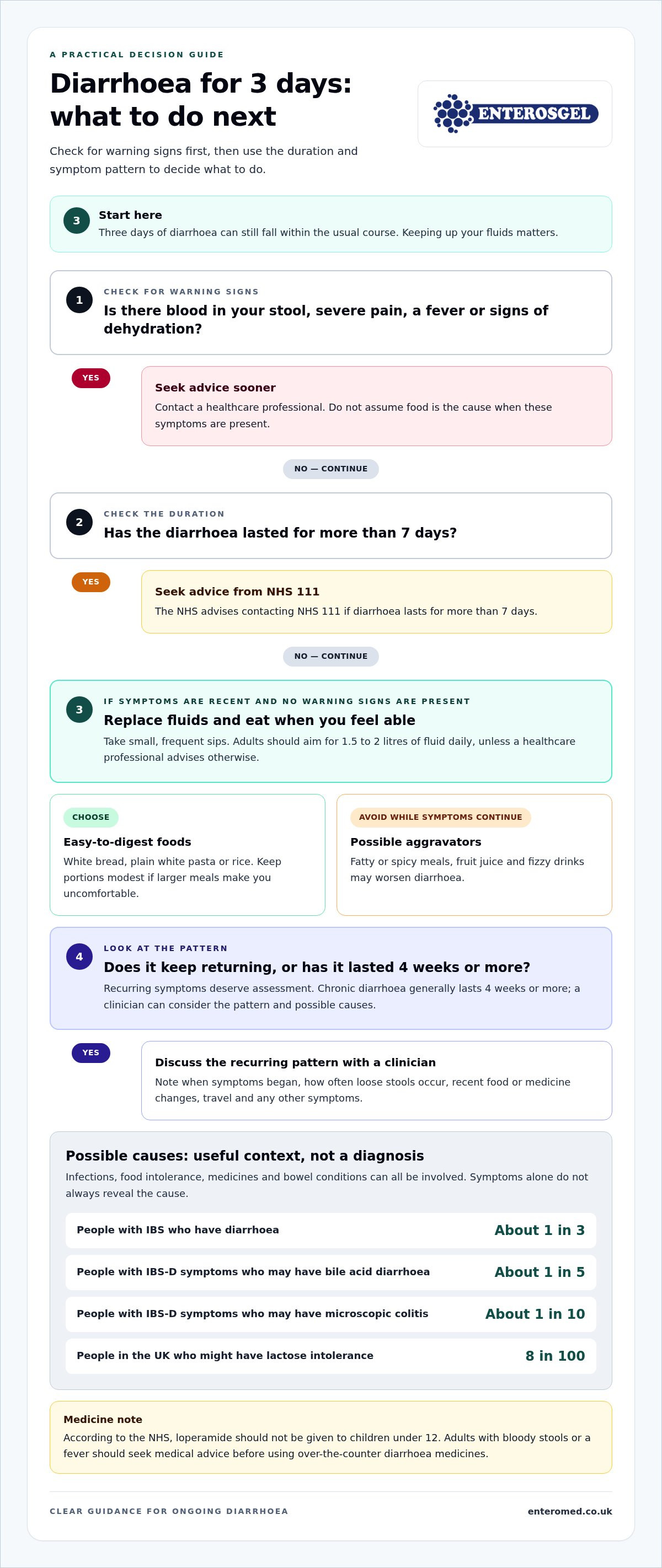
Three days of diarrhoea can still fall within the usual course, but keeping up your fluids matters. If you’re deciding what to do when you have diarrhoea for 3 days, take small, frequent sips and eat easy-to-digest foods when you feel able. According to the NHS, seek advice from NHS 111 if diarrhoea lasts for more than 7 days. Contact a healthcare professional sooner if you have blood in your stool, severe pain, a fever or signs of dehydration.
Ongoing diarrhoea can be uncomfortable and draining, and it’s natural to want to know whether it’s likely to settle or needs attention. Common causes include infections and food or medicines that irritate the bowel; recurring symptoms can have other causes, too.
This guide explains possible causes, what to eat and drink, what to avoid, and how to replace lost fluids. It also covers how long diarrhoea and vomiting typically last, and which symptoms mean you should seek medical advice.
Key Takeaways
- Diarrhoea can have several causes, including infections, food and bowel conditions; recurring symptoms may need a different approach from a short-lived episode.
- Choose easy-to-digest foods when you feel able, and avoid fatty or spicy meals, fruit juice and fizzy drinks while symptoms continue.
- Take frequent small sips to replace lost fluids. A pharmacist may recommend oral rehydration powder mixed with water.
- Diarrhoea and vomiting often settle within days, but seek advice if symptoms persist or you notice blood, severe pain, fever or signs of dehydration.
- According to the NHS, loperamide should not be given to children under 12.
What causes diarrhoea?
Diarrhoea means passing frequent, loose stools. It can be caused by infection, food intolerance, medicines or a bowel condition. Viruses and bacteria can affect the stomach and bowel; contaminated food or contact with someone who is unwell can spread infection. Symptoms alone don’t always reveal the cause, so note when they began and what else you’re experiencing.
Common causes include:
- Infections: Viruses and bacteria can trigger acute diarrhoea. Recent travel, shared meals or contact with someone who has similar symptoms may help explain the timing.
- Food intolerance: Lactose intolerance can cause diarrhoea after eating or drinking dairy products. In the UK, 8 in 100 people might have lactose intolerance.
- Medicines: Some treatments can irritate the bowel. Record any recent medicine changes and when loose stools began, then share those details with a healthcare professional.
- Bowel conditions: About 1 in 3 people with IBS have diarrhoea. Among people with IBS-D symptoms, about 1 in 5 may have bile acid diarrhoea, and about 1 in 10 may have microscopic colitis.
Possible causes aren’t a diagnosis. A clinician may consider when symptoms began, stool frequency, recent food, medicines, travel and other symptoms. Blood in your stool, severe pain, fever or dehydration are reasons to seek medical advice rather than assume food is the cause. Keep a brief record of symptoms and possible triggers to help explain the pattern.
What should I do for diarrhoea lasting 3 days in the UK? If you’re wondering what to do when you have diarrhoea for 3 days, keep replacing lost fluids and eat when you feel able. Contact your GP or NHS 111 if symptoms are severe, worsening or concerning. The NHS advises seeking help from NHS 111 if diarrhoea lasts more than 7 days.
When diarrhoea keeps returning
Repeated episodes may have a different cause from a single infection. Chronic diarrhoea generally lasts 4 weeks or more, according to the National Institute of Diabetes and Digestive and Kidney Diseases. Recurring symptoms that disrupt daily activities, or come with pain, blood or other changes, deserve assessment. Knowing what to do when you have diarrhoea for 3 days also means noticing whether this is a new episode or part of a continuing pattern.
For symptom relief, don’t give loperamide to children under 12, according to the NHS. Adults with bloody stools or a fever should seek medical advice before using over-the-counter diarrhoea medicines. A pharmacist or clinician can help assess whether a medicine is appropriate, particularly when other health conditions or regular medicines are involved.
How can I prevent spreading infectious diarrhoea to others? Wash your hands with soap and water for at least 20 seconds after using the toilet and before eating or preparing food, as the NHS advises. Stay off work or school until you’ve had no diarrhoea or vomiting for at least 2 days. Avoid sharing towels or cutlery, and clean the toilet after use.
Foods and drinks to avoid
Diarrhoea can make eating difficult, but fasting isn’t necessary. Eat when you feel able and choose soft, easy-to-digest foods. White bread, white pasta and rice are low-fibre options that may be easier to manage than wholegrain alternatives. Keep portions modest if larger meals make you uncomfortable.
Some foods and drinks can aggravate symptoms. While stools are watery, avoid fatty or spicy meals, which may be harder to tolerate. Skip fruit juice and fizzy drinks, too, as they can make diarrhoea worse. These choices may help during recovery, whether symptoms follow an infection or occur alongside irritable bowel syndrome.
- Choose: white bread, plain white pasta or rice as low-fibre meal options.
- Avoid: fatty foods and spicy dishes while diarrhoea continues.
- Leave out: fruit juice and fizzy drinks, which may worsen loose stools.
- Eat slowly: chew each mouthful well and allow time to rest after eating.
Small, frequent meals may feel more manageable than a large plate. Try a little white rice at one meal, then white toast or pasta later if you’re hungry. Eat slowly and chew well. If a food repeatedly seems to trigger symptoms, note what you ate and when; this record can help you describe the pattern to a healthcare professional.
Children with diarrhoea may have less appetite, so offer food when they feel ready rather than forcing a full meal. For adults, too, prioritise fluids, then try familiar, easy-to-digest foods. If eating worsens nausea, pause and try a small amount later. Return to normal meals as appetite and bowel movements improve.
There’s no single menu that suits everyone. A food that feels tolerable during an acute episode may be uncomfortable for someone with chronic symptoms or a food intolerance. If dairy reliably causes problems, avoid it while symptoms are active and discuss recurring reactions with a clinician. Don’t remove many food groups without advice, particularly for children, as a restricted diet can make it harder to meet nutritional needs.
Food changes may improve comfort, but they don’t replace fluids. Keep drinking alongside meals, and seek medical advice for severe symptoms, blood in stools, fever or signs of dehydration. If diarrhoea persists, worsens after eating or keeps returning, a clinician can assess the pattern and possible causes rather than relying on diet changes alone.
Hydration and avoiding dehydration
Diarrhoea removes water and salts, so drink often to replace losses. Adults should aim for 1.5 to 2 litres of fluid daily, unless a healthcare professional advises otherwise.
Drinking to prevent dehydration
Prevent dehydration by replacing fluids regularly, rather than waiting until you feel thirsty. Small, frequent sips may be easier to manage, especially if nausea makes larger drinks difficult.
Water is a useful choice; soup and broth also provide fluid. Oral rehydration solutions replace water and salts lost through diarrhoea. A pharmacist can advise whether oral rehydration sachets are suitable and how to mix them. Follow the sachet instructions carefully, using the stated amount of water.
Light yellow or almost clear urine can indicate you’re drinking enough. If you’re struggling to drink, try a sip every few minutes and increase gradually as tolerated. Keep fluids close by, such as a glass beside your bed or a bottle within reach. Don’t rely on one large drink to make up for several hours without fluids.
Dehydration symptoms and risks
Dehydration occurs when your body loses more fluid than it takes in. Recognising symptoms early matters, because ongoing watery stools and vomiting can make fluid loss harder to replace.
Notice changes in urination. Dark, strong-smelling urine or urinating less often can signal dehydration. For young children, fewer wet nappies are a warning sign. Older adults aged 65 and over, and people with diabetes, kidney disease, a weak immune system or other health conditions, may need particular care.
Check symptoms as well as fluid intake. If you or your child still show signs of dehydration after using oral rehydration sachets, call NHS 111. A pharmacist can advise about a child over 5 with signs such as dark urine or reduced urination. If you’re concerned, seek advice rather than waiting for symptoms to become severe.
Medical treatment for dehydration
Medical treatment can restore fluid when drinking alone isn’t enough. This is important because severe dehydration may require hospital care.
A pharmacist or GP may recommend oral rehydration solution, mixed with water according to its instructions. Keep offering small sips if you can keep fluids down. Adults who remain dehydrated after oral rehydration sachets, or who keep being sick and cannot retain fluids, should contact their GP practice urgently.
Doctors may give intravenous fluids for severe dehydration, sometimes in hospital. Seek prompt medical advice if diarrhoea comes with worsening dehydration or you can’t keep fluids down. Loperamide can slow bowel movements, but it doesn’t replace water or salts lost through diarrhoea. You still need to replace fluids even if you use another medicine.
Typical duration of diarrhoea and vomiting
Three days of diarrhoea can still fall within the usual short-term course. Diarrhoea often clears within a few days to a week, while vomiting usually stops sooner. The timeline depends partly on the cause: a viral infection and food poisoning may follow different courses.
Acute diarrhoea symptoms usually clear within 5 to 7 days. In adults, symptoms often improve within two to four days, although some infections last a week or more. A three-day episode is therefore not automatically unusual, but the trend matters. Fewer loose stools and easier drinking suggest improvement; worsening symptoms need attention.
Cause can affect duration. Diarrhoea caused by a virus may last 2 to 3 days. Food poisoning can last about 3 to 7 days without treatment, while travellers’ diarrhoea usually lasts only 1 or 2 days. These are typical ranges, not a way to identify a disease by timing alone. Fever, bloody stools, severe pain or dehydration change the decision: contact a healthcare professional rather than relying on the expected timeline.
Vomiting usually stops in 1 or 2 days for adults and children in the UK. If you or your child vomit for more than 2 days, call NHS 111. Keep taking small sips of fluid during illness, because vomiting and diarrhoea together make replacing lost fluid harder.
Seek advice if symptoms are persistent, severe or getting worse. NHS guidance recommends contacting NHS 111 when diarrhoea lasts more than 7 days. Bloody diarrhoea, marked dehydration or severe pain should prompt earlier medical advice. Don’t wait for a particular day count if symptoms are concerning; the effect on drinking, urination and general condition matters too.
How long should I stay off work or school and avoid preparing food after diarrhoea? Stay off work or school until you’ve had no vomiting or diarrhoea for at least 2 days, according to the NHS. Avoid preparing food for others while symptoms continue, and wash your hands with soap and water before handling food.
After symptoms stop, allow your body time to return to usual eating and drinking. Oral rehydration can help replace fluid and salts lost during diarrhoea; continue drinking as you recover. If loose stools keep returning over weeks, arrange medical advice rather than treating each episode as a separate short illness. Chronic diarrhoea generally lasts 4 weeks or more, according to the National Institute of Diabetes and Digestive and Kidney Diseases.
Enterosgel: Enterosgel 225g Tube
Enterosgel 225g Tube is an oral intestinal adsorbent and medical device for diarrhoea relief. It doesn’t bind or capture bacteria. Instead, it captures bacterial toxins from pathogenic bacteria which cause leaky gut and diarrhoea. This process helps reduce diarrhoea duration and the number of loose stools.
It works locally in the digestive tract and is not a pharmaceutical medicine. It doesn’t replace rehydration or medical assessment. For recurrent IBS-D symptoms, the Enterosgel IBS Starter pack Tube 225g and pack of Sachets is another available format. For IBS-D symptoms and daily use, it should be taken in 30-day courses, with each course followed by a short break.
Visit Enteromed online to learn more about Enterosgel and its use.
Choose your next step with confidence
If you have diarrhoea for three days, choose your next step based on how you feel now. If symptoms are worsening, you’re struggling to drink or you notice blood, seek medical advice rather than relying on self-care alone. If you’re improving, keep monitoring your symptoms and follow the guidance that fits your situation.
For readers considering an intestinal adsorbent, Enterosgel offers the Enterosgel 225g Tube and Enterosgel Sachets (Pack of 10). Enterosgel Kids 0+ is a gentle option for children because it contains no sugar, gluten or preservatives. Unlike other antidiarrhoeal drugs, Enterosgel is safe for children under 12 years. For children under 3 years old, it is advisable to consult a doctor prior to use.
If you’re still deciding what to do when you have diarrhoea for 3 days, consider whether symptoms are easing, staying the same or getting worse. That distinction can help guide a sensible next step. Contact Enterosgel for advice about its products and use.
Frequently Asked Questions
What should I ask your doctor?
Ask which causes are most likely and what might change the care plan. Share when symptoms began, what you were eating, any recent travel, and the medicines or supplements you take. Ask whether these details point to a medicine side effect, food intolerance or another bowel issue. You can also ask which changes should prompt urgent help and whether an existing health condition could affect your recovery.
When should I call my healthcare provider?
Call your GP or NHS 111 if symptoms are severe, worsening or causing concern. Blood in your stool, severe pain, fever, difficulty keeping fluids down or signs of dehydration warrant prompt advice. For a child, explain their age, symptoms and how they are drinking and urinating. If you’re unsure how urgently they need help, NHS 111 can advise on the next step.
Are there any over the counter treatments I can take?
A pharmacist can help you choose an appropriate over-the-counter option and check whether it suits your symptoms and other medicines. Don’t use over-the-counter diarrhoea medicines without medical advice if you have bloody stools or a fever. The NHS says loperamide should not be given to children under 12. Enterosgel is a gentle option for children because it contains no sugar, gluten or preservatives; unlike other antidiarrhoeal drugs, it is safe for children under 12 years. For children under 3 years old, it is advisable to consult a doctor prior to use.
Does diarrhoea need to be monitored, and if so, how?
Yes. Make a simple note of when symptoms started and whether they’re improving, unchanged or worsening. Record new symptoms and how they affect drinking, sleep and usual activities. For a child, note changes in wet nappies or trips to the toilet. This concise record can help a healthcare professional understand how the illness is progressing and decide what assessment may be appropriate.
How is diarrhoea treated?
Treatment depends on the likely cause and the person’s symptoms. Self-care may be enough for a mild episode, while persistent or severe symptoms need clinical assessment. A GP may consider recent medicines, food triggers, travel and existing bowel conditions when deciding what further care is needed. For children, follow age-appropriate advice and product instructions; don’t give them an adult treatment without professional guidance.
How long does diarrhoea last?
How long diarrhoea lasts varies with the cause, so track whether it’s improving. Notice whether stools are becoming less frequent and whether appetite and daily activity are returning. If symptoms keep coming back after they settle, explain the pattern to your GP rather than treating each episode as unrelated. Seek advice if symptoms worsen or you’re concerned about your recovery.


