

Posted by Enterosgel

For a child with diarrhoea, fluids come first; symptom relief is an additional consideration. It’s understandable to feel unsure how to keep your child hydrated, choose an age-appropriate option and recognise when symptoms need medical attention. This guide to diarrhoea treatment for children UK families can use covers practical care at home, warning signs and when to contact a healthcare professional.
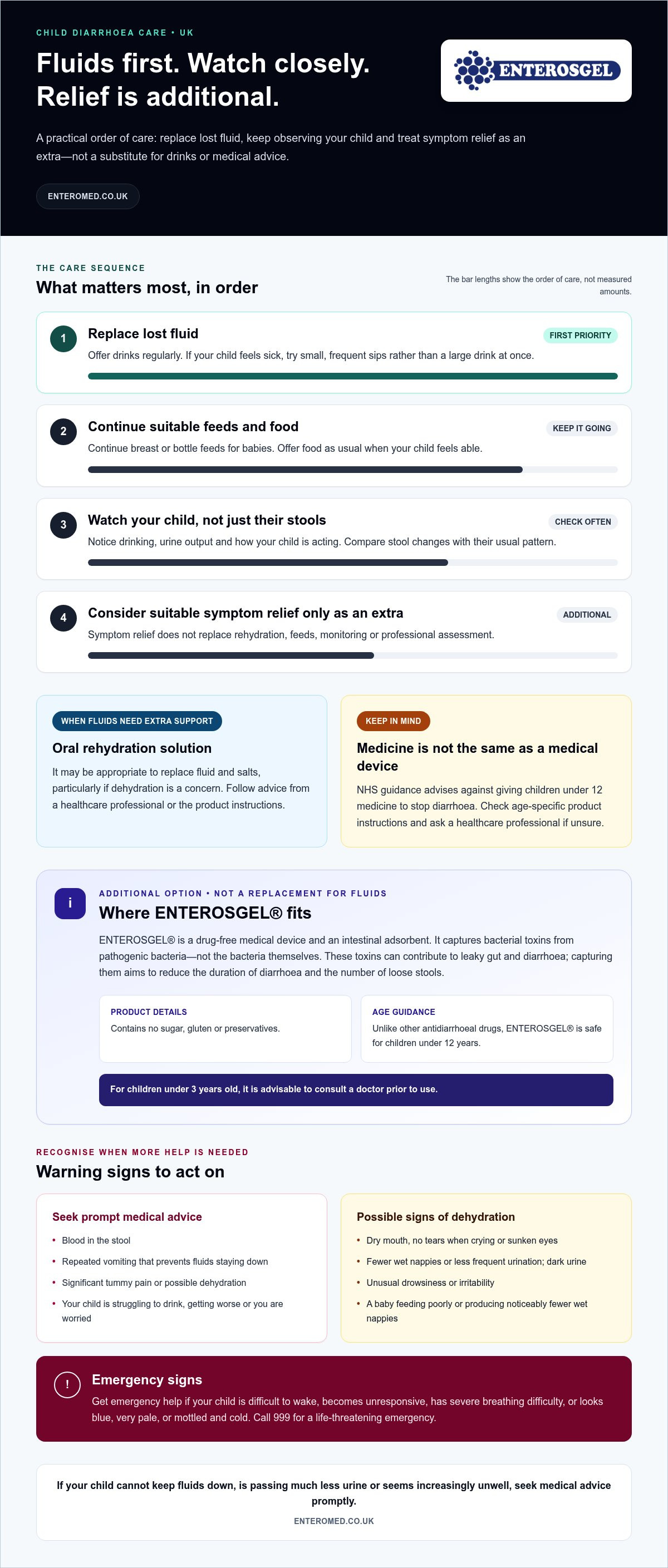
Offer frequent small sips of fluid and food as usual when your child feels able. The NHS advises against giving children under 12 medicine to stop diarrhoea. ENTEROSGEL® is a drug-free medical device, not a pharmaceutical medicine. It captures bacterial toxins from pathogenic bacteria, not the bacteria themselves. These toxins can contribute to leaky gut and diarrhoea; capturing them aims to reduce the duration of diarrhoea and the number of loose stools. Unlike other antidiarrhoeal drugs, ENTEROSGEL® is safe for children under 12 years. It contains no sugar, gluten or preservatives. For children under 3 years old, it is advisable to consult a doctor prior to use.
You’ll also learn which changes may signal dehydration or another warning sign, and where an intestinal adsorbent may fit alongside fluids and medical advice. It is not a substitute for either.
Key Takeaways
- Compare your child’s stools with their usual pattern to recognise acute diarrhoea. Common triggers include stomach bugs and food, but symptoms alone don’t confirm the cause.
- Use this guide to plan diarrhoea treatment for children UK families can follow, including what to monitor and when to seek medical advice.
- Build a calm home-care routine around fluids, suitable feeds and close observation. Adjust your approach if your child feels sick.
- ENTEROSGEL® is a CE-certified medical device and an additional option, not a substitute for fluids or medical assessment. It captures bacterial toxins from pathogenic bacteria that can cause leaky gut and diarrhoea, aiming to reduce diarrhoea duration and loose stools. It contains no sugar, gluten or preservatives and, unlike other antidiarrhoeal drugs, is safe for children under 12 years. For children under 3 years old, it is advisable to consult a doctor prior to use.
Child diarrhoea in the UK: what it can mean and when to seek help
How to recognise diarrhoea and understand common causes
Acute diarrhoea is a short-term episode in which a child passes looser or more watery stools, or has bowel movements more often than usual for them. Compare the change with your child’s normal pattern, which can vary with age, feeding and diet. One softer stool may not mean diarrhoea, while repeated watery stools are a clearer change to watch.
Gastroenteritis, often caused by a stomach bug, is a common cause. Food, medicines and other triggers can also affect bowel movements. Stool changes alone can’t reliably identify the cause, and symptoms vary between children. The length of an episode does not, by itself, show how severe it is. Pay attention to your child’s overall condition, fluid intake and urine output as well as their stools.
Warning signs that need professional advice
If your child is alert, drinking and passing urine as usual, and has no concerning symptoms, close observation at home may be reasonable. Contact a healthcare professional promptly if you’re worried, particularly if your child is a baby, symptoms are worsening or they’re struggling to drink. Seek urgent advice if your child has blood in their stool, repeated vomiting that prevents them keeping fluids down, significant tummy pain or possible dehydration.
Signs of dehydration include a dry mouth, fewer wet nappies or less frequent urination, dark urine, no tears when crying, sunken eyes, or unusual drowsiness or irritability. These signs need prompt assessment. A baby who is feeding poorly or producing noticeably fewer wet nappies also needs timely medical advice.
Get emergency help if your child is difficult to wake, becomes unresponsive, has severe breathing difficulty, or looks blue, very pale or mottled and cold. Call 999 for a life-threatening emergency. For urgent but non-emergency concerns, contact your GP or the appropriate urgent NHS service where you live. The route differs across the UK, so follow your nation’s NHS guidance.
This is the starting point for diarrhoea treatment for children UK families can follow: monitor your child, not just the number of days or bowel movements. If you feel something is wrong, seek professional advice rather than waiting for symptoms to pass.
How child diarrhoea treatment works: fluids first, then suitable symptom relief
Rehydration replaces lost fluid; symptom-targeted treatment aims to ease diarrhoea. They have different roles, and one cannot take the place of the other. Keeping your child hydrated and watching for changes come before considering additional relief.
Why fluid replacement comes first
Watery stools carry fluid out of the body. If your child is also vomiting, they may lose more and struggle to drink enough. Offer fluids regularly rather than waiting until they ask. The NHS advises plenty of fluids, with small sips if a child feels sick. Continue breast or bottle feeds for babies.
An oral rehydration solution may be appropriate to replace fluid and salts, particularly if dehydration is a concern. Follow advice from a healthcare professional or the product instructions about its use. Symptom relief is not a substitute for drinks, feeds or monitoring. If your child can’t keep fluids down, is passing much less urine or seems increasingly unwell, seek medical advice promptly.
Why treatment suitability depends on age and product type
Medicines designed to slow bowel movements work differently from a drug-free medical device. These options aren’t interchangeable, and an adult’s familiar treatment shouldn’t automatically be given to a child. NHS guidance says not to give children under 12 medicine to stop diarrhoea. Follow the product’s age-specific instructions, and speak with a healthcare professional if you’re unsure whether an option is suitable for your child.
A medical device may work through a physical action in the gut rather than as a medicine that slows bowel movement. That does not make it a replacement for rehydration or professional assessment. ENTEROSGEL® is an intestinal adsorbent, with a role separate from restoring fluids. Don’t use symptom-targeted relief to delay seeking help if warning signs appear or your child’s condition worsens.
For further context on the evidence for this type of device, explore Enterosgel clinical research. Keep the immediate priority clear: support fluid intake, observe your child and seek advice if their symptoms or behaviour cause concern.
A practical home-care plan for a child with diarrhoea
A simple routine can make care feel more manageable. Offer drinks, continue appropriate feeds, watch how your child is doing and reduce the chance of infection spreading. These measures support home care, but don’t wait to seek help if your child develops warning signs.
Feeding, drinking and everyday care
- Offer fluids regularly. If your child feels sick, encourage small, frequent sips rather than a large drink at once. If they vomit, pause briefly, then try again with small sips. Follow NHS or healthcare professional advice about oral rehydration solution if it’s recommended for your child.
- Keep up usual feeds. Continue breastfeeding or your baby’s usual milk feeds. Don’t dilute infant formula. Offer food as normal if your child is willing to eat, but don’t pressure them or impose broad food restrictions. A temporarily smaller appetite can happen; drinking and your child’s general condition remain key things to watch.
- Make rest and comfort easy. Keep drinks within reach and let your child rest as needed. Continue to check how alert they are and whether they’re drinking and urinating. If they’re getting worse or you’re concerned, contact a healthcare professional rather than waiting to complete a home-care routine.
Monitoring symptoms and reducing spread
A brief written record can help you describe changes clearly if you speak to a clinician. Note when diarrhoea or vomiting occurs, what your child has managed to drink, when they last urinated or had a wet nappy, and any change in alertness or behaviour. Use the record to support a useful conversation, not as a reason to delay urgent care.
Good hygiene helps limit spread at home. Wash hands thoroughly with soap and water after changing nappies or using the toilet, and before preparing food or eating. Clean frequently touched bathroom surfaces, such as taps, toilet seats and flush handles, and handle soiled clothes or bedding carefully. Wash them separately, following the garment’s care instructions, and wash your hands afterwards.
In line with NHS advice, keep your child away from school or nursery until at least 48 hours after their last episode of diarrhoea or vomiting. This is a useful foundation for diarrhoea treatment for children UK parents can manage at home, alongside continued attention to symptoms. If you’re considering an additional option as part of care, explore Enterosgel clinical research and discuss suitability with a healthcare professional.
Enterosgel for children: how the drug-free medical device fits into care
For parents considering an additional option, ENTEROSGEL® Diarrhoea, Pain & Bloating Relief for Children 0+ is the child-specific product. ENTEROSGEL® is a CE-certified medical device and intestinal adsorbent, not a pharmaceutical medicine. It is intended to complement fluid replacement and appropriate medical advice, not replace either.
How intestinal adsorption works and what the evidence says
ENTEROSGEL® works physically within the digestive tract. It does not bind or capture bacteria. Instead, it captures bacterial toxins from pathogenic bacteria, which can cause leaky gut and diarrhoea. This action aims to reduce the duration of diarrhoea and the number of loose stools.
Evidence in children should be considered separately from adult research. A clinical study in The Gambia examined ENTEROSGEL® for diarrhoea in children under five. You can review Enterosgel clinical research for information about the studies.
Child-specific use, safety and next steps
The gel contains no sugar, gluten or preservatives, making it a gentle option for children. Unlike other antidiarrhoeal drugs, ENTEROSGEL® is safe for children under 12 years. For children under 3 years old, it is advisable to consult a doctor prior to use. These points don’t remove the need to follow age-specific directions or seek medical advice when symptoms are concerning.
Read the official Instructions for Use for your child’s age-specific dose, preparation and timing. For children, dilute the specified amount with water or oral rehydration solution. Don’t estimate a dose or use adult directions. Continue to follow your child’s care plan and seek professional advice if their condition worsens or warning signs appear.
Consider this option only as part of a broader care plan that keeps hydration and appropriate medical assessment central. If you’re uncertain about suitability or how to follow the instructions, speak with a healthcare professional.
Choose your child’s next step with confidence
Use this guidance on diarrhoea treatment for children UK families need to make a measured next decision: keep monitoring your child’s symptoms, and seek professional advice if you’re concerned or they worsen. Any additional support should sit alongside appropriate fluids and medical assessment, not take their place.
If you’re considering ENTEROSGEL®, review the child-specific product, ENTEROSGEL® Diarrhoea, Pain & Bloating Relief for Children 0+. It’s a CE-certified medical device, not a pharmaceutical medicine. Read the age-specific Instructions for Use and review the available clinical research, considering paediatric findings separately from adult research.
Explore drug-free support for children and make an informed choice. With clear information and timely medical advice when needed, you can approach your child’s care with greater confidence.
Frequently Asked Questions
Can I give my child anything to stop diarrhoea?
For children under 12, NHS advice is not to give medicine to stop diarrhoea. If you’re considering an alternative, follow the product’s age restrictions and official instructions rather than adapting a treatment intended for adults. ENTEROSGEL® is a medical device, not a pharmaceutical medicine. Seek professional advice if your child’s symptoms worsen or warning signs arise.
Is Enterosgel safe for children under 12?
ENTEROSGEL® is a drug-free medical device and contains no sugar, gluten or preservatives, making it a gentle option for children. Unlike other antidiarrhoeal drugs, it is safe for children under 12 years. Follow the official Instructions for Use for your child’s age, and don’t infer a dose from another product or an adult’s directions. It doesn’t replace clinical care when needed.
What should I give a child with diarrhoea to drink?
Offer drinks your child can manage, and try small, frequent sips if nausea makes drinking difficult. An oral rehydration solution may be suitable; follow NHS or healthcare professional advice on whether to use one and how to prepare it. For babies, continue breastfeeding or usual bottle feeds. Never dilute infant formula. If your child refuses or cannot keep fluids down, contact a healthcare professional for advice rather than repeatedly changing drinks at home.
When should I contact a doctor about my child’s diarrhoea?
Contact a healthcare professional if your child is getting worse, is unusually sleepy or irritable, is passing less urine, or if you’re worried, especially with a very young baby. Use current NHS guidance for your UK nation to choose the appropriate urgent-care route. If your child is difficult to wake, unresponsive or has severe breathing difficulty, call 999. Don’t wait to see whether a diarrhoea treatment works before seeking assessment for concerning symptoms.
How does Enterosgel work for diarrhoea in children?
ENTEROSGEL® is an intestinal adsorbent that captures bacterial toxins from pathogenic bacteria, not the bacteria themselves. These toxins can contribute to leaky gut and diarrhoea. Capturing them aims to reduce diarrhoea duration and the number of loose stools, but can’t guarantee an individual outcome. It’s a CE-certified medical device, not a pharmaceutical medicine. Consider child-specific research on its own findings rather than applying adult study results to children or assuming a study proves benefit for every child.
How should Enterosgel be given to a child?
Use the official Instructions for Use to check the dose for your child’s age, how to prepare it and when to give it in relation to meals. Dilute the specified amount in room-temperature water or, for children, oral rehydration solution. Don’t estimate a dose or substitute adult directions. Seek medical advice if warning signs develop, regardless of treatment.


