

Posted by Enterosgel

Loose stools after antibiotics deserve attention, but they don’t mean you should stop or change your prescribed treatment on your own. Urgency can disrupt everyday routines, and it can be difficult to tell a common side effect from a complication. Finding safe antibiotic associated diarrhoea relief starts with understanding possible causes and knowing when to seek medical advice.
Antibiotics can disturb the balance of bacteria in the gut, which may lead to diarrhoea. In some cases, an infection such as Clostridioides difficile (C. difficile) needs prompt assessment. Contact a healthcare professional if symptoms are severe, persistent or accompanied by warning signs such as fever or significant abdominal pain.
This guide explains why diarrhoea can follow antibiotics, which symptoms need medical attention and practical steps to support recovery without changing your treatment independently. It also explains how ENTEROSGEL®, an intestinal adsorbent, captures toxins from pathogenic bacteria, not the bacteria themselves. Evidence for ENTEROSGEL® in IBS-D is not proof of effectiveness for antibiotic-associated diarrhoea, so the information here will help you assess its role clearly.
Key Takeaways
- Learn what loose stools after antibiotics may indicate, and why symptoms alone don’t confirm a specific cause.
- Recognise warning signs that call for medical advice, including symptoms that could be linked to C. difficile.
- Support recovery by maintaining fluid intake and seeking advice before changing prescribed antibiotics.
- Understand how Enterosgel, an oral intestinal adsorbent medical device, captures toxins from pathogenic bacteria, not the bacteria themselves.
- Consider antibiotic associated diarrhoea relief while distinguishing symptom support from evidence specific to this cause of diarrhoea.
Antibiotic-associated diarrhoea: what it is and what symptoms to expect
Acute diarrhoea associated with antibiotic use is a short-term change to looser or more frequent bowel movements during or after a course of antibiotics. It describes a symptom pattern, not a diagnosis: the timing alone can’t establish the cause. NHS guidance recognises diarrhoea as a possible side effect of antibiotics, but other causes may also need consideration.
When loose stools may be linked to antibiotics
Loose stools can start while you’re taking an antibiotic or after you’ve finished. Antibiotics may affect the usual balance of bacteria in the gut, but timing doesn’t prove they’re the only cause. An infection, another medicine or a separate digestive problem may also be responsible. Note when symptoms began, how often you’re passing loose stools and whether they’re changing. These details can help a healthcare professional assess what’s happening.
Milder symptoms may involve a few loose stools without feeling significantly unwell. Persistent, severe or worsening diarrhoea deserves closer attention, particularly if it makes it difficult to drink or comes with other symptoms. Don’t use timing alone to decide whether it’s safe to wait or change your antibiotic.
Symptoms that call for closer attention
Seek medical advice if diarrhoea is severe, persistent or getting worse, or if you have abdominal pain, a fever or blood in your stools. These symptoms can have different causes, including infections that need assessment. If you’re taking antibiotics now or have recently taken them, mention this when you contact your GP or NHS 111.
Watch for dehydration too. Warning signs include a dry mouth, unusual thirst, passing less urine than usual or darker urine, and dizziness, especially when standing. If you can’t keep fluids down or these signs are developing, seek prompt advice through your GP or NHS 111. Call 999 for a life-threatening emergency, such as collapse or severe confusion.
- Mild and improving: keep track of your symptoms and maintain fluid intake.
- Persistent, worsening or accompanied by warning signs: contact your GP or NHS 111 for advice.
- Severe or life-threatening symptoms: seek urgent help.
Understanding the cause is the first step towards appropriate antibiotic associated diarrhoea relief. Symptoms can help you decide when to get help, but they can’t confirm the cause. A healthcare professional can advise whether further assessment is needed.
Why antibiotics can cause diarrhoea, and when C. difficile matters
Antibiotics act against bacteria causing an infection, but they can also affect some of the bacteria that normally live in the gut. These bacteria form part of the gut microbiome, which contributes to normal digestive function. A change in this balance may make stools looser or more frequent. This is one possible explanation, not proof of what is causing symptoms in any particular person.
How changes in the gut may lead to loose stools
The NHS lists diarrhoea among the possible side effects of antibiotics. However, loose stools during or after treatment can have other causes, including a separate infection or another medicine. Symptoms alone can’t establish which explanation applies. The timing is useful information for a clinician, but it isn’t a diagnosis. There’s also no basis to conclude that a course of antibiotics has permanently damaged your gut or that a particular food will reverse the change.
Symptoms can follow antibiotic use, but the cause and appropriate care depend on clinical assessment. This distinction matters because ordinary medicine-related diarrhoea and an infection such as Clostridioides difficile (C. difficile) may call for different advice.
C. difficile: why worsening symptoms need assessment
C. difficile is one possible cause of diarrhoea after antibiotic use. It can inflame the bowel and may cause frequent watery stools, abdominal pain or cramping, and fever. These symptoms don’t confirm C. difficile, but severe, persistent or worsening diarrhoea, blood in the stool or signs of dehydration warrant medical advice. Tell the clinician about any current or recent antibiotic use.
NICE guidance on C. difficile infection (NG199) supports clinical assessment when this infection is suspected. A clinician can decide whether a stool test or other assessment is appropriate and what care is needed. Don’t try to identify or treat C. difficile based on symptoms alone. Contact your GP or NHS 111 if you’re concerned, and seek urgent help for severe illness.
When considering antibiotic associated diarrhoea relief, keep the evidence in context: findings for one type of diarrhoea don’t automatically apply to another. Enterosgel’s published research should be considered in relation to the condition studied, not as proof of effectiveness for antibiotic-associated diarrhoea.
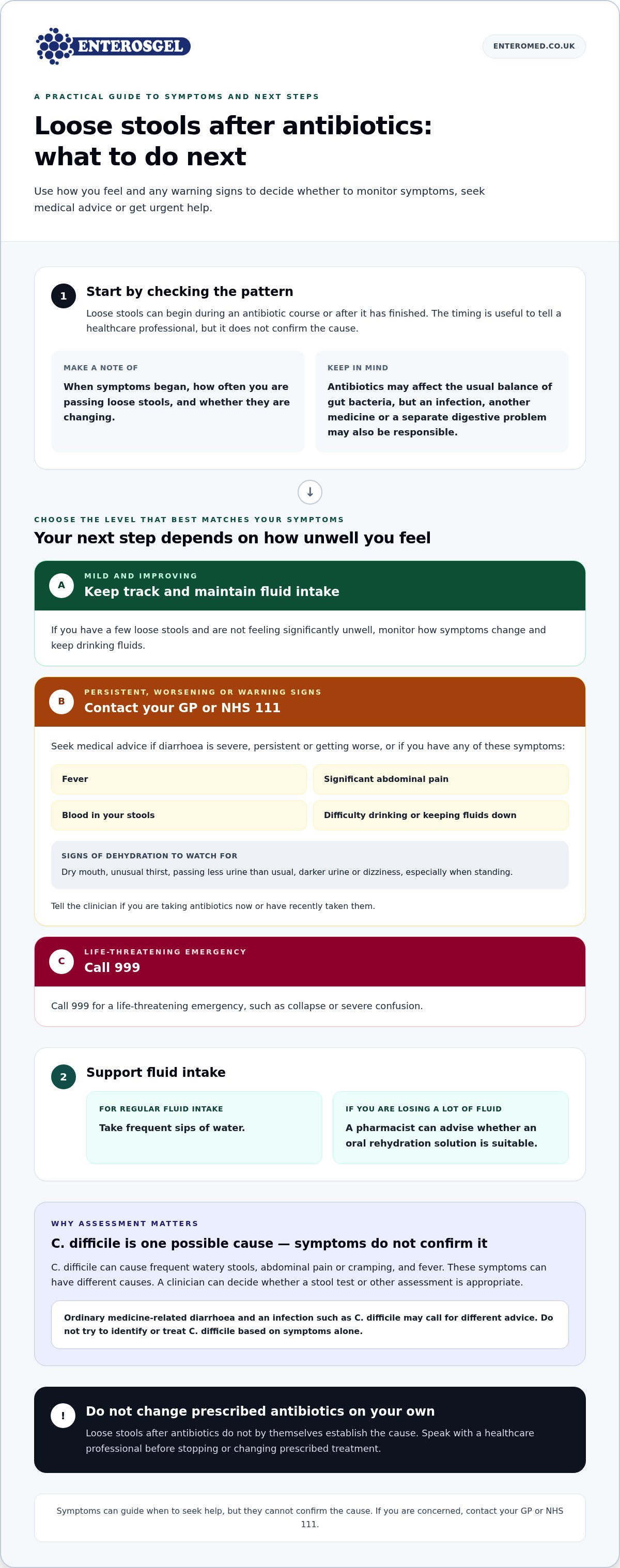
Antibiotic-associated diarrhoea: a safe step-by-step plan
A practical plan can help you manage symptoms while keeping treatment decisions safe. Use these steps to decide what to do next.
- Assess how unwell you feel. Note whether diarrhoea is mild and improving or severe, persistent or getting worse. Fever, blood in your stools, significant abdominal pain or signs of dehydration need medical advice.
- Replace fluids. Take frequent sips of water. If you’re losing a lot of fluid or are concerned about dehydration, a pharmacist can advise whether an oral rehydration solution is suitable. NHS advice on diarrhoea and vomiting recommends fluids to help prevent dehydration.
- Keep track of changes. Make a note of bowel movements, how much you’re drinking and any new symptoms. This gives a GP, pharmacist or NHS 111 a clearer picture. Eat as you feel able; avoid restrictive diets or assuming a particular food will cure diarrhoea.
- Get advice before changing treatment. Don’t stop, skip or change prescribed antibiotics without speaking to the prescriber or another qualified healthcare professional. Before adding a symptom-relief product, ask a pharmacist or clinician whether it’s appropriate alongside your current treatment.
When to contact a GP or urgent service
Contact your GP or NHS 111 if symptoms are severe, persistent or worsening, or if you have a fever, blood in your stools, abdominal pain or signs of dehydration, such as passing much less urine, dark urine or dizziness. Mention that you’re taking, or have recently taken, antibiotics. Suspected Clostridioides difficile infection needs clinical assessment; a clinician can decide whether testing or specific treatment is appropriate.
Safety first: Don’t rely on self-care alone for severe, persistent or worsening symptoms. Seek professional assessment, and call 999 for a life-threatening emergency.
For antibiotic associated diarrhoea relief, a symptom-support product should never delay assessment or replace advice about your antibiotic. ENTEROSGEL® is an oral intestinal adsorbent medical device, not a pharmaceutical medicine. It doesn’t bind or capture bacteria. It captures bacterial toxins from pathogenic bacteria, which cause leaky gut and diarrhoea. This physical action is intended to help reduce the duration of diarrhoea and the number of loose stools, but evidence for IBS-D does not establish effectiveness specifically for antibiotic-associated diarrhoea. If you’re considering ENTEROSGEL®, review the Enterosgel tube information and discuss suitability with a pharmacist or clinician.
Where Enterosgel may fit in relief after antibiotics
Enterosgel is an oral intestinal adsorbent medical device, not an antibiotic or pharmaceutical medicine. It provides symptom support, but it doesn’t diagnose the cause of diarrhoea or replace clinical assessment. Severe or worsening symptoms, or suspected Clostridioides difficile infection, need professional advice rather than relying on a product alone.
What an intestinal adsorbent does
Enterosgel captures bacterial toxins from pathogenic bacteria; it does not bind or capture bacteria. This physical action is distinct from killing or removing bacteria, and should not be taken as evidence that it treats an infection. The product is intended to help reduce diarrhoea duration and the number of loose stools, but claims about a specific cause should be based on evidence for that condition.
Published research on Enterosgel includes IBS-D, but that evidence does not establish effectiveness for antibiotic-associated diarrhoea. Read the clinical research on Enterosgel in relation to the condition and population studied, rather than assuming the findings apply to every cause of diarrhoea.
How to consider Enterosgel alongside clinical advice
If you’re considering Enterosgel after antibiotics, first decide whether your symptoms need medical assessment. A symptom-support option must not delay care for severe symptoms or suspected C. difficile. Follow the current Instructions for Use, and ask a pharmacist or clinician about timing if you take other oral medicines. Don’t alter prescribed antibiotic treatment without professional advice.
For product-format information, see the Enterosgel 225g tube details. Use it as symptom support alongside appropriate clinical advice, not as a way to identify or resolve the underlying cause on its own.
Take your next step with confidence
Before choosing symptom support, be clear about what it can and can’t do. The goal of antibiotic associated diarrhoea relief is not to mask a problem that needs assessment or to alter prescribed treatment without advice. If symptoms are concerning, contact a healthcare professional first. If you’re considering a product, read its current Instructions for Use and ask a pharmacist or clinician about suitability alongside other medicines.
Evidence also needs to match the condition being discussed. Research into IBS-D is not proof of effectiveness for diarrhoea after antibiotics. Keeping that distinction in mind can help you make a measured choice and discuss your options with a professional, rather than relying on a product claim to identify the cause.
For a closer look at Enterosgel and the research behind it, explore Enterosgel and its clinical research. If you’re looking for symptom support, view the Enterosgel 225g tube and follow its current Instructions for Use. Seek medical advice first if symptoms are severe, persistent or worsening.
Frequently Asked Questions
Is antibiotic-associated diarrhoea contagious?
Diarrhoea caused by an antibiotic’s effect on your gut isn’t contagious by itself, but an infection causing the symptoms may spread. C. difficile, for example, can pass between people through contaminated hands or surfaces. Wash your hands thoroughly with soap and water after using the toilet and before preparing food. If an infection is suspected, follow your healthcare professional’s advice about hygiene and limiting spread.
Can antibiotic-associated diarrhoea happen after the antibiotic course has finished?
Yes. Loose stools can start after you’ve finished taking the antibiotic, so tell a GP or pharmacist about recent treatment even if it has ended. Note the medicine’s name if you know it, when you completed the course and when the bowel changes began. Seek advice if symptoms are severe, worsening or accompanied by other concerning signs rather than assuming they’re a delayed side effect.
How is C. difficile infection tested for?
A clinician may ask you to provide a stool sample, which can be tested for C. difficile. Contact your GP or NHS 111 if you’re concerned; they can assess your symptoms and advise whether testing is needed. A test result is interpreted alongside your symptoms and medical history. Don’t use a home assessment or symptoms alone to decide that you have, or don’t have, the infection.
What foods are easiest to tolerate while recovering from diarrhoea after antibiotics?
Choose foods you find manageable and eat when you feel able. Plain options such as rice, bread, potatoes or soup may be easier than rich meals for some people. You don’t need to follow a strict recovery diet, and no particular food is known to cure antibiotic-associated diarrhoea. Drink regularly; if eating or drinking makes you feel worse, or you’re struggling to keep fluids down, seek medical advice.
Can I take a diarrhoea relief product while taking antibiotics?
Possibly, but check with a pharmacist or clinician before using a diarrhoea relief product alongside antibiotics. Whether a product is suitable, and how to time it with other oral medicines, depends on the specific product and your circumstances. Read its current Instructions for Use and share the names of any medicines you’re taking. Don’t stop, skip or change prescribed antibiotics without advice from the prescriber or another qualified professional.
Does everyone who develops diarrhoea after antibiotics need medical treatment?
No. Some mild episodes settle without specific treatment, but whether you need assessment depends on your symptoms and health. Contact a healthcare professional if diarrhoea is severe, persistent or getting worse, or if you have a fever, blood in your stools, marked pain or signs of dehydration. A clinician can decide whether tests or treatment are needed, including if C. difficile is a concern.


