

Posted by Enterosgel

It’s the middle of the night, and abdominal discomfort, bloating or an urgent trip to the toilet has interrupted your sleep again. In that moment, knowing how to calm an IBS flare up at night can feel more pressing than working out what triggered it.
Night-time symptoms can occur with IBS, and a disrupted night can make them harder to manage. But don’t automatically put new, severe or persistent symptoms down to IBS. A simple plan can help you stay comfortable, monitor what is happening and recognise when to seek medical advice.
This guide covers practical steps to try during a flare, including how to stay comfortable and hydrated, and when night-time bowel symptoms need medical attention. It also explains how treatment options may fit into longer-term IBS-D management. If symptoms are severe or worsening, seek medical advice rather than relying on self-care alone.
Key Takeaways
- Use a calm, step-by-step approach to how to calm an IBS flare up at night, starting with a check for warning signs.
- If diarrhoea is present, take small sips of fluid and focus on comfort while symptoms settle.
- Don’t assume new, severe, persistent or worsening night-time symptoms are IBS. Blood in the stool, fainting, severe dehydration or sudden severe pain need urgent medical advice.
- ENTEROSGEL® is an intestinal adsorbent medical device, not a pharmaceutical medicine. It captures bacterial toxins from pathogenic bacteria, not the bacteria themselves.
- For IBS-D treatment and daily use, Enterosgel should be taken in 30-day courses, with each course followed by a short break.
Night-time IBS flare-ups: what may be happening and what to check first
Waking with abdominal pain, bloating, urgency or diarrhoea can feel unsettling, especially when you’re tired and unsure what to do next. A flare-up is a period when your usual IBS symptoms become more noticeable or frequent. However, not every episode of night-time bowel symptoms is caused by IBS. First, compare what is happening now with the pattern you recognise.
This check can help you decide whether familiar self-care may be appropriate or whether a change needs medical attention. It is a useful first step before deciding how to calm an IBS flare up at night.
Can IBS symptoms wake you at night?
IBS symptoms can disturb sleep, but don’t automatically attribute waking with bowel symptoms to IBS. Ask whether this episode resembles your established pattern, such as the same kind of discomfort or urgency you’ve experienced before. Notice if it feels new, more intense or otherwise different. If night-time symptoms recur, record when they happen and discuss the pattern with a healthcare professional.
A quick symptom check before trying self-care
Pause and take stock rather than assuming the cause. IBS-D is irritable bowel syndrome in which diarrhoea is the predominant bowel pattern. If you have IBS-D, diarrhoea may occur alongside other familiar symptoms, but changes in your usual pattern still matter.
Note the details that can help you judge whether this is a familiar flare or a marked change:
- Pain: where it is, how strong it feels and whether it is familiar.
- Stool changes: whether you have diarrhoea and how this compares with your usual bowel pattern.
- Urgency: whether the need to go feels typical or unusually sudden or difficult to manage.
- Duration: when symptoms began and whether they are settling, continuing or worsening.
- Other symptoms: anything accompanying the bowel changes that is new or unusual for you.
Familiar, manageable symptoms may fit your known IBS pattern. Sudden, severe or markedly different symptoms need more caution. Don’t explain them away as a flare. This check can help you decide what to do next and what information to share if you seek medical advice.
How to calm an IBS flare-up at night: a step-by-step plan
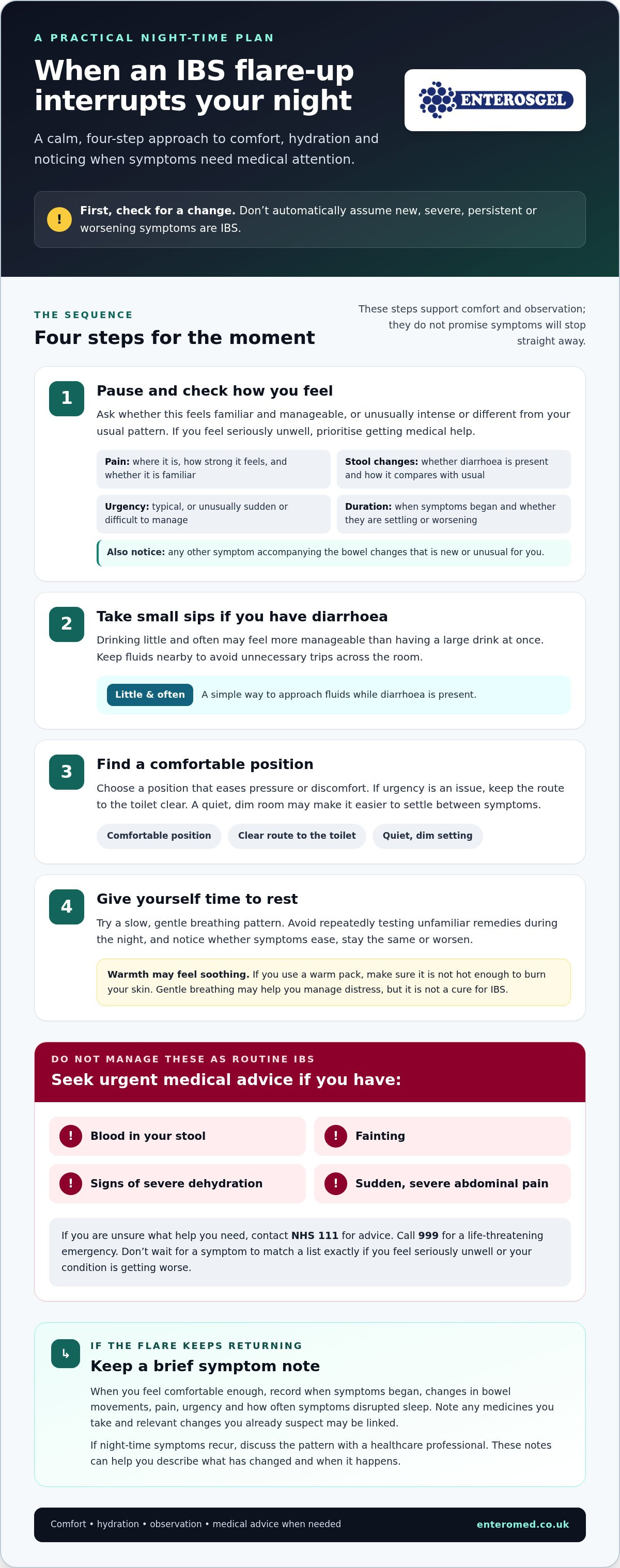
A simple sequence can help you respond without adding extra stress. These steps are for comfort and observation, not a promise that symptoms will stop straight away. If symptoms are sudden, severe or very different from your usual pattern, seek medical advice rather than relying on self-care.
- Pause and check how you feel. Notice whether the symptoms are familiar and manageable, or unusually intense or different. If you feel seriously unwell, prioritise getting medical help.
- Take small sips if you have diarrhoea. Drinking little and often may feel more manageable than having a large drink at once. Keep fluids nearby to avoid unnecessary trips across the room.
- Find a comfortable position. Choose a position that eases pressure or discomfort, and keep the route to the toilet clear if urgency is an issue. A quiet, dim room may make it easier to settle between symptoms.
- Give yourself time to rest. Try a slow, gentle breathing pattern and avoid repeatedly testing unfamiliar remedies during the night. Notice whether symptoms ease, stay the same or worsen.
Simple comfort measures while symptoms settle
Gentle breathing may help you manage distress, but it isn’t a cure for IBS. If warmth feels soothing, use a warm pack as a comfort measure and make sure it isn’t hot enough to burn your skin. Keep the plan simple: a familiar position, a calm setting and small sips of fluid if you have diarrhoea can be easier to manage than trying several new approaches at once.
What to record if the flare keeps returning
When you feel comfortable enough, make a brief note of when symptoms began, changes in bowel movements, pain, urgency and how often symptoms disrupted sleep. Record any medicines you take and any relevant changes you already suspect may be linked. These notes can help you describe recurring episodes clearly to a healthcare professional and inform a clinical guide to managing IBS symptoms.
If you’re considering treatment as part of longer-term IBS-D management, read the Enterosgel 225g tube information alongside advice from your healthcare professional. Keep tonight’s focus on comfort and monitoring; don’t expect any measure to provide immediate relief.
When night-time bowel symptoms need medical advice
IBS can cause recurring bowel symptoms, but new, severe, persistent or worsening symptoms shouldn’t simply be labelled a flare. At night, focus on how unwell you feel and whether the symptoms are changing. A familiar episode that settles is different from a sudden or marked change, but no checklist can rule out a serious problem.
Warning signs that should not be managed as routine IBS
Seek urgent medical advice if you have blood in your stool, fainting, signs of severe dehydration or sudden severe abdominal pain. These symptoms need assessment rather than another attempt at self-care. A new or severe symptom pattern needs clinical assessment.
If you’re unsure what help you need, contact NHS 111 for advice. Call 999 for a life-threatening emergency. Don’t wait for a symptom to match a list exactly if you feel seriously unwell or your condition is getting worse.
What to tell a healthcare professional
Clear notes can help explain what has changed, especially if symptoms have woken you from sleep more than once. Share when the episode began, how often it happens and whether it interrupts your sleep. Include any stool changes, pain, urgency and concerns about hydration, such as finding it difficult to keep fluids down. Note any medicines you take and relevant changes you’ve already noticed.
- Timing: when symptoms start and how long they last.
- Pattern: how often you wake, and whether symptoms resemble your usual IBS or differ.
- Changes: bowel movements, pain, urgency and any other symptoms.
- Context: medicines and hydration concerns that may help explain the episode.
Repeated night-time waking or a changing symptom pattern is worth discussing with a healthcare professional, even if symptoms ease by morning. You can also describe where pain occurs and whether bloating accompanies it, so a clinician can advise what assessment is appropriate. For immediate guidance when symptoms feel urgent but aren’t life-threatening, contact NHS 111. If you need emergency help, call 999.
IBS-D treatment context: where Enterosgel may fit
Comfort measures can help manage the immediate disruption of a night-time flare, while treatment options may form part of a wider IBS-D plan. ENTEROSGEL® is an intestinal adsorbent medical device. ENTEROSGEL® is NOT a pharmaceutical medicine. It should not be relied on to stop symptoms instantly or replace medical advice when symptoms are concerning.
Enterosgel does not bind or capture bacteria. It captures bacterial toxins from pathogenic bacteria, which cause leaky gut and diarrhoea. This physical action is intended to reduce the duration of diarrhoea and the number of loose stools, rather than provide immediate relief during a night-time episode. For IBS-D treatment and daily use, the product should be taken in 30-day courses, with each course followed by a short break.
What the IBS-D trial can and cannot tell readers
The RELIEVE IBS-D randomised controlled trial involved 440 patients across 28 NHS sites in England and was published in GUT in 2022. In the trial, Enterosgel relieved IBS-D symptoms in 76% of patients, with no serious adverse events. These results provide evidence relevant to IBS-D, but they don’t show that Enterosgel will calm symptoms immediately at night or work in the same way for every person. A trial result cannot guarantee an individual response.
If you’re weighing up how to calm an IBS flare up at night, keep the distinction clear: the practical steps in this guide are for comfort and monitoring, while treatment use should follow the product instructions. New or severe symptoms still need appropriate medical assessment.
Read the evidence and product information
Review the published research on Enterosgel to understand the evidence behind its use in IBS-D. For practical details about the tube format, see the Enterosgel tube product information. Read the relevant instructions before use, and speak with a healthcare professional if you’re unsure whether a treatment is suitable for you.
For product details, explore Enterosgel product information.
Make your next step a confident one
A night-time flare can leave you tired and uncertain, but you don’t have to make every decision while you’re uncomfortable. Keep your response simple: follow the practical steps that feel manageable, and seek medical advice if symptoms are concerning or changing. If you’re considering longer-term IBS-D support, read the product information and follow its instructions rather than expecting an overnight fix.
Keep comfort measures separate from treatment choices. If symptoms keep disrupting your sleep, bring your notes to a healthcare professional to discuss the pattern and what support may suit you.
To learn more about Enterosgel and its use, read the product information.
Frequently Asked Questions
Can IBS symptoms wake you up at night?
Yes, symptoms can wake someone who has IBS, but look for a pattern over time rather than judging one night in isolation. Note whether waking happens after a similar evening routine or at roughly the same point in the night. This won’t identify a cause by itself, but it can give you and a healthcare professional a clearer starting point for discussing recurring episodes.
What can I do immediately during an IBS flare-up at night?
Keep your response manageable and avoid making several changes at once. If you’re wondering how to calm an IBS flare up at night, focus on one familiar action, then give yourself time to see how you feel. You could keep a notepad by your bed and make a brief note once you’re settled, rather than trying to analyse every sensation in the moment. Comfort steps aren’t a guaranteed way to stop symptoms.
When should I seek urgent help for diarrhoea or abdominal pain at night?
Seek urgent help if symptoms feel severe, are getting worse, or include warning signs such as blood in the stool, fainting, severe dehydration or sudden severe pain. This guidance can help you choose the next step, but it can’t rule out a serious problem. If you feel faint or too unwell to get help safely, ask someone nearby to assist. Use 999 for a life-threatening emergency.
Can stress make an IBS flare feel worse at night?
Stress may make it harder to cope with symptoms and settle after waking, though it doesn’t prove stress caused the episode. If you notice a connection, record what was happening that day and whether the same link appears on other occasions. A brief calming routine before bed may help you feel more settled, but it shouldn’t replace medical advice for symptoms that are new, severe or changing.
Can Enterosgel help with IBS-D symptoms at night?
Enterosgel may be used in the context of IBS-D, but shouldn’t be relied on for immediate night-time relief. For IBS-D treatment and daily use, the product should be taken in 30-day courses, with each course followed by a short break. Follow the product instructions, and discuss suitability with a healthcare professional if you have questions about adding it to your symptom-management plan.
What should I record if night-time IBS symptoms keep happening?
Alongside symptom details, note how the episodes affect the following day, such as whether tiredness disrupts work or usual activities. Record symptom-free nights too, as these can help show how often the problem occurs. Bring your notes to an appointment and mention the main change you want advice about. This can help keep the conversation focused on the impact that matters most to you.


