

Posted by Enterosgel

Slowing the bowel isn’t the only way to manage diarrhoea. If you’re considering alternatives to Imodium for diarrhoea, it helps to understand how each option works: loperamide slows bowel movements, while other approaches focus on replacing lost fluids or acting within the intestine. The right next step depends on your symptoms and their likely cause.
It’s understandable to want relief while avoiding unwanted effects or choosing an option that suits your situation. This guide explains the main approaches, what each can and can’t do, and when it’s sensible to seek advice from a pharmacist or GP.
It also explains where ENTEROSGEL® may fit. This drug-free intestinal adsorbent medical device does not bind or capture bacteria. Instead, it captures bacterial toxins from pathogenic bacteria which cause leaky gut and diarrhoea. By helping remove these toxins from the gut, it may reduce the duration of diarrhoea and the number of loose stools. You’ll also learn why oral rehydration solutions remain important and which symptoms call for prompt medical advice.
Key Takeaways
- Compare alternatives to Imodium for diarrhoea by their role: replacing lost fluids, slowing bowel movements or acting as an intestinal adsorbent.
- Use symptom severity and duration to guide your next step, and prioritise replacing fluids and salts.
- Recurring diarrhoea needs a different approach from a short episode; symptoms alone cannot confirm the cause.
- ENTEROSGEL® is a drug-free medical device that captures toxins from pathogenic bacteria, not the bacteria themselves.
- Know which warning signs mean you should seek medical advice rather than rely on symptom relief alone.
Alternatives to Imodium for diarrhoea: what are the main options?
Diarrhoea can be uncomfortable and disruptive. The most suitable response depends on your symptoms, their likely cause and your circumstances. Some options replace what the body loses, while others are intended to ease symptoms or offer a different approach within the digestive tract. Each has a distinct purpose, so these options aren’t interchangeable.
In brief:
- Oral rehydration: replaces fluids and salts lost through diarrhoea; it isn’t intended to stop diarrhoea.
- Loperamide: slows bowel movements and may provide symptom relief when suitable.
- Intestinal adsorbents: provide a separate, physical approach within the digestive tract.
What does Imodium do, and why might someone consider an alternative?
Imodium is a brand of loperamide. NHS medicine information explains that loperamide treats diarrhoea by slowing the movement of the gut. This gives the bowel more time to absorb water and can reduce the frequency of bowel movements.
Loperamide may be appropriate for some people, but it isn’t the only way to manage diarrhoea. You might consider another approach if you’re unsure whether it suits your symptoms or want to prioritise replacing lost fluids. Loperamide may be unsuitable if you have a fever or blood in your stool. In those circumstances, seek advice from a pharmacist or clinician rather than using it to mask symptoms.
Which types of diarrhoea relief are different from loperamide?
Oral rehydration solutions help replace fluids and salts lost through diarrhoea. They don’t slow bowel movements or treat the underlying cause. Regular fluid intake matters too, particularly if you’re passing loose stools frequently.
Intestinal adsorbents are a different category from loperamide. ENTEROSGEL® is a drug-free intestinal adsorbent medical device, available in the ENTEROSGEL® 225g tube format.
For mild symptoms that you can manage at home, start with self-care, including replacing fluids. Choosing a medicine or medical device is a separate decision, and suitability depends on the person and the situation. Ask a pharmacist or clinician if you’re uncertain, symptoms are severe, or diarrhoea persists or recurs.
How do diarrhoea alternatives work differently from Imodium?
A useful comparison is what each approach is intended to address and what it cannot replace. A treatment that changes bowel activity has a different purpose from supportive hydration or a locally acting intestinal adsorbent. The table summarises these distinctions without ranking one option as best for everyone.
| Approach | Basic mechanism | Intended role | Key limitation |
|---|---|---|---|
| Loperamide | Slows gut motility | Symptom relief for some episodes | Suitability depends on the person and symptoms |
| Oral rehydration | Replaces lost fluids and salts | Supports hydration | Doesn’t aim to stop diarrhoea |
| Intestinal adsorbent | Acts locally within the digestive tract | Offers a non-systemic approach | Doesn’t replace fluid replacement or medical advice when needed |
Bowel-slowing medicines and supportive hydration
Loperamide is intended to reduce bowel movement frequency, which can be useful for symptom relief when appropriate. It doesn’t establish or address the cause of every episode. Hydration has a separate priority: diarrhoea can mean fluid and salt loss, so replacing these remains part of care even if you’re considering a symptom-relief option.
For current advice about whether loperamide is suitable for you, read NHS medicine guidance or speak with a pharmacist. Follow the product directions, and don’t assume that a previous choice is right for a different episode.
How an intestinal adsorbent differs
An intestinal adsorbent acts within the gut rather than slowing bowel movements. ENTEROSGEL® is a drug-free medical device in this category. It captures bacterial toxins from pathogenic bacteria, not the bacteria themselves, offering a different type of support. It is not a replacement for rehydration or assessment when symptoms need medical attention. The 225g tube format is one way the product is supplied.
Think about the immediate need: symptom relief, replacing fluid loss, or considering a locally acting device. These approaches aren’t interchangeable, and more than one aspect of care may matter during an episode. If symptoms are severe, persist or worsen, seek medical advice rather than relying on an over-the-counter option alone.
How to choose an alternative to Imodium safely
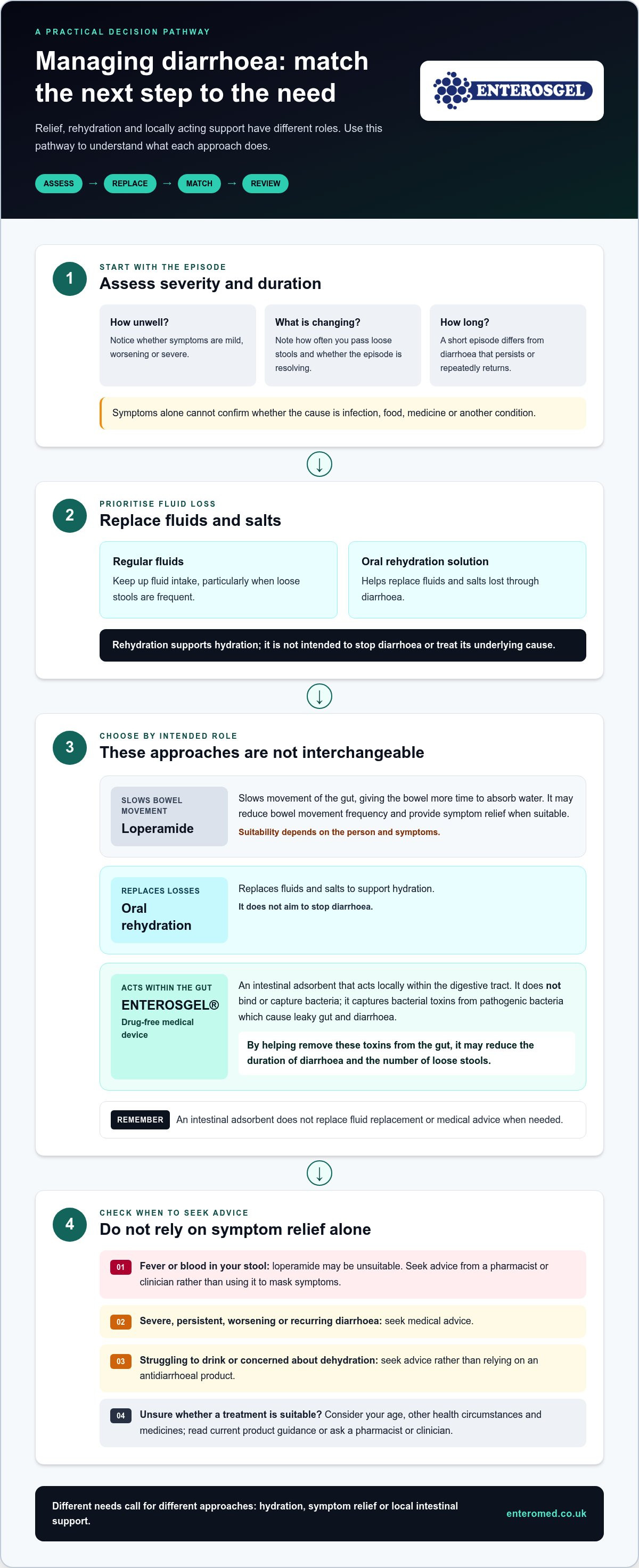
Choose your next step based on how unwell you are, how long symptoms have lasted and whether you can keep up with fluid loss. Wanting to stop bowel movements quickly isn’t, by itself, enough to show that a medicine is suitable. Use this pathway to guide your decision, not to diagnose the cause.
- Assess severity and duration. Notice whether symptoms are mild or worsening, how often you’re passing loose stools and whether the episode is resolving. A short episode differs from diarrhoea that persists or repeatedly returns. Symptoms alone can’t confirm whether the cause is an infection, food, medicine or another condition.
- Prioritise hydration. Replace lost fluids, and consider oral rehydration if you need to replace salts as well. If you’re struggling to drink or are concerned about dehydration, seek advice rather than relying on an antidiarrhoeal product.
- Check treatment suitability. Consider your age, other health circumstances and any medicines you take. Read current product guidance, and ask a pharmacist or clinician if you’re unsure whether loperamide or another option is appropriate for you.
Get medical advice if symptoms are severe, getting worse, persistent or recurring. Seek urgent NHS advice if you’re concerned about dehydration or a serious deterioration. Don’t delay seeking help because a product appears to reduce symptoms. NHS guidance and a pharmacist can help you judge whether self-care is suitable and what to do next.
Recurring symptoms need assessment rather than repeated attempts to suppress bowel movements. If diarrhoea is part of diagnosed or suspected IBS-D, keep a record of the pattern and discuss ongoing symptoms with a healthcare professional. A symptom record can help you describe how often episodes occur and whether they are changing.
The safest choice among alternatives to Imodium for diarrhoea depends on the person and the episode. For medicine-specific advice, follow NHS guidance or speak to a pharmacist. If you’re considering a drug-free intestinal adsorbent, review the ENTEROSGEL® tube information and its Instructions for Use to understand its role and directions.
Where ENTEROSGEL® fits among alternatives to Imodium
ENTEROSGEL® is a drug-free alternative that works differently from loperamide, which slows bowel movements. It is an intestinal adsorbent medical device with a physical, non-systemic action in the gut. It does not bind or capture bacteria. Instead, it captures bacterial toxins from pathogenic bacteria which cause leaky gut and diarrhoea. This may reduce the duration of diarrhoea and the number of loose stools. It does not replace hydration or appropriate medical advice.
What the clinical evidence can and cannot tell you
A randomised controlled trial published in GUT in 2022 studied ENTEROSGEL® in 440 people with IBS-D across 28 NHS sites in England. The study found IBS-D symptom relief in 76% of patients, with no serious adverse events reported. These findings provide evidence in the context of IBS-D; they should not be taken as proof of the same effect in every case of acute diarrhoea or for every individual.
Trial results describe outcomes across a study group. They can’t predict how one person will respond, identify the cause of a new episode or determine whether an option is suitable for you. Review the ENTEROSGEL® clinical research information for further context, and seek medical advice if symptoms are severe, persistent or worsening.
Practical next steps if considering an intestinal adsorbent
Read the current product Instructions for Use before taking ENTEROSGEL®. Follow the directions and suitability information provided. The ENTEROSGEL® 225g tube details describe the product format, but don’t use a product in place of professional advice when you’re concerned about your symptoms.
For IBS-D symptoms and daily use, the product should be taken in 30-day courses, with each course followed by a short break. If you’re unsure whether this approach suits your symptoms, speak with a healthcare professional. This can help you weigh the different alternatives to Imodium for diarrhoea without treating symptom relief as a substitute for understanding recurring or concerning symptoms.
If you’d like to consider this drug-free intestinal adsorbent as part of your options, explore ENTEROSGEL® and review its product instructions before use.
Make your next step an informed one
Keep a brief note of when symptoms began, how they’ve changed and any details you’ve noticed alongside them. If you speak with a pharmacist or GP, this record can help you describe what’s happening and discuss which options may suit your circumstances. Seek medical advice promptly if you’re concerned or symptoms worsen.
There isn’t one best choice for everyone. Understanding how alternatives to Imodium for diarrhoea differ can help you consider your options without overlooking hydration, product instructions or the need for professional advice. If you’re considering a drug-free intestinal adsorbent, review its intended use and directions.
Explore ENTEROSGEL® and its product information to learn more about this drug-free intestinal adsorbent and its directions for use.
Frequently Asked Questions
Is there a drug-free alternative to Imodium for diarrhoea?
Yes. An intestinal adsorbent is a drug-free option that works differently from loperamide, which slows bowel movements. ENTEROSGEL® is a medical device that acts physically in the digestive tract. It captures bacterial toxins from pathogenic bacteria, not the bacteria themselves. This may help reduce diarrhoea duration and the number of loose stools. Follow the product instructions when considering alternatives to Imodium for diarrhoea.
Can I take an alternative to Imodium with oral rehydration salts?
Oral rehydration salts and symptom treatments have different roles: rehydration replaces fluid and salts lost through diarrhoea, while a treatment may act on symptoms in another way. They may both be relevant during the same episode, but don’t assume every combination is suitable for you. Follow the directions for each product. If you’re unsure how to use them together, ask a pharmacist, especially if you take other medicines.
What is the difference between loperamide and an intestinal adsorbent?
Loperamide acts by slowing bowel movements; an intestinal adsorbent works physically within the digestive tract. ENTEROSGEL® captures bacterial toxins from pathogenic bacteria, but it does not bind or capture the bacteria themselves. These approaches have different intended actions, and one shouldn’t be treated as a direct substitute for the other in every situation. Consider your symptoms and the product directions, and seek advice if you’re uncertain which option is suitable.
When should I seek medical advice for diarrhoea instead of trying an alternative to Imodium?
Seek medical advice if diarrhoea is severe, getting worse or persistent, or if you’re concerned about dehydration. The NHS advises seeking help for serious symptoms rather than relying on self-treatment. If you feel markedly unwell or can’t maintain fluid intake, contact NHS 111 or a healthcare professional for guidance. Don’t delay getting advice because a product seems to ease symptoms, particularly if your condition is deteriorating.
Does ENTEROSGEL® work in the same way as Imodium?
No. Imodium contains loperamide, which slows bowel movements. ENTEROSGEL® is a drug-free intestinal adsorbent medical device with a physical action in the gut, not a bowel-slowing medicine. It captures bacterial toxins from pathogenic bacteria, not bacteria themselves. This process may help reduce diarrhoea duration and the number of loose stools. Read the Instructions for Use and seek medical advice if symptoms are concerning.
Can I use an alternative to Imodium for recurring IBS-D symptoms?
Recurring IBS-D symptoms differ from a single short episode, so don’t assume the cause or repeat an acute-diarrhoea treatment without considering ongoing care. Discuss persistent or changing symptoms with a healthcare professional, who can help assess what is appropriate. For IBS-D symptoms and daily use, ENTEROSGEL® should be taken in 30-day courses, with each course followed by a short break. Follow the product Instructions for Use and seek professional guidance if unsure.


