

Irritable Bowel Syndrome Relief UK: A Clinical Guide to Managing IBS Symptoms
One in five people across the UK currently lives with the disruptive reality of a sensitive gut, yet many still struggle to find a management plan that actually works. If you've ever had to cancel plans due to unpredictable bowel urgency or felt the sharp discomfort of persistent bloating, you know that seeking effective irritable bowel syndrome relief UK is about more than just physical comfort. It's about regaining your freedom. We understand that the social anxiety caused by gut symptoms can be just as taxing as the physical pain itself.
This clinical guide provides a clear, evidence-led pathway to managing your symptoms. You'll discover the latest strategies for long-term relief, ranging from precise dietary adjustments to innovative, drug-free medical devices that act as a gentle protector for your intestinal wall. We'll explore how these tools physically trap irritants to settle the gut. By the end of this article, you'll have the knowledge to build a safe, daily management routine that reduces flare-ups and gives you the confidence to leave the house without worrying about the nearest toilet.
Key Takeaways
- Understand why IBS is classified as a disorder of gut-brain interaction and how visceral hypersensitivity causes the gut to overreact to normal digestive processes.
- Explore evidence-based strategies for irritable bowel syndrome relief UK, comparing traditional medications that mask pain with innovative medical devices that remove underlying irritants.
- Learn how to build a structured daily management routine, incorporating morning hydration and trigger-food identification to reduce the frequency of unpredictable flare-ups.
- Discover the "sponge-like" mechanism of drug-free intestinal adsorbents that physically trap and remove harmful pathogens, toxins, and bile acids from your system.
- Identify the clinical role of the Low FODMAP diet in UK practice and how it serves as a foundation for long-term symptom control and personal confidence.
Understanding Irritable Bowel Syndrome Relief in the UK
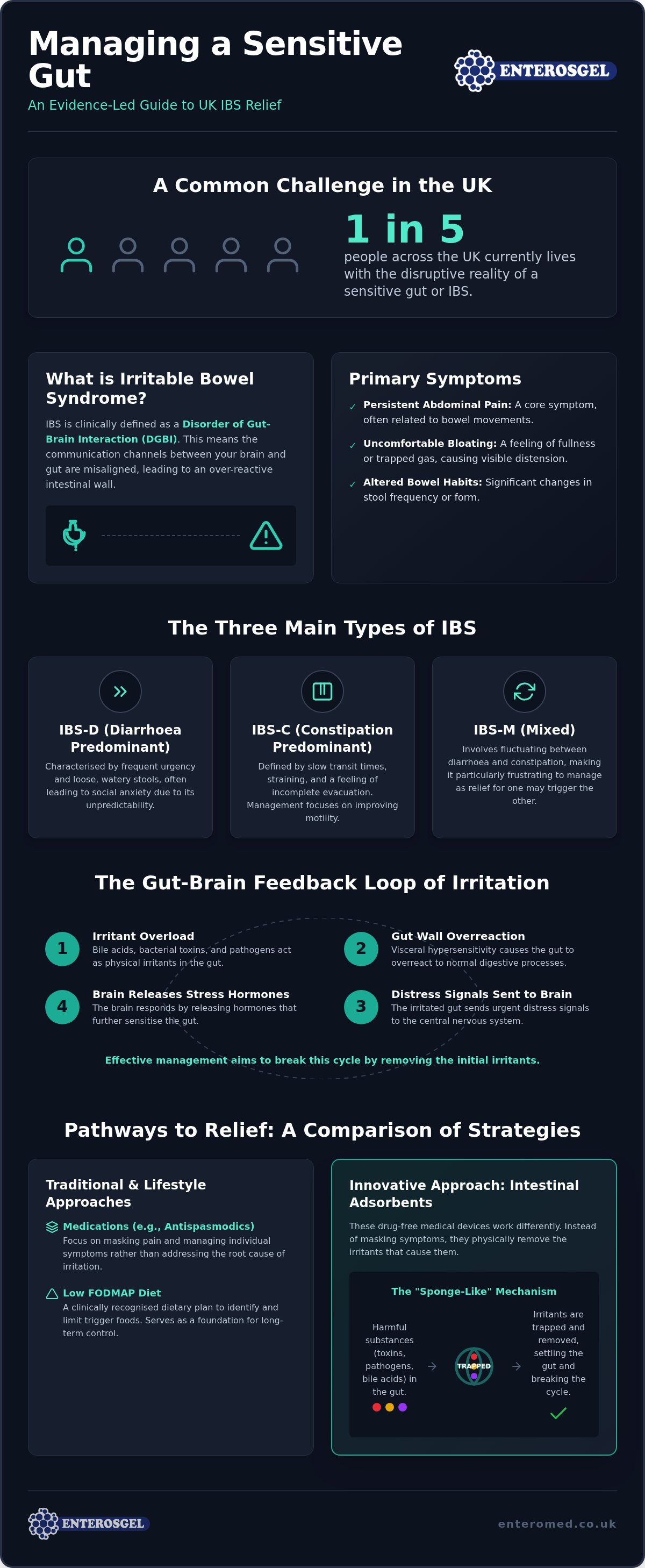
Irritable Bowel Syndrome (IBS) is no longer viewed simply as a "nervous stomach" or a minor digestive quirk. Clinicians now define it as a disorder of gut-brain interaction (DGBI). This means the communication channels between your central nervous system and your enteric nervous system are misaligned, leading to heightened gut sensitivity. In the UK, this condition is remarkably prevalent. Current data suggests that up to 20% of the population experiences these symptoms, which equates to roughly one in five people. For those seeking irritable bowel syndrome relief UK, understanding this physiological basis is the first step toward effective management.
IBS manifests through a trio of primary symptoms: persistent abdominal pain, uncomfortable bloating, and significantly altered bowel habits. These aren't just minor inconveniences; they can dictate your daily schedule and social life. However, relief isn't found in a single "magic pill." It requires a multi-layered management approach. By combining dietary shifts with targeted medical devices that address gut irritants, you can create a robust defence against flare-ups and regain your confidence.
The Different Types of IBS
Symptoms aren't uniform amongst all sufferers. Your experience depends largely on your specific subtype, which dictates your clinical management path:
- IBS-D (Diarrhoea predominant): Characterised by frequent urgency and loose, watery stools. The primary challenge is the unpredictable nature of bowel movements, often leading to social anxiety.
- IBS-C (Constipation predominant): Defined by slow transit times, straining, and a feeling of incomplete evacuation. Management focuses on improving motility and reducing the discomfort of trapped gas.
- IBS-M (Mixed): This involves fluctuating between both extremes. It's often the most frustrating type to manage, as the "relief" for one symptom might inadvertently trigger the other.
Why a Diagnosis Matters
Self-diagnosis is risky and often leads to unnecessary dietary restriction. It's vital to consult a GP to rule out more serious conditions like coeliac disease or inflammatory bowel disease (IBD). UK clinicians typically use the ROME IV criteria to confirm an IBS diagnosis. This framework looks for recurrent abdominal pain occurring at least one day per week, associated with changes in stool frequency or form.
Beyond the clinical necessity, a formal diagnosis provides immense psychological relief. It validates your physical experience and allows for a more targeted approach to irritable bowel syndrome relief UK. Once you understand your specific gut triggers, you can stop guessing and start implementing a structured, evidence-based plan for long-term comfort.
The Science of Irritants: Why Your Gut Overreacts
Nerve sensitivity. Irritant overload. These are the twin engines of gut distress. In a healthy digestive system, the movement of food and gas is a quiet, unnoticed process. However, for those living with visceral hypersensitivity or lowered pain threshold for your internal organs, the intestinal wall becomes hyper-responsive. Normal digestive activity is interpreted by the brain as intense pain or urgent distress. For many seeking irritable bowel syndrome relief UK, this overreaction isn't just "in the head"; it's a physical response to specific triggers within the gut lumen.
Bile acids, bacterial toxins, and pathogens act as physical irritants that signal the bowel to contract prematurely. This creates a distressing feedback loop through the gut-brain axis. Physical irritation sends distress signals to the brain, which then releases stress hormones that further increase gut sensitivity. It's a cycle where physical discomfort and mental stress amplify one another. Effective Managing IBS Symptoms requires breaking this loop by addressing the physical irritants at their source.
The Role of Bile Acids and Toxins
Excess bile acids are a frequent, yet under-discussed, cause of urgency and loose stools. When these bile acids which are used in digestion aren't reabsorbed properly in the small intestine, they enter the colon and irritate its delicate lining. This irritation is often compounded by increased intestinal permeability, where the gut barrier becomes less effective at keeping out harmful substances. Whilst many treatments focus on the chemical suppression of the nervous system, intestinal adsorption works differently by physically binding to these irritants and removing them from the body entirely. By clearing these triggers, you can reduce the "noise" that keeps your gut in a state of high alert.
Post-Infectious IBS (PI-IBS)
A significant number of IBS cases begin following a bout of gastroenteritis or a heavy course of antibiotics. This is known as Post-Infectious IBS. Even after the initial bug has cleared, low-grade inflammation often persists in the gut lining. This "residue" of infection keeps the immune system on high alert, maintaining a state of chronic sensitivity that leads to frequent flare-ups. Removing these lingering pathogens and toxins is essential to restoring the gut's natural balance. For those struggling with these persistent triggers, using a medical device designed to trap irritants can provide a gentle, drug-free layer of protection for the intestinal wall.
Evaluating Relief Methods: Lifestyle vs. Medication vs. Adsorbents
Choosing the right strategy for irritable bowel syndrome relief UK requires a nuanced understanding of how different treatments interact with your body. Traditional clinical approaches to treatment typically follow a stepwise approach, starting with foundational lifestyle adjustments before moving to pharmacological options. Whilst many over-the-counter medications provide temporary reprieve, it's essential to distinguish between those that merely mask the sensation of pain and those that address the underlying irritants.
Dietary Adjustments and Lifestyle Changes
The NHS recommends "First Line" dietary advice as the initial point of intervention. This typically involves limiting caffeine and alcohol intake, alongside managing fibre levels to suit your specific IBS subtype. For many, the Low FODMAP diet is the next logical step in UK clinical practice, though it should ideally be followed under professional guidance to ensure nutritional adequacy. Beyond diet, the NICE guidelines emphasise the role of stress management. Techniques such as mindfulness or Cognitive Behavioural Therapy (CBT) are recognised as effective ways to modulate the gut-brain axis. Maintaining a detailed food diary remains one of the most practical ways to identify personal triggers and gain control over your symptoms.
When lifestyle changes aren't enough, many turn to medications like antispasmodics or anti-diarrhoeals such as loperamide. These can be effective for short-term control. For example, loperamide slows down gut transit, which is helpful for managing acute urgency. However, these drugs work by chemically suppressing the body's natural responses and can sometimes lead to rebound constipation or other systemic side effects, some of which are severe. They don't remove the toxins or bile acids that may be causing the irritation in the first place.
The Benefits of Drug-Free Intestinal Adsorbents
Intestinal adsorbents represent a different category of care. Unlike pharmaceuticals that enter the bloodstream, a physical binder like Enterosgel remains unabsorbed by the body. It works like a microscopic sponge, travelling through the digestive tract to physically trap pathogens, toxins, and bile acids. Because it acts by physical binding of irritants in the gut, rather than being absorbed systematically, it carries a lower risk of systemic side effects and doesn't interfere with the body's natural metabolic processes. This makes it a suitable option for long-term daily management, providing a "Gentle Protector" for the gut lining without the complexities of systemic medication. For those seeking a safe, drug-free path to comfort, these devices offer a logical alternative to traditional chemical suppression.
A Practical Daily Framework for Long-Term Symptom Control
Consistency is the cornerstone of irritable bowel syndrome relief UK. A structured daily framework reduces the cognitive load of managing symptoms and helps prevent the erratic nature of flare-ups. By following a methodical schedule, you can transition from reactive symptom suppression to proactive gut protection.
- Hydration and Fibre Management: Start your morning with a glass of water. If your subtype requires fibre adjustment, introduce changes gradually to avoid sudden bloating.
- Trigger Food Screening: Use the Low FODMAP framework to identify high-risk foods. Focus on specific irritants like onions or garlic rather than following a broad, overly restrictive diet.
- Daily Irritant Removal: Incorporate an intestinal adsorbent into your routine. This acts as a physical filter, binding toxins and bile acids before they can irritate the bowel wall.
- Emergency Protocol: Have a pre-defined plan for when symptoms escalate. This includes both physical tools and mental grounding techniques to manage urgency.
- Progress Review: Keep a log of your symptoms for your GP. This evidence will help you adjust your management of your condition or when securing specialist referral.
Managing Flare-Ups and Urgency
Sudden urgency is one of the most distressing aspects of IBS. For "Can’t Wait" moments, many in the UK find confidence by carrying a Radar key from Disability Rights UK, which provides access to thousands of locked accessible toilets. Regular use of the intestinal adsorbent Enterosgel has been clinically proven to significantly reduce symptoms of urgency. Combining this with slow, diaphragmatic breathing can calm the nervous system and reduce the intensity of intestinal spasms. For those looking to establish a reliable routine, the Enterosgel IBS Starter pack provides the necessary tools for both home and travel management.
Long-Term Gut Health Maintenance
Effective management extends beyond diet. Gentle movement, such as walking or yoga, helps regulate gut motility without overtaxing the body. Sleep also plays a vital role; a consistent rest schedule helps regulate the gut-brain axis and reduces systemic sensitivity. Review your progress every few weeks. If symptoms persist despite these interventions, revisit your GP. Under NICE guidelines, you may be eligible for a specialist referral to a dietitian or gastroenterologist for more personalised support. Maintaining this holistic approach ensures that you aren't just reacting to symptoms, but actively protecting your gut health every day. To understand how your digestive wellness can influence other aspects of your health, such as your complexion, check out Bitter Boost for more on the gut-skin axis.
Enterosgel: A Clinically Proven, Drug-Free Path to Gut Comfort
Enterosgel stands as a cornerstone for those seeking irritable bowel syndrome relief UK. It is a Class IIa medical device that functions as a high-performance intestinal adsorbent. Unlike standard medications that are absorbed into the bloodstream, this gel remains entirely within the gut lumen. It works through a sophisticated "sponge-like" mechanism. Its porous structure is designed to physically trap and bind specific harmful substances, such as bacterial toxins, pathogens, and excess bile acids. By removing these triggers from the gut, rather than suppressing the body's natural signals, it helps the gut lining to recover and reduces the frequency of painful spasms.
Clinical evidence supports its efficacy, particularly for the relief of IBS-D and associated abdominal pain. For those new to this approach, the Enterosgel IBS Starter pack provides a comprehensive introduction. It includes both the 225g tube for home use and portable sachets for managing symptoms whilst away from the house. This combination ensures that protection is always within reach, providing a reliable safety net for your digestive health.
Why Choose Enterosgel for IBS Relief?
Safety and purity are central to the Enterosgel formulation. It is a drug-free, non-allergenic, and sugar-free solution that contains no additives or preservatives. This high safety profile makes it suitable for the whole family, including children from birth upwards with Enterosgel Kids 0+. Because it isn't absorbed by the body, there are no known systemic side effects. You can choose the format that best fits your lifestyle. The 225g tube offers a stable supply for daily use, whereas the pack of 10 sachets provides discreet, on-the-go support for irritable bowel syndrome relief UK when you are travelling or at work.
How to Incorporate Enterosgel into Your Routine
To ensure maximum efficacy, you should take Enterosgel 1-2 hours before or after eating a meal or 2 hours taking other oral medications. This gap prevents the gel from binding to nutrients or interfering with the absorption of other treatments. Consistency is key to achieving long-term comfort. Most clinical observations suggest following a 21-day management cycle to allow the gut environment to stabilise and the intestinal wall to settle. By making this a part of your daily framework, you create a gentle, protective barrier that works with your body's natural processes rather than against them.
Start your journey to gut comfort with the Enterosgel IBS Starter Pack
Reclaiming Your Confidence and Gut Comfort
Managing IBS in the UK requires a shift from reactive symptom suppression to proactive gut protection. By understanding the role of physical irritants like bile acids and toxins, you can implement a more effective daily framework. We've explored how a combination of dietary awareness and physical adsorption provides a robust defence against unpredictable flare-ups. As part of your holistic care, you could also explore Travel Latex Pillow options from Gurum Pillow to ensure better rest and reduced stress. This evidence-based approach allows you to step away from the cycle of discomfort and social anxiety.
Enterosgel offers a solution that is clinically proven for IBS-D relief and has been used clinically for over 30 years. Its drug-free, non-systemic mechanism ensures it remains unabsorbed, acting only within the gut to trap pathogens and irritants. This high-performance medical device provides the stability needed for a safe, daily management routine. You don't have to navigate your symptoms alone. With the right clinical tools and a structured plan, long-term irritable bowel syndrome relief UK is an achievable goal.
Order your Enterosgel IBS Starter Pack for clinically proven relief
Frequently Asked Questions
How can I get fast relief from IBS symptoms in the UK?
Fast relief involves a combination of immediate symptom management and identifying triggers. Over-the-counter options like antispasmodics can help with cramps, whilst intestinal adsorbents like Enterosgel work to remove the toxins causing the distress. For those seeking irritable bowel syndrome relief UK, clinicians often recommend a structured flare-up protocol that includes hydration, gentle movement, and physical binders to settle the gut quickly without the use of systemic drugs.
Is there a drug-free treatment for IBS bloating and diarrhoea?
Yes, Enterosgel is a clinically proven, drug-free medical device specifically designed for the relief of bloating and diarrhoea. It works mechanically rather than chemically, using a porous structure to physically trap pathogens and irritants. Because it isn't absorbed by the body, it provides a gentle way to manage symptoms without the risk of systemic side effects or chemical interactions. This makes it an ideal choice for those pursuing a natural management route.
Can I take Enterosgel alongside my other IBS medications?
Enterosgel can be used in conjunction with other treatments, provided you observe a specific timing window. You should take it 1-2 hours before or after any other oral medications or meals. This gap ensures that the gel's adsorbent properties don't interfere with the absorption of your other medicines or essential nutrients. Always consult your GP or a pharmacist if you are unsure how to integrate it into your existing clinical regimen.
How long does it take for an intestinal adsorbent to work?
Many users report an improvement in symptoms within 1-2 hours of the first dose, though individual results vary based on the severity of the flare-up. For long-term stabilisation, a consistent 21-day management cycle is recommended. This allows the adsorbent to continuously clear toxins and bile acids, giving the gut lining sufficient time to recover. Consistency is vital for achieving sustainable irritable bowel syndrome relief UK and reducing the frequency of future episodes.
Is Enterosgel safe for long-term use for IBS management?
Enterosgel is safe for long-term use because its mechanism of action is entirely physical and non-systemic. It travels through the digestive tract without being metabolised or absorbed into the bloodstream, eventually leaving the body naturally. This clinical profile makes it a reliable "Gentle Protector" for daily use. It doesn't cause the rebound effects often associated with chemical medications, allowing for steady, safe management of chronic gut sensitivity over months or years.
What is the difference between adsorption and absorption for gut health?
Absorption is the process where substances enter the bloodstream, whereas adsorption is a surface-level physical binding process. Think of an adsorbent like a microscopic sponge that traps toxins on its surface without letting them into your system. By using adsorption, Enterosgel removes harmful irritants from the gut lumen whilst remaining unabsorbed itself. This distinction is why the treatment is drug-free and carries such a high safety profile for vulnerable groups.
Can children use Enterosgel for upset stomachs?
Children can safely use Enterosgel from birth upwards for the management of diarrhoea and upset stomachs. The Enterosgel formulation is specifically designed to be gentle on developing digestive systems. It is non-allergenic and sugar-free, making it a safe choice for paediatric care. Because it works mechanically to remove pathogens, it helps settle a child’s stomach quickly without introducing harsh chemicals or medications into their sensitive bodies.Prior to use in children under 3 years old it is advisable to consult a doctor.
Where can I buy Enterosgel in the UK?
Enterosgel is widely available across the UK in major pharmacies and online retailers. You can find the 225g tube, sachets, and the IBS Starter Pack directly through the official Enteromed website. It is also stocked by many independent high-street chemists and specialist health stores across the country. For those newly diagnosed or experiencing a severe flare-up, the Starter Pack is often the most practical choice for beginning a structured, daily management routine.
Share this article