

Posted by Enterosgel

Most adults recover from gastroenteritis within a week, according to the NHS. However, the long term effects of gastroenteritis can include bowel symptoms that continue after the initial illness has passed. The infection may be over before digestion feels normal again.
Lingering discomfort can be worrying, particularly if your appetite or usual routine has not returned. Changes in bowel habits may make it hard to tell whether recovery is progressing or another issue needs attention. Looking at symptoms over time, rather than judging by one meal or bowel movement, can give you a clearer picture.
This article explains the usual course of gastroenteritis, why digestive changes can persist, and how food tolerance may shift after an infection. It also outlines when to seek medical advice and what details to share, including symptom duration, vomiting, abdominal pain and changes in bowel habits. Use this information to understand recovery and consider an appropriate next step for yourself or someone in your care.
Key Takeaways
- Most adult gastroenteritis clears up within a week, but bowel symptoms can take longer to settle.
- Persistent changes in bowel habits after an infection may be post-infectious IBS; learn what symptoms can look like and how recovery may progress.
- After gastroenteritis, some people temporarily find certain foods, including dairy, harder to tolerate.
- Adults should contact NHS 111 or their GP urgently if diarrhoea lasts more than 7 days.
- Good hand hygiene supports recovery and helps limit the spread of infection; NHS recommends washing with soap for at least 20 seconds.
Gut recovery after gastroenteritis
Gastroenteritis symptoms can settle before digestion feels normal again. In the UK, adult gastroenteritis usually clears up by itself within one week, according to the NHS.
Recovery and lasting effects
Recovery means the infection has passed and bowel function is gradually returning to its usual pattern. A lingering change does not necessarily mean the infection is still active. Recovery varies with a person’s health and diet, so note whether symptoms are easing, staying the same or worsening.
For example, you may regain your appetite but still notice loose stools after meals. The NHS advises that people can usually return to their usual diet when their appetite returns, even if diarrhoea continues. If a food repeatedly seems to trigger discomfort, record what you ate and when symptoms followed.
Risk of long-term complications
People with weaker immune systems, including children under 5, may face greater risks from gastroenteritis. Young children, older people and those with suppressed immunity can also have symptoms that last longer than in healthy adults. Risk matters because the same duration of diarrhoea can have different effects, especially if fluid loss makes it harder to stay hydrated.
Existing health conditions and the ability to replace lost fluids can affect recovery. Watch for reduced drinking or urination in a child, and seek medical advice if these changes accompany ongoing diarrhoea. This responds to possible vulnerability without assuming that every lingering symptom signals a complication.
Tests and treatment for persistent symptoms
Persistent symptoms may need assessment to determine whether infection remains or another digestive problem is present. A GP may recommend a stool sample for laboratory testing to help identify the cause. Tell the clinician when symptoms began, whether they are improving, and whether there is abdominal pain, fever or blood in the stool.
For viral gastroenteritis, care typically focuses on preventing dehydration. Regular fluids and drinks containing electrolytes can replace water and salts lost through diarrhoea or vomiting. The right assessment depends on the person’s symptoms and health.
Preventing and managing long-term effects
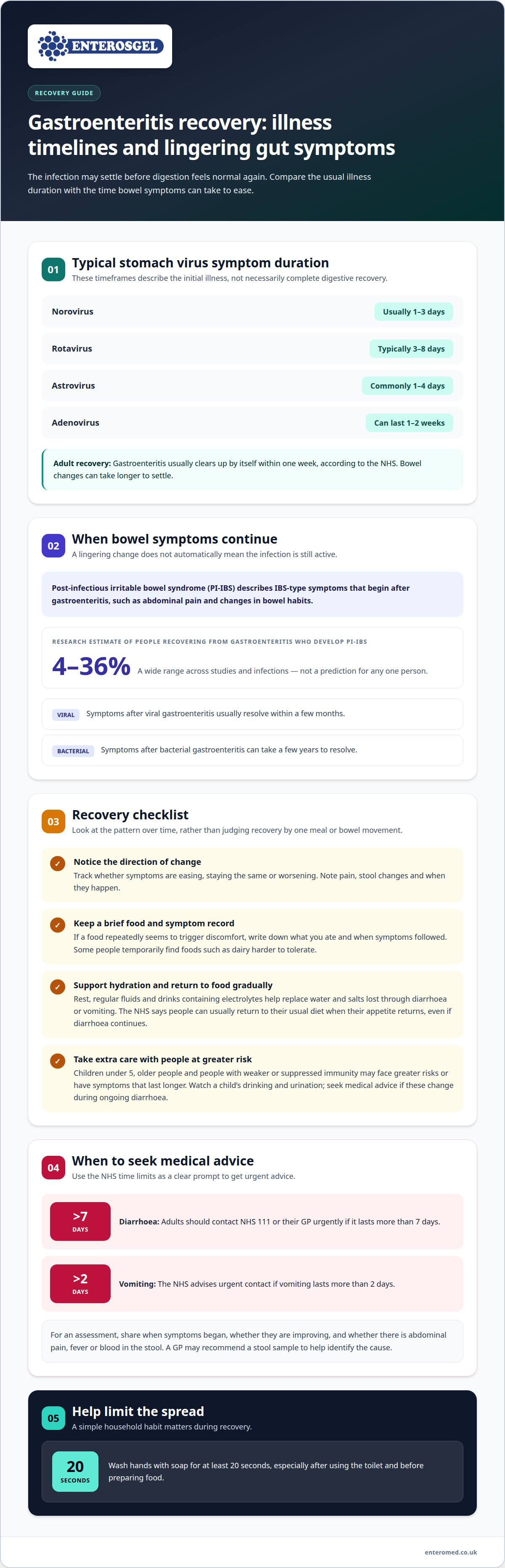
Reducing the spread of infection helps protect other people in the household. According to the NHS, washing hands with soap for at least 20 seconds is recommended to help remove germs and toxins. Wash after using the toilet and before preparing food, especially while symptoms are present.
During recovery, rest and plenty of fluids and electrolytes support hydration. Resume your usual diet when your appetite returns, and avoid excluding multiple foods without a clear reason. Keep a brief record of bowel changes and meals. If symptoms persist, this can help you identify patterns and give a GP useful details.
How long do stomach virus symptoms last?
Stomach virus symptoms vary by virus. Norovirus usually causes symptoms for 1-3 days, while rotavirus symptoms typically last 3-8 days. Astrovirus symptoms commonly last 1-4 days; adenovirus symptoms can continue for 1-2 weeks. These durations describe the initial illness, not necessarily the time needed for every digestive symptom to settle.
Post-infectious irritable bowel syndrome (PI-IBS) means IBS-type symptoms begin after gastroenteritis. These can include abdominal pain and changes in bowel habits, even after the infection has passed. Research estimates that 4-36% of people recovering from gastroenteritis develop PI-IBS. The wide range reflects differences between studies and the infections examined; it is not a prediction for any one person.
Post-infectious IBS (PI-IBS) can follow viral or bacterial gastroenteritis, but its course may differ. Symptoms after viral gastroenteritis usually resolve within a few months. After bacterial gastroenteritis, symptoms can take a few years to resolve. Recording pain, stool changes and their timing can help a clinician distinguish a persistent bowel pattern from a return of the original infection.
Some less common complications have been associated with particular bacterial infections. A Swedish cohort included 101,855 people with microbiologically confirmed bacterial gastrointestinal infections reported during 1997-2004. Within one year, Salmonella infection was associated with ulcerative colitis, with a standardised incidence ratio of 3.2. Campylobacter infection had a ratio of 2.8 for ulcerative colitis within one year.
The same cohort linked Salmonella infection with an increased risk of aortic aneurysm within three months, with a standardised incidence ratio of 6.4. These are relative associations observed in a population, not evidence that an individual will develop an aneurysm. Aortic aneurysm and ulcerative colitis are distinct from PI-IBS and are described as rare complications after enteric infections.
Reactive arthritis is another uncommon complication associated with some bacterial infections. In the Swedish cohort, the standardised incidence ratio within one year was 47.0 after Yersinia enteritis, 18.2 after Salmonella and 6.3 after Campylobacter. Joint pain or swelling after an infection is different from digestive symptoms; mention it during medical assessment rather than assuming it is part of routine gut recovery.
When to seek medical advice
Most stomach infections settle without medical treatment, but some symptoms need prompt assessment. How long symptoms last, dehydration, blood in stools and a person’s immune health all help determine how urgently to seek care.
For adults, the NHS advises contacting NHS 111 or a GP urgently if diarrhoea lasts more than 7 days. The NHS also advises urgent contact if vomiting lasts more than 2 days. These limits matter even if symptoms began like a routine stomach bug, because ongoing fluid loss can affect recovery.
Seek medical advice sooner for frequent vomiting, severe abdominal or rectal pain, or stools containing blood or pus. Black, tarry stools also need assessment. Six or more loose stools in a day is another reason to contact a healthcare professional. A fever is also a reason for an adult to seek medical advice.
Children need closer attention because diarrhoea can lead to dehydration quickly. Arrange medical assessment if a child’s diarrhoea lasts more than a day, or if they have no wet nappies for 3 hours or more. If an infant with gastroenteritis develops a fever, consider seeking medical advice. Children under 5 and people with weaker immune systems may face greater risks from infection.
While arranging advice, offer frequent small drinks to help replace fluids lost through diarrhoea or vomiting. Drinks containing electrolytes can replace salts as well as water. If someone cannot keep fluids down or becomes increasingly unwell, seek help without waiting for usual symptom-duration limits.
Medicines for diarrhoea or vomiting aren’t suitable for every person or cause. Ask a pharmacist, GP or NHS 111 before using an over-the-counter option, especially for a child, someone with an immune condition, or a person taking other medicines. A clinician will consider symptoms, age, health conditions and possible infection before advising what is appropriate.
For children, contact a healthcare professional promptly if reduced urination, persistent vomiting or unusual drowsiness accompanies gastroenteritis. For adults, record when symptoms began, how often diarrhoea occurs, and whether fever or pain is present. These details help a GP assess the condition and decide whether further investigation is needed.
Can gastroenteritis cause lactose intolerance or food sensitivities?
Yes. Gastroenteritis can temporarily affect how well the gut tolerates certain foods. After an infection, milk, wheat, soy or gluten may trigger symptoms such as bloating, abdominal discomfort or diarrhoea. This change can be temporary or permanent, so difficulty with a food during recovery does not automatically mean you need to avoid it indefinitely.
One possible reason is reduced lactase, the enzyme that breaks down lactose, the natural sugar in milk. Some viruses and parasites, including giardia, can lead to lactase deficiency in up to 40% of infected people. Undigested lactose can contribute to digestive discomfort after dairy foods. This is different from an allergy, which involves an immune response to a food.
Food sensitivity can also be hard to distinguish from continuing infection or post-infectious IBS. For example, diarrhoea after milk might reflect temporary lactose intolerance, while abdominal pain after a meal could have another explanation. Note which foods seem linked to symptoms, what you ate and when symptoms followed. A repeated pattern is more useful than reacting to one uncomfortable meal.
In the first few days of recovery, the digestive tract may be unusually sensitive. Temporarily avoiding a food that repeatedly worsens symptoms can help you see whether discomfort settles. Avoid cutting out several food groups at once: removing milk, wheat, soy and gluten together makes it harder to identify a specific trigger and can unnecessarily restrict your usual diet.
As your appetite returns, you can usually resume your usual diet, even if some diarrhoea remains. If dairy seems troublesome, discuss the pattern with a healthcare professional rather than assuming all milk products will cause symptoms. How long food intolerance lasts depends on the infection and your recovery. Symptoms that persist or interfere with eating deserve assessment.
Ongoing food restriction in children needs particular care because a varied diet supports growth. A parent can record examples, such as milk with breakfast or wheat at lunch, and share the pattern with the child’s clinician. Seek advice if a child’s diarrhoea continues, symptoms worsen, or eating and drinking become difficult. These details help distinguish post-infection sensitivity from another digestive condition.
Some people may experience recurring flare-ups, food intolerance or nerve damage after gastroenteritis. As the digestive tract may be unusually sensitive for a few days, temporarily avoiding foods that seem to worsen symptoms can be reasonable. Tolerance of foods containing gluten, milk, soy or wheat may change temporarily or permanently.
Enterosgel: Enterosgel 225g Tube
Enterosgel 225g Tube is an option for adults seeking support with diarrhoea during recovery. It is an oral intestinal adsorbent, not a pharmaceutical medicine. It does not bind or capture bacteria; it captures bacterial toxins from pathogenic bacteria which cause leaky gut and diarrhoea. This process helps reduce the duration of diarrhoea and the number of loose stools.
Enterosgel is a CE-certified medical device and intestinal adsorbent that may be used for diarrhoea symptoms. It does not replace medical assessment for persistent symptoms, dehydration, blood in stools or severe abdominal pain, and it is not a treatment for post-infectious IBS or food intolerance. Follow the product instructions, and seek medical advice if symptoms continue or worsen.
For product details, visit Enterosgel 225g Tube at Enteromed.
Take your next step towards recovery
Track ongoing bowel changes, food triggers and how they affect daily life. This can help you explain what has changed since the infection and discuss persistent symptoms with a healthcare professional. The long term effects of gastroenteritis vary, so your next step should reflect the symptoms you are experiencing, not assumptions about what caused them.
For diarrhoea symptom support, Enterosgel is available as the Enterosgel 225g Tube and Enterosgel Sachets (Pack of 10). Enterosgel Kids 0+ is another option for children. It contains no sugar, gluten or preservatives; for children under 3 years old, it is advisable to consult a doctor prior to use. Unlike other antidiarrhoeal drugs, Enterosgel is safe for children under 12 years.
For product information or support, contact Enterosgel. Keep seeking medical advice for persistent or worsening symptoms, and take recovery one clear step at a time.
Frequently Asked Questions
Can gastroenteritis have long-term effects?
Yes, some people develop digestive symptoms that continue after the infection has cleared. For example, post-infectious IBS can cause recurring bowel changes, while temporary lactose intolerance may make milk harder to digest. These symptoms do not necessarily mean the original infection is still present. If symptoms return after improving, note when they happen and what you ate, then discuss the pattern with a healthcare professional.
How common is this condition?
Gastroenteritis is common, although the cause varies between cases. Viruses cause 60% of gastroenteritis cases, and norovirus accounts for 50% of viral gastroenteritis cases. These figures describe causes, not the proportion of people who develop lasting symptoms. Your risk of prolonged digestive problems depends on factors such as the infection and your health. Children, older people and people with weaker immune systems may need closer attention.
How long does gastroenteritis last?
Symptoms can last from a few days to about a week, depending on the cause and the person affected. Norovirus symptoms typically last 1-3 days; other infections can follow a different course. The NHS says adult gastroenteritis usually clears up by itself within one week. Keep drinking fluids while symptoms continue, and pay attention to whether they’re improving rather than relying only on the first day of illness.
How long does it take for your gut to heal after gastroenteritis?
There is no single recovery timeline for everyone. How long gut inflammation takes to settle depends partly on a person’s health and diet, and bowel symptoms can remain after the infection ends. Some post-infection symptoms ease over time, while others need clinical assessment. Record changes in bowel habits, appetite and food tolerance so you can explain what is improving or persisting.
How serious is gastroenteritis?
Gastroenteritis is often short-lived, but fluid loss from diarrhoea or vomiting can make it serious. Dehydration is a particular concern for young children, older people and anyone with a weaker immune system. Drinking fluids regularly can help replace losses. Seek medical advice if symptoms are severe, worsening or accompanied by worrying changes, rather than assuming every episode will be mild.
What long-term effects can gastroenteritis cause?
Possible lasting effects include post-infectious IBS and temporary difficulty digesting lactose or other foods. Research estimates that 4-36% of people recovering from gastroenteritis develop post-infectious IBS, although estimates vary. Food tolerance can also change after an infection. If a food seems to trigger symptoms repeatedly, record the food and reaction instead of removing several food groups at once; this gives a clinician clearer information.


