

Posted by Enterosgel

A meeting can be going smoothly when sudden urgency or abdominal discomfort shifts your attention to the nearest toilet. Managing IBS at work means planning for those unpredictable moments as well as the tasks in front of you, without feeling you have to explain every detail to colleagues.
It’s understandable to worry about toilet access, commuting or symptoms becoming noticeable. A practical routine and a discreet conversation about adjustments can help make the workday feel more manageable. This guide sets out ways to prepare for symptom-prone parts of your day and discuss your needs with a manager.
You’ll also find an evidence-informed look at IBS-D support, including Enterosgel and a 440-patient NHS trial published in GUT in 2022. The aim is a repeatable plan that brings together workplace strategies, symptom support and clear guidance on when to seek advice from a healthcare professional.
Key Takeaways
- Build a repeatable plan for symptom-prone parts of your workday, from the commute to meetings and breaks.
- Use a food-and-symptom diary to notice possible patterns without assuming a particular food is the cause or making unnecessary restrictions.
- Managing IBS at work can include a discreet conversation about how symptoms affect your work and what practical adjustment may help.
- Compare routine changes, workplace adjustments and clinician-guided IBS-D support to decide which next step suits your needs.
Why IBS can disrupt work, and what a manageable workday plan needs
Irritable bowel syndrome (IBS) can cause recurring abdominal pain and changes in bowel habits. IBS-D is IBS in which diarrhoea is the predominant bowel pattern. Symptoms and bowel patterns vary between people and can change from day to day. A useful approach to managing IBS at work starts with your own symptoms, role and routine rather than a fixed plan for everyone.
Urgency can mean leaving a task or meeting unexpectedly. Pain and bloating may make it harder to concentrate, while uncertainty about toilet access can affect confidence during a commute or presentation. These effects are real, even when they aren’t visible to colleagues. IBS isn’t simply caused by stress, and symptoms aren’t imagined. Stress may affect symptoms for some people, but it isn’t the only factor.
Which IBS symptoms can affect a working day?
Symptoms may include abdominal pain or cramps, bloating, diarrhoea, constipation, or changes between bowel patterns. For one person, the main difficulty may be needing the toilet quickly; for another, discomfort may interrupt concentration even without diarrhoea. Symptoms can also vary over time for the same person. A useful workday plan should be flexible enough to account for better and more difficult days.
A sudden need for a toilet break can interrupt a meeting, while pain or bloating can make a long commute or sitting at a desk uncomfortable. Think through which parts of your day are most difficult, such as a journey without easy toilet access or consecutive meetings, and what change might help. Planning can reduce disruption, but it can’t predict every flare-up.
When should workday symptoms prompt medical advice?
Workplace coping strategies can help with day-to-day demands, but they don’t diagnose IBS or replace individual clinical care. If you haven’t been assessed, symptoms are persistent, or your usual pattern changes, contact your GP for advice. A clinician can consider whether IBS is the right explanation and discuss appropriate next steps.
Seek prompt medical advice for warning signs such as blood in your stool, unexplained weight loss, or a new lump or swelling in your abdomen. Severe or sudden abdominal pain also needs urgent assessment. Don’t assume new or changing symptoms are IBS simply because you’ve had bowel problems before. A clear diagnosis can help you choose support that fits your health needs as well as your working day.
How to prepare for IBS symptoms before and during work
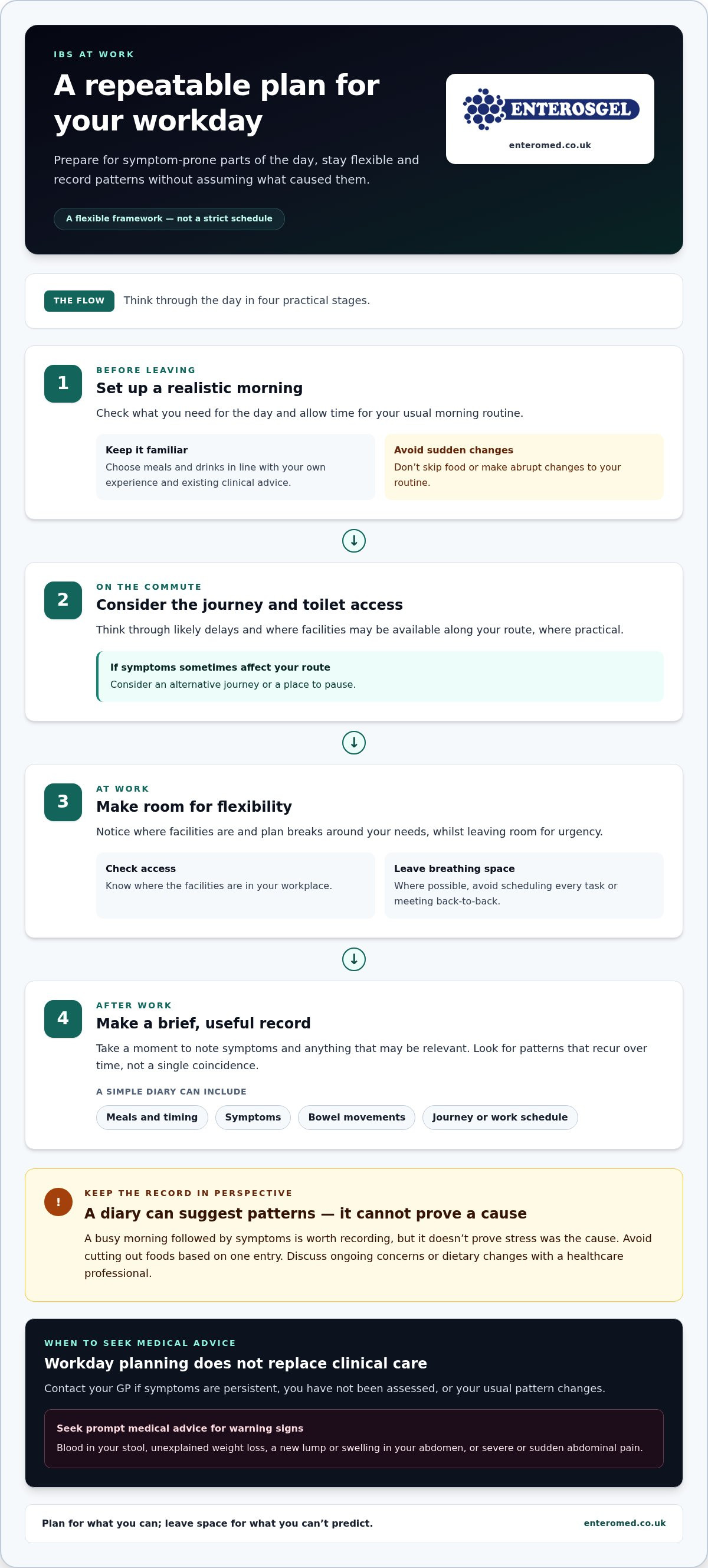
A repeatable routine can reduce last-minute decisions, even though it can’t prevent every symptom. Treat it as a flexible framework: adapt it to your usual pattern, commute and any advice from your healthcare professional. The aim is to make the day easier to manage, not to follow a strict schedule or diet.
Create a morning and commute routine that feels realistic
Allow enough time to get ready without making the morning unnecessarily demanding. Keep the parts that suit you consistent, but leave room for symptoms to change your plans. If toilet access is a concern during your journey, identify suitable facilities along your route where practical. No particular breakfast, travel method or routine is right for everyone.
- Before leaving: Check what you need for the day and allow time for your usual morning routine. Choose meals and drinks in line with your own experience and existing clinical advice, rather than skipping food or making sudden changes.
- On the commute: Consider the journey, likely delays and toilet access. If symptoms sometimes affect your route, think through an alternative journey or a place to pause.
- At work: Notice where facilities are and plan breaks around your needs, while keeping some flexibility for urgency. Where possible, avoid scheduling every task or meeting back-to-back.
- After work: Take a brief moment to record symptoms and anything that may be relevant. A short review can help you spot recurring patterns without turning every difficult day into a rule.
Track patterns without turning the diary into a restrictive diet
A symptom diary can help you and your healthcare professional identify possible patterns and shape a plan around your individual experience. Keep it simple: note meals and their timing, symptoms, bowel movements, and relevant circumstances such as your journey or work schedule. Record what happened without assuming that one meal or event caused it.
Look for patterns that recur over time, not a single coincidence. A busy morning followed by symptoms, for example, is worth recording, but it doesn’t prove that stress was the cause. Avoid cutting out foods based on one entry. If you’re considering dietary changes or have ongoing concerns, discuss them with a healthcare professional.
If you’re weighing up symptom support as part of your wider plan, the IBS-D clinical research may help inform a discussion with your clinician. Routine planning is individual, and symptom support does not replace workplace adjustments or personalised clinical advice.
How to discuss IBS and request practical support at work
You can raise the practical effects of IBS without sharing every personal medical detail. Focus the conversation on what happens at work, what change could help and how you’d like to follow up. A manager or HR contact may be a suitable starting point; choose someone you feel comfortable speaking with.
What can you say to a manager or HR contact?
A simple opener can keep the discussion focused: “I have IBS, and symptoms can sometimes mean I need prompt access to a toilet. Could we discuss a practical arrangement for those occasions?” Explain the effect on your work, then name the support you’d like to discuss. You can decide how much health information to share and with whom.
It may help to request a private meeting and make a few notes beforehand. Be specific about the situation rather than apologising for symptoms. For example, explain that an unpredictable break may occasionally interrupt a meeting and ask to agree a discreet way to step out. You can also suggest reviewing the arrangement after trying it.
Which workplace adjustments may be worth discussing?
Possible options depend on your role, symptoms and workplace. Raise those that address a practical difficulty, and discuss how they might work for your team.
- Access to a suitable toilet or a desk closer to facilities.
- Flexible breaks or a discreet way to leave a meeting if symptoms arise.
- Meeting times or formats that allow for breaks, or temporary changes to working hours or location.
These are discussion points, not guaranteed solutions. What is workable will vary by individual circumstances. Under the Equality Act 2010, IBS may meet the definition of a disability if it has a substantial and long-term negative effect on normal daily activities. Whether the Act applies is assessed case by case, so don’t assume that a diagnosis alone settles the question. For current employment-rights guidance, consult Acas or official UK guidance.
Managing IBS at work can involve both practical adjustments and symptom support, but one doesn’t replace the other. If you’re also discussing IBS-D care with a healthcare professional, you can review the clinical research on IBS-D support to inform that conversation.
Compare IBS-D support options and plan your next step
There isn’t one approach that suits everyone. Managing IBS at work may involve a combination of daily routines, workplace support and symptom care guided by a healthcare professional. Each addresses a different need: routines help you prepare, adjustments can make work more practical, and clinical support can help you understand treatment options. They can work alongside one another, but none guarantees symptom-free days or better performance at work.
- Routine-based self-management can help you prepare for your own symptom patterns and notice changes over time.
- Workplace adjustments may address practical barriers, such as difficulty accessing facilities or managing breaks.
- Clinician-guided support can help with diagnosis, persistent or changing symptoms, and decisions about IBS-D symptom options.
What does the IBS-D clinical evidence show?
A UK randomised controlled trial studied Enterosgel in 440 people with IBS-D across 28 NHS sites in England. The trial summary reports that 76% of patients experienced IBS-D symptom relief, with no serious adverse events reported. The study was published in GUT in 2022. These findings describe outcomes in the trial; they can’t predict an individual response or show that treatment improves work attendance or performance. You can review the clinical research on IBS-D when discussing options with a healthcare professional.
Where can Enterosgel fit in an IBS-D support plan?
Enterosgel is a drug-free intestinal adsorbent medical device, not a pharmaceutical medicine. It does not bind or capture bacteria. Instead, it captures bacterial toxins from pathogenic bacteria, which cause leaky gut and diarrhoea. Its intended focus is to help reduce the duration of diarrhoea and the number of loose stools, not to cure IBS or manage every aspect of a working day.
For IBS-D symptoms and daily use, Enterosgel should be taken in 30-day courses, with each course followed by a short break. Follow the official Instructions for Use and seek professional advice if you’re unsure whether it’s appropriate for you. Consider how this symptom support could fit alongside workplace arrangements and clinical care in your plan.
Take one practical step towards a more predictable day
Choose one change to try, such as adjusting how you prepare for a symptom-prone part of the day or arranging a private conversation about a practical need. Notice whether it helps, then adapt your approach rather than expecting every workday to follow the same pattern. If symptoms are new, persistent or changing, seek clinical advice before relying on workplace strategies alone.
For IBS-D, symptom support may be one part of a wider plan, alongside practical arrangements at work. Enterosgel is a drug-free intestinal adsorbent medical device with a 30-year clinical track record. Its clinical evidence can inform a discussion with a healthcare professional, but it can’t predict your individual response or replace adjustments that make work more manageable.
Explore Enterosgel products and clinical evidence to inform your next conversation: Explore Enterosgel and its clinical evidence. With a considered plan, managing IBS at work can feel less uncertain, one useful step at a time.
Frequently Asked Questions
Can IBS symptoms affect my ability to work?
Yes. IBS symptoms can affect attendance, concentration and comfort, although the impact differs from person to person. For example, urgency may make a long journey or a scheduled call difficult, while pain can make it harder to focus on detailed tasks. If symptoms interfere with your work, note which situations are most challenging. That can help you decide whether to adjust your routine, seek clinical advice or discuss practical support.
Should I tell my employer that I have IBS?
It’s your choice whether to share a diagnosis, but explaining a practical need may help your employer understand what would make work manageable. You could say, “I sometimes need an urgent toilet break. Could we agree how I can step out of meetings?” You don’t have to begin by describing your full medical history. Consider speaking privately with your manager or HR contact, and share only what you’re comfortable discussing.
Can stress make IBS symptoms worse at work?
Stress may worsen symptoms for some people, but it isn’t the sole cause of IBS and doesn’t mean symptoms are psychological or imagined. A high-pressure deadline, for instance, might coincide with a flare-up, but that alone doesn’t show what triggered it. If work pressure seems relevant, record it alongside symptoms and other circumstances. Use the notes to discuss possible patterns with a healthcare professional rather than assuming one event explains them.
Is IBS considered a disability in the UK?
IBS can meet the Equality Act 2010 definition of disability if its effects on normal daily activities are substantial and long-term. It isn’t automatic; individual circumstances matter, including the severity and duration of the impact. If symptoms substantially affect your working life, you may wish to discuss practical support with your employer and check current Acas or official UK guidance. For advice about your specific employment situation, consult an appropriate employment-rights service.
Can Enterosgel help with IBS-D symptoms during the working day?
Enterosgel may be considered as symptom support for IBS-D, but it isn’t a complete plan for managing work or a guarantee of symptom relief. It’s a drug-free intestinal adsorbent medical device. It does not bind or capture bacteria; it captures bacterial toxins from pathogenic bacteria, which cause leaky gut and diarrhoea, with the intended focus of reducing the duration of diarrhoea and the number of loose stools. The intended focus is diarrhoea symptoms, not workplace performance. Discuss with a healthcare professional whether it may be appropriate for you, particularly if your symptoms are new, persistent or changing.
How should I use Enterosgel for IBS-D symptoms?
For IBS-D symptoms and daily use, take Enterosgel in 30-day courses, with each course followed by a short break. Refer to the official Instructions for Use for directions and don’t exceed them. If you take other oral medicines or have questions about using the product alongside your care, ask a pharmacist or doctor for advice. Seek clinical guidance if symptoms persist, change, or haven’t been assessed; workplace planning does not replace medical advice.


