

Posted by Enterosgel

A treatment that slows diarrhoea may also slow your bowel more than you want. If you’re looking for non-constipating diarrhoea relief, compare how each option works as well as its effect on loose stools. Loperamide reduces gut movement, which can help firm stools but may cause constipation for some people.
It’s understandable to want relief without that trade-off, or to wonder what “drug-free” means in practice. This guide compares bowel-slowing treatments with intestinal adsorbents, which act physically in the gut rather than by changing gut motility. ENTEROSGEL® is a drug-free medical device. It does not bind or capture bacteria. Instead, it captures bacterial toxins from pathogenic bacteria, which cause leaky gut and diarrhoea. This action may help reduce the duration of diarrhoea and the number of loose stools.
You’ll learn what to consider for acute diarrhoea and IBS-D, how to interpret clinical evidence and where Enterosgel fits. We’ll also cover when symptoms call for professional medical advice rather than self-care. For IBS-D, a 440-patient NHS randomised controlled trial across 28 sites in England offers evidence to consider alongside the practical differences between treatment approaches.
Key Takeaways
- Compare treatments by their mechanism: some slow bowel movement, while intestinal adsorbents act within the gut without directly slowing gut motility.
- Non-constipating diarrhoea relief describes a mechanism-focused approach, not a guarantee of zero side effects.
- Consider the symptom pattern: short-term acute diarrhoea and recurring IBS-D call for different considerations.
- For IBS-D and daily use, ENTEROSGEL® should be taken in 30-day courses, with each course followed by a short break.
- Read trial findings in context by checking the outcomes measured, and weigh them alongside practical safety guidance.
Non-constipating diarrhoea relief: what people mean by it
Diarrhoea can disrupt work, travel and everyday routines. You may want relief while feeling uneasy about treatments that slow bowel movements, particularly if you’re concerned about constipation afterwards. “Non-constipating” is best understood as a way to compare how options work, not as a promise that a treatment will have no side effects or suit everyone.
The difference is the mechanism. Some approaches aim to slow gut motility; others work in another way. Knowing the intended mechanism can help you weigh options, but it can’t predict your individual response. Your symptoms, health circumstances and the product instructions all matter.
What does non-constipating diarrhoea relief mean?
People may prefer not to rely on slowing bowel movements because they want to avoid that effect or are concerned about constipation. The phrase “non-constipating diarrhoea relief” describes this preference for comparing alternatives by their mechanism. It doesn’t mean constipation is impossible or that any option is free from unwanted effects. Read the product information and seek advice from a pharmacist or clinician if you’re unsure what’s suitable for you.
Symptom control describes what you’re trying to ease; mechanism of action describes how an option may do it. Keeping those questions separate makes comparisons clearer. Relief from loose stools, for example, doesn’t by itself explain what is happening in the gut or why symptoms began.
Which symptoms and situations should guide the comparison?
Start by noting whether this is a short-lived episode or a recurring pattern. Acute diarrhoea is a short-term episode of diarrhoea that may result from infection, medication or other triggers. Food and other factors may also be relevant, but symptoms alone can’t confirm the cause. A single episode doesn’t automatically mean you have an infection or another specific condition.
Recurring diarrhoea, especially alongside repeated abdominal discomfort, may call for a different discussion. IBS-D is irritable bowel syndrome in which diarrhoea is the predominant bowel pattern. It’s a recognised pattern, not a conclusion to draw from one bout of diarrhoea. If symptoms keep returning, consider discussing them with a healthcare professional rather than treating each episode as isolated.
Before comparing options, note how long symptoms have lasted, whether they recur and what else you’re experiencing. This can help distinguish short-term symptom management from decisions about an ongoing pattern, and focus your comparison on what fits your situation.
How non-constipating diarrhoea relief differs by mechanism
Diarrhoea treatments can ease symptoms in different ways. Comparing their mechanisms helps explain why some options may slow bowel movements, whilst others act within the gut without directly changing its movement. Neither approach guarantees a particular response for every person.
| Approach | How it works | What to consider |
|---|---|---|
| Bowel-slowing anti-diarrhoeal drugs, such as loperamide | Slow the movement of material through the digestive tract, giving the bowel more time to absorb water. | This may help firm loose stools. Slowing the bowel can cause constipation for some people, but it doesn’t happen to everyone. |
| Intestinal adsorbents, such as ENTEROSGEL® | Bind certain harmful materials within the digestive tract for removal from the body, without directly slowing gut motility. | Their action differs from bowel-slowing drugs. This mechanism doesn’t guarantee an individual response or mean side effects are impossible. |
Bowel-slowing relief and the constipation concern
Loperamide and similar anti-diarrhoeal drugs are intended to slow the bowel. By reducing gut movement, they can help reduce loose stools, but a slower bowel may also lead to constipation in some people. That possibility doesn’t make these treatments unsuitable for everyone; the right option depends on the person and circumstances. If you’ve been prescribed treatment, don’t stop or change it without professional advice.
How an intestinal adsorbent acts in the gut
An intestinal adsorbent binds harmful materials within the digestive tract for removal from the body. Adsorption is a physical process: the material is held within the gut rather than acting by slowing bowel movement. For a closer explanation of intestinal adsorbent research, explore the evidence behind this approach.
ENTEROSGEL® is a drug-free oral intestinal adsorbent and medical device. It does not bind or capture bacteria. Instead, ENTEROSGEL® captures bacterial toxins from pathogenic bacteria, which cause leaky gut and diarrhoea. By capturing these toxins, it may help reduce the duration of diarrhoea and the number of loose stools. It doesn’t guarantee that symptoms will resolve or establish the cause of an individual episode. The 225g tube is one format for this approach; see the ENTEROSGEL® 225g tube information for product details.
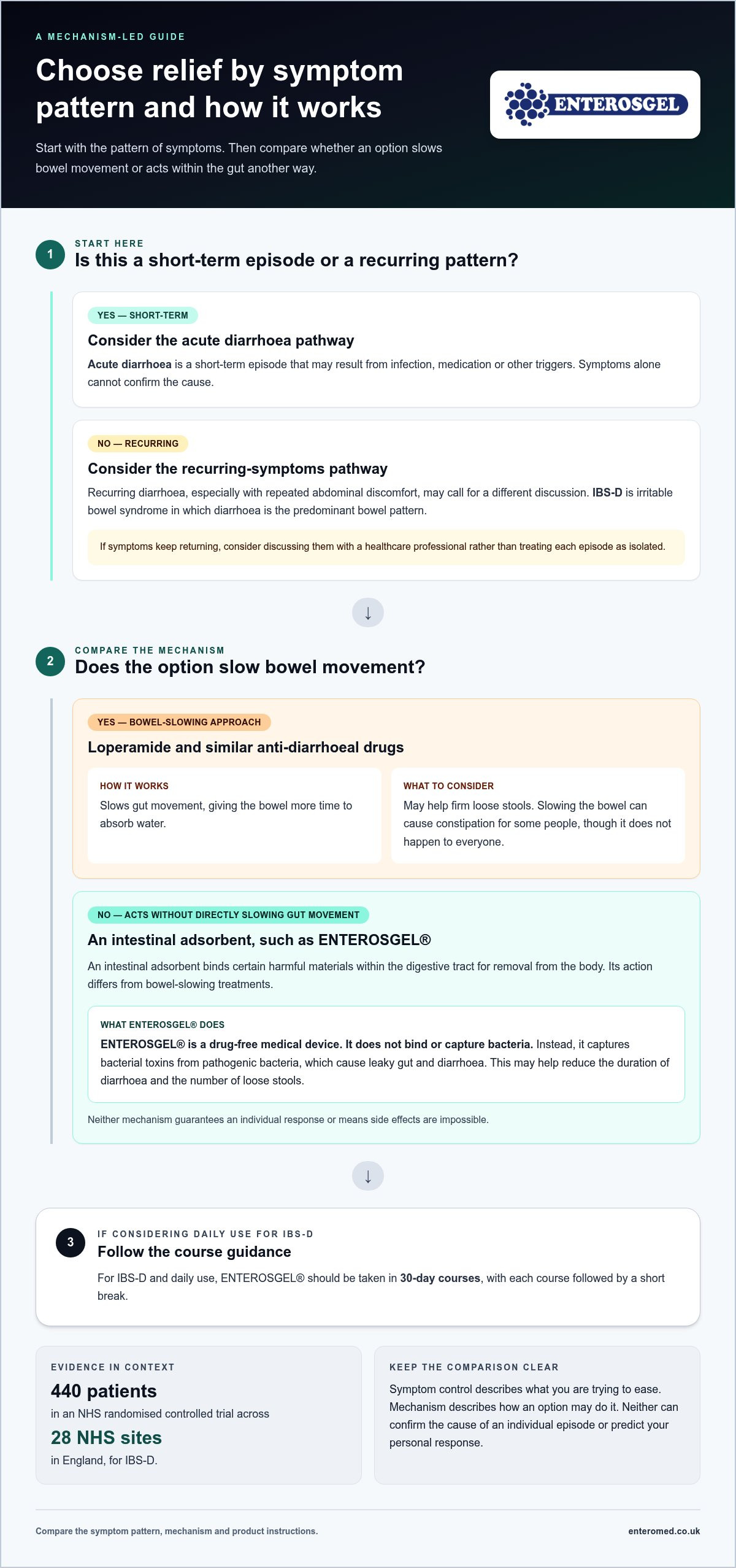
Choosing non-constipating diarrhoea relief for acute symptoms or IBS-D
A useful comparison starts with your symptom pattern, then considers what you want relief for and how an option works. Evidence and safety instructions matter too. This approach helps you judge whether information applies to a short-term episode or recurring symptoms, rather than assuming one option suits every situation.
A practical checklist for comparing relief options
Work through these points before choosing an approach:
- Identify the pattern. Is this a short-term episode, or do diarrhoea and related symptoms keep returning?
- Clarify the intended use. Does the product information address acute diarrhoea, IBS-D or another situation?
- Check the mechanism. Does the option slow bowel movement, or does it act in another stated way?
- Read the evidence carefully. Check who took part and which symptoms or outcomes the study measured. Evidence in one group may not apply to another.
- Review safety and instructions. Follow the product’s current directions, and ask a pharmacist or clinician if you’re unsure whether it’s appropriate for you.
Acute diarrhoea, recurring IBS-D and when to seek help
For an isolated episode, focus on the short-term symptoms, how they change and the instructions for any treatment you’re considering. Recurring diarrhoea is different: IBS-D may be relevant, but a repeating pattern should not be self-diagnosed. If you’re managing recurring symptoms, this research on ENTEROSGEL® can help you consider the evidence in context.
For IBS-D symptoms and daily use, the product should be taken in 30-day courses, with each course followed by a short break. Follow the Instructions for Use, and seek professional advice if you have questions about ongoing symptoms or use.
Get medical advice promptly if you notice blood in your stools, have severe symptoms or signs of dehydration. Seek advice if diarrhoea persists or worsens, too. These symptoms need attention; don’t rely on self-care alone or delay getting help while comparing products.
If you’re considering an intestinal adsorbent, review the ENTEROSGEL® 225g tube details alongside its instructions and the evidence relevant to your symptoms.
Enterosgel as drug-free diarrhoea relief: evidence and next steps
ENTEROSGEL® is a drug-free oral intestinal adsorbent and medical device, not a pharmaceutical medicine. Instead, it captures bacterial toxins from pathogenic bacteria which cause leaky gut and diarrhoea. This physical action may help reduce diarrhoea duration and the number of loose stools, without directly slowing gut motility. It can’t guarantee relief or replace medical advice when symptoms need assessment.
What the IBS-D research can tell readers
The RELIEVE IBS-D trial provides clinical evidence to consider. The trial involved 440 patients across 28 NHS sites in England. Its findings report IBS-D symptom relief in 76% of patients, with no serious adverse events. This reported symptom-relief result is distinct from the trial’s primary endpoint, which assessed improvement in both abdominal pain and stool consistency. Study findings offer context, not a prediction of an individual’s response. Review the research and clinical evidence alongside the outcomes measured.
Formats, instructions and a considered next step
ENTEROSGEL® is available in a 225g tube and sachets, including a pack of 10. Consider which format suits your circumstances, and read the current product instructions before use. For questions about IBS-D or daily use, follow the Instructions for Use and seek advice from a healthcare professional if you’re unsure. If symptoms persist, worsen or concern you, don’t rely on a product alone.
Compare the mechanism, evidence and instructions with your needs, without assuming any treatment will work the same way for everyone. Review the ENTEROSGEL® 225g tube details or explore Enteromed’s product information as a considered next step.
Make your next choice with confidence
A useful next step is to keep a brief record of your symptoms: when they occur, how long they last and whether they return. This can help you explain the pattern clearly when discussing treatment options with a pharmacist or clinician, particularly if you’re managing recurring symptoms. Note any treatments you’re already using, too, and don’t change prescribed treatment without professional advice.
For non-constipating diarrhoea relief, focus on what matters for your situation: the intended use, the mechanism and the product instructions. No approach can promise the same result for everyone, so take time to review the information and seek advice if you’re uncertain. Choosing thoughtfully is more useful than assuming faster symptom control is always the best fit.
To consider ENTEROSGEL® as part of your decision, explore Enteromed’s product information and review the available formats. Use the product details and instructions to decide what to discuss with a healthcare professional or use.
Frequently Asked Questions
Can children use Enterosgel for diarrhoea?
Enterosgel can be used for children when the age-specific Instructions for Use and dosing directions are followed. For children under 3 years old, it is advisable to consult a doctor prior to use. It contains no sugar, gluten, or preservatives, making it a gentle option for children. Unlike other antidiarrhoeal drugs, Enterosgel is safe for children under 12 years. Seek medical advice if you’re concerned about your child’s symptoms or fluid intake.
When should I seek medical advice for diarrhoea?
Seek medical advice promptly if you have blood in your stools, severe symptoms or signs of dehydration, such as passing very little urine or feeling unusually weak. Get advice if symptoms persist or worsen, or if you’re worried about a baby, child or someone who may be more vulnerable. If symptoms feel urgent, use NHS 111 or emergency services as appropriate. Don’t delay care while trying different self-care options.
What should I do if diarrhoea does not improve?
If diarrhoea isn’t improving, contact a healthcare professional for advice, especially if it’s getting worse or affecting your ability to drink and keep fluids down. Note how long symptoms have lasted, how often you’re passing loose stools and any other symptoms; these details can help guide the conversation. Continue to replace lost fluids. Don’t exceed product directions or extend treatment beyond the instructions without seeking advice.
Can I take Enterosgel alongside other oral medicines?
Ask a pharmacist or doctor about taking Enterosgel alongside oral medicines, and follow the current Instructions for Use. If you’re considering non-constipating diarrhoea relief whilst taking regular medicines, tell the pharmacist what you take and when, so they can advise on suitable timing. Don’t assume that taking products together is appropriate, and don’t alter prescribed doses or stop treatment without professional advice.
Can diarrhoea have causes other than infection?
Yes. Diarrhoea may be associated with food, medication or other triggers, as well as infection. For example, if symptoms begin after starting a medicine, discuss the timing with a pharmacist or prescriber. This alone can’t confirm the cause, so don’t stop prescribed treatment without advice. If episodes recur, keep a simple record of when they happen and any possible triggers to share with a healthcare professional.
Is ENTEROSGEL® a pharmaceutical medicine?
No. ENTEROSGEL® is a drug-free intestinal adsorbent medical device, not a pharmaceutical medicine. It acts physically within the digestive tract and is not intended to work through pharmacological action. This classification describes the type of product, not a guarantee that it will suit every person or resolve every episode of diarrhoea. Read the product instructions and seek professional advice if you’re unsure whether it’s appropriate for you.


