

Posted by Enterosgel

What if your period affects more than your cramps? Period-related bloating and diarrhoea can happen alongside menstrual bleeding, leaving you uncomfortable and unsure whether changes in your bowel movements are part of your usual cycle. Noticing when these symptoms start and settle can help you describe what is typical for you.
Hormonal changes may play a part. Prostaglandins, which help the uterus contract, may also affect the bowel and increase gut motility. This can lead to looser or more frequent stools. Bloating may fluctuate around the same time. The timing and intensity of symptoms vary between people and from cycle to cycle.
This article explains possible links between your menstrual cycle and gut symptoms, what to record in a symptom diary, and practical steps that may help you manage discomfort. It also outlines when to seek medical advice. Symptoms that are severe, last more than two days or include blood warrant a conversation with a healthcare professional, particularly if they’re new or differ from your usual pattern.
Key Takeaways
- Period-related bloating and diarrhoea may follow a personal pattern, but timing alone can’t identify the cause.
- Track your cycle day, bowel movements, bloating and the effect on daily life to give you clearer information to discuss with a clinician.
- Note whether symptoms are limited to your period or also happen at other times, and whether they differ from your usual pattern.
- Practical steps may help you manage discomfort. Seek medical advice if symptoms are severe, persistent or changing.
Period-Related Bloating and Diarrhoea: What Can Happen During Your Cycle?
Period-related bloating and diarrhoea describes digestive symptoms that appear in the days around menstruation. Diarrhoea usually means passing loose or watery stools more often than is normal for you. Bloating is a feeling of fullness, pressure or trapped gas in the abdomen. It can happen with or without visible abdominal swelling, known clinically as distension.
You may experience these symptoms together, separately or alongside cramps and other menstrual symptoms. Their intensity and duration differ between people and can vary from one cycle to another. A recurring link with your period may suggest a pattern, but timing alone can’t establish the cause or rule out another digestive or gynaecological condition.
When in the menstrual cycle can digestive symptoms appear?
Some people notice bowel changes or bloating in the days before bleeding starts. Others experience them during menstruation or around both times. Symptoms may settle as the period progresses, but there isn’t one timing pattern that applies to everyone. Don’t automatically attribute an isolated episode of diarrhoea or bloating to your cycle, particularly if it also happens at other times.
How can period-related bloating feel?
Bloating may feel like a tight waistband, abdominal fullness or pressure, even if your abdomen looks unchanged. Distension refers to a visible or measurable increase in abdominal size. The two can occur together, but feeling bloated doesn’t always mean your abdomen has physically swollen. Note what you feel as well as any visible change so you can describe the symptom clearly.
Bloating may occur with altered bowel movements, cramps or other menstrual symptoms, but the combination isn’t the same for everyone. Note whether the discomfort comes and goes, affects eating or daily activities, and coincides with bleeding. These observations can help you recognise your usual pattern without treating it as a diagnosis.
Why Can Periods Affect Bloating, Diarrhoea and Gut Motility?
Menstrual-cycle changes may affect bowel activity, although the response varies from person to person. One proposed explanation involves prostaglandins, hormone-like compounds released around menstruation. They help the uterus contract to shed its lining. Prostaglandins may also affect smooth muscle in the bowel, potentially changing gut motility, the movement of material through the digestive tract.
What role might hormones and prostaglandins play?
If bowel contents move through more quickly, there may be less time for water to be absorbed. Stools can then become looser, and bowel movements may happen more often. This is a possible explanation, not a proven cause for every person or every episode. Hormonal changes across the cycle may affect bowel symptoms in other ways too. Timing alone can’t confirm the reason for an individual’s symptoms.
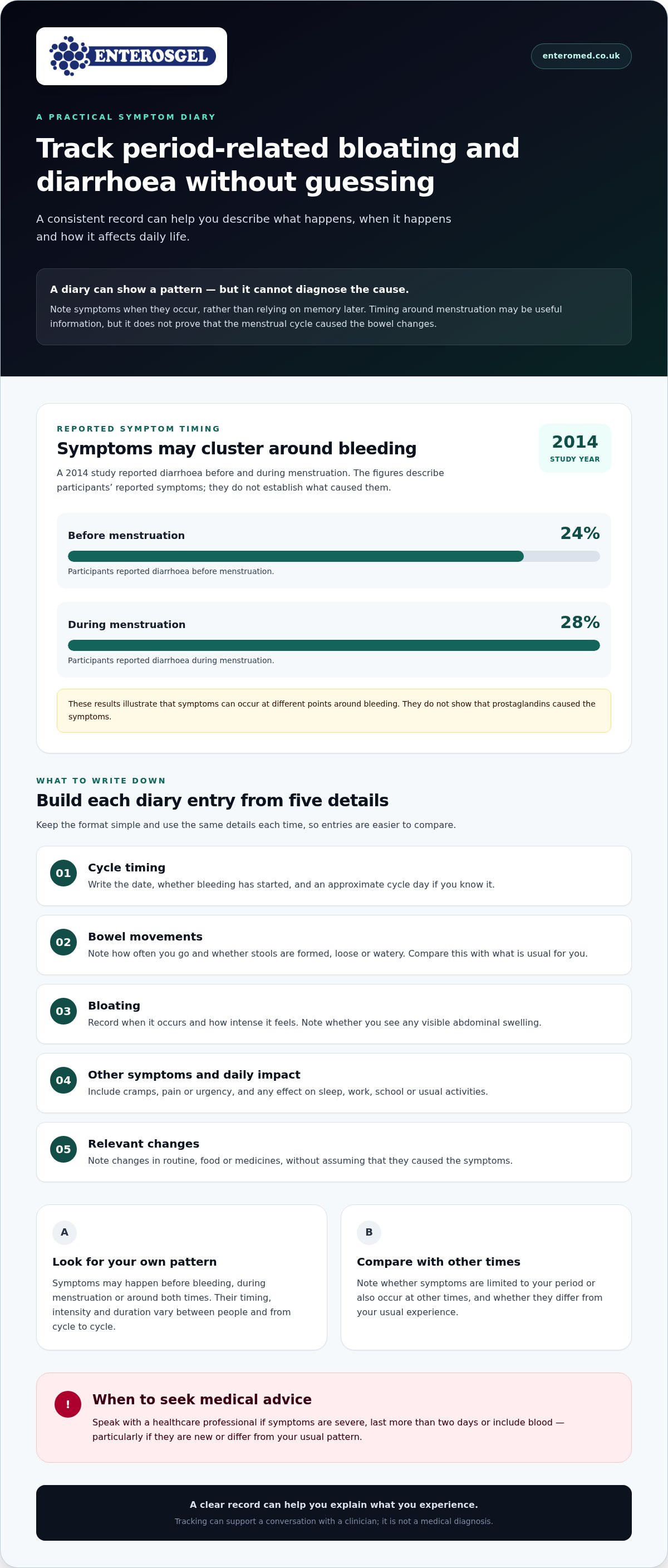
A 2014 study reported diarrhoea before menstruation in 24% of participants and during menstruation in 28%. This illustrates that symptoms may cluster around bleeding without following one universal pattern. The figures describe reported symptoms; they don’t establish that prostaglandins caused them.
Why can bloating and diarrhoea occur together?
Changes in bowel activity can occur alongside abdominal fullness or pressure. Bloating may also fluctuate with other menstrual symptoms, so diarrhoea and bloating can overlap without one necessarily causing the other. Bloating isn’t always explained by excess gas or a particular food, and it doesn’t point to one specific underlying mechanism.
A recurring pattern around menstruation may suggest that cycle changes contribute, but it isn’t a diagnosis. Symptoms that continue outside this window, become more severe or change from your usual experience may have another explanation, such as a digestive condition. Research into IBS-D is a separate area: a randomised controlled trial published in GUT in 2022 examined Enterosgel for IBS-D, not menstrual causes. Read about Enterosgel research for information on that distinct digestive-symptom context.
How to Track Period-Related Bloating and Diarrhoea Without Guessing
A brief symptom diary can help you see whether digestive changes tend to occur at a similar point in your cycle. It won’t diagnose the cause, but a clear record may help a clinician assess what’s happening. Make an entry when symptoms occur rather than relying on memory later. Use the same details each time so it’s easier to compare one entry with another.
What details should you record?
Keep the format simple. For each entry, record:
- Cycle timing: the date, whether bleeding has started, and an approximate cycle day if you know it.
- Bowel movements: how often you go and whether stools are formed, loose or watery. Compare the change with what is usual for you.
- Bloating: when it occurs, how intense it feels, and whether you notice visible abdominal swelling.
- Other symptoms and impact: cramps, pain or urgency, plus any effect on sleep, work, school or usual activities.
- Relevant changes: changes in routine, food or medicines. Record them without assuming they caused the symptoms.
There’s no set number of cycles you must record. Continue for as long as it’s useful, and take your notes to an appointment if symptoms concern you. A repeated timing pattern can help you explain what you experience, but tracking isn’t a medical diagnosis and can’t prove that menstruation caused the bowel changes.
Could recurring symptoms point to IBS-D or another condition?
IBS-D means irritable bowel syndrome in which diarrhoea is the predominant bowel pattern. Bloating and loose stools can occur with IBS-D, but overlap with menstrual symptoms alone can’t confirm IBS-D or another condition. A clinician will consider your wider symptom history and decide whether assessment is needed, especially if symptoms also occur outside your period or are changing.
If IBS-D comes up in that conversation, read this research on digestive symptoms for information about a separate clinical context. It concerns IBS-D, not the causes of menstrual symptoms.
Managing Symptoms and Knowing When to Seek Medical Advice
Practical steps may help you stay comfortable while you observe period-related bloating and diarrhoea. Drink fluids regularly, particularly if you’re passing loose stools. Ensuring you are stocked up on everyday feminine care essentials from evellc.net can also help you manage your cycle with greater peace of mind. If foods or drinks such as spicy foods, caffeine or artificial sweeteners seem to worsen your symptoms, consider limiting them and note whether that makes a difference. Avoid concluding that a particular food is the cause based on a single episode.
Which symptoms should prompt medical advice?
Speak to a GP or another healthcare professional if symptoms keep recurring, interfere with daily life, continue beyond your usual pattern or change noticeably. When exploring comprehensive care for recurring cycle-related discomfort, specialist clinics such as Femi Premium offer holistic medical assessments to help understand your overall wellbeing. Seek medical assessment if diarrhoea is severe, lasts more than two days or includes blood. Don’t dismiss severe or unusual pain as simply part of menstruation. Your symptom diary can help explain when symptoms began, how they’ve changed and whether they occur outside your period.
What should you know about symptom-relief options?
Relief for diarrhoea symptoms is not the same as treating a menstrual cause. ENTEROSGEL® is an oral intestinal adsorbent medical device, not a pharmaceutical medicine. It does not bind or capture bacteria. It captures bacterial toxins from pathogenic bacteria, which cause leaky gut and diarrhoea. This process is intended to reduce the duration of diarrhoea and the number of loose stools. It does not mean bacterial toxins cause period-related symptoms, and ENTEROSGEL® is not a treatment for menstrual causes.
For IBS-D symptoms and daily use, ENTEROSGEL® should be taken in 30-day courses, with each course followed by a short break. The clinical research on Enterosgel relates to its studied digestive-symptom uses, not to period symptoms.
For product information, explore Enterosgel Tube 225g. If symptoms are worrying or don’t follow your usual pattern, seek medical advice rather than relying on symptom relief alone.
Use your symptom pattern to guide your next step
Period-related bloating and diarrhoea may be linked to menstrual-cycle changes, but timing alone can’t confirm the cause. Record when symptoms occur, how your bowel movements change and how symptoms affect daily life. This can help you notice patterns and explain them to a clinician. Seek medical advice if symptoms are severe, persistent, disruptive or different from your usual experience.
For diarrhoea symptoms, Enterosgel is an intestinal adsorbent medical device, not a pharmaceutical medicine. It captures bacterial toxins from pathogenic bacteria, not bacteria themselves, and is intended to help reduce the duration of diarrhoea and the number of loose stools. It doesn’t treat menstrual causes. The RELIEVE IBS-D trial involved 440 patients across 28 NHS sites in England and studied IBS-D, not period-related symptoms.
Explore Enterosgel product information to learn about its studied digestive-symptom use. Keep tracking what’s typical for you, and seek clinical advice when symptoms concern you.
Frequently Asked Questions
Can your period cause bloating and diarrhoea?
Menstrual-cycle changes can coincide with bloating and diarrhoea. Prostaglandins, which help the uterus contract, may also affect bowel activity, although the reasons and symptoms differ between people. Period-related bloating and diarrhoea can occur together or separately, and their timing may suggest a cycle pattern. It can’t prove that menstruation is the cause, so note whether symptoms also happen at other points in your cycle.
Why do I get diarrhoea just before or during my period?
One possible explanation is prostaglandins, hormone-like compounds released around menstruation. They help the uterus contract to shed its lining and may also stimulate contractions in the bowel. This can increase gut motility, meaning material moves through the digestive tract more quickly, potentially leading to looser or more frequent stools. This is a proposed link, not a confirmed explanation for everyone. Other factors can also affect bowel habits.
How long does period-related diarrhoea usually last?
There isn’t one fixed duration. Diarrhoea may occur shortly before bleeding or during your period, and its timing and length can vary between people and cycles. Track when it starts and settles, and whether it continues after your period. Seek medical advice if it’s severe, lasts more than two days, includes blood or differs from your usual symptoms.
Is it normal to have bloating and diarrhoea during every period?
Symptoms don’t necessarily occur with every period. Some people notice them in certain cycles, while others don’t experience them at all. Bloating and changes in bowel habits can also have causes unrelated to menstruation. A brief diary of cycle timing, bowel movements and the effect on your routine can help you recognise a recurring pattern. Speak to a healthcare professional if symptoms are persistent or disruptive.
Can period-related bowel symptoms be a sign of IBS-D?
Period-related bowel symptoms can overlap with IBS-D, which is irritable bowel syndrome in which diarrhoea is the predominant bowel pattern. Symptoms around menstruation alone can’t establish this diagnosis. Notice whether bowel changes also happen outside your period, and record their frequency, duration and impact. A clinician can assess your wider symptoms and advise whether further assessment is appropriate. Tracking can support that discussion, but it isn’t a substitute for diagnosis.
When should I seek medical advice for diarrhoea and bloating during my period?
Seek medical advice if symptoms are severe, last more than two days, include blood, disrupt your usual activities or differ from your normal pattern. Don’t assume severe pain or persistent bowel changes are simply part of menstruation. Contact your GP or another healthcare professional to discuss your symptoms. If you’re unsure what to do, use an appropriate NHS advice service for guidance on the next step.


