

Posted by Enterosgel

A gentle stomach massage from right to left, along with moving around, may help release trapped wind. These are simple first steps when considering how to get rid of trapped wind, particularly when gas causes cramps or pressure.
Trapped wind can feel like bloating, but bloating is a sensation of fullness and can have causes beyond trapped gas. Food and drink, swallowed air and digestive conditions may all play a part. Noticing when symptoms occur can help you identify possible triggers.
This guide covers common causes, how trapped wind differs from bloating, and how a stomach massage may help. You’ll also find practical ways to ease symptoms and guidance on when to seek medical advice, including warning signs that need urgent attention. The aim is to help you choose sensible next steps without overlooking symptoms that need professional care.
Key Takeaways
- Food, fizzy drinks and swallowed air can contribute to wind; noticing patterns in what you eat and drink may help identify personal triggers.
- Trapped wind is gas caught in the digestive system, while bloating describes fullness or discomfort and can have other causes.
- A gentle stomach massage from right to left may help move trapped gas, alongside practical changes such as eating more slowly.
- Get medical advice for persistent or recurring bloating, especially if it comes with weight loss or blood in your poo.
- Know which symptoms need urgent help, including severe stomach pain, vomiting blood or serious difficulty breathing.
What causes trapped wind?
Trapped wind occurs when gas builds up or becomes stuck in the digestive system. Digestion normally produces several litres of gas a day, and swallowed air can add to it.
Food and drink triggers
Some foods and drinks can increase gas as the gut digests them. Beans, peas, fruit and other high-fibre foods contain carbohydrates that can produce gas during digestion; fizzy drinks can add gas too. Fructose or lactose intolerance may make certain foods harder to digest. Identifying your own triggers matters more than avoiding everything on this list.
Eating habits linked to wind
Eating quickly or talking while eating can mean you swallow more air, which may contribute to wind. Eating slowly and chewing with your mouth closed can reduce this source of gas. Large meals may also worsen discomfort for some people, so try smaller, more frequent meals and notice whether symptoms change. Smoking and stress may contribute as well.
Common causes of trapped wind include swallowed air and gas produced as carbohydrates are digested. Triggers differ between people: a fizzy drink may cause symptoms for one person, while beans or peas affect another. Keeping a record of meals, drinks and symptoms can reveal patterns. Note whether discomfort follows eating quickly or a particular food, rather than cutting out several foods at once.
Common causes of bloating
Bloating means fullness or discomfort in the tummy, and trapped gas is only one possible cause. Constipation, food intolerance, coeliac disease and irritable bowel syndrome can also cause bloating. Some people notice it around their period. Feeling swollen or uncomfortable in your abdomen does not, by itself, mean gas is trapped.
Relief depends on the likely cause. If fizzy drinks or a particular food repeatedly precede symptoms, reduce that trigger and track the effect. If you swallow air while eating, slow down and chew with your mouth closed. For constipation, foods containing soluble fibre, such as oats or linseed, may help. If a food intolerance or digestive condition seems possible, discuss the pattern with a doctor rather than cutting out major food groups without advice.
When to seek medical advice
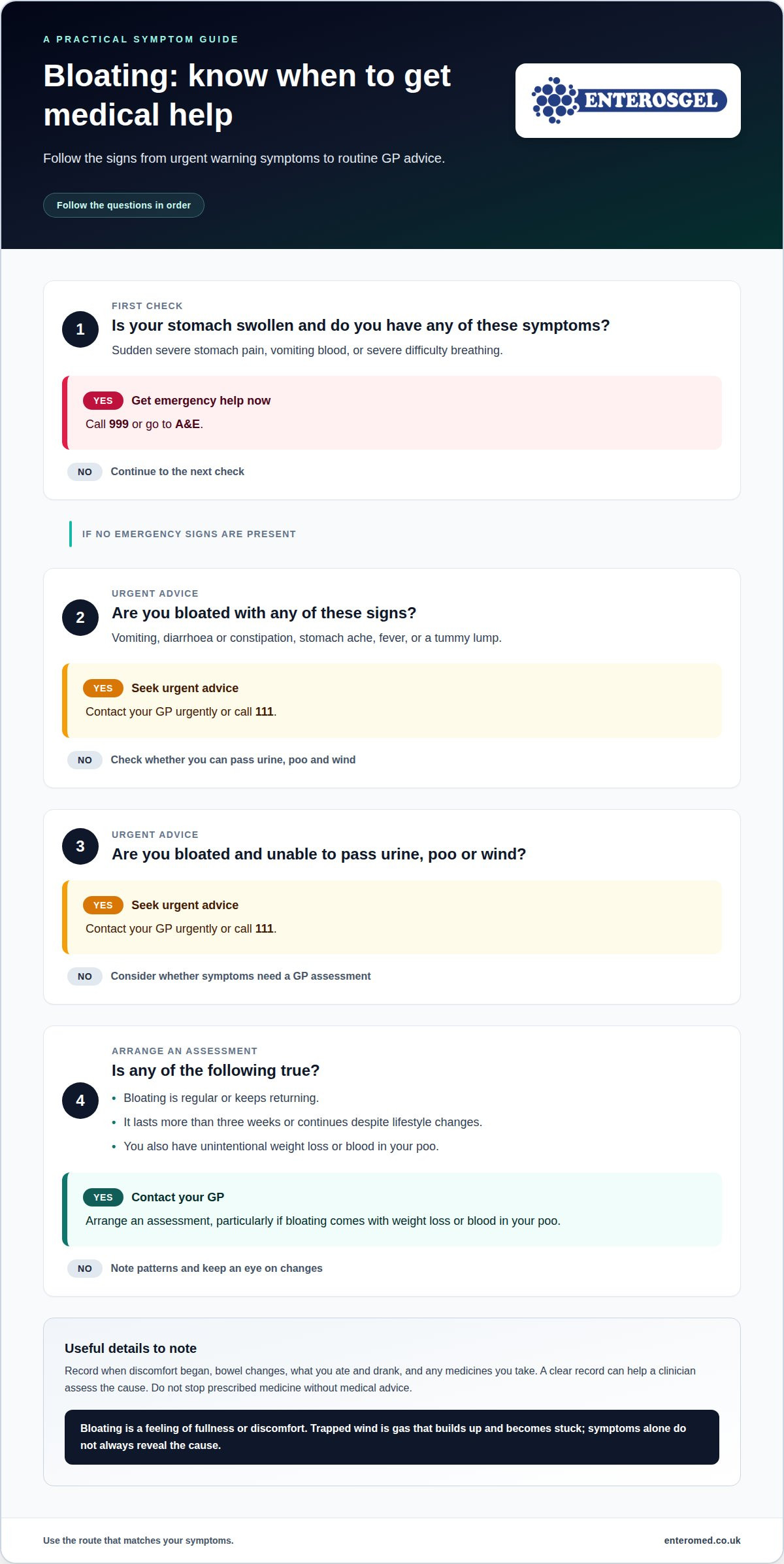
Seek advice if wind or bloating persists, keeps returning, or changes alongside other symptoms. A clear record of when discomfort began, bowel changes and medicines you take can help a clinician assess the cause.
Contact your GP about regular bloating, symptoms that continue despite lifestyle changes, or bloating lasting more than three weeks. Arrange an assessment if you also have unintentional weight loss or blood in your poo. Coeliac disease, irritable bowel syndrome, gastroenteritis and inflammatory bowel disease can increase gas production, so recurring symptoms may need more than home measures.
Some symptom combinations need urgent help. According to the NHS, bloating with vomiting, diarrhoea or constipation, stomach ache, fever or a tummy lump warrants urgent GP advice or a call to 111. If your stomach is swollen and you develop sudden severe pain, vomit blood or have severe difficulty breathing, call 999 or go to A&E.
Medicines may affect digestion, so note whether symptoms began after starting or changing a treatment. Don’t stop prescribed medicine without medical advice. A pharmacist or GP can review your medicines and consider whether constipation or an underlying digestive condition needs attention.
What are safe doses and side effects of over-the-counter remedies for trapped wind? There isn’t one dose for every remedy: follow the instructions on the product packaging, and ask a pharmacist if you’re unsure. Side effects depend on the medicine, so read its leaflet and seek advice if symptoms worsen or you develop a reaction.
Treatment depends on the cause. If constipation is contributing, a pharmacist can advise whether a laxative is suitable. Other medicines may encourage gut movement or ease spasm-related symptoms. Peppermint oil capsules taken before meals may reduce bloating and cramps, but check the product instructions and ask a pharmacist whether they’re suitable, especially if you take other medicines.
Smaller meals and regular movement may support digestion, but persistent symptoms still deserve attention. If bloating comes with a change in bowel habits, pain or other warning signs, follow the NHS advice above rather than relying only on lifestyle adjustments or pharmacy remedies.
Seek urgent GP advice or call 111 if bloated and unable to pass urine, poo or wind. Persistent bloating can sometimes signal a serious condition such as ovarian cancer.
Difference between bloating and trapped wind
Bloating describes a feeling of fullness or discomfort in your tummy; trapped wind is gas that builds up and becomes stuck in the digestive system. They often occur together, but bloating can also result from constipation, food intolerance, coeliac disease or irritable bowel syndrome.
Trapped gas may cause cramps, abdominal pressure, rumbling or a stomach that feels larger than usual. Passing wind or burping may occur too. Bloating is the sensation itself, so you can feel bloated without trapped wind being the only cause. Symptoms alone don’t always reveal what is behind the discomfort.
How can you tell trapped wind from indigestion, constipation or irritable bowel syndrome? Gas-related cramps, rumbling and relief after passing wind may point towards trapped wind, while difficulty passing stools suggests constipation. Indigestion and irritable bowel syndrome can have overlapping symptoms, so recurring discomfort or changes in bowel habits need assessment rather than a diagnosis based on one symptom.
Food patterns may offer clues, but they don’t prove the cause. Fizzy drinks, cabbage and other vegetables may contribute to gas for some people. Lactose intolerance can make foods containing lactose harder to digest. If symptoms repeatedly follow a particular meal, record what you ate and when discomfort began; don’t cut out several food groups based on one episode.
What are the quickest ways to relieve trapped wind at home? Gentle movement, such as a walk, may support digestion and ease gas. At your next meal, try a smaller portion, eat slowly and chew with your mouth closed. Avoid a large meal or fizzy drinks if they seem to trigger your symptoms.
These steps may help with gas, but they won’t address every cause of bloating. Constipation, coeliac disease and IBS, for example, may need a different approach. If a particular food seems responsible, keep a simple food-and-symptom record before making lasting dietary changes. This can help reveal a repeated link rather than prompting a reaction to one meal.
For practical relief, focus on your symptom pattern. Note whether discomfort improves after passing wind, follows eating, or occurs alongside constipation or a change in bowel habits. Smaller, more frequent meals may ease bloating compared with large meals, and regular exercise supports digestion. If symptoms persist, worsen or repeatedly disrupt daily activities, seek medical advice rather than treating every episode as trapped gas.
Stomach massage to release trapped wind
A gentle stomach massage from right to left may help release trapped wind. If you’re considering how to get rid of trapped wind, use light pressure and slow movements across your abdomen rather than pressing deeply. The aim is comfort, not force. Stop if the massage increases pain. It may ease pressure temporarily, but it won’t address every cause of gas or bloating.
Try this simple approach when you’re resting comfortably:
- Choose a comfortable position, such as lying on your back with your knees slightly bent. Relaxing your stomach muscles may make gentle massage easier.
- Rest your hand lightly on the right side of your abdomen. Move it across towards the left with steady strokes.
- Repeat the right-to-left movement gently, then pause. Notice whether the pressure or discomfort has eased before continuing.
Keep each stroke light. If your abdomen feels tender, don’t press harder to try to move gas. Massage is a comfort measure, not a way to diagnose the cause of symptoms. Bloating can also be linked to constipation, food intolerance or irritable bowel syndrome, so persistent discomfort needs more than a massage routine.
Movement can complement massage. A gentle walk may support digestion and help gas pass through the digestive system. If you prefer a stretch, try the Happy Baby Pose and hold it for between 30 seconds and a minute before releasing. Stay within a comfortable range and stop if the position causes pain.
Massage won’t prevent gas forming after a food trigger. If you’re intolerant to lactose, for example, symptoms may follow foods containing lactose, the sugar found in milk. Note what you ate, when symptoms began, and whether massage or exercise helped. This record can help you identify a recurring food pattern rather than attributing every episode to trapped wind.
A practical approach to how to get rid of trapped wind combines gentle right-to-left strokes with comfortable movement. After massaging, take a short walk if you feel able. At your next meal, eat slowly and notice whether symptoms return after a particular food or drink. These steps may ease immediate discomfort while helping you observe possible triggers, without assuming every swollen stomach is caused by trapped gas.
Seek medical advice if discomfort persists, worsens or repeatedly returns despite these measures. Massage and exercise may ease trapped wind, but they don’t replace an assessment when symptoms suggest another digestive cause.
Enterosgel: Enterosgel 225g Tube
Enterosgel 225g Tube is an intestinal adsorbent for digestive symptoms such as diarrhoea and bloating. It isn’t a direct method for releasing trapped gas, so gentle movement or massage may be more relevant for wind itself.
Enterosgel does not bind or capture bacteria. It captures bacterial toxins from pathogenic bacteria which cause leaky gut and diarrhoea, helping reduce diarrhoea duration and the number of loose stools. For IBS-D symptoms, the product should be taken in 30-day courses, with each course followed by a short break. Follow the product instructions and seek medical advice for persistent or concerning symptoms.
For information about Enterosgel 225g Tube, visit Enteromed’s website.
Take your next step towards digestive comfort
A practical plan for how to get rid of trapped wind starts with paying attention to your symptoms. If discomfort keeps returning, a brief record of meals, bowel changes and when symptoms occur can help you describe the pattern clearly when seeking advice.
For digestive symptoms that include diarrhoea or bloating, Enterosgel offers the Enterosgel 225g Tube and Enterosgel Sachets (Pack of 10). Enterosgel Kids 0+ is a gentle option for children because it contains no sugar, gluten or preservatives. Unlike other antidiarrhoeal drugs, Enterosgel is safe for children under 12 years. For children under 3 years old, it is advisable to consult a doctor prior to use.
Choose your next step according to your symptoms: continue gentle self-care for occasional wind, or seek medical advice when symptoms warrant it. For information about Enterosgel’s products, contact Enterosgel for advice. A clear understanding of your symptoms can help you move forward with confidence.
Frequently Asked Questions
Do walking, gentle exercise or specific positions help trapped wind?
Yes, gentle movement may support digestion and help gas pass. A short walk around the house is a low-effort option if sitting makes pressure feel worse. You can also try the Happy Baby Pose, holding it for between 30 seconds and a minute before releasing. Keep the stretch comfortable and stop if it increases pain. These measures may ease symptoms, but don’t replace medical advice for persistent discomfort.
What foods and drinks commonly cause gas and bloating?
Beans, peas, some fruit and fizzy drinks can contribute to gas. Foods containing lactose or fructose may also trigger symptoms in people who have difficulty digesting those sugars. The effect varies: a food that causes discomfort for one person may not affect another. Rather than avoiding a long list of foods, note what you ate and whether symptoms followed, then look for a repeated pattern.
How can diet changes help prevent trapped wind?
Use a food-and-symptom diary to guide small, focused changes. Record meals, drinks and when discomfort starts, then test one suspected trigger at a time. For example, if symptoms repeatedly follow a fizzy drink, try reducing it and observe the difference. Avoid removing several food groups at once, as this can make triggers harder to identify. If you’re considering a restrictive diet, ask a GP or dietitian for guidance.
Do peppermint oil, simeticone or other medicines relieve trapped wind in the UK?
Peppermint oil capsules taken before meals may reduce bloating and cramps. Simeticone and other pharmacy remedies may suit some symptoms, but ask a pharmacist which option fits your situation and follow the packet instructions. If constipation is contributing, a pharmacist can advise whether a laxative is appropriate. Don’t combine remedies or exceed the stated dose without professional advice, particularly if you take other medicines.
When should you see a GP or call NHS 111 for trapped wind?
Contact your GP if bloating keeps returning, lasts more than three weeks, or continues despite changes to your diet. Seek advice if it comes with unintentional weight loss or blood in your poo. According to the NHS, bloating accompanied by vomiting, diarrhoea or constipation, stomach ache, fever or a tummy lump warrants urgent GP advice or a call to NHS 111. Describe when symptoms began and any changes in bowel habits.
What symptoms with trapped wind could indicate a serious problem requiring urgent care?
Call 999 or go to A&E if a swollen stomach occurs with sudden, severe stomach pain, vomiting blood or severe difficulty breathing, according to the NHS. Don’t wait for home remedies to work in these situations. Bloating with fever, vomiting, diarrhoea, constipation, stomach ache or a tummy lump also needs urgent GP advice or a call to NHS 111. Explain all accompanying symptoms when seeking help.


