

Posted by Enterosgel

What if the key to settling a childhood stomach bug isn't simply waiting it out with fluids, but actively removing the irritants causing the distress? Finding gentle, effective tummy bug relief for kids UK parents can depend on is often a stressful challenge. When acute diarrhoea strikes, the immediate worry about dehydration, sleepless nights, and the strict NHS 48-hour school exclusion rule can quickly disrupt family life. Conventional antidiarrhoeal medicines are contraindicated for children under 12 without prescription, leaving carers rightly hesitant to use harsh pharmacological treatments on young digestive systems.
You want your child comfortable, protected, and back on their feet without unnecessary medical risks. Discover how to manage your child’s stomach bug safely with evidence-based home care and drug-free clinical solutions. This guide details practical rehydration strategies, explains how non-systemic intestinal adsorbents safely capture bacterial toxins to reduce the duration of diarrhoea, and outlines clear milestones for when to seek professional advice from your GP or NHS 111.
Key Takeaways
- Learn how to identify common triggers of paediatric acute diarrhoea and explore gentle strategies for tummy bug relief for kids UK households need during sudden flare-ups.
- Master essential home hydration protocols using oral rehydration solutions alongside a simple symptom log to monitor your child's recovery accurately.
- Understand how non-systemic oral intestinal adsorbents physically capture bacterial toxins without slowing normal gut motility or entering the bloodstream.
- Discover drug-free solutions safe for children under 12 years old, including clear clinical safety advice on consulting a doctor prior to use for infants under 3.
Understanding Tummy Bugs and Acute Diarrhoea in Children
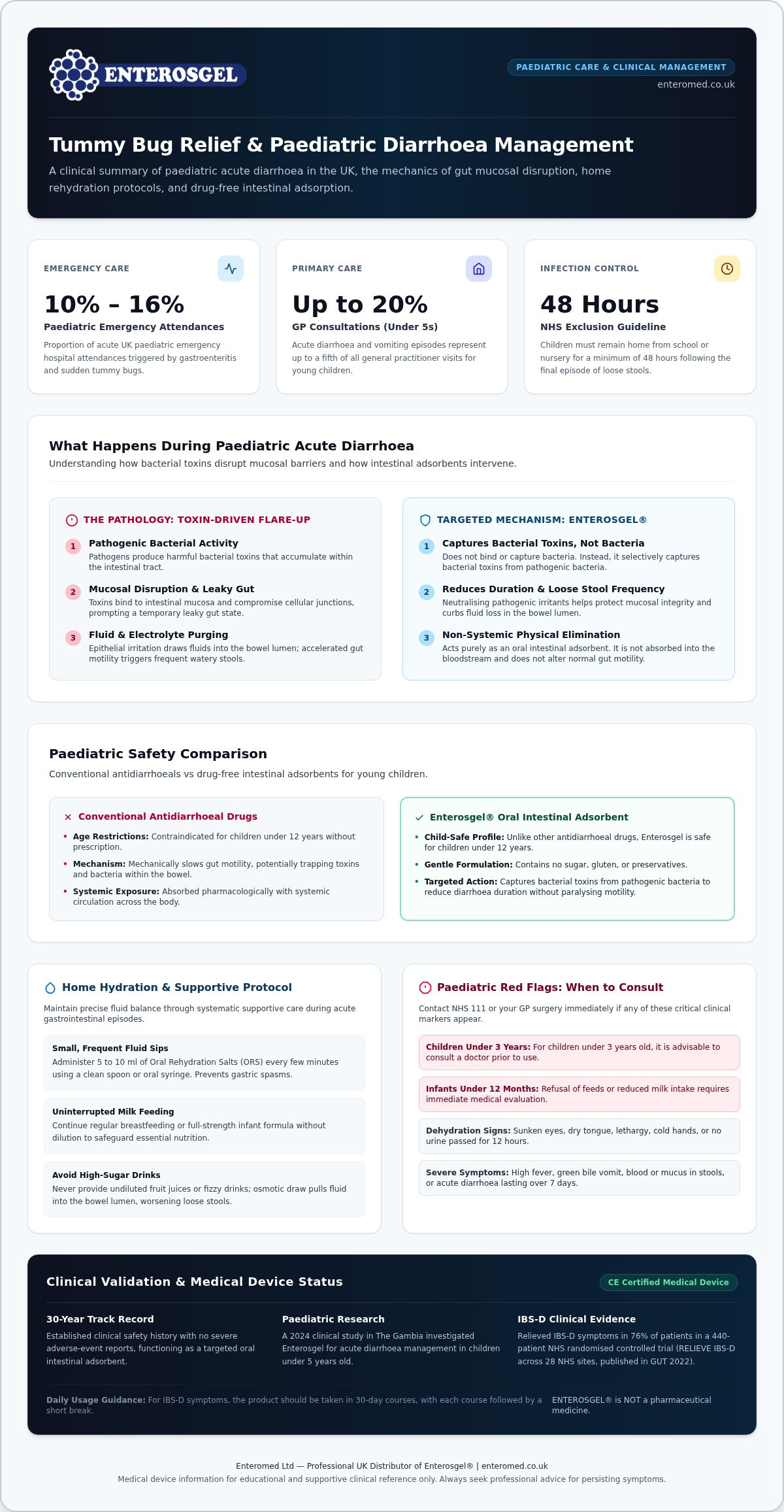
Paediatric gastroenteritis, commonly known as a tummy bug, accounts for roughly 10% to 16% of paediatric emergency attendances and up to 20% of GP visits for children under five in the UK. The infection strikes quickly. Watery stools, abdominal cramping, and nausea can leave young children exhausted within hours. Finding reliable tummy bug relief for kids UK parents can safely administer begins with understanding what actually happens inside an inflamed gut.
Viral vs Bacterial: What is Causing the Upset?
Most childhood episodes stem from viruses like rotavirus or norovirus, circulating readily through nurseries and classrooms. Bacterial pathogens, including Campylobacter or Escherichia coli, represent another frequent trigger. While viruses damage the mucosal lining directly, pathogenic bacteria generate harmful bacterial toxins. In practical home care, identifying the specific micro-organism matters far less than managing the physical symptoms and safeguarding against fluid loss.
The Mechanism of Loose Stools
When bacterial toxins bind to the intestinal mucosa, they disrupt cellular junctions, triggering a temporary state of "leaky gut". This inflammatory disruption fundamentally alters fluid transport across the bowel wall:
- Epithelial irritation: Pathogenic toxins provoke active inflammation across the lining of the digestive tract.
- Electrolyte and water influx: Damaged cells lose their ability to retain moisture, drawing pints of water from the bloodstream into the bowel lumen.
- Protective purging: The gastrointestinal tract speeds up gut motility, producing frequent bowel movements to expel the offending irritants.
Because infants and young children possess a higher body surface-to-mass ratio and rapid metabolic turnover, this watery purge places them at immediate risk of dehydration. Real tummy bug relief for kids UK families require must address this fluid deficit while actively reducing the mucosal irritation that drives prolonged diarrhoea.
Managing Symptoms at Home: Hydration and Care
Effective recovery relies on methodical supportive care. The clinical gold standard for acute diarrhoea is oral rehydration salts (ORS), which restore vital electrolytes lost through loose stools. Alongside hydration, keep a simple symptom log detailing fluid intake, wet nappies, and bowel movements. This provides valuable objective data should you need clinical advice from your GP or health visitor.
Continue breastfeeding or full-strength formula feeding without dilution. Once nausea passes, offer bland solids such as porridge, plain toast, or bananas. To stop pathogens spreading through the home, wash hands thoroughly with soap and warm water, clean touched surfaces regularly, and strictly observe the NHS 48-hour exclusion rule from school or nursery following the final episode of diarrhoea or vomiting.
The Hydration Checklist for Parents
Young bodies lose fluids rapidly during a gastrointestinal flare-up. Keep these practical hydration rules in mind:
- Offer small, frequent sips: Give 5 to 10 ml of ORS every few minutes using a spoon or oral syringe. Gulping large volumes can trigger gastric spasms and prompt immediate vomiting.
- Monitor dehydration signs: Watch for sunken eyes, a dry tongue, cold hands, lethargy, or fewer wet nappies (specifically, no urine for 12 hours).
- Avoid high-sugar liquids: Never give undiluted fruit juice or carbonated soft drinks. High sugar concentrations draw excess water into the bowel via osmosis, worsening loose stools.
When to Seek Medical Advice
While most viral bugs resolve within a few days, certain symptoms demand urgent assessment. Contact NHS 111 or your GP surgery if you observe red flags such as high fever, blood or mucus in the stool, green bile vomit, or if acute diarrhoea lasts longer than seven days.
For babies under 12 months who refuse feeds, seek medical advice straight away. Additionally, for children under 3 years old, it is advisable to consult a doctor prior to use of any new therapeutic product. When you need dependable tummy bug relief for kids UK clinical guidelines favour gentle, non-systemic interventions. Keeping an evidence-backed solution like the Enterosgel 225g Tube at home provides a calm, prepared approach to restoring digestive comfort.
The Science of Intestinal Adsorbents for Tummy Bug Relief
Parents are often told to wait out an illness while offering fluids, but modern clinical care offers a way to actively target the root source of irritation. An oral intestinal adsorbent acts like a selective, microscopic sponge passing through the gastrointestinal tract. Unlike absorption, where substances pass through the gut wall into the bloodstream, adsorption is a physical surface phenomenon. Toxic molecules bind directly to the exterior pores of the gel matrix, which passes safely out of the body during normal bowel movements.
How Adsorbents Target the Cause
Precision matters when managing an inflamed digestive tract. Enterosgel does not bind or capture bacteria. Instead, it selectively captures bacterial toxins from pathogenic bacteria which cause leaky gut and diarrhoea. By targeting these medium and high molecular weight toxins alongside inflammatory mediators, the adsorbent stops them from damaging the delicate gut lining. This physical process significantly reduces the duration of diarrhoea and the number of loose stools, helping the bowel return to normal function without disrupting beneficial microflora.
Why Drug-Free is Often Best for Kids
Standard pharmacological antidiarrhoeals, such as antimotility drugs like loperamide, work by chemically paralysing bowel motility. In young children, stopping gut transit can cause intestinal atony, trapping dangerous pathogens and their secretions inside the body. For this reason, conventional antidiarrhoeal medicines are contraindicated for over-the-counter use in children under 12 years old.
Enterosgel is not a pharmaceutical medicine; it is a drug-free Class IIa medical device. It works purely through physical action and is not absorbed into the body. It contains no sugar, gluten, flavours, lactose, or preservatives, making it a very gentle option for sensitive paediatric stomachs. Unlike other antidiarrhoeal drugs, Enterosgel is safe for children under 12 years. If you are seeking targeted tummy bug relief for kids UK families can trust, you can explore the clinical research validating this gentle, non-systemic approach.
Choosing Enterosgel for Family-Safe Relief
When sudden stomach upsets strike, having an established, child-friendly treatment ready in your family first-aid kit eases panic. Enterosgel Kids 0+ provides parents with a targeted solution designed specifically for delicate digestive systems. Because it works solely within the gut cavity to capture bacterial toxins without entering the bloodstream, it supports rapid recovery without introducing synthetic chemicals into your child's body.
A 30-Year Clinical Track Record
Enterosgel is backed by over three decades of clinical use and rigorous UK scientific evaluation. As a CE-certified Class IIa medical device, its safety profile is supported by extensive trials, including the landmark RELIEVE IBS-D study across 28 NHS sites in England. Published in GUT in 2022, that 440-patient trial demonstrated significant symptom relief in 76% of participants with no serious adverse events.
Further clinical investigation in young children with acute diarrhoea demonstrated that adding this intestinal adsorbent to standard hydration shortened the duration of loose stools by an average of 19.3 hours compared to hydration alone. This clinical pedigree offers dependable assurance when managing acute childhood bugs at home.
Practical Administration Guide
Administering oral treatments to an unwell, nauseous child can feel daunting. Enterosgel is entirely tasteless, odourless, and free from sugar, gluten, and preservatives, making it simple to disguise:
- Liquid blending: Thoroughly dilute the prescribed dose in a small glass of plain water, expressed breast milk, or infant formula before giving it to your child.
- Syringe feeding: For younger toddlers or fussy drinkers, draw the mixed liquid into a clean oral syringe and administer it gently into the inside cheek in small measures.
- Timing: Offer the dose one to two hours before or after meals, oral rehydration solutions, or any other oral medication to ensure optimal binding.
For children under 3 years old, it is advisable to consult a doctor prior to use. Unlike standard pharmacological antimotility drugs, Enterosgel is safe for children under 12 years. By physically trapping harmful toxins before they worsen mucosal irritation, it delivers the reassuring tummy bug relief for kids UK parents need to restore digestive balance quickly and gently.
Restoring Your Child's Digestive Health with Confidence
Managing paediatric gastroenteritis safely comes down to two clear clinical priorities: maintaining essential fluid balance and addressing mucosal irritation at its physical source. While oral rehydration salts safeguard against dangerous dehydration, supporting the gut lining helps minimise exhausting days away from nursery and school. Choosing a non-systemic approach ensures your child's natural bowel motility remains active and unhindered.
Enterosgel provides an evidence-based pathway forward for concerned parents. Clinically proven in an NHS trial and safe for children 0+, this 100% drug-free medical device selectively captures bacterial toxins to reduce stool frequency without entering the bloodstream. It delivers the dependable tummy bug relief for kids UK households require when seasonal upsets strike without warning. Prepare your family first-aid kit today; order Enterosgel Kids 0+ for fast, drug-free relief and help your little one recover their comfort naturally.
Frequently Asked Questions
Is Enterosgel safe for babies and toddlers with a tummy bug?
Yes, Enterosgel is clinically safe for young children from birth (0+). It is a drug-free medical device that works physically without entering the bloodstream. However, for children under 3 years old, it is advisable to consult a doctor prior to use. Unlike other antidiarrhoeal drugs that are restricted due to systemic risks, Enterosgel is safe for children under 12 years, making it an appropriate choice for tummy bug relief for kids UK families trust.
How does an intestinal adsorbent differ from standard diarrhoea medicine?
Standard antidiarrhoeal medicines chemically slow down gut motility, which can trap pathogens inside an inflamed bowel. In contrast, an intestinal adsorbent works physically rather than chemically. Enterosgel does not bind or capture bacteria; instead, it captures bacterial toxins from pathogenic bacteria which cause leaky gut and diarrhoea. These toxins are safely carried out of the body during regular bowel movements without disrupting normal muscle contractions or absorbing into the bloodstream.
Can I use Enterosgel if my child is on other medications?
Yes, but timing is critical. Because Enterosgel is an active intestinal adsorbent, it can bind other substances in the digestive tract and potentially reduce their absorption. You should administer Enterosgel at least one to two hours before or after your child takes any other oral medication, including antibiotics, liquid paracetamol, or oral rehydration salts. If your child takes prescription medications regularly, speak to your GP or pharmacist for guidance.
How quickly will my child see relief from diarrhoea symptoms?
Relief typically develops over the first 24 to 48 hours of treatment. In paediatric clinical research, adding Enterosgel to standard rehydration reduced the duration of diarrhoea by an average of 19.3 hours compared to fluids alone. Parents often observe a noticeable drop in the frequency of loose stools by days two and three, helping accelerate recovery and providing effective tummy bug relief for kids UK parents can measure.
Does Enterosgel contain any sugar or artificial flavours?
No, Enterosgel contains no sugar, gluten, or preservatives. It is completely free from artificial sweeteners, colours, flavours, lactose, and alcohol. This pure composition makes it a gentle option for children experiencing acute gastrointestinal irritation. Because it is completely tasteless and odourless, you can easily dilute it in plain water, infant formula, or expressed breast milk without altering the flavour, ensuring stress-free administration for sensitive or fussy children.
Should I stop my child from eating whilst they have a tummy bug?
No, modern paediatric guidelines advise against fasting or resting the gut. While you shouldn't force food during active vomiting, you should offer light, plain meals as soon as your child feels hungry. Continue breastfeeding or bottle-feeding at full strength without diluting formula. Offer bland carbohydrates such as toast, plain crackers, rice, or bananas. Eating small amounts helps repair the damaged mucosal lining and promotes faster recovery.


