

Posted by Enterosgel

Watery stools often settle without specific treatment, but replacing lost fluids is essential. The NHS says diarrhoea in adults and children usually stops within 5 to 7 days. If you’re working out how to stop watery stools, take frequent small sips of fluid, especially if you feel sick, and seek medical advice if symptoms are severe or persistent.
Acute diarrhoea can’t always be avoided, particularly when it’s caused by an infection, but careful hygiene can reduce the chance of spreading it. The NHS advises washing your hands with soap and water for at least 20 seconds, and staying at home until at least 48 hours after your last episode of diarrhoea.
Watery stools can have several causes, from infections to food or medicine triggers, so the right response depends on the likely cause and any warning signs. This article explains practical ways to replace lost fluids, reduce infection risk, and recognise when medical advice or cause-specific treatment is needed.
Key Takeaways
- Recognise how infections, food triggers, medicines and recurring digestive conditions can lead to watery stools.
- Learn which everyday hygiene measures can reduce the risk of spreading infectious diarrhoea.
- Spot possible dehydration early and understand when a child may need urgent advice from NHS 111.
- Know when persistent symptoms or warning signs call for medical assessment rather than home care alone.
- Understand why identifying the cause matters when considering symptom relief or cause-specific treatment.
What causes diarrhoea?
Watery stools can result from an infection, a change in bowel function or an underlying condition. The pattern, accompanying symptoms and duration can help distinguish a short-lived episode from one that needs medical assessment.
Common causes of diarrhoea
Infections are a common cause of sudden diarrhoea. Norovirus and toxins produced by bacteria such as E. coli can enter the body through contaminated food or water. Some medicines can also irritate the bowel. When symptoms began, recent meals and any new treatment can offer useful clues, but they cannot confirm the cause on their own.
Recurring or persistent symptoms can be linked to lactose intolerance, coeliac disease, recent antibiotic use, hospitalisation or a travel-related infection. IBS-D is another possibility. Bile acid diarrhoea and microscopic colitis can cause similar symptoms, so repeated episodes shouldn’t automatically be blamed on IBS or something you ate.
How diarrhoea develops
Normal stool is about 75% water; the remaining 25% includes protein, fat, mucus and dietary fibre. Diarrhoea occurs when stool becomes looser and passes more frequently than usual. Infection, irritation in the bowel or a change in gut function can contribute to this shift.
Passing three or more loose or watery stools in one day is a common definition. On the Bristol Stool chart, diarrhoea corresponds to types 6 and 7. A noticeable change from your own usual pattern matters too, since normal bowel habits differ between people.
Foods and drinks that may aggravate diarrhoea
Some foods can aggravate loose stools, cramps or wind during an episode. Beans, lentils, pulses, nuts, dried fruit and uncooked vegetables contain fibre or may increase gas. Fruit juice, alcohol, strong tea or coffee, and spicy, fried or fatty foods can also worsen symptoms for some people.
Cabbage, cauliflower and onions may cause extra wind. Briefly recording meals and symptoms can help you spot whether a particular food seems to trigger discomfort. Temporarily avoiding a suspected trigger may clarify a pattern, but recurring symptoms after eating warrant discussion with a healthcare professional.
In adults and children, diarrhoea usually stops within 5 to 7 days, according to the NHS. A short episode may follow infection or food poisoning, while symptoms that continue or return can have another cause. Duration alone does not identify which condition is responsible.
For persistent symptoms, note when they began, how often stools occur and whether there is pain, fever or blood. The NHS advises people with diarrhoea to stay at home until at least 48 hours after their last episode to help prevent spreading infection. Bloody stools or a recurring pattern should prompt medical advice.
How can I prevent diarrhoea?
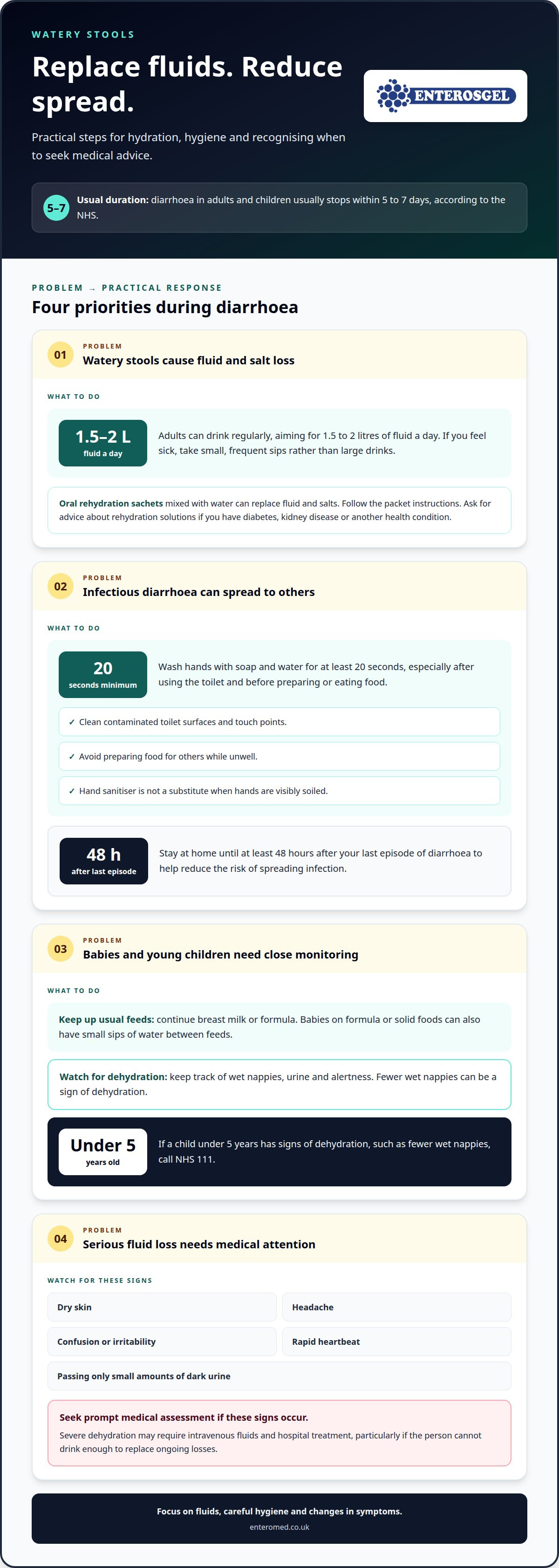
Replacing fluid and salts lost through watery stools helps reduce the risk of dehydration. Adults can drink regularly, aiming for 1.5 to 2 litres of fluid a day; if nausea makes drinking difficult, take small, frequent sips instead of large drinks. Oral rehydration sachets mixed with water can replace fluid and salts. Follow the packet instructions, and seek advice about rehydration solutions if you have diabetes, kidney disease or another health condition.
Choose drinks carefully. Water helps replace lost fluid, while fruit juice and fizzy drinks can worsen diarrhoea. Eat when you feel able; smaller portions may be easier to manage than a large meal. If food seems to aggravate symptoms, temporarily avoid items such as fatty or spicy dishes. A pharmacist can advise whether an over-the-counter option is suitable, particularly if you have a food intolerance or take other medicines.
Babies and young children need close attention to feeding and wet nappies. Continue breast milk or formula as usual; babies on formula or solid foods can also have small sips of water between feeds. If a child under 5 years has signs of dehydration, such as fewer wet nappies, call NHS 111.
Watch for signs of serious fluid loss, such as dry skin, headache, confusion, irritability, a rapid heartbeat or passing only small amounts of dark urine. Seek prompt medical assessment if these occur. Severe dehydration may require intravenous fluids and hospital treatment, particularly if the person cannot drink enough to replace ongoing losses.
Reduce infection transmission at home and work with careful hand hygiene and cleaning. The NHS advises washing hands with soap and water for at least 20 seconds, especially after using the toilet and before preparing or eating food. Clean contaminated toilet surfaces and touch points, avoid preparing food for others while unwell, and follow the 48-hour stay-home period after the last episode of diarrhoea.
At work, tell your workplace you’re unwell and stay home during that 48-hour period rather than risking spread to colleagues. At home, use a separate towel where possible, wash soiled clothing promptly, and clean bathroom surfaces after use. Soap and water are the key step; hand sanitiser is not a substitute when hands are visibly soiled.
If vomiting accompanies diarrhoea, continue offering small sips of fluid. For a child who is reluctant to drink, offer small amounts frequently rather than forcing a large drink at once. Keep track of wet nappies, urine and alertness, as changes can help you recognise dehydration early.
Medical evaluation and cause-specific treatment
Watery diarrhoea may follow an infection, food intolerance, a medicine side effect or an underlying bowel condition. If you’re considering how to stop watery stools at home, focus on fluids and changes in symptoms, and seek medical advice for warning signs or prolonged symptoms.
Dietary triggers and medicine side effects
Food patterns and medicine changes can help explain when symptoms started. For example, diarrhoea after dairy may be associated with lactose intolerance, while a new medicine or recent antibiotic use may also be relevant. Note meal times, doses and bowel changes before speaking with a GP or pharmacist. Don’t stop prescribed treatment without professional advice.
If symptoms recur after eating a particular food, describe the pattern rather than removing several food groups at once. A clinician can consider dietary triggers alongside other causes, including coeliac disease, microscopic colitis or inflammatory bowel disease. This matters because ongoing symptoms may need assessment and treatment for the underlying condition, not just temporary relief.
Over-the-counter options for watery stools
Some over-the-counter medicines can reduce loose stools for a short time, but may only manage symptoms. A pharmacist can advise whether an option is suitable, taking your symptoms, other medicines and health conditions into account. If you’re considering how to stop watery stools with medication, mention any fever, blood in your stools or significant abdominal pain.
Loperamide may reduce loose stools, but avoid it with bloody diarrhoea or a fever unless a healthcare professional says it is safe. Children under 12 should not be given medicine to stop diarrhoea. Don’t take antidiarrhoeal medicines daily without discussing this with a healthcare professional. If symptoms worsen or continue while using an over-the-counter treatment, seek medical advice rather than extending self-treatment.
Warning signs that need medical care
Blood or mucus in stools, severe abdominal pain, a high temperature and signs of dehydration need attention. Seek medical advice if your temperature reaches 38°C or above, or if you become confused, pass very little dark urine or cannot keep fluids down. These features can change the urgency of assessment, even when symptoms have only recently started.
According to the NHS, adults should contact their GP practice urgently if diarrhoea lasts more than 7 days. The NHS also advises calling NHS 111 if you are worried about a baby under 12 months. A clinician will consider the symptom pattern, medicines, travel and medical history when deciding whether tests or cause-specific treatment are appropriate.
Before an appointment, record when symptoms began, whether they have worsened, relevant medicines and recent travel. Mention blood or mucus in the stools, and whether you have pain or fever. These details help the doctor assess the problem and plan the next step. If symptoms are severe, seek medical advice rather than waiting for a routine appointment.
Common causes of watery stools
Watery stools can follow a brief infection, a food-related trigger, medicine use or an ongoing bowel condition. Timing and pattern offer useful clues: sudden symptoms after eating may differ from recurring episodes linked to particular foods or a chronic disease. These clues don’t confirm the cause, but they show why persistent or repeated diarrhoea needs a different response from a short-lived episode.
Infections can produce acute diarrhoea after contaminated food or water, and symptoms often settle as the illness passes. Viral diarrhoea can last 2 to 3 days, while food poisoning can last about 3 to 7 days without treatment. Travellers’ diarrhoea often lasts 1 or 2 days. These durations vary, so ongoing symptoms or worsening illness still need attention.
Food intolerance is another possible trigger. Around 8 in 100 people in the UK might have lactose intolerance, which can cause digestive symptoms after eating or drinking dairy products. A pattern after milk, yoghurt or other dairy may be worth discussing with a healthcare professional. Coeliac disease is another condition linked with persistent diarrhoea, and assessment can help distinguish it from temporary food-related symptoms.
Some causes involve the bowel’s response to food rather than infection. The gastrocolic reflex is a natural signal that stimulates the colon after food enters the stomach; an exaggerated response may contribute to urgency after meals. Recording meal times, bowel changes and recurring triggers can help a clinician assess whether symptoms fit a functional pattern, food intolerance or another condition.
Recurring watery stools can accompany IBS-D, where diarrhoea is the predominant bowel pattern. Other possible explanations include bile acid diarrhoea and microscopic colitis. Inflammatory bowel disease, including ulcerative colitis, is a separate group of conditions involving bowel inflammation. These causes need different assessment and treatment, so don’t automatically attribute repeated episodes to IBS or a recent meal.
Medicine effects also matter. Some treatments irritate the bowel, and recent antibiotic use or hospitalisation may be relevant when diarrhoea persists. Don’t stop a prescribed medicine on your own; discuss the timing and symptoms with a clinician. Rehydration helps replace fluid lost during a short-term illness, but it doesn’t identify or treat an underlying disease.
The practical distinction is between a brief episode and a recurring or prolonged pattern. Note when symptoms began, whether they follow eating and any other changes. Blood in the stools, continuing symptoms or repeated episodes call for medical assessment, rather than repeated self-treatment without understanding the cause.
Enterosgel
Enterosgel is a CE-certified medical device and oral intestinal adsorbent for diarrhoea symptoms. It binds bacterial toxins from pathogenic bacteria associated with diarrhoea, helping reduce the duration of diarrhoea and the number of loose stools. It is not a pharmaceutical medicine.
For adults, Enterosgel 225g Tube and Enterosgel Sachets (Pack of 10) provide two formats to consider. Enterosgel Kids 0+ is a gentle option for children because it contains no sugar, gluten, or preservatives. For children under 3 years old, it is advisable to consult a doctor prior to use. Unlike other antidiarrhoeal drugs, Enterosgel is safe for children under 12 years.
Keep replacing lost fluids, and seek medical advice for warning signs or persistent diarrhoea. To discuss Enterosgel, please contact us.
Choose a sensible next step for your symptoms
Knowing how to stop watery stools starts with recognising when home care is enough and when symptoms need medical attention. Keep up your fluid intake, note recurring triggers, and seek professional advice for persistent symptoms or warning signs. If digestive problems continue, recording when episodes occur and what you were eating can make a clinical discussion more useful.
Enterosgel offers the Enterosgel 225g Tube and Enterosgel Sachets (Pack of 10) for adults, as well as Enterosgel Kids 0+ for children. These options provide formats for different needs, while care for a child should follow the product instructions and appropriate medical advice.
If you’d like to discuss whether Enterosgel is relevant to your situation, ask Enterosgel about watery stools. Take the next step at a pace that feels manageable, and seek medical care when symptoms call for it.
Frequently Asked Questions
Can acute diarrhoea be avoided?
Not always: infections and other triggers can cause acute diarrhoea despite sensible precautions. Reduce the risk of infection by washing your hands before preparing food and after using the toilet, and handling food safely. If someone at home is ill, clean shared bathroom surfaces and avoid sharing towels. These steps help limit the spread of germs, but cannot prevent every episode.
What should I ask my doctor?
Ask which causes are most likely, whether your symptoms need tests and which signs mean you should seek help again. Give the doctor a clear account of when diarrhoea began, how often you pass stools, and whether you have pain, fever, blood or mucus. Mention recent travel, medicine changes and any food patterns you’ve noticed. This helps the doctor assess the episode in context.
Are there any over-the-counter treatments I can take?
A pharmacist can advise whether an over-the-counter treatment is suitable for your symptoms and other medicines. Loperamide may reduce loose stools for a short time, but avoid it with bloody diarrhoea or a fever unless a healthcare professional advises otherwise. Read the medicine leaflet and follow its instructions. Children under 12 should not be given medicine to stop diarrhoea; ask a pharmacist or doctor for suitable advice.
Do I need any more tests if diarrhoea lasts more than 7 days?
Adults should contact their GP practice urgently if diarrhoea lasts more than 7 days, according to the NHS. A longer episode does not automatically mean you need a particular test. Your GP will consider symptoms, medicines, travel and health history to decide whether further investigation is appropriate. Mention any change in severity, blood in stools, continuing fever or difficulty maintaining fluid intake during the assessment.
Does diarrhoea need to be monitored?
Yes. A brief record can help you see whether symptoms are improving, recurring or changing. Note bowel movement frequency, stool appearance, temperature, fluid intake and urine changes. For example, record whether symptoms follow a particular meal or medicine dose. Seek medical advice if you see blood, develop severe pain, become increasingly unwell or notice signs of dehydration.
How long does diarrhoea last?
Diarrhoea in adults and children usually stops within 5 to 7 days, according to the NHS, although the cause affects how long symptoms continue. A short-lived infection may settle sooner; recurring or prolonged symptoms need attention to identify an underlying condition. Contact your GP practice urgently if you’re an adult and diarrhoea lasts more than 7 days, or seek help sooner for serious warning signs.


