

Posted by Enterosgel

Could the time of day offer a clue to your symptoms? Morning timing can help you spot a pattern, but it rarely identifies the cause on its own. If you’re wondering what causes loose stools in the morning, possible triggers include coffee, alcohol, stress or a short-lived infection. The gastrocolic reflex, which stimulates the colon after food enters the stomach, may also contribute to urgency after breakfast.
A recurring pattern can be worrying, especially if it disrupts your routine. This guide explains common reasons for morning loose stools and what the timing and accompanying symptoms may suggest. It also covers which details to record, including food, daily habits and medicine changes, and when to seek medical advice. Persistent symptoms, blood in your stool, unexplained weight loss, severe pain or signs of dehydration deserve particular attention.
Key Takeaways
- Timing alone can’t show what causes loose stools in the morning. Look at patterns and other symptoms rather than drawing conclusions from one episode.
- Coffee and other foods or drinks may affect bowel habits, but triggers vary between people. Notice whether symptoms follow particular meals or routines.
- If symptoms recur, keep a simple record of timing, frequency, stool changes and related symptoms. This can help inform a conversation with a clinician.
- Seek medical advice if symptoms persist, worsen or come with concerning signs. The right next steps depend on the underlying cause.
Why loose stools happen in the morning: timing, routine and bowel activity
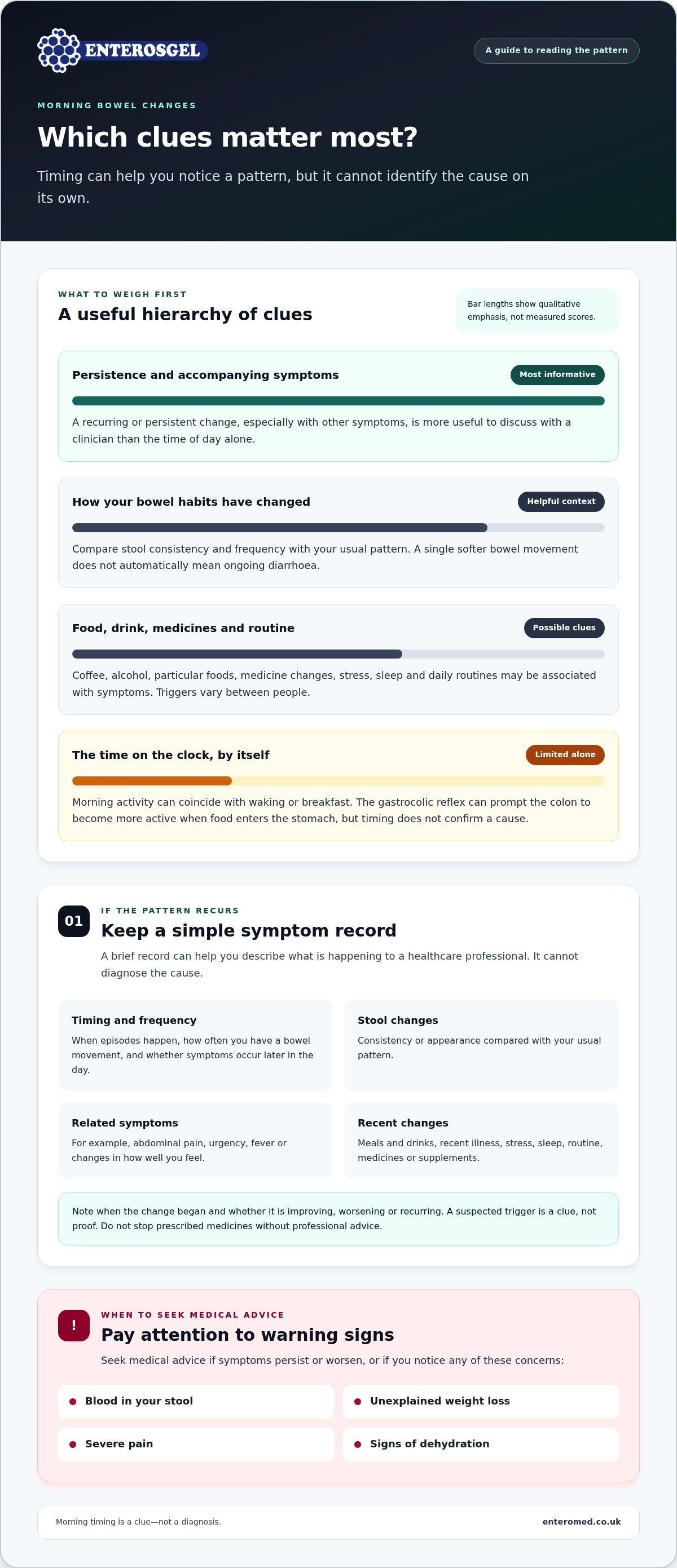
The time on the clock doesn’t always explain what causes loose stools in the morning. Bowel activity may coincide with waking, breakfast and the start of your daily routine, but timing alone can’t identify a cause or establish a condition. A single softer bowel movement may be a temporary change. A repeated change from your usual pattern is more useful to discuss with a healthcare professional.
What counts as loose stools, and how does it differ from diarrhoea?
Loose stools are softer or less formed than usual, and may appear mushy or watery. What’s typical varies between people, so pay attention to changes from your own usual pattern, including how often you go and whether you feel urgency. One softer bowel movement does not automatically mean you have ongoing diarrhoea. The pattern over time and any other symptoms provide more context than a single episode.
How the gastrocolic reflex can affect morning bowel movements
The gastrocolic reflex is the body’s natural signal for the colon to become more active when food enters the stomach. This can help explain why you feel an urge to use the toilet after breakfast. You may already feel the urge on waking, then notice it more after eating. Breakfast can coincide with a bowel movement without being the sole cause of a loose stool.
Morning bowel habits also coincide with daily routines. Getting out of bed, moving around, having a drink or eating after an overnight fast may all happen around the time you feel the urge to go. That timing can make a pattern noticeable, but it doesn’t show whether the change relates to a temporary trigger, your routine or another digestive issue.
Look at what happens across several mornings rather than interpreting one episode in isolation. Is the stool softer than usual or watery? Does the change happen before or after breakfast? Do you also experience urgency or discomfort? These observations can help you describe the pattern clearly, but they can’t confirm a diagnosis. Don’t assume a normal gastrocolic reflex explains recurring or troublesome symptoms.
Common causes of loose stools in the morning, from food to IBS-D
There isn’t one answer to what causes loose stools in the morning. Food, drink, medicines, stress and short-term infections can all affect bowel habits, and the same trigger may affect people differently. A morning pattern alone can’t confirm which, if any, is responsible.
Food, drink, medicines and short-term triggers
Coffee and other caffeinated drinks may prompt bowel activity or looser stools in some people. Alcohol and particular foods may also be associated with symptoms, although responses vary. A change to prescribed medicine or a supplement could be relevant, as could a short-term stomach infection. Stress may affect gut activity too, and can coincide with changes to routine, eating or sleep.
Look for a pattern rather than assuming one item is to blame. Brief notes can help you explain what has changed:
- Meals, snacks and drinks from the previous evening and morning
- New supplements, medicines or changes to how you take them
- When symptoms began and whether they ease or recur
- Stressful events or changes in sleep and daily routine
A suspected trigger is a clue, not proof of the cause. Don’t stop prescribed medicines without professional advice. If you think a medicine may be affecting your bowel movements, speak to your prescriber or pharmacist.
IBS-D and other ongoing digestive conditions
IBS-D is irritable bowel syndrome in which diarrhoea is the predominant bowel pattern. Recurring loose stools, particularly alongside other ongoing digestive symptoms, are a reason to discuss an assessment with a clinician rather than trying to diagnose yourself based on the time of day. Other conditions, including inflammatory bowel disease or coeliac disease, can also affect bowel habits, but symptoms alone don’t establish a diagnosis.
An assessment can help a clinician consider your history, symptoms and any relevant medicine or food changes. Seek advice if the pattern keeps returning, persists or affects daily life. Avoid relying on guesswork or repeatedly removing foods without guidance. For background on clinical research into diarrhoea-predominant IBS, see research on Enterosgel for IBS-D. Evidence about symptom relief does not identify or treat the underlying cause of an individual’s symptoms.
How to assess a recurring morning pattern and recognise warning signs
A brief record can help you describe symptoms clearly to a healthcare professional. It may also show whether the pattern is limited to mornings or happens at other times. Persistence and accompanying symptoms matter more than timing alone when deciding what needs attention. Your notes can support an assessment, but they can’t diagnose the cause.
What to record before seeking advice
Keep the record simple and continue your usual diet unless a clinician advises otherwise. Include:
- When each episode happens, how often you have a bowel movement and whether symptoms occur later in the day
- Changes in stool consistency or appearance compared with your usual pattern
- Related symptoms, such as abdominal pain, urgency, fever or changes in how well you feel
- Meals and drinks, any recent illness, and changes to medicines or supplements
Where possible, note when the change began and whether it is improving, worsening or recurring. You don’t need to identify a cause or cut out several foods for the record to be useful. If you suspect a medicine is involved, write down its name and when it was started or changed. Don’t stop prescribed treatment without professional advice.
When to seek medical advice
Seek prompt professional assessment if you notice blood in your stools or have severe symptoms. Contact a healthcare professional if symptoms persist, keep returning or get worse, particularly if they affect your daily activities. Mention a fever or a marked change in your general wellbeing too.
Loose stools can lead to dehydration. Watch for signs such as a dry mouth, unusual thirst, passing less urine than usual, dark urine or dizziness. If these occur, seek medical advice, especially if you’re struggling to keep fluids down or feel increasingly unwell.
Before speaking to a clinician, gather your notes and list any questions or concerns. Describe what has changed, when it happens and what other symptoms you’ve noticed. This gives the clinician a clearer picture and helps them decide whether further assessment is appropriate.
Morning loose stools: next steps and symptom relief
What to do next depends on the cause, so symptom relief shouldn’t replace assessment when symptoms persist or worsen. If symptoms are mild, keep drinking fluids regularly and note when loose stools occur, how often, and whether anything else has changed. If you’re losing fluid, replacing it is important. A pharmacist can advise whether an oral rehydration solution is suitable for you.
Practical steps while symptoms are mild
Keep meals and drinks as usual unless a healthcare professional recommends a change. A record of food, caffeine, other drinks, symptoms and medicines can help you spot patterns without making restrictive dietary changes. Don’t stop prescribed medicines or change how you take them without professional advice. If the change continues, returns frequently or affects your daily routine, speak with your GP or pharmacist.
Seek advice sooner if you develop concerning symptoms, such as blood in your stool, severe pain or signs of dehydration. A healthcare professional can consider the full pattern and help decide whether further assessment or a particular form of symptom management is appropriate. One remedy won’t suit every cause of loose stools.
Where an intestinal adsorbent may fit
ENTEROSGEL® is a drug-free intestinal adsorbent medical device, not a pharmaceutical medicine. It does not bind or capture bacteria. Instead, it captures bacterial toxins from pathogenic bacteria which cause leaky gut and diarrhoea. This action is intended to help reduce the duration of diarrhoea and the number of loose stools. It does not establish or treat the underlying cause of a morning pattern, and it isn’t suitable for every cause.
A 440-patient NHS randomised controlled trial studied Enterosgel for IBS-D. The clinical research on Enterosgel for IBS-D relates to diarrhoea symptoms in the people studied, not to diagnosing the cause of an individual’s symptoms. For IBS-D symptoms and daily usage, the product should be taken in 30-day courses, with each course followed by a short break. Follow the product instructions and seek clinical advice if symptoms persist or you’re unsure what’s appropriate.
If you’re considering Enterosgel for diarrhoea symptom relief, review the information about the Enterosgel 225g tube. For an overview of the product and its clinical research, explore Enterosgel and its research. These resources can help you consider an option, but they don’t replace appropriate medical assessment.
Take your next step with confidence
If you’re still wondering what causes loose stools in the morning, use your symptom notes to guide a conversation with a GP or pharmacist rather than trying to reach a diagnosis alone. Seek professional advice if symptoms persist, worsen or come with concerning signs. The right approach depends on what’s behind the change.
For diarrhoea symptom relief, ENTEROSGEL® is a drug-free intestinal adsorbent medical device, not a pharmaceutical medicine. It does not bind or capture bacteria; it captures bacterial toxins from pathogenic bacteria which cause leaky gut and diarrhoea. In the 440-patient NHS trial for IBS-D, 76% of patients experienced symptom relief, with no serious adverse events. These results relate to the trial and don’t establish the cause of your symptoms or guarantee an individual outcome.
Explore Enterosgel and its clinical research, and continue to seek appropriate medical advice for persistent or concerning symptoms. A clear record and the right support can help you take the next step with confidence.
Frequently Asked Questions
Why do I have loose stools in the morning but not later in the day?
Bowel activity can be more noticeable after waking or eating, but symptoms limited to the morning don’t identify the cause. Consider whether the pattern changes on days when your breakfast or morning routine differs, and note any symptoms later in the day too. The question of what causes loose stools in the morning has several possible answers, not one diagnosis. If the pattern keeps recurring, discuss it with a healthcare professional.
Can coffee cause loose stools in the morning?
Coffee may stimulate bowel activity in some people, so it could be relevant if you notice symptoms after your usual morning cup. It isn’t necessarily the cause, and sensitivity varies. Note whether the timing seems consistent, including on days when you have coffee with breakfast or at a different time. Avoid making major dietary changes based on one episode. Seek medical advice if symptoms persist or come with other concerns.
Can IBS cause loose stools every morning?
IBS-D, where diarrhoea is the predominant bowel pattern, can be associated with recurring loose stools, but a daily morning pattern alone cannot confirm IBS-D. Track whether the change comes with abdominal discomfort or urgency, and note days when your bowel habits differ. Share this pattern and your health history with a clinician, especially if symptoms persist or affect work, travel or other usual activities.
Can stress cause loose stools in the morning?
Stress may contribute to changes in bowel habits, but it shouldn’t automatically be treated as the explanation. Note whether symptoms coincide with stressful events, disrupted sleep or changes to your routine, and whether the pattern also occurs during calmer periods. This context may help a clinician assess the situation. For those navigating ongoing stress or anxiety that affects physical health, clinics such as kingsfordmedicalservices.com provide specialist support and medical care to address underlying wellbeing concerns. Seek advice if symptoms continue, worsen or occur with blood in your stool, severe pain or signs of dehydration.
When should I see a doctor about loose stools in the morning?
Arrange medical advice if loose stools persist, recur frequently, worsen or interfere with daily activities. Contact a healthcare professional promptly if you notice blood, severe abdominal pain, fever, signs of dehydration or a marked change in your wellbeing. Mention any recent illness and changes to your medicines. If symptoms feel severe or worsen rapidly, seek urgent medical advice rather than waiting to see whether a diary reveals a pattern.
Could a medicine be causing loose stools in the morning?
Some medicines can affect bowel habits, and a recent start or dose change may be useful to mention. Note the medicine’s name, when you began taking it and when the bowel change started. This timing is a clue, not proof. Don’t stop or alter prescribed treatment on your own. A GP or pharmacist can review your concerns and advise whether the medicine could be contributing or whether further assessment is needed.


