

Posted by Enterosgel

A very restrictive diet isn’t usually necessary when your stomach is upset. If you’re wondering what to eat when you have an upset stomach, NHS guidance is to eat when you feel able, starting with small, light meals, and to focus on fluids if you have diarrhoea or vomiting. It can be hard to know which foods will feel comfortable, especially when advice seems to rule out so much.
This guide offers practical options to try as symptoms settle, from plain rice, toast and potatoes to gentle drinks and small sips of fluid. You’ll also learn which foods may aggravate symptoms, why a limited diet such as BRAT shouldn’t be followed for longer than necessary, and how to reintroduce foods according to your tolerance. Food choices can support comfort, but they can’t replace medical care when it’s needed. We’ll explain signs of dehydration and other reasons to seek professional advice, so you can make manageable choices without restricting your diet unnecessarily.
Key Takeaways
- An upset stomach describes symptoms, not a single diagnosis; nausea, diarrhoea, bloating and abdominal discomfort can have different triggers.
- Use symptom-led choices to decide what to eat when you have an upset stomach, and pay attention to what you tolerate.
- Start with manageable portions and gradually widen your food choices as symptoms settle.
- Frequent small sips can help you keep up your fluid intake; watch for signs that dehydration may need medical attention.
- Seek professional advice if symptoms are severe, persistent or accompanied by concerning signs.
What an upset stomach can mean, and what food can realistically do
“Upset stomach” describes how you feel; it isn’t a diagnosis. It can refer to nausea, loose stools, bloating or abdominal discomfort, sometimes in combination. These symptoms can have different triggers, and the same symptom can occur for different reasons. Food choices may make eating feel more manageable, but symptoms alone can’t confirm what’s causing them.
Common symptoms do not all call for the same food
Nausea may make the smell, texture or size of a meal difficult to tolerate. With diarrhoea, the priority is often choosing food that feels manageable while keeping up your fluid intake. Bloating can make larger meals uncomfortable, while abdominal discomfort may affect your appetite or make it harder to tell whether a particular food suits you.
There’s no single menu that works for everyone. Let your main symptom and your own tolerance guide your choices: notice what feels comfortable, and don’t force foods that make you feel worse. A symptom pattern can help you decide what to try, but it can’t identify a cause on its own.
When dietary changes may help, and their limits
Simple adjustments can support comfort while symptoms settle. You might find smaller portions easier than a full meal, or prefer familiar foods you’ve tolerated before. If a particular food seems to worsen your symptoms, set it aside temporarily and see whether you feel more comfortable. You don’t need to assume that one food will suit everyone or that a restrictive diet is necessary.
Food may ease symptoms, but symptom relief is not the same as treating the underlying cause. What to eat when you have an upset stomach depends on what you’re experiencing and what you can tolerate. No food can be relied on to stop symptoms or address every cause. Dietary changes are supportive care, not a diagnosis or a guaranteed remedy.
Seek professional medical advice if symptoms are severe, persistent or worrying, or if you’re concerned about dehydration. A clinician can help assess whether something beyond food choices is needed. You don’t have to wait for dietary changes to work if you feel seriously unwell.
What to eat for nausea, diarrhoea or bloating
There’s no single menu for every upset stomach. What to eat when you have an upset stomach depends on your main symptom and what you can tolerate. Start with small, simple portions; a food that suits one person may not feel comfortable for another.
Gentle choices when nausea or low appetite is the main problem
If nausea or low appetite makes a full meal unappealing, try a small portion of a plain food you already know sits well. Options might include dry toast, plain crackers, white rice, boiled potato or clear broth. These are examples, not remedies: none is guaranteed to relieve nausea. Eat slowly, and pause or try a different option if the smell, taste or texture worsens how you feel.
Food choices when diarrhoea or bloating is present
With diarrhoea, plain foods such as white rice, toast or potatoes may be manageable if you tolerate them. A banana or a little clear broth may also suit some people. These choices can make eating more comfortable, but they don’t establish or treat the cause of diarrhoea. Keep drinking fluids as well as choosing food.
If bloating is prominent, try smaller portions and notice whether particular foods seem to trigger discomfort. Some high-FODMAP foods can aggravate symptoms for some people with IBS, but this varies. Avoid cutting out whole food groups without a clear reason. A food and symptom diary can help you spot patterns to discuss with a health professional. Recurrent IBS-D symptoms are worth discussing with a healthcare professional, who can help assess them.
Keep the plan flexible
The BRAT diet, made up of bananas, rice, stewed apple and toast, is too limited to serve as a complete or prolonged eating plan. You don’t need to restrict yourself to those foods. As your appetite and tolerance improve, gradually return to a wider range of familiar foods. Let your symptoms guide what to eat when you have an upset stomach, and change course if a choice doesn’t suit you.
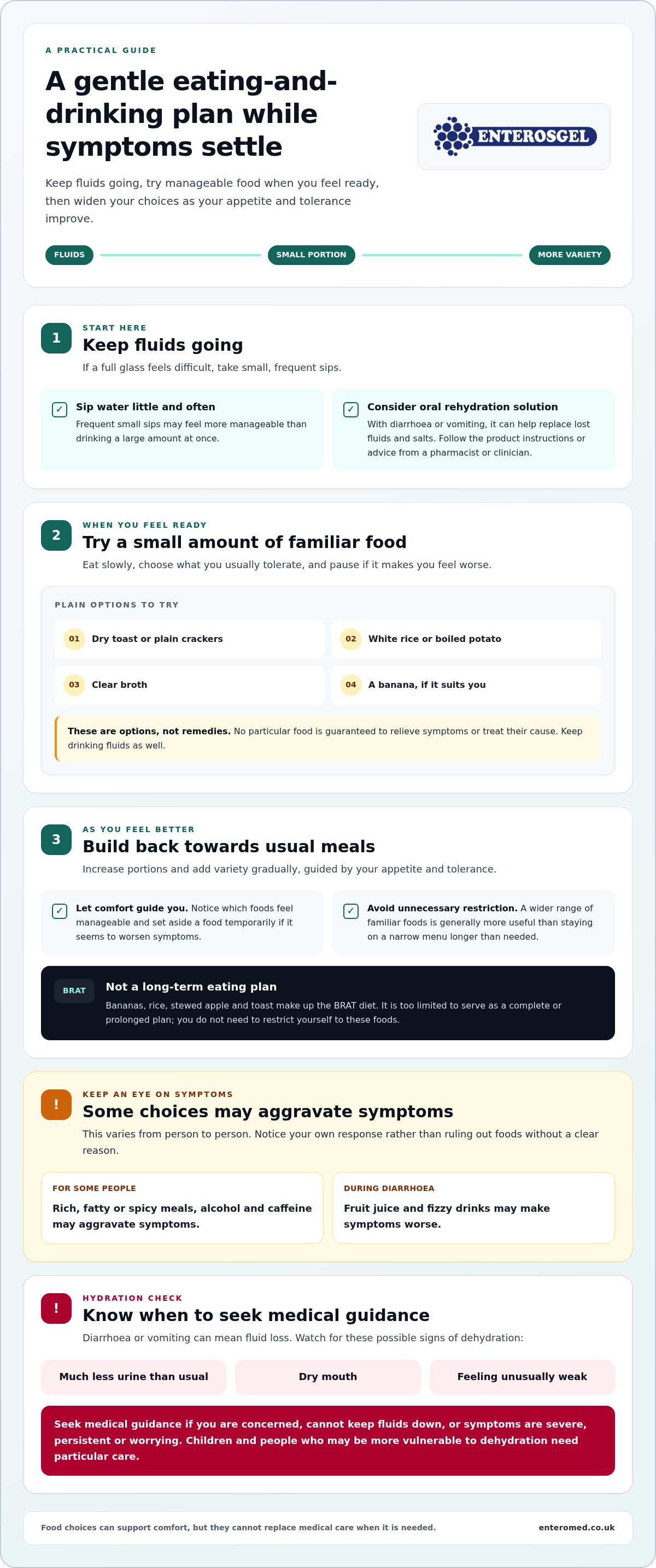
How to eat and drink while symptoms settle
A simple sequence can make eating feel more manageable: keep fluids going, try a small portion of food when you feel ready, then gradually return to your usual meals as your appetite and tolerance improve. You don’t need to wait until every symptom has gone before widening your choices.
A simple eating and drinking sequence
- Sip fluids often. If a full glass feels difficult, take small, frequent sips of water. With diarrhoea or vomiting, oral rehydration solution can help replace lost fluids and salts; follow the product instructions or advice from a pharmacist or clinician.
- Try a little food when ready. Choose a small amount of a familiar, plain food you’ve tolerated before. Eat slowly and pause if it makes you feel worse. There’s no need to force a meal when your appetite is low.
- Build back towards usual meals. As you feel better, increase portion sizes and add more variety according to your appetite and tolerance. Returning to a varied diet is generally more useful than staying on a narrow menu longer than needed.
Pay attention to hydration, especially if you’re losing fluid through diarrhoea or vomiting. Passing much less urine than usual, a dry mouth or feeling unusually weak can be signs of dehydration. Seek medical guidance if you’re concerned or can’t keep fluids down. Children and people who may be more vulnerable to dehydration need particular care.
Foods and drinks that may aggravate symptoms
Rich, fatty or spicy meals, alcohol and caffeine can aggravate symptoms for some people. During diarrhoea, fruit juice and fizzy drinks may also make symptoms worse. These aren’t universal bans: tolerance differs, and a food that causes discomfort during an episode may be fine at another time.
For now, consider temporarily limiting items you already know trigger symptoms. Once you’re improving, reintroduce them gradually rather than excluding whole food groups without a clear reason. If symptoms began during or after travel, consider the circumstances alongside your food and fluid choices.
When food is not enough: medical advice and diarrhoea support
Food choices can support comfort, but they can’t diagnose the cause of an upset stomach or manage every illness. Knowing what to eat when you have an upset stomach is only one part of care. Seek professional advice if symptoms are severe, persistent or getting worse, rather than relying on dietary changes alone.
Signs that need prompt medical advice
Contact a healthcare professional promptly if you have blood in your stools, severe abdominal pain, persistent vomiting or signs of dehydration. These can include passing much less urine than usual, a dry mouth or unusual weakness. If you can’t keep fluids down or are worried about how quickly symptoms are changing, seek medical guidance without delay.
Take extra care with babies and children, who can become dehydrated quickly. Get medical advice if a child is unusually drowsy, passing less urine, unable to keep fluids down or has blood in their stools. Don’t delay assessment because you’re trying dietary changes or a home treatment. If you’re concerned about a child’s symptoms, contact a healthcare professional.
Where diarrhoea-specific support may fit
For diarrhoea, ENTEROSGEL® is a drug-free intestinal adsorbent medical device, not a treatment for every upset-stomach symptom. It does not bind or capture bacteria. It captures bacterial toxins from pathogenic bacteria, which cause leaky gut and diarrhoea. This process helps reduce the duration of diarrhoea and the number of loose stools. It doesn’t replace rehydration or medical assessment when needed.
For children, ENTEROSGEL® contains no sugar, gluten or preservatives. Unlike other antidiarrhoeal drugs, Enterosgel is safe for children under 12 years. For children under 3 years old, it is advisable to consult a doctor prior to use. Follow the product instructions, and seek medical advice if symptoms are concerning.
Evidence for ENTEROSGEL® includes an NHS randomised controlled trial involving people with IBS-D. You can read more about the research on ENTEROSGEL®. For diarrhoea support, review the ENTEROSGEL® 225g tube details and follow the instructions for use.
Choose your next step with confidence
As you recover, let your appetite and tolerance guide your food choices, and seek medical advice if symptoms are severe, persistent or worsening. If diarrhoea is the main concern, consider support intended specifically for diarrhoea rather than expecting a food choice to address every cause.
ENTEROSGEL® has been investigated for IBS-D in a 440-patient NHS randomised controlled trial. A randomised controlled trial was also published in GUT in 2022. These findings relate to clinical research, not a promise that the product will suit every person or every upset stomach.
Food and fluids remain practical parts of self-care, while professional guidance matters if you’re worried about your symptoms.
For diarrhoea-specific support, explore ENTEROSGEL® and review its intended use before deciding whether it’s appropriate for you.
Frequently Asked Questions
What can I eat when I have an upset stomach and feel nauseous?
Choose a small amount of food with a mild smell and flavour, and eat somewhere well ventilated if cooking smells make nausea worse. Cold or room-temperature food may be easier to face than a hot meal. Take your time, and stop if eating increases your discomfort. If nausea keeps you from eating or drinking adequately, or is unusual for you, contact a healthcare professional for advice.
Are bananas, rice or toast good for an upset stomach?
They may be suitable if you usually tolerate them, but none is essential or guaranteed to ease symptoms. Try one at a time rather than combining several new choices, so it’s easier to notice how you respond. There’s no need to finish a portion if your appetite changes. If you have a medical condition that affects your diet, follow advice already given by your healthcare professional.
What should I drink when I have diarrhoea or vomiting?
Water is a useful first choice, while an oral rehydration solution can be helpful when fluid loss is a concern. Mix a rehydration product exactly as its packet directs; don’t make it stronger or weaker. If you’re unsure which option is suitable, a pharmacist can advise you. People with conditions that require fluid restrictions should follow their clinician’s individual guidance.
Can I eat normally after an upset stomach?
Usually, you can return towards your usual eating pattern as your appetite allows. You don’t need to wait for a particular number of symptom-free hours or days. If a meal feels too much, have less and try again later. Keep a brief note of foods and symptoms if discomfort returns repeatedly; this can help you describe the pattern clearly to a healthcare professional.
Is the BRAT diet recommended for children with diarrhoea?
No. Bananas, rice, apple purée and toast shouldn’t make up a child’s full or prolonged diet, as this can limit dietary variety. Offer foods appropriate for the child’s age and usual eating stage. If considering Enterosgel for a child’s diarrhoea, it contains no sugar, gluten or preservatives. Unlike other antidiarrhoeal drugs, Enterosgel is safe for children under 12 years. For children under 3 years old, it is advisable to consult a doctor prior to use.
When should I seek medical advice for an upset stomach?
Seek professional advice if you’re unsure how serious symptoms are, if they aren’t settling, or if they’re affecting your ability to manage everyday activities. In the UK, you can contact your GP or NHS 111 for guidance; use emergency services if you believe there’s an immediate threat to life. For a baby or child, seek advice promptly if you’re concerned rather than waiting to see whether food changes help.


