

Diarrhoea from Food Poisoning Treatment: A Clinical Recovery Guide
Recent clinical data indicates a sharp rise in confirmed foodborne illnesses, with hospitalisations more than doubling in a single year as pathogens become increasingly aggressive. You're likely all too familiar with the sudden, debilitating bowel urgency and the sharp abdominal cramping that follows a contaminated meal. It's a distressing experience that leaves you worried about dehydration and understandably confused about which diarrhoea from food poisoning treatment is safe for your family, especially when children are involved.
You don't have to simply wait for the illness to pass or rely on medications that merely slow down your gut. This clinical recovery guide shows you how to manage the condition by physically trapping and removing harmful pathogens and toxins from your system. We'll explore drug-free, non-systemic methods that provide rapid relief and offer clear guidance on home recovery for both adults and infants. You'll discover a methodical approach to gut health that prioritises safety, purity, and proven science to help your family recover quickly and safely.
Key Takeaways
- Learn how bacterial toxins trigger an inflammatory response and why physical removal is more effective than simply masking symptoms.
- Compare different philosophies of care to find a diarrhoea from food poisoning treatment that addresses the root cause rather than just slowing bowel movements.
- Master the clinical steps for home recovery, from immediate electrolyte replacement to the use of targeted intestinal adsorbents.
- Understand the mechanism of drug-free medical devices that act as a physical trap for pathogens whilst remaining completely non-systemic.
- Gain clear guidance on safe management strategies for vulnerable groups, including children and infants from birth.
Understanding Diarrhoea from Food Poisoning: Causes and Common Symptoms
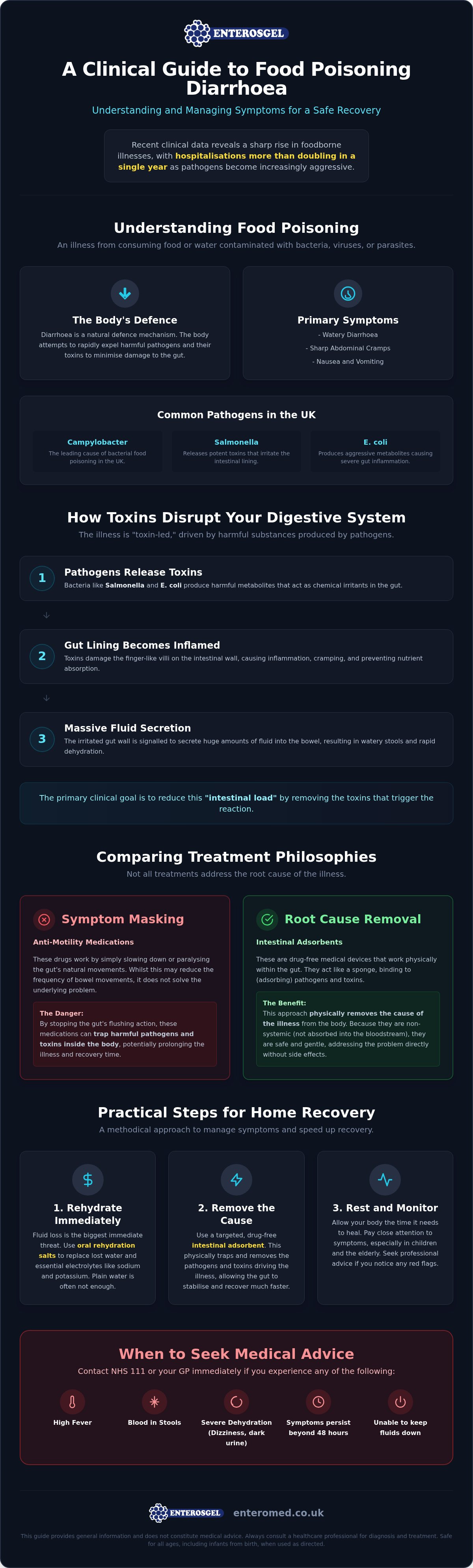
Food poisoning is an illness caused by consuming contaminated food or water containing bacteria, viruses, or parasites. Maintaining a sterile water supply is a critical preventative measure, and for those seeking high-performance purification systems, you can visit Intellect Aqua to learn about advanced treatment technologies. Once ingested, these pathogens begin to multiply or release toxins that irritate the gut wall, disrupting your normal digestive processes. This leads to the primary symptoms of watery diarrhoea, abdominal cramps, nausea, and vomiting. It's essential to recognise that diarrhoea is the body’s natural defence mechanism to expel harmful substances as quickly as possible. Food poisoning diarrhoea is a symptomatic response to intestinal pathogens that requires targeted management. Because of this, an effective diarrhoea from food poisoning treatment shouldn't just stop the gut from moving, but should help clear the underlying cause.
Common Pathogens Behind Foodborne Illness
In the United Kingdom, certain pathogens are frequently responsible for gastric distress. Foodborne illness is often driven by Campylobacter, which remains the leading cause of bacterial food poisoning in the UK, alongside Salmonella and E. coli. These bacteria release potent toxins that irritate the intestinal lining, causing inflammation and triggering the secretion of fluids into the bowel. This process is distinct from a viral "stomach bug." Whilst viruses like norovirus are common, bacterial infections often produce more aggressive metabolites. Recent data indicates a trend towards increased severity in foodborne outbreaks, making it vital to understand that your recovery depends on how effectively these irritants are cleared from your system.
When Diarrhoea Becomes a Medical Concern
Most cases of gastric distress resolve within a few days with rest and hydration. However, certain red flags necessitate immediate professional advice. You should contact NHS 111 or your GP if you experience a high fever, notice blood in your stools, or observe signs of severe dehydration such as dark urine and dizziness. Monitoring the frequency and consistency of bowel movements is essential, particularly for vulnerable groups like young children and the elderly. If symptoms persist beyond 48 hours or if you're unable to keep fluids down, professional intervention is required. Finding the right diarrhoea from food poisoning treatment early can prevent these complications and ensure a smoother, safer clinical recovery for the whole family.
The Mechanism of Infection: How Toxins Disrupt Your Digestive System
When you consume contaminated food, the resulting illness is often "toxin-led." Pathogens like Salmonella or E. coli don't just occupy space; they produce harmful metabolites that act as chemical irritants. These toxins signal the intestinal wall to secrete massive amounts of fluid, which results in the watery stools characteristic of the condition. Whilst the body is naturally attempting to flush these toxins out, the process is often slow and physically exhausting. An effective diarrhoea from food poisoning treatment focuses on reducing this "intestinal load" by removing the toxins that trigger the reaction in the first place. By lowering the concentration of these irritants, you allow the digestive system to stabilise more rapidly.
The Role of the Intestinal Lining
The lining of your gut is covered in tiny, finger-like projections called villi. These are responsible for absorbing nutrients and water into the bloodstream. When pathogens release toxins, these villi become inflamed and damaged, leading to temporary malabsorption. This inflammation is what causes the sharp, rhythmic cramping sensations you feel. Protecting the integrity of the gut wall is vital for a quick return to health. Without intervention, the intestinal barrier remains under siege, prolonging recovery time. Using a gentle, drug-free intestinal adsorbent can help trap these irritants before they cause further damage.
Dehydration: The Secondary Threat
Rapid fluid loss is the most immediate danger during an acute episode. Diarrhoea doesn't just remove water; it strips the body of vital electrolytes like sodium and potassium. These minerals are essential for heart and muscle function. Clinical Treatment for Food Poisoning prioritises rehydration to prevent systemic failure. Plain water often isn't enough because the gut needs electrolytes to absorb the water effectively. This is why oral rehydration salts are recommended alongside treatments that address the cause of the fluid loss. When choosing a diarrhoea from food poisoning treatment, it is important to consider how it interacts with your hydration levels. Reducing the toxin load helps the gut return to its normal absorptive state, ensuring that the fluids you drink actually stay in your system.
Comparing Treatment Options: Adsorbents vs Anti-Motility Medications
When you are faced with sudden gastric distress, the choice of diarrhoea from food poisoning treatment usually falls into one of two categories: "stopping the gut" or "cleansing the gut." These two philosophies represent very different approaches to recovery. One seeks to halt the physical symptoms of the illness by chemically altering gut movement, whilst the other aims to physically remove the irritants causing the problem. Understanding the clinical difference between these methods is essential for choosing a path that supports your body's long-term recovery rather than just masking the immediate discomfort.
Anti-Motility Drugs: Pros and Cons
Anti-motility medications, such as loperamide, are perhaps the most common over-the-counter options. These drugs work by binding to receptors in the gut wall to slow down the rhythmic contractions of the intestines. This effectively "stops" the diarrhoea for a period, which can be useful in emergency scenarios, such as when you must travel or have no access to a toilet. However, this approach has a notable clinical disadvantage. By slowing down the transit of waste, these medications can trap pathogens and their toxic metabolites inside your digestive tract for longer. This may inadvertently prolong the infection or lead to increased bloating and discomfort. It is also important to note that these drugs carry strict age restrictions and are generally not suitable for children under 12. For a more detailed look at when these might be appropriate, you can consult professional resources on Food poisoning diagnosis and treatment.
Intestinal Adsorbents: A Targeted Approach
In contrast to drugs that enter the bloodstream, intestinal adsorbents offer a physical, non-systemic method of treatment. Adsorption is a scientific process where molecules of toxins, viruses, and bacteria are trapped onto the surface of a porous substance. You can think of an adsorbent as a "smart sponge" that travels through the digestive tract. It does not stop the gut from moving; instead, it selectively binds to the harmful substances that trigger fluid secretion and inflammation. Because these medical devices are not absorbed into the body, they don't interfere with your internal chemistry or cause systemic side effects. This makes them an increasingly popular diarrhoea from food poisoning treatment for those seeking a drug-free, gentle recovery. By reducing the concentration of toxins in the bowel, adsorbents help the intestinal lining return to its normal function more naturally, providing relief without trapping the cause of the illness inside your system.
Practical Steps for Managing Food Poisoning Diarrhoea at Home
Managing an acute episode of gastric distress requires a methodical, step-by-step approach to recovery. Your immediate priority is rehydration. Diarrhoea rapidly depletes the body of water and essential electrolytes, which can lead to systemic complications if not addressed. Using oral rehydration salts (ORS) is the most effective way to restore this balance, as these clinical formulations are specifically designed to be absorbed even when the gut is inflamed. Alongside rehydration, introducing a drug-free intestinal adsorbent helps to begin the physical removal of the pathogens and metabolites causing the irritation. This dual-action strategy forms the foundation of an effective diarrhoea from food poisoning treatment plan at home.
During the first few hours of intense symptoms, adopt a "rest and digest" approach. It's often best to avoid all solid foods to give your gastrointestinal tract time to stabilises. Once the frequency of bowel movements begins to decrease, you can gradually reintroduce bland foods. The traditional BRAT diet (bananas, rice, applesauce, and toast) remains a reliable clinical standard because these foods are low in fibre and easy for a compromised digestive system to process. For those seeking a modern, evidence-led addition to their recovery kit, you can buy Enterosgel online to help trap and remove the underlying cause of the illness.
The Recovery Diet: What to Eat and Avoid
As you recover, certain substances can inadvertently prolong your discomfort. It's vital to avoid dairy products, spicy dishes, fatty foods, and caffeine, as these act as significant irritants to an already inflamed intestinal lining. You should also steer clear of sugary fizzy drinks. Whilst they may seem like a source of energy, the high sugar content increases osmotic pressure in the bowel, which can actually draw more water out of your body and make the diarrhoea worse. Instead, stick to gentle alternatives such as clear broths, plain crackers, and boiled potatoes until your digestion returns to its normal rhythm.
Hygiene and Prevention of Spread
Foodborne pathogens are highly transmissible, making strict hygiene essential to protect other members of your household. You must wash your hands thoroughly with soap and warm water after every bathroom visit and before handling any food. It's a common misconception that alcohol-based hand gels are sufficient; however, they are often less effective against certain resilient stomach bugs than traditional hand washing. Frequently clean shared bathroom facilities, including taps and door handles, with a bleach-based disinfectant. In the UK, the standard clinical guidance is to remain at home and away from work or school for at least 48 hours after your last episode of diarrhoea or vomiting to ensure the risk of infection has fully passed.
Enterosgel: A Clinical Solution for Targeted Toxin Removal
Enterosgel represents a modern advancement in gastric care, functioning as a clinically proven medical device designed specifically to address acute digestive distress. Unlike traditional medications that rely on chemical interactions with your body's systems, this organic mineral gel works through a purely physical mechanism. It has been validated by over 30 years of clinical use, providing a reliable option for those seeking an effective diarrhoea from food poisoning treatment. By acting as a selective adsorbent, it targets the harmful substances in the gut without interfering with the body's natural recovery processes.
The unique structure of the gel allows it to act like a "smart sponge" within the intestinal tract. It selectively binds to medium-weight molecules, such as bacterial toxins, viruses, and other pathogens, whilst leaving essential nutrients, vitamins, and healthy microflora untouched. This targeted action is what makes it such a high-performance healthcare tool. Because the gel is not absorbed into the bloodstream, it remains non-systemic, meaning it travels through the gut, traps the irritants, and is then expelled naturally along with the bound toxins. This physical "trapping" action offers a superior way to handle the root cause of foodborne illness.
Safety and inclusivity are central to the Enterosgel philosophy. The product is suitable for the entire family, including vulnerable groups such as pregnant women, the elderly, and infants. Enterosgel ensures that even the youngest members of the household have access to gentle, effective protection from birth. By providing a stable and reliable method for toxin removal, it serves as a "Gentle Protector" for the gut, helping to restore normal function and comfort quickly.
Why Choose a Drug-Free Adsorbent?
Choosing a drug-free, non-systemic diarrhoea from food poisoning treatment offers several clinical advantages. Because Enterosgel is not absorbed by the body, it does not cause the systemic side effects often associated with chemical anti-diarrhoeals, such as drowsiness or constipation. This makes it a favourite for parents and individuals who may already be taking other medications for chronic conditions. It works in harmony with your physiology, removing the cause of the distress rather than simply suppressing the symptoms. This ensures that your recovery is thorough and grounded in scientific rigour.
Convenient Formats for Home and Travel
To ensure you're prepared for sudden illness, Enterosgel is available in formats tailored for different scenarios. The Enterosgel 225g Tube is a staple for the UK family medicine cabinet, providing multiple doses for home use. For those who are commuting or on holiday, Enterosgel Sachets offer targeted relief in a portable, travel-friendly format. Using the gel is straightforward; you can simply mix the required dose with water or take it directly from the sachet or a spoon. This flexibility ensures that professional-grade protection is always accessible, whether you're at home or abroad.
Securing Your Family’s Recovery from Foodborne Illness
Effective recovery requires a shift in focus from merely masking symptoms to physically addressing the underlying cause. By prioritising rehydration and the targeted removal of pathogens, you reduce the overall intestinal load and allow the gut lining to repair itself naturally. This methodical approach ensures that your choice of diarrhoea from food poisoning treatment supports long-term digestive health without introducing harsh chemicals into your system. It's about providing your body with the stability it needs to heal from within.
Enterosgel serves as a modern essential for the UK family medicine cabinet, offering a bridge between scientific rigour and gentle care. As a clinically proven medical device with over 30 years of clinical use worldwide, it's a reliable solution that's suitable for children from birth. You can manage gastric distress with the confidence of a professional medical solution that remains accessible and safe for the whole family. Order Enterosgel today for fast, drug-free relief from food poisoning diarrhoea. With the right tools and a clear recovery plan, you'll be able to navigate the discomfort of food poisoning with ease and return to your daily life sooner.
Frequently Asked Questions
How long does diarrhoea from food poisoning usually last?
Diarrhoea from food poisoning typically lasts between one and three days, although certain bacterial infections can persist for up to a week. Most cases in the UK are self-limiting and resolve as the body naturally clears the pathogens through bowel movements. If your symptoms continue beyond 48 hours or you notice red flags like blood in your stools, you should contact your GP or NHS 111 for a clinical assessment.
Can I take Enterosgel alongside other medications for food poisoning?
You can take Enterosgel alongside most other medications, provided you maintain a specific time interval between doses. Because it is a high-performance adsorbent, it's recommended to take the gel one to two hours before or after other oral medicines to ensure their efficacy is not affected. This allows the gel to focus on trapping pathogens as part of your diarrhoea from food poisoning treatment without interfering with your regular prescriptions.
Is it better to stop diarrhoea or let it run its course?
It is generally better to support the body in removing toxins rather than simply stopping the gut or letting the illness run its course unaided. Anti-motility drugs can trap harmful bacteria inside your system, whilst doing nothing at all can lead to severe dehydration. Using a targeted adsorbent offers a middle path by physically cleansing the gut of irritants whilst allowing natural bowel movements to continue safely.
What is the difference between Enterosgel and charcoal for food poisoning?
The primary difference lies in selectivity and physical composition. Whilst activated charcoal is a broad-spectrum adsorbent that can bind to nutrients and medications, Enterosgel is an organic mineral gel that selectively targets medium-weight molecules like toxins and pathogens. This makes it a more refined option for a diarrhoea from food poisoning treatment, as it avoids stripping the body of essential substances during your recovery.
Can I give Enterosgel to my baby if they have an upset stomach?
Yes, you can safely use Enterosgel for infants as it is suitable for children from birth. Enterosgel Kids 0+ is specifically designed for the most vulnerable groups, providing a drug-free way to manage an upset stomach without systemic side effects. Always ensure you follow the age-appropriate dosage instructions provided on the packaging or consult a healthcare professional if you're concerned about your baby's hydration levels.
How soon will I feel relief after taking an intestinal adsorbent?
Many users report a reduction in bowel urgency and cramping within a few hours of the first dose. Relief occurs as the gel begins to decrease the concentration of toxins in the intestinal tract, effectively lowering the intestinal load. However, the total time for full clinical recovery depends on the specific pathogen involved and the severity of the initial infection you're fighting.
Should I take probiotics whilst I still have active diarrhoea?
It is usually more effective to wait until the acute phase of diarrhoea has subsided before starting a course of probiotics. During active food poisoning, the rapid transit of fluids through the gut means that beneficial bacteria often cannot colonise effectively. Once the toxin load has been reduced and your bowel movements begin to stabilise, probiotics can then help restore a healthy balance to your gut flora.
What should I drink if I cannot keep water down during food poisoning?
If you're struggling to keep plain water down, you should try taking tiny, frequent sips of oral rehydration salts (ORS) or clear, chilled broths. These liquids contain electrolytes that aid absorption more effectively than water alone. If you cannot keep any fluids down for more than a few hours, especially in children, seek immediate medical advice to prevent the onset of severe dehydration.
Share this article