

Baby Diarrhoea Treatment UK: A Clinical Guide to Safe, Drug-Free Relief
What if the most effective approach to your infant's recovery isn't a chemical drug that slows the gut, but a physical barrier that removes the irritants instead? Sleepless nights. Constant worry. When searching for baby diarrhoea treatment UK parents often find themselves caught between the fear of rapid dehydration and confusion over which over-the-counter products are truly safe for newborns. Frequent nappy changes and the constant pressure to maintain fluid levels can leave you feeling exhausted. It's a distressing experience that requires a solution grounded in clinical evidence rather than marketing hype.
We understand that your priority is fast, gentle relief that doesn't compromise your baby's delicate system. This guide provides a clear pathway to managing infant upset through clinically-led hydration and the use of drug-free intestinal adsorbents. You'll discover how a certified medical device can act like a "gentle protector" within the gut, physically binding to toxins like a magnet whilst you focus on restoring normal bowel behaviour. By following these professional strategies, you can prevent dehydration and help your baby return to their happy, healthy self.
Key Takeaways
- Learn to recognise clinical signs of dehydration and distinguish between standard bowel patterns and viral triggers such as Rotavirus or Norovirus.
- Understand why maintaining full milk feeds is the gold standard for baby diarrhoea treatment UK and why you should never dilute formula or stop breastfeeding.
- Discover the clinical advantages of adsorption over absorption, explaining why standard anti-diarrhoeal drugs are unsafe for children under 12.
- Explore how a drug-free medical device can physically bind and remove pathogens from your infant's gut without being absorbed into the bloodstream.
- Implement a step-by-step management protocol to prevent the spread of infection whilst prioritising your baby’s comfort and rapid recovery.
Understanding Baby Diarrhoea: Causes and Clinical Signs
Infant bowel habits are diverse. Some breastfed babies pass stools multiple times a day; others go days without a movement. Diarrhoea occurs when there is a marked shift toward more frequent, looser, or more watery stools than their usual pattern. For parents, this change often triggers immediate concern about comfort and safety. When seeking an effective baby diarrhoea treatment UK parents must first distinguish between a minor digestive upset and a clinical symptom.
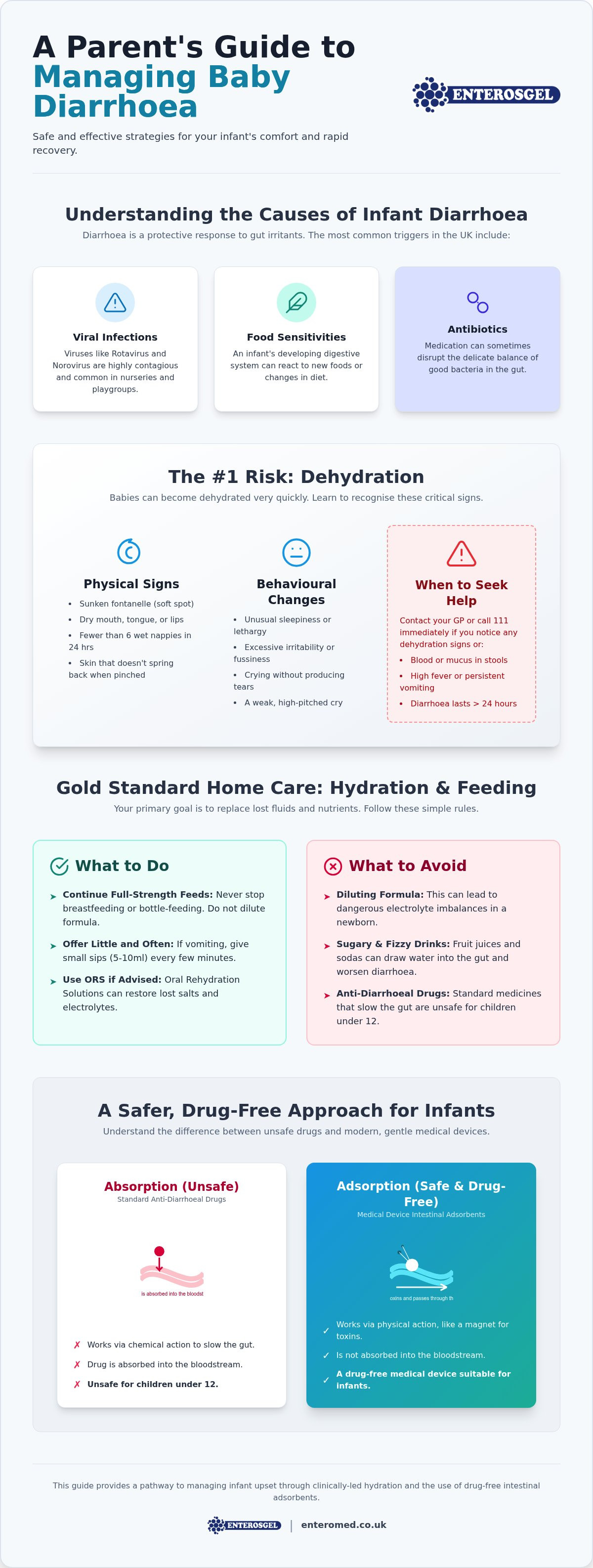
Diarrhoea is a physiological response to gut irritants like toxins and pathogens. In the UK, the most common triggers include viral infections such as Rotavirus and Norovirus. Whilst vaccinations have reduced the incidence of certain strains, these viruses remain prevalent in nurseries and playgroups. Other causes include food sensitivities or complications following a course of antibiotics, which can disrupt the delicate microbial balance of the gut.
An infant's intestinal barrier is significantly more permeable than that of an adult. This "leaky" nature means that pathogens can more easily disrupt the absorption of water and electrolytes. Understanding Gastroenteritis is vital because it explains why infants lose fluids at a much faster rate than older children. This understanding forms the basis of any baby diarrhoea treatment UK strategy, ensuring that the focus remains on stabilisation and protection.
Recognising Dehydration in Babies
Dehydration is the primary risk during a diarrhoeal episode. Because babies have a high surface-area-to-volume ratio, they can become dangerously dry in a matter of hours. Early detection is essential for home management.
- Physical red flags: Look for a sunken fontanelle (the soft spot on the head), a dry mouth or tongue, and a noticeable reduction in wet nappies.
- Behavioural changes: Your baby might display unusual lethargy, seem excessively irritable, or cry without producing tears.
- The Pinch Test: Gently pinch the skin on your baby's tummy. In a hydrated infant, the skin should snap back instantly. If it remains "tented" or moves slowly, seek medical advice immediately.
When to Consult a GP or Call 111
Whilst many cases resolve with home care, certain "red flag" symptoms necessitate professional intervention. If you notice blood or mucus in the stool, a high fever, or if your baby is persistently vomiting and unable to keep fluids down, contact your GP or call 111. The 24-hour rule is a standard clinical benchmark; if diarrhoea persists for more than a day in an infant under one year old, a medical assessment is required. This structured approach ensures that severe gastric distress is caught early within the UK paediatric healthcare pathway.
The Foundation of Home Care: Hydration and Feeding
Maintaining adequate hydration is the cornerstone of baby diarrhoea treatment UK. It's the "Gold Standard" of care because it remains the most effective way to prevent hospitalisation. When an infant experiences frequent watery stools, they lose more than just water; they lose essential electrolytes and salts. The World Health Organization on Diarrhoeal Disease highlights that fluid replacement is the single most important intervention in managing these episodes. Your primary goal is to replace what's lost as quickly as it leaves the body.
Feeding should continue as normal. You should never stop breastfeeding or bottle-feeding during a diarrhoeal episode. Breast milk, in particular, provides essential antibodies that help the infant's immune system fight the infection. For bottle-fed babies, use full-strength formula. Whilst you might feel tempted to offer fruit juices or carbonated drinks, these fall into "The Fizzy Drink Trap." High sugar concentrations in these beverages can actually draw more water into the gut, making the diarrhoea worse. Stick to milk feeds and, if recommended by a professional, Oral Rehydration Solutions (ORS) which are specifically balanced to restore salt and sugar levels.
Feeding Strategies During Gastric Upsets
If your baby is nauseous or vomiting, a "little and often" approach is best. Instead of a full feed, try offering 5ml to 10ml of fluid every few minutes. This smaller volume is less likely to trigger a gag reflex or further vomiting. It's vital that you never weaken or dilute formula. Incorrect solute concentration can lead to dangerous electrolyte imbalances in a newborn's system. For breastfeeding mothers, prioritise your own hydration too. Your body needs extra fluids to maintain a consistent milk supply whilst you support your baby through the illness. Whilst hydration manages the fluid balance, you may also consider using a targeted medical device like Enterosgel Kids 0+ to physically remove the pathogens causing the distress.
Managing Solids and Reintroduction
If your baby has started weaning, don't feel pressured to maintain a strict solid food schedule. Follow your baby’s lead; if they're uninterested in food, focus entirely on fluids. Once their appetite returns, introduce gentle, simple starches. Plain rice, porridge, or mashed bananas are excellent choices as they're easy on the digestive tract. Avoid fatty, sugary, or highly seasoned foods for at least 48 hours after the last episode. These can irritate the sensitive intestinal lining and potentially cause a relapse in symptoms.
Adsorption vs. Absorption: A Safer Approach for Infants
Traditional anti-diarrhoeal drugs are often unsuitable and unsafe for children under 12 in the UK. These pharmacological agents typically work by slowing down the gut's movement. Whilst this might stop the frequency of stools, it can inadvertently trap the bacteria or viruses causing the illness inside the body for longer. For an infant with a delicate system, this "locking in" of pathogens is counterproductive. A more modern, clinically-led approach focuses on the physical removal of these irritants through a process known as adsorption.
Adsorption is fundamentally different from absorption. Whilst absorption involves a substance entering the bloodstream or being taken into the body's tissues, adsorption happens on the surface. An adsorbent acts like a "molecular sponge" to soak up pathogens. This physical mechanism allows a medical device to bind to toxins, viruses, and bacteria within the intestinal tract without being absorbed into the baby's system itself. It represents a shift from chemical interference to smart, mechanical protection.
The Limitations of "Wait and See"
Parents often feel a sense of helplessness when told to simply wait for a stomach bug to pass. Whilst hydration manages the symptoms, it doesn't address the presence of the irritants causing the distress. By actively removing the cause of irritation from the digestive tract, you can support the body's natural recovery process. Reducing the toxic load in the gut can help shorten the duration of the episode. This proactive strategy is a key component of effective baby diarrhoea treatment UK, moving beyond passive observation toward active, safe management.
Safety Profile of Intestinal Adsorbents
The safety of any baby diarrhoea treatment UK is paramount. Intestinal adsorbents offer a high safety profile due to their non-systemic action. This means the substance does not enter the bloodstream; it remains within the gut and is naturally expelled in the stool. This makes it appropriate for even the most vulnerable patients, including newborns. Unlike chemical drugs, these medical devices are compatible with other treatments. You can use them alongside rehydration salts to provide a comprehensive recovery plan. Crucially, this physical action helps preserve the natural gut flora whilst specifically targeting the harmful substances that cause diarrhoea.
Step-by-Step Guide to Managing a Diarrhoea Episode
When a diarrhoeal episode begins, your first priority is a calm, clinical assessment. You must monitor the frequency of stools and cross-reference them with the dehydration red flags established in previous sections. A "nappy diary" is a highly effective tool for this purpose. Use it to record the time, volume, and consistency of every movement, alongside a log of fluid intake. This structured data provides a clear clinical picture for health professionals if the condition persists. It ensures that your baby diarrhoea treatment UK strategy is based on objective facts rather than memory during a stressful period.
Preventing the Spread of Infection
Hygiene is the primary barrier against household transmission. Viral pathogens like Norovirus are highly contagious and can survive on surfaces for days. In the UK, the standard public health protocol is the "48-hour rule." Your child must remain home from nursery, playgroups, or school for at least two full days after their last episode of diarrhoea or vomiting. Effective cleaning requires specific tools. Many standard antibacterial sprays do not kill viruses; instead, use bleach-based disinfectants for hard surfaces like changing mats and door handles. When handling laundry, wash soiled items separately at a minimum of 60°C. This temperature is necessary to thermally disinfect the fabric and prevent the cycle of reinfection within the family. Following these protocols is a vital part of any baby diarrhoea treatment UK plan.
Soothing Nappy Rash and Discomfort
Diarrhoea is exceptionally aggressive on delicate infant skin. The stools passed during an infection often contain active digestive enzymes that have moved too quickly through the gut to be neutralised. These enzymes cause rapid skin breakdown, leading to painful inflammation and broken skin. To manage this, clean the area gently with plain water and cotton wool rather than scented wipes. Apply a thick layer of a zinc-based barrier cream at every change to create a physical shield. Providing "air time" is also essential. Let your baby lie on a towel without a nappy for 15 minutes several times a day to allow the skin to dry and heal naturally. Emotional distress is a significant part of the illness. Keep the environment quiet and prioritise physical closeness to soothe your baby's nervous system. To assist this process by physically removing the underlying irritants, you can order Enterosgel Kids 0+ to help restore their internal balance.
Enterosgel Kids 0+: The Clinical Choice for UK Families
Enterosgel Kids 0+ is a drug-free medical device specifically formulated for infants from birth. It offers a sophisticated solution for parents seeking a baby diarrhoea treatment UK that avoids chemical interference. This medical device acts as a selective adsorbent, travelling through the digestive tract to bind pathogens, toxins, and allergens on its surface. Once captured, these harmful substances are naturally expelled in the stool. Because the gel isn't absorbed into the bloodstream, it remains a non-systemic option that prioritises the safety of the most vulnerable patients.
Administering the gel is straightforward. The substance is odourless and tasteless, ensuring it doesn't cause a sensory aversion in infants. You can easily mix it with a small amount of water, expressed breast milk, or formula. For babies who have started weaning, it can be stirred into a favourite puree. This ease of use reduces the stress of dosing, allowing you to focus on comforting your child whilst the gel works as a "Gentle Protector" within their gut.
Why Paediatricians Value Adsorbents
Paediatricians often favour this approach due to its long-standing clinical history. With over 30 years of research and validation, the mechanism of adsorption is well-documented in healthcare. Its drug-free profile is especially important for newborns whose metabolic pathways are still developing. By physically removing irritants, Enterosgel supports the restoration of a healthy intestinal microbiome. It doesn't kill beneficial bacteria; instead, it removes the toxic load that prevents the gut's natural flora from flourishing.
Practical Tips for Parents
Preparation is essential for managing sudden gastric upsets. Keeping Enterosgel Kids 0+ in your home first-aid kit ensures you can act quickly at the first sign of loose stools as part of your baby diarrhoea treatment UK toolkit. The Enterosgel Sachets (Pack of 10) are particularly useful for travel or holidays, providing a portable and hygienic way to manage symptoms whilst away from home. For older children, you might also find our guide on toddler bloating and gas relief helpful for navigating different stages of digestive development. Whether you use the Enterosgel 225g Tube or the convenient sachets, having this medical device on hand offers a sense of stability and smart protection for your family.
Restoring Your Baby’s Digestive Balance
Managing an infant's gastric distress requires a dual strategy: protecting the body from fluid loss whilst removing the underlying cause of the irritation. You've seen that while hydration is the gold standard of care, modern baby diarrhoea treatment UK now includes physical medical devices that act as a gentle protector for the gut. By choosing an adsorbent over a chemical drug, you ensure that pathogens are bound and expelled without interfering with your baby's delicate system or entering their bloodstream.
As trusted UK gut health specialists, we provide solutions that are clinically proven for over 30 years and suitable for infants from birth. You don't have to simply "wait and see" when your child is in discomfort. Taking proactive, drug-free steps can help restore normal bowel behaviour and bring peace of mind back to your household. To support your baby’s recovery with a certified medical device, Discover Enterosgel Kids 0+ for Safe Baby Diarrhoea Relief. Your baby's health is our priority, and we're here to guide you toward a faster, safer recovery.
Frequently Asked Questions
Can I give my 6-month-old medicine to stop diarrhoea?
No, you should not give standard anti-diarrhoeal medicines to children under 12 years of age in the UK. These pharmacological agents work by slowing the gut's motility, which can dangerously trap the infection inside your baby's system. For an effective baby diarrhoea treatment UK, focus on hydration and the use of drug-free medical devices like Enterosgel Kids 0+. These physical adsorbents remove the pathogens without interfering with the gut's natural movement.
Is it safe to continue breastfeeding whilst my baby has diarrhoea?
Yes, continuing to breastfeed is the most effective way to support your baby's recovery. Breast milk provides the perfect balance of fluids, electrolytes, and essential antibodies that help the immune system fight the underlying infection. You should never stop or dilute milk feeds during a gastric upset. If your baby is vomiting, try offering shorter, more frequent feeds to ensure they can tolerate and retain the vital nutrients and hydration.
How long does a stomach bug usually last in babies?
Most viral stomach bugs in infants resolve within 5 to 7 days. Whilst the symptoms are distressing, the majority of cases are self-limiting and can be managed safely at home. However, if the diarrhoea persists for more than 24 hours in a newborn, or if you notice any "red flag" symptoms like blood in the stool or high fever, you must contact your GP or call 111 for a professional medical assessment.
Can teething cause diarrhoea in infants?
Teething itself does not clinically cause diarrhoea. However, the increased salivation associated with teething can sometimes lead to slightly looser stools. Additionally, babies often put more objects in their mouths during this period, which increases the risk of introducing mild viral or bacterial infections. If the stools are watery, frequent, or accompanied by other signs of illness, you should treat the episode as a gastric upset rather than a teething symptom.
What is the difference between an adsorbent and a probiotic?
An adsorbent and a probiotic serve different roles in a baby diarrhoea treatment UK strategy. An adsorbent, such as Enterosgel, acts like a molecular sponge to physically bind and remove toxins and pathogens from the gut. A probiotic introduces live beneficial bacteria to help balance the microbiome. Whilst probiotics support long-term gut health, adsorbents are used during an active episode to remove the specific irritants that are causing the diarrhoea.
When can my baby return to nursery after having diarrhoea?
Your baby must stay away from nursery or playgroups for at least 48 hours after their last episode of diarrhoea or vomiting. This "48-hour rule" is a standard UK public health protocol designed to prevent the spread of highly contagious viruses like Norovirus. Even if your baby seems bright and alert, they may still be shedding the virus, so it's vital to wait until they are fully recovered before returning to social settings.
How do I know if my baby is dangerously dehydrated?
Dehydration is a serious clinical concern for infants. You should check for physical signs such as a sunken soft spot on the head, a dry mouth, and a significant reduction in wet nappies. If your baby is unusually lethargic, irritable, or cries without producing tears, these are signs of advanced fluid loss. If you observe these red flags, seek immediate medical advice from a healthcare professional or your local A&E department.
Can Enterosgel be used alongside paracetamol for fever?
Yes, Enterosgel can be used alongside infant paracetamol, but you must space the administration. Because Enterosgel is a physical medical device that binds to substances in the gut, it could potentially reduce the absorption of other oral medications. To ensure both treatments work effectively, administer Enterosgel at least 1 to 2 hours before or after giving any other medicine. This ensures the paracetamol is fully absorbed into the bloodstream before the adsorbent passes through.
Share this article