

Toddler Bloating and Gas Relief: A Parent’s Guide to Safe, Drug-Free Comfort
It is 3 AM, and your toddler is doubled over, crying from the sharp pressure of trapped wind whilst you desperately scan the medicine cupboard for anything safe to use. You aren't alone in this exhaustion. Watching your child suffer through abdominal discomfort is heartbreaking; the conflicting advice regarding traditional "wind drops" often leaves parents feeling more confused than comforted. Many common treatments simply attempt to break up bubbles, yet they don't address why the gas is there in the first place.
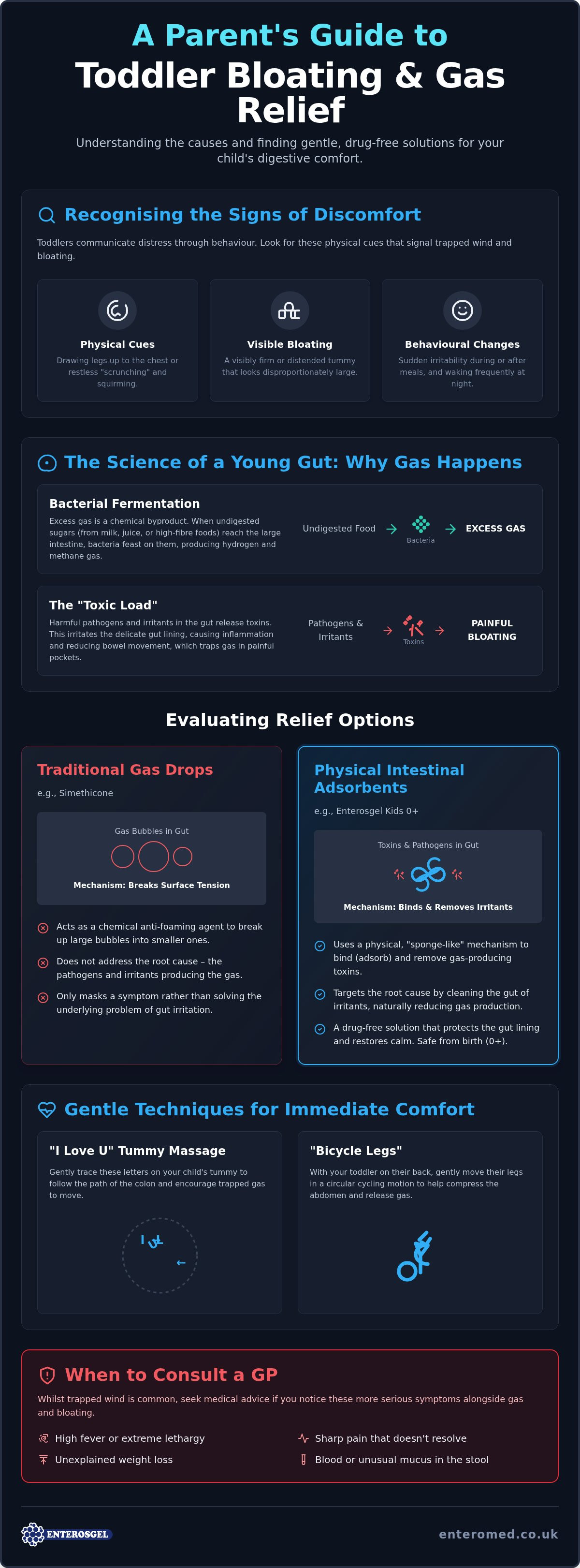
This guide provides a clear path to effective toddler bloating and gas relief by focusing on clinically proven, drug-free methods that target the root cause of the distress. You will learn how to identify specific digestive triggers and discover the vital difference between masking symptoms with chemicals and physically removing gas-producing irritants from your child's system. We will explore the "sponge-like" mechanism of physical adsorbents that act as a gentle protector for young tummies. By the end of this article, you will understand how to restore a calm, sleeping household using evidence-led solutions that are safe even for the most vulnerable infants from birth.
Key Takeaways
- Identify the physical signs of digestive distress, such as abdominal distension and specific behaviours like drawing legs to the chest during sleep.
- Understand how bacterial fermentation and harmful pathogens in the large intestine create the excess gas responsible for your child's discomfort.
- Discover why physical intestinal adsorbents offer more comprehensive toddler bloating and gas relief than traditional chemical anti-foaming agents.
- Learn gentle, drug-free techniques including the "I Love U" tummy massage and "bicycle legs" to help physically move trapped wind through the colon.
- Explore how Enterosgel Kids 0+ acts as a gentle protector by binding and removing gas-producing toxins naturally via the stool.
Recognising Toddler Bloating and Gas: Symptoms and Common Triggers
Bloating is the physical distension of the abdomen caused by trapped gas. It feels like a tight, inflated balloon within the gut, creating a sense of internal pressure that can be incredibly distressing for a small child. Because toddlers often lack the vocabulary to explain this sensation, they communicate through physical cues. Recognising these signs is the first step toward finding effective toddler bloating and gas relief.
Parents should look for specific behaviours that signal digestive distress. These include drawing the legs up towards the chest, excessive flatulence, and "scrunching" or restless squirming during sleep. You might also notice your child becoming suddenly irritable during or after meals. Night-time gas is particularly prevalent amongst toddlers. The horizontal positioning of a sleeping child prevents gas from moving naturally through the colon, whilst active digestion cycles can trigger pain that wakes them from a deep sleep.
In the UK, common triggers often involve high-fibre "nursery" foods such as beans, lentils, or heavy wholemeal breads which can lead to excess fermentation. Swallowing air, known as aerophagia, is another major factor. This often happens when a child cries intensely or gulps down drinks too quickly. Even a mild stomach bug can disrupt the delicate balance of the gut, leading to temporary but painful gas production.
Is it gas or something more serious?
It's vital to distinguish between normal wind and symptoms of a more significant issue. Whilst trapped gas is uncomfortable, it shouldn't typically cause a high fever or systemic illness. However, gut irritation from mild pathogens can increase gas production as the microbiome struggles to stay balanced. If your child experiences gas alongside persistent diarrhoea, it may indicate an underlying infection that requires attention. Traditional remedies like Simethicone are frequently used to break down surface bubbles, but they don't address the pathogens that cause this irritation.
Consult a GP if you notice any of the following:
- Persistent, unexplained weight loss or lack of appetite.
- A high fever or extreme lethargy.
- Blood or unusual mucus in the stool.
- Consistent, sharp pain that does not resolve with movement or massage.
The impact of dietary habits in the UK
Dietary patterns in the UK often include high levels of dairy and fruit juices. These can be difficult for young digestive systems to process, leading to fermentation in the large intestine. "Grazing" behaviour, where a child snacks constantly throughout the day, also increases the amount of air they swallow. This habit prevents the digestive system from entering a resting phase, which often results in a visibly firm, "bloated tummy" that looks disproportionately large compared to their frame and signifies trapped wind.
The Science of the Young Gut: Why Pathogens and Fermentation Cause Excess Gas
Gas in the lower intestine isn't simply swallowed air; it's primarily a chemical byproduct of bacterial activity. In a healthy gut, bacteria assist with digestion, but when the balance is disrupted, the volume of gas produced can increase significantly. For parents seeking toddler bloating and gas relief, understanding this internal fermentation process is essential to choosing the right treatment. A toddler’s immature digestive system is less efficient at processing certain gases, meaning even small amounts of trapped wind can cause disproportionate pain.
We must also consider the "toxic load" within the gut. When harmful pathogens or undigested food particles linger in the intestines, they release toxins that irritate the delicate gut lining. This irritation leads to a physical response where the bowel becomes inflamed and less mobile. This lack of movement allows gas to accumulate in pockets, creating the intense pressure and abdominal distension that makes a child feel so unwell.
Bacterial fermentation and wind
Fermentation occurs when undigested sugars, such as lactose from milk or fructose from fruit juice, reach the large intestine. The resident bacteria feast on these sugars, breaking them down and releasing gases like hydrogen and methane. This process is often more intense during or after a mild stomach upset, as the gut’s ability to produce digestive enzymes is temporarily reduced. According to clinical guidance on Gas and Bloating in Children, managing these dietary triggers is a key part of home care. When fermentation is excessive, the resulting pressure can be sharp and persistent, requiring a solution that addresses the gas-producing environment rather than just the bubbles themselves.
Pathogens as gas-producers
Certain viruses and bacteria do more than just cause an upset stomach; they actively release metabolic toxins that trigger the gut to produce excess wind. This inflammatory response makes the abdomen feel tender to the touch and can lead to a cycle of discomfort and poor digestion. By removing these pathogens and their toxic byproducts, you can significantly reduce the underlying cause of the bloating. Using a physical method of adsorption, such as Enterosgel: The Clinically Proven, Drug-Free Solution for Gut Health & IBS, allows parents to target these irritants directly without introducing harsh chemicals into a young child's system. Choosing a targeted intestinal adsorbent can help manage these irritants safely and restore comfort to your toddler's digestive tract.
Evaluating Relief Options: Intestinal Adsorbents vs Traditional Gas Drops
Traditional gas drops often contain simethicone. This chemical acts as an anti-foaming agent. It works by breaking down the surface tension of gas bubbles, allowing smaller bubbles to join together into larger ones that are theoretically easier to pass. Whilst this might provide temporary relief from the pressure, it doesn't address the underlying bacterial fermentation or the pathogens producing the gas. For parents seeking comprehensive toddler bloating and gas relief, it's important to look beyond surface-level symptoms and target the environment where the gas is created.
Intestinal adsorbents like Enterosgel work through a completely different mechanism. Instead of a chemical reaction, they use a physical method of action called adsorption. Think of it as a microscopic sponge that travels through the gut, "mopping up" harmful substances. Because it's classified as a medical device rather than a drug, it isn't absorbed into the bloodstream. It remains in the intestinal tract, collects toxins, and is then passed out naturally. This provides a high level of reassurance for parents worried about systemic side effects or chemical interactions in young children.
How adsorption provides a deeper level of relief
Adsorption doesn't just mask the problem. It physically traps pathogens, toxins, and undigested particles within its porous structure. By removing the irritants that cause the gut to produce excess wind, it offers more sustained comfort than products that only target the bubbles. This physical "sponge" approach is safe for children from birth (0+), as it doesn't interfere with the body's metabolic processes. Clinical guidance on Gas, Bloating, and Burping often highlights the importance of managing the internal environment of the gut to reduce frequent distress. Removing the root cause of the gas is the most logical way to ensure long-term comfort and a calm night's sleep for your child.
The limitations of gripe water and herbal oils
Many traditional UK remedies, such as gripe water or various herbal oils, have been used for generations. However, their efficacy is often anecdotal rather than clinically proven. Some older formulations may contain hidden sugars or even small amounts of alcohol, which are unsuitable for modern paediatric care. Whilst herbal solutions like fennel or dill might offer some soothing properties, they don't have the capacity to bind and remove the toxins responsible for fermentation. When your child is in acute pain, relying on evidence-led treatments ensures you are providing the most effective care possible. Modern toddler bloating and gas relief should focus on high-performance healthcare tools that are grounded in scientific validation rather than traditional guesswork.
Practical Strategies for Immediate Comfort: Massage, Diet, and Home Care
While addressing the root cause of toddler bloating and gas relief is essential, physical comfort measures provide immediate support during acute episodes. These techniques help move trapped wind through the digestive tract and relax the abdominal muscles. Combining hands-on care with a structured home routine creates a calm environment for recovery. Consistency is key when managing a child's digestive distress, especially during the night when symptoms often peak.
Physical techniques for wind expulsion
The "I Love U" massage is a specific sequence designed to follow the natural path of the large intestine. Start on your child's left side with a single downward stroke to form the "I". Next, stroke across the top of the abdomen from their right to their left and down to form an "L". Finally, create an upside-down "U" by starting at the lower right, moving up, across, and down the left side. Use gentle but firm pressure with a skin-safe oil. This physical stimulation encourages the movement of gas towards the rectum for expulsion.
Bicycle legs offer another effective method. Lie your toddler on their back and gently move their legs in a cycling motion towards their tummy. This compression helps shift gas through the bowel loops. A warm bath can also assist by relaxing the enteric nervous system and the gut muscles, making it easier for the body to pass wind naturally. Even for older toddlers, supervised "tummy time" or encouraging them to crawl can provide the necessary abdominal pressure to release trapped gas.
Feeding adjustments for a calmer tummy
Dietary management during a flare-up should focus on reducing the fermentation load. Offer smaller, more frequent meals rather than three large ones. This prevents the immature digestive system from becoming overwhelmed. High-fructose fruits, such as apples and pears, and fizzy drinks should be avoided whilst the gut is sensitive. These items introduce excess gas and sugars that bacteria quickly ferment into painful bubbles. For a deeper understanding of how certain foods impact the gut, you can consult this Irritable Bowel Syndrome Relief UK: A Clinical Guide to Managing IBS Symptoms.
To minimise night-time gas pains, ensure the last meal of the day is served at least two hours before bed. This allows the bulk of digestion to occur whilst the child is still upright and active. If your toddler is prone to swallowing air, check that they aren't using a bottle or sippy cup that creates a vacuum. For parents seeking a reliable way to support these home care techniques, using Enterosgel Kids 0+ can help remove the underlying toxins and pathogens that cause fermentation in the first place.
Enterosgel Kids: A Clinically Proven, Drug-Free Solution for Gas and Bloating
Enterosgel Kids 0+ offers a sophisticated, evidence-led approach to toddler bloating and gas relief. Unlike traditional chemical treatments, this intestinal adsorbent acts as a gentle protector for young digestive systems. It works through a purely physical mechanism. The gel possesses a porous, sponge-like structure that selectively binds gas-producing pathogens and metabolic toxins within the gut. Once these irritants are trapped, they are naturally removed from the body via the stool. This process ensures the source of the discomfort is physically eliminated rather than merely masked.
Safety is a primary concern for any parent. Because Enterosgel is classified as a medical device, it isn't absorbed into the bloodstream. It remains entirely within the intestinal tract, performing its function before being excreted. This lack of systemic absorption makes it exceptionally safe for toddlers, including those with sensitive systems or allergies. It's particularly effective during mild stomach bugs or digestive upsets, where excess gas is often a byproduct of an irritated microbiome.
Why UK parents trust Enterosgel for wind relief
UK families increasingly seek high-performance healthcare tools that avoid unnecessary additives. Enterosgel meets this demand by being completely sugar-free, gluten-free, and preservative-free. This clean profile reduces the risk of further gut irritation. Its versatility is another significant benefit; it effectively addresses gas and bloating whilst also managing associated symptoms like diarrhoea. With a clinical history spanning over 30 years, it provides a level of professional validation that few other over-the-counter options can match. It offers stability and smart protection for the whole family.
How to administer Enterosgel for bloating
Administering treatments to a fussy toddler can be challenging. To make the process easier, the gel can be mixed with a small amount of their favourite food or diluted with a little fruit squash. It's tasteless and has a smooth texture, which helps with compliance. When using an intestinal adsorbent, maintaining proper hydration is essential. Ensure your child drinks plenty of water or their usual fluids throughout the day to support the natural movement of the gel through the digestive tract.
Restoring your child’s gut comfort doesn't have to involve harsh chemicals or complex drug interactions. By choosing a physical solution that targets the root cause of fermentation, you can provide rapid relief from abdominal pressure. This methodical, clinical approach ensures your toddler returns to their happy, active self without the worry of systemic side effects. It's a reliable way to secure a calm, sleeping household once again.
Restoring Your Child's Digestive Comfort Safely
Managing your child's digestive health requires a move away from simply masking symptoms and towards addressing the underlying causes of fermentation. You now understand how trapped wind is often driven by pathogens and toxins that irritate the delicate gut lining. By combining physical techniques like the "I Love U" massage with evidence-led dietary adjustments, you'll provide immediate comfort whilst working towards a long-term solution. Effective toddler bloating and gas relief is about physically removing the source of the irritation rather than just breaking up surface bubbles.
Choosing a solution that's safe from birth (0+) and not absorbed into the bloodstream offers the ultimate peace of mind for UK parents. Enterosgel Kids 0+ is a drug-free medical device that's been clinically proven for over 30 years and is recommended by UK healthcare professionals for gut health. It acts as a gentle protector, using its sponge-like mechanism to mop up toxins and pathogens. Order Enterosgel Kids 0+ for safe, drug-free gas relief today and help your child return to a state of calm, natural comfort. You've now got the tools to support their wellbeing through every stage of their development.
Frequently Asked Questions
Is it safe to give my toddler wind relief drops in the UK?
Wind relief drops are generally safe when used according to the manufacturer's instructions, but it's essential to examine the active ingredients. Many traditional UK drops use simethicone to consolidate gas bubbles. Whilst effective for some, these are chemical-based treatments. If you prefer a drug-free approach for toddler bloating and gas relief, consider a physical adsorbent that removes the source of the gas without being absorbed into the child's bloodstream.
How can I tell if my toddler is bloated or just has a "pot belly"?
A normal "pot belly" is soft and pliable, whereas bloating results in a noticeably firm and distended abdomen. You can identify bloating by checking if the tummy feels tight like a drum when gently pressed. If the distension is accompanied by irritability, flatulence, or your child drawing their legs to their chest, it is likely trapped wind rather than a natural toddler physique.
Can trapped gas cause my toddler to wake up screaming at night?
Trapped gas is a frequent cause of night-time distress because horizontal positioning makes it harder for the body to expel wind naturally. As digestion continues during sleep, bacterial fermentation can produce sharp, localised pressure in the intestines. This discomfort often leads to sudden waking, screaming, or restless "scrunching" behaviours. Addressing the pathogens responsible for this fermentation can help ensure more settled nights for both you and your child.
How does Enterosgel help with toddler bloating and gas?
Enterosgel acts as a physical intestinal adsorbent rather than a chemical drug. Its microscopic, sponge-like structure travels through the gut to selectively bind gas-producing toxins and pathogens. By "mopping up" these irritants, it removes the underlying cause of the fermentation. This process provides effective toddler bloating and gas relief without interfering with the body's natural metabolic processes or introducing harsh preservatives into a young system.
What foods should I avoid giving a gassy toddler?
During acute bloating phases, you should temporarily limit foods that are high in fermentable sugars or excessive fibre. This includes:
- Fizzy drinks and high-fructose fruit juices like apple or pear.
- Cruciferous vegetables such as broccoli or cabbage.
- Large quantities of beans or lentils.
When should I be worried about my toddler’s flatulence?
Flatulence is usually a normal part of toddler development, but certain "red flag" symptoms require a consultation with your GP. Seek medical advice if gas is accompanied by a high fever, persistent diarrhoea, or unexplained weight loss. You should also be concerned if your child appears excessively lethargic or if the abdominal pain is so severe that it prevents them from standing up or walking normally.
Is Enterosgel safe for babies under 1 year old?
Yes, Enterosgel Kids 0+ is specifically designed to be safe for infants from birth. Because it is a physical medical device that is not absorbed into the bloodstream, it doesn't pose the same systemic risks as drug-based medications. It remains entirely within the digestive tract, collecting harmful substances before being passed out naturally in the stool, making it an appropriate choice for even the most vulnerable age groups.
Can I use Enterosgel alongside other toddler medications?
Enterosgel can be used alongside other medications, but you must observe a specific timing protocol. Because it is a powerful adsorbent, it may bind to other oral medicines and reduce their effectiveness. To prevent this, always administer Enterosgel at least two hours before or after any other medication. This ensures that the adsorbent can perform its function without interfering with the absorption of essential treatments your toddler may be taking.
Share this article