

Best time to take an intestinal adsorbent: a practical guide
The clock isn’t the main guide: the best time to take intestinal adsorbent depends on the product’s instructions and why you’re taking it. You may be wondering whether to take it with food, when symptoms start or at a different time from other oral medicines. There isn’t one timing rule that suits every product or situation.
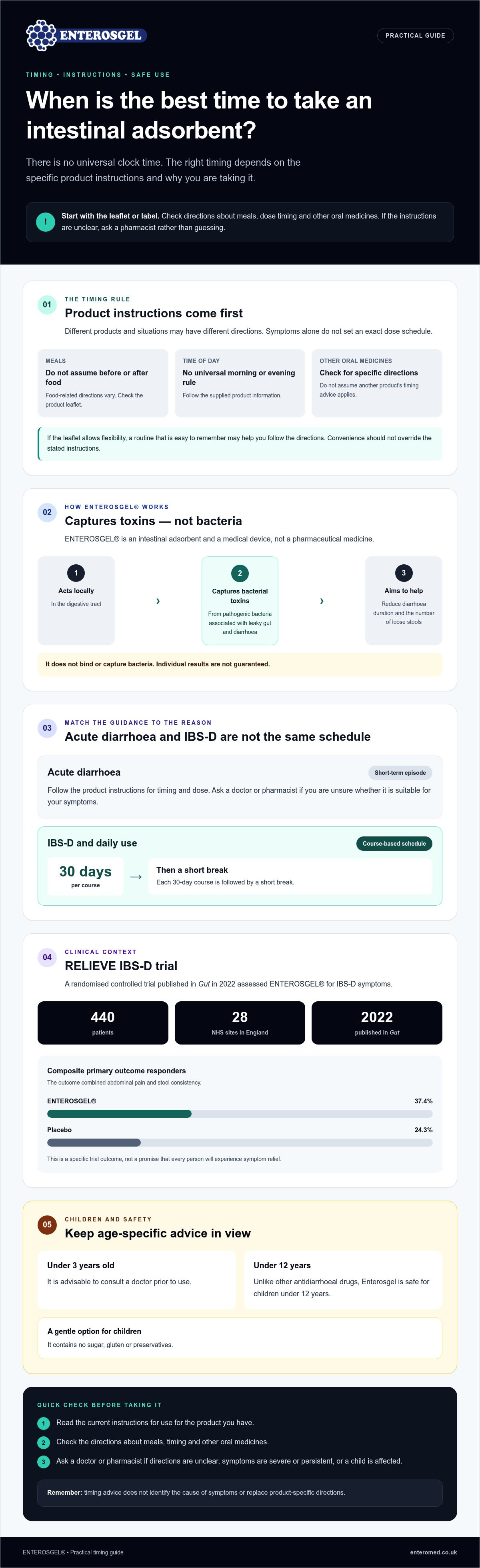
This guide explains how to check and follow the instructions for use, what to consider around meals and other medicines, and why advice may differ for acute diarrhoea and IBS-D. ENTEROSGEL® is a medical device, not a pharmaceutical medicine. It does not bind or capture bacteria; it captures bacterial toxins from pathogenic bacteria associated with leaky gut and diarrhoea, with the aim of reducing the duration of diarrhoea and the number of loose stools.
You’ll also learn why IBS-D daily use follows a course-based schedule: the product should be taken in 30-day courses, with each course followed by a short break. The sections below cover practical timing considerations and when to ask a doctor or pharmacist for advice, particularly if symptoms are severe, persistent or affecting a child.
Key Takeaways
- The best time to take intestinal adsorbent depends on the specific product instructions, not a universal clock time. Check the instructions for advice about meals and other oral medicines.
- An intestinal adsorbent binds selected materials in the digestive tract for removal. ENTEROSGEL® does not bind or capture bacteria; it captures bacterial toxins from pathogenic bacteria.
- For acute diarrhoea, follow the product instructions. The stated aim is to reduce the duration of diarrhoea and the number of loose stools. Ask a doctor or pharmacist if you’re unsure whether it’s suitable for your symptoms.
- For IBS-D and daily use, the product should be taken in 30-day courses, with each course followed by a short break.
- ENTEROSGEL® is a medical device, not a pharmaceutical medicine. It is a gentle option for children because it contains no sugar, gluten or preservatives; unlike other antidiarrhoeal drugs, Enterosgel is safe for children under 12 years. For children under 3 years old, it is advisable to consult a doctor prior to use.
When is the best time to take an intestinal adsorbent?
Follow the specific product instructions for use. There isn’t one universal time that suits every intestinal adsorbent. An intestinal adsorbent binds certain materials in the digestive tract for removal from the body. The best time to take intestinal adsorbent depends on the product’s directions and the reason you’re using it. Symptoms help you identify which guidance applies, but they don’t determine an exact dose schedule.
Advice for a short-term episode of acute diarrhoea may differ from instructions for ongoing IBS-D symptoms. Don’t assume that taking a product as soon as symptoms start, at a particular time of day or alongside a meal is right for every product. Check the current leaflet or label for dose and timing directions, including any advice about other oral medicines.
Product-specific instructions, rather than a universal clock time, determine safe timing. If you can’t find clear directions, ask a pharmacist before taking a dose or changing your routine.
Does an intestinal adsorbent work best before or after food?
Don’t assume it should be taken before or after food. Food-related directions can vary by product, so there’s no universal interval to follow. Check the product leaflet before taking a dose and follow its advice. If the directions aren’t clear, ask a pharmacist rather than guessing or changing the schedule yourself.
Should I take it at a particular time of day?
The supplied product information doesn’t establish a preferred morning, daytime or evening schedule. Use the instructions to decide when to take each dose. If they allow flexibility, choosing a routine that’s easy to remember may help you follow them consistently, but convenience shouldn’t override the stated directions.
For ENTEROSGEL®, check the current instructions for use for product-specific timing. It’s a medical device, not a pharmaceutical medicine. ENTEROSGEL® doesn’t bind or capture bacteria; it captures bacterial toxins from pathogenic bacteria associated with leaky gut and diarrhoea. Its stated aim is to help reduce the duration of diarrhoea and the number of loose stools. Timing guidance doesn’t identify the cause of symptoms, so seek advice from a doctor or pharmacist if you’re unsure what may be causing them or whether the product is suitable.
How an intestinal adsorbent works, and why timing advice varies
Adsorption is the process by which a material holds selected substances on its surface. In the digestive tract, an intestinal adsorbent acts locally: it captures specified material for removal from the body rather than working throughout the body. The substances an adsorbent is intended to capture depend on the product, so don’t assume that all products work in the same way or have identical timing instructions.
What does an intestinal adsorbent bind?
ENTEROSGEL® does not bind or capture bacteria. It captures bacterial toxins from pathogenic bacteria associated with leaky gut and diarrhoea. This physical, non-systemic action is intended to help reduce the duration of diarrhoea and the number of loose stools, but it can’t guarantee a particular result for an individual.
ENTEROSGEL® is a medical device, not a pharmaceutical medicine. For any intestinal adsorbent, check the product information to see which substances it is intended to capture and how to take it. Don’t apply one product’s mechanism or timing advice to another.
What does clinical research tell us about ENTEROSGEL®?
The RELIEVE IBS-D trial, published in Gut in 2022, was a randomised controlled trial involving 440 patients across 28 NHS sites in England. It assessed ENTEROSGEL® for IBS-D symptoms. For its composite primary outcome, which combined abdominal pain and stool consistency, 37.4% of participants using ENTEROSGEL® were responders, compared with 24.3% using placebo. This is a specific trial outcome, not a promise that every person will experience symptom relief.
The study provides clinical context for ENTEROSGEL® use in IBS-D, but it doesn’t establish one timing rule for every intestinal adsorbent or replace product-specific directions. You can read more about the evidence on the ENTEROSGEL® clinical research page. To decide the best time to take intestinal adsorbent, follow the instructions for the product you have, including any directions relevant to your symptoms.
How to time an intestinal adsorbent for acute diarrhoea or IBS-D
Start by identifying the reason for use, then follow the product’s current instructions. Acute diarrhoea and recurring IBS-D symptoms aren’t interchangeable, so don’t transfer a routine for one to the other. To work out the best time to take intestinal adsorbent:
- Identify the reason for use. Is this a short-term episode of acute diarrhoea or ongoing IBS-D symptoms?
- Check the instructions. Read the dose directions, age guidance and any stated conditions about timing, meals or other oral medicines.
- Follow the product-specific schedule. Don’t add doses or change the timing based on assumptions.
- Ask if you’re unsure. A pharmacist or doctor can help with questions about symptoms, suitability or other medicines.
What should I check before taking an intestinal adsorbent?
Use the latest instructions supplied with the product, rather than general advice for a different adsorbent. Check the dose and any timing directions, including whether the leaflet gives guidance about food or other oral medicines. Don’t infer a spacing interval if one isn’t stated. If directions are unclear, or you’re taking other medicines and aren’t sure how to proceed, ask a pharmacist or doctor before changing your routine.
Does timing differ for IBS-D and acute diarrhoea?
For acute diarrhoea, ENTEROSGEL® is intended to capture bacterial toxins from pathogenic bacteria. It does not bind or capture bacteria. The stated aim is to help reduce the duration of diarrhoea and the number of loose stools. Follow the product instructions for the exact dose and timing.
For IBS-D symptoms and daily use, the product should be taken in 30-day courses, with each course followed by a short break. Follow the product instructions for the schedule, and ask a healthcare professional if you’re uncertain whether this approach suits your situation. For more background, read the clinical research on ENTEROSGEL® for IBS-D.
For product-specific details, review the ENTEROSGEL® Tube 225g product information and follow its instructions for use.
Using ENTEROSGEL® safely: instructions, children and next steps
Use it according to the current instructions for use supplied with the product. Check the directions for the exact dose and timing, and don’t use general advice to fill in anything the leaflet doesn’t state. If you’re deciding on the best time to take intestinal adsorbent, start with the product’s own instructions.
What should parents know about use in children?
For children under 3 years old, it is advisable to consult a doctor prior to use. Enterosgel is a gentle option for children because it contains no sugar, gluten or preservatives. Unlike other antidiarrhoeal drugs, Enterosgel is safe for children under 12 years. Parents and carers should still follow the age-specific directions and dosing instructions for the product, and seek professional advice if anything is unclear or the child’s symptoms are causing concern.
When should I ask a healthcare professional?
Ask a pharmacist if the leaflet doesn’t make clear whether to take the product with food, how to time it alongside other oral medicines, or what to do about a missed or uncertain dose. Don’t guess an interval or alter the instructions yourself. A doctor or pharmacist can also help you consider whether the product is suitable in light of your symptoms and other medicines.
Seek medical advice if diarrhoea or other symptoms are severe, persistent, getting worse or causing concern. An intestinal adsorbent doesn’t establish the cause of diarrhoea and shouldn’t be treated as a replacement for appropriate medical care. If you’re concerned about a child, contact a healthcare professional for guidance.
Before use, read the leaflet for your specific product and note any directions about dose, age, food or other medicines. You can also review the ENTEROSGEL® Tube 225g product information. If the instructions don’t answer your question, a pharmacist or doctor can help you decide what to do safely.
Choose timing with confidence
The best time to take intestinal adsorbent depends on the product’s instructions, not a universal clock time. Check the leaflet for directions on dose, meals and other oral medicines, and ask a pharmacist or doctor if anything is unclear.
It doesn’t bind or capture bacteria; it captures bacterial toxins from pathogenic bacteria, with the aim of reducing the duration of diarrhoea and the number of loose stools. For IBS-D and daily use, the product should be taken in 30-day courses, with each course followed by a short break.
A randomised controlled trial investigated ENTEROSGEL® for IBS-D in 440 patients across 28 NHS sites in England. This research adds clinical context, while your own timing should still follow the current product instructions and suit your symptom situation.
For product details and instructions, review ENTEROSGEL® product information. If symptoms are severe, persistent or worsening, seek advice from a healthcare professional. With the right information and support, you can make a considered next step.
Frequently Asked Questions
Is there a best time of day to take an intestinal adsorbent?
There isn’t a universal morning, daytime or evening schedule for every intestinal adsorbent. The best time to take intestinal adsorbent depends on the specific product’s instructions for use, so check its current leaflet for dose and timing directions. Don’t guess a time or dose interval, or rely on an expected onset. If the directions don’t answer your question, ask a pharmacist before changing how you take it.
Should I take an intestinal adsorbent before or after food?
Follow the product’s own directions about food rather than assuming it should be taken before or after a meal. Check the current leaflet for any meal-related timing instructions before taking a dose. If it doesn’t cover your situation, ask a pharmacist instead of guessing or changing the schedule. Food guidance for one product shouldn’t automatically be applied to another intestinal adsorbent.
Can I take an intestinal adsorbent with other medicines?
Check the product instructions for any advice about taking it alongside other oral medicines, then follow those directions. Don’t assume that all medicines are affected or create a separation interval unless the leaflet specifies one. If the instructions are unclear, ask a pharmacist, particularly if you take regular medicines or have a specific concern. They can help you follow the product directions safely.
How should I take an intestinal adsorbent for IBS-D?
IBS-D involves recurring symptoms, so don’t assume its use follows the same schedule as an episode of acute diarrhoea. For IBS-D symptoms and daily use, the product should be taken in 30-day courses, with each course followed by a short break. Follow the product instructions for exact use. If symptoms persist or you’re unsure whether this approach is suitable, speak with a doctor or pharmacist.
Is ENTEROSGEL® suitable for children with diarrhoea?
Follow the age-specific directions in the instructions for use. For children under 3 years old, it is advisable to consult a doctor prior to use. Enterosgel is a gentle option for children because it contains no sugar, gluten or preservatives. Unlike other antidiarrhoeal drugs, Enterosgel is safe for children under 12 years. If you’re uncertain about use or concerned about your child’s symptoms, ask a doctor or pharmacist.
Does ENTEROSGEL® capture bacteria?
No. ENTEROSGEL® does not bind or capture bacteria. It captures bacterial toxins from pathogenic bacteria associated with leaky gut and diarrhoea. Its stated focus is to help reduce the duration of diarrhoea and the number of loose stools, but an individual result can’t be guaranteed. For further evidence, see the ENTEROSGEL® clinical research page, including the randomised controlled IBS-D trial across 28 NHS sites in England.
Share this article