

Causes of Sudden Bloating and Gas: What Your Symptoms May Mean
What if the timing of sudden bloating and gas tells you more than the gas itself? The causes of sudden bloating and gas can include swallowed air, a large meal, fizzy drinks, constipation, food intolerance or a short-lived digestive upset. A recent meal may offer a clue, but it doesn’t prove that a particular food is responsible or explain every episode.
Unexpected swelling and discomfort can be unsettling, especially when you’re unsure whether to wait or seek advice. This guide explains common triggers and how to track symptom patterns without trying to diagnose yourself. Note when symptoms start, how long they last and whether they occur with changes in bowel habits. These details can help distinguish a one-off episode from recurring symptoms. You’ll also find practical steps for mild discomfort and guidance on symptoms that need medical attention. A healthcare professional can assess what’s causing your symptoms.
Key Takeaways
- The causes of sudden bloating and gas may include a recent meal, swallowed air or temporary changes in digestion. Timing can offer useful clues.
- Bloating is a feeling of fullness or swelling, while intestinal gas is one possible contributor. They can occur together, but they aren’t the same thing.
- When symptoms start, note what you ate, when discomfort began, any bowel changes and other symptoms. Gentle movement and eating slowly may help if symptoms are mild.
- Seek medical advice if symptoms persist, recur or come with concerning changes. An isolated episode differs from an ongoing pattern that may need assessment.
- ENTEROSGEL® is an intestinal adsorbent medical device, not a pharmaceutical medicine. Its role in IBS-D is separate from the cause of a sudden bout of gas.
What can cause sudden bloating and gas?
Sudden bloating and gas describes a quick onset of abdominal fullness or swelling, sometimes accompanied by a build-up or passage of intestinal gas. Bloating is the sensation of pressure, fullness or enlargement in your abdomen; gas is air in the digestive tract. They can occur together, but one doesn’t always mean the other is present.
The causes of sudden bloating and gas can include eating, swallowing air or temporary changes in digestion. Symptoms may appear during a meal or soon afterwards, but timing is a clue, not a diagnosis. It can’t confirm that a particular food is responsible or rule out other explanations.
How a meal, swallowed air and digestion can trigger symptoms
Eating quickly, drinking fizzy drinks or chewing gum can lead you to swallow more air, which may contribute to pressure or wind. Food can also stimulate the gastrocolic reflex, a natural signal that stimulates the colon after food enters the stomach. This response may prompt bowel activity soon after eating.
Portion size, meal ingredients and timing can all affect how your digestive system feels. Some foods produce more gas as they’re broken down in the gut, but symptoms after a meal don’t by themselves establish a food intolerance. A one-off episode may reflect several factors rather than a single ingredient.
When sudden bloating may be part of a recurring pattern
A single episode differs from symptoms that keep returning or occur alongside changes in bowel habits. IBS-D is irritable bowel syndrome in which diarrhoea is the predominant bowel pattern. Recurrent bloating and gas can have different explanations, so seek clinical assessment rather than assuming one food is the cause.
If symptoms recur with diarrhoea, abdominal pain or urgency, note when they happen and any accompanying bowel changes to discuss with a healthcare professional. For background on research into recurring IBS-D symptoms, read about ENTEROSGEL® IBS-D research. This research relates to IBS-D and doesn’t establish that every cause of sudden bloating or gas will respond in the same way.
How gut processes and underlying conditions can produce gas
Gas is affected not only by how much forms, but also by how it moves through the digestive tract and how sensitive the gut is to stretching. Gut motility, the movement of material through the digestive system, can influence where gas collects and how strongly you feel pressure or fullness. Constipation may also contribute: when bowel movements are less frequent, gas and stool can remain in the bowel for longer.
Some carbohydrates are broken down by bacteria in the large intestine, producing gas as part of normal digestion. The amount and type of food involved may affect symptoms, but fermentation alone doesn’t show that you have an intolerance. Swallowed air and a temporary digestive upset can contribute too. These are possible explanations, not diagnoses.
An isolated bout of gas or a short episode of acute diarrhoea differs from symptoms that repeatedly return. A sudden change may settle, while a recurring pattern, particularly one involving altered bowel movements, needs to be considered in context.
Food-related triggers are clues, not a diagnosis
Keep a simple note of meals, when symptoms begin and how long discomfort lasts. Include changes in bowel movements and any other symptoms. This can help you identify patterns without making assumptions. A suspected food trigger doesn’t prove an intolerance or explain why symptoms occur; other digestive factors may be involved. Avoid removing several foods at once without clinical guidance, as this can make patterns harder to interpret and restrict your diet unnecessarily.
When recurring symptoms may need clinical assessment
Arrange clinical advice if bloating keeps returning alongside changes in bowel movements, such as diarrhoea or constipation. IBS-D, where diarrhoea is the predominant bowel pattern in irritable bowel syndrome, is one possible clinical context, but gas alone can’t establish that diagnosis. A healthcare professional can assess the wider symptom pattern and decide whether further evaluation is needed.
For background on research involving recurring IBS-D symptoms, read the ENTEROSGEL® clinical research information. This evidence relates to IBS-D and shouldn’t be taken as proof that every cause of sudden bloating and gas has the same explanation or response.
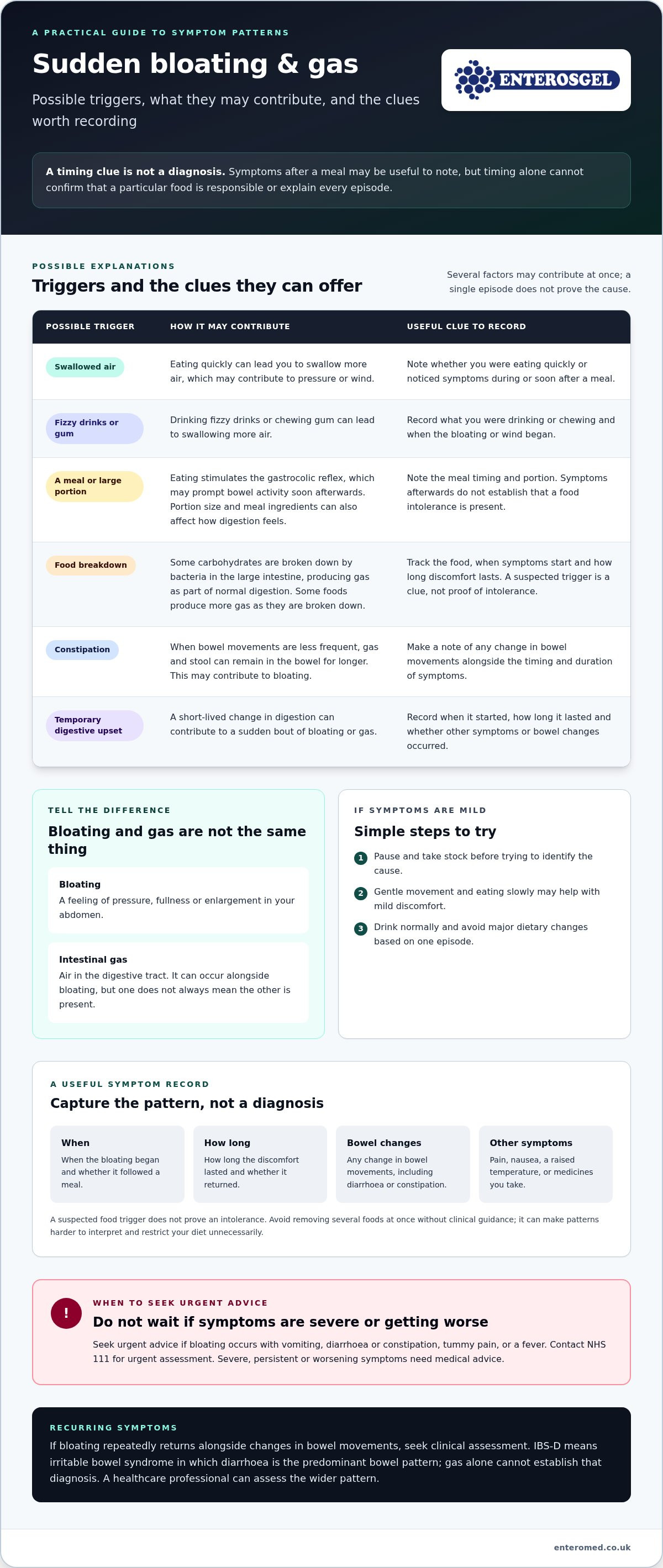
What to do when bloating and wind start suddenly
Pause and take stock before trying to identify the cause. If symptoms are mild and there are no warning signs, gentle movement and eating slowly may help you feel more comfortable. Drink normally and avoid making major dietary changes based on one episode. A single bout cannot confirm a food intolerance or another diagnosis.
Mild, short-lived bloating may settle on its own, but severe, persistent or worsening symptoms, or symptoms with other warning signs, need medical advice.
A simple symptom record can reveal useful patterns
Make a brief note of when the bloating began, how long it lasts and whether it followed a meal. Record any changes in bowel movements, pain, medicines you take and other symptoms, such as nausea or a raised temperature. If episodes happen again, this record can help you describe the pattern to a clinician. It’s useful information, not a way to diagnose yourself.
Warning signs and when to seek medical advice
NHS guidance advises seeking urgent advice if bloating occurs with vomiting, diarrhoea or constipation, tummy pain or a fever. Contact NHS 111 for urgent assessment. Don’t wait for symptoms to pass if they’re severe or getting worse. Sudden, severe abdominal pain needs urgent medical attention. If bloating keeps returning or doesn’t settle, arrange an appointment with your GP.
ENTEROSGEL® is an intestinal adsorbent medical device, not a pharmaceutical medicine, and it isn’t a general remedy for every cause of sudden gas. It doesn’t bind or capture bacteria. It captures bacterial toxins from pathogenic bacteria which cause leaky gut and diarrhoea, helping reduce the duration of diarrhoea and the number of loose stools. For information about the product, read about ENTEROSGEL® Tube 225g.
Recurring bloating, IBS-D and evidence-led next steps
A single episode of gas may pass, but bloating that keeps returning, changes over time or occurs with altered bowel movements deserves a broader look. Note the pattern and discuss it with a healthcare professional rather than assuming one food is responsible. IBS-D is one possible clinical context, but sudden gas alone can’t establish a diagnosis or determine what support may be appropriate.
Where an intestinal adsorbent fits, and where it does not
ENTEROSGEL® is a drug-free intestinal adsorbent medical device, not a pharmaceutical medicine. It does not bind or capture bacteria. It captures bacterial toxins from pathogenic bacteria which cause leaky gut and diarrhoea. By helping remove these toxins from the digestive tract, it is intended to help reduce the duration of diarrhoea and the number of loose stools.
This mechanism relates to diarrhoea. It doesn’t mean that ENTEROSGEL® treats every cause of bloating or gas, and sudden gas alone doesn’t establish a reason to use it. Consider its intended use and seek professional advice if symptoms are recurring, changing or concerning.
Recurring IBS-D symptoms call for a clear plan
If you’re considering ENTEROSGEL® for IBS-D symptoms and daily use, the product should be taken in 30-day courses, with each course followed by a short break. Follow the product instructions and speak with a healthcare professional about recurring symptoms or a change in your usual pattern.
Research can help put potential use in context, but it can’t identify the cause of an individual episode. The RELIEVE IBS-D trial studied ENTEROSGEL® in 440 patients across 28 NHS sites in England and was published in GUT in 2022. Its findings relate to IBS-D, not every possible cause of sudden bloating and gas. Read the ENTEROSGEL® research information for further context.
Use symptom patterns to choose your next step
The causes of sudden bloating and gas can range from swallowed air and temporary digestive changes to patterns that recur alongside altered bowel movements. A meal may offer a clue, but one episode can’t confirm a food intolerance or explain every symptom. Note when discomfort starts, what else you experience and whether it returns.
Mild, short-lived symptoms may settle, but recurring, worsening or severe symptoms deserve medical advice. A clinician can assess the full pattern rather than relying on gas alone to identify a cause.
A 440-patient NHS randomised controlled trial studied ENTEROSGEL® for IBS-D. This evidence relates to IBS-D, not every cause of sudden gas. ENTEROSGEL® is a drug-free intestinal adsorbent medical device, not a pharmaceutical medicine. It doesn’t bind or capture bacteria; it captures bacterial toxins from pathogenic bacteria which cause leaky gut and diarrhoea, helping reduce the duration of diarrhoea and the number of loose stools.
Explore the trial context and product information from Enteromed Ltd: Explore ENTEROSGEL® and its clinical research. Keep a clear symptom record and seek appropriate advice when symptoms recur or cause concern.
Frequently Asked Questions
What causes sudden bloating and gas?
The causes of sudden bloating and gas can include swallowed air, constipation, a large meal, fizzy drinks or temporary digestive changes. Some foods produce gas as they’re broken down in the gut, but symptoms after eating don’t prove a food intolerance. Note when discomfort starts, what you ate and whether your bowel movements or other symptoms change. Timing can offer clues, but it can’t confirm the cause.
Can stress cause sudden bloating and gas?
Stress may affect how your gut functions and how strongly you notice digestive sensations, so it can be associated with bloating or changes in bowel habits. It isn’t possible to identify stress as the cause from gas alone, and digestive symptoms can have other explanations. If symptoms recur, keep a record of when they happen and any related changes, then discuss the pattern with a healthcare professional.
Can a food intolerance cause bloating and gas straight after eating?
A food intolerance can be one possible explanation for digestive symptoms, but bloating straight after eating doesn’t establish that this is the cause. Swallowed air, portion size, ingredients and your gut’s response to a meal may also affect how you feel. Record what you ate and when symptoms began rather than removing several foods at once. Seek professional advice if symptoms keep recurring or your diet is becoming restricted.
When should I seek medical advice for bloating and gas?
Seek medical advice if bloating keeps returning, doesn’t settle, worsens or comes with other symptoms. NHS guidance advises urgent advice if bloating occurs with vomiting, diarrhoea or constipation, tummy pain or a fever; contact NHS 111 for assessment. Sudden, severe abdominal pain needs urgent medical attention. Don’t delay seeking help if symptoms are severe or getting worse. A clinician can assess the full pattern and advise on next steps.
Can IBS cause sudden bloating and gas?
IBS can involve bloating and gas, often alongside abdominal pain and changes in bowel habits, but gas alone doesn’t diagnose IBS. IBS-D is irritable bowel syndrome in which diarrhoea is the predominant bowel pattern. An isolated episode may have a different explanation from symptoms that repeatedly return. If you notice a recurring pattern or a change in your bowel movements, speak with a healthcare professional for assessment.
Does ENTEROSGEL® capture bacteria that cause diarrhoea?
No. ENTEROSGEL® does not bind or capture bacteria. It’s a drug-free intestinal adsorbent medical device, not a pharmaceutical medicine, and captures bacterial toxins from pathogenic bacteria which cause leaky gut and diarrhoea. Its stated mechanism relates to helping reduce the duration of diarrhoea and the number of loose stools. Sudden gas alone doesn’t establish a reason to use it, and its IBS-D research shouldn’t be taken as evidence for every cause of bloating.
Share this article