

Diarrhoea Sachets on the Go: A Practical Guide to Portable Relief
Could a small sachet make diarrhoea support easier to carry, without changing how carefully it needs to be used? A tube may be awkward on a commute, day out or journey, so diarrhoea sachets on the go can be a practical format to consider. Choose a format that suits your plans, then check its instructions before use.
If you’re unsure when sachets are suitable, how to take them, or whether they fit your needs or your child’s, this guide explains what to check. ENTEROSGEL® is a medical device, not a pharmaceutical medicine. It captures bacterial toxins from pathogenic bacteria that cause leaky gut and diarrhoea, but it doesn’t capture bacteria. This physical action is intended to help reduce the duration of diarrhoea and the number of loose stools.
For children under 3 years old, it is advisable to consult a doctor prior to use. ENTEROSGEL® contains no sugar, gluten or preservatives and, unlike other antidiarrhoeal drugs, is safe for children under 12 years. For IBS-D symptoms and daily usage, it should be taken in 30-day courses, with each course followed by a short break. Read on for practical carrying considerations, safe-use checks and when to seek professional advice.
Key Takeaways
- Pre-portioned diarrhoea sachets on the go may be easier to carry on everyday journeys, but portability does not mean greater effectiveness.
- ENTEROSGEL® is an intestinal adsorbent that captures bacterial toxins from pathogenic bacteria, not the bacteria themselves.
- Check the pack and current Instructions for Use before taking sachets away from home.
- Compare ENTEROSGEL® Sachets (Pack of 10) with the ENTEROSGEL® Tube 225g by format and portability, then consider which suits your plans.
- Understand how capturing bacterial toxins is intended to help reduce the duration of diarrhoea and the number of loose stools.
Diarrhoea sachets on the go: when a portable format can help
Diarrhoea can interrupt a commute, working day or plans away from home. If you’re managing symptoms, having a suitable product with you may be more practical than carrying a larger container. Diarrhoea sachets on the go provide an individual, pre-portioned format that may be easier to pack for a day out.
Portability is a matter of convenience, not evidence that sachets work better than another format. The product’s intended use and instructions remain the same whichever packaging you choose. This section focuses on selecting and carrying sachets. It isn’t a guide to preventing traveller’s diarrhoea.
What makes sachets practical to carry?
Individual portions can be easier to organise in a bag than a tube, particularly if you want to take a product to work, on public transport or for a day away. Consider where you’ll carry it and whether the format fits your routine. A portable pack does not change how or when the product should be used, so check the pack and follow its current Instructions for Use.
For example, a tube may suit someone who prefers that format at home, while sachets may be easier to include with everyday essentials. This is a practical preference, not a reason to change the recommended use.
When should diarrhoea symptoms prompt medical advice?
Don’t dismiss symptoms that concern you or delay seeking professional advice because you have a product with you. If you’re worried, symptoms are worsening, or you’re unsure what action to take, contact a healthcare professional for guidance. This is particularly important when choosing a product for someone else or if symptoms keep returning.
Before using any sachet, read the instructions for the specific product you have. Check its directions and age guidance rather than making assumptions based on another format or previous use. If the instructions don’t answer your question, ask a pharmacist or doctor. Being prepared can help, but it doesn’t replace appropriate medical advice.
How ENTEROSGEL® sachets work without capturing bacteria
Knowing what a sachet contains is only part of choosing diarrhoea sachets on the go. It also helps to understand how the product is intended to work, and what it does not do. ENTEROSGEL® is a drug-free intestinal adsorbent medical device, not a pharmaceutical medicine.
What does intestinal adsorption mean?
An intestinal adsorbent is a substance that binds harmful materials within the digestive tract for removal from the body. Think of a surface that holds selected material against it, rather than a sponge soaking liquid into itself. The important distinction here is that ENTEROSGEL® does not bind or capture bacteria.
Instead, ENTEROSGEL® captures bacterial toxins from pathogenic bacteria which cause leaky gut and diarrhoea. Its intended action is physical within the digestive tract. By capturing these toxins, it is intended to help reduce the duration of diarrhoea and the number of loose stools. Individual results can vary, so this should not be understood as a guaranteed outcome.
How is this different from slowing bowel activity?
Some antidiarrhoeal medicines work by slowing bowel activity. ENTEROSGEL® has a different described mechanism: it captures bacterial toxins rather than acting to slow the bowel. These approaches are not interchangeable, and which option is suitable depends on the person and circumstances. Follow the relevant product instructions and seek professional advice if you’re uncertain.
The distinction matters when interpreting product claims. ENTEROSGEL® is not described as capturing bacteria or pathogens, and its action should not be taken to mean it captures every harmful substance. Its stated role is to bind bacterial toxins from pathogenic bacteria associated with leaky gut and diarrhoea, with the aim of reducing diarrhoea duration and loose-stool frequency.
If you want to examine the evidence behind its use, explore the clinical research on ENTEROSGEL®. Research can provide useful context, but it doesn’t replace the current Instructions for Use or individual medical advice. Check the instructions for the sachet format you have before taking it, and speak with a healthcare professional if you have concerns about symptoms or suitability.
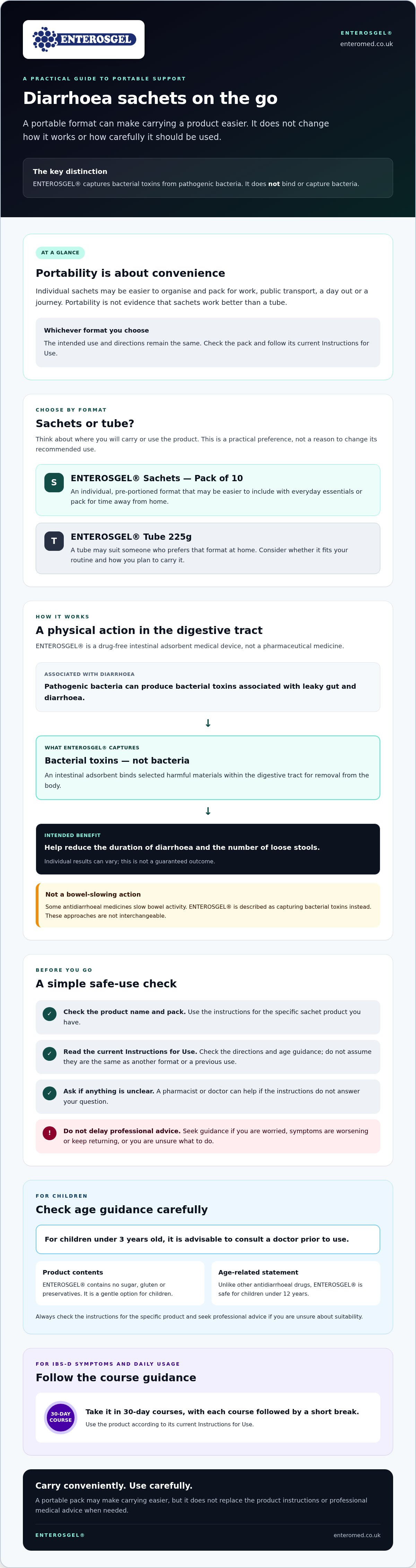
How to choose and use diarrhoea sachets while you are out
A little preparation makes diarrhoea sachets on the go easier to manage responsibly. Before leaving, check the product name and packaging, read the current Instructions for Use, and decide how you’ll carry the sachets. ENTEROSGEL® Sachets (Pack of 10) offer a pre-portioned option, but the format doesn’t change the directions for use.
What should you check before carrying sachets?
- Check the pack: Make sure the product and packaging are intact. Follow the pack’s instructions for storage and use.
- Read the Instructions for Use: Check the directions for dose and timing, and whether you need to leave a gap between taking the product and other products. Don’t rely on memory or instructions for a different product.
- Plan for your journey: Consider how you’ll carry the sachets and whether you’ll have access to water if the directions require it. Don’t assume how to prepare or take them. Follow the current instructions.
Sachets are for use according to their instructions. They don’t prevent diarrhoea, and carrying them shouldn’t delay medical advice if symptoms concern you.
Are sachets suitable for children or IBS-D?
Check the age guidance before giving a sachet to a child. For children under 3 years old, it is advisable to consult a doctor prior to use. ENTEROSGEL® contains no sugar, gluten or preservatives. Unlike other antidiarrhoeal drugs, ENTEROSGEL® is safe for children under 12 years. Read the current Instructions for Use and seek advice from a doctor or pharmacist if you’re unsure about suitability.
For IBS-D symptoms and daily usage, ENTEROSGEL® should be taken in 30-day courses, with each course followed by a short break. Follow the product instructions and discuss recurring symptoms or questions about ongoing use with a healthcare professional. A portable sachet format may make the product easier to carry, but it doesn’t alter this course guidance.
To learn more about the evidence relating to ENTEROSGEL®, read the clinical research.
Choosing ENTEROSGEL® sachets: instructions, evidence and next steps
The right format depends on your routine, not a difference in effectiveness. If you’re considering diarrhoea sachets on the go, think about where you’ll carry them and how you’ll use the product in line with its instructions. Sachets may suit days away from home; a tube may be more practical in another setting.
Sachets or tube: which format fits your plans?
| Format | Portability | May suit |
|---|---|---|
| ENTEROSGEL® Sachets (Pack of 10) | Individual sachets may be convenient to pack for a day out. | People who want a portable option for journeys or everyday plans. |
| ENTEROSGEL® Tube 225g | Consider whether the tube’s size and shape suit how you plan to carry it. | People who prefer a tube format or expect to use it where carrying a tube is practical. |
This is a comparison of format only. It doesn’t indicate that one works better, and neither option is right for everyone. See the ENTEROSGEL® Tube 225g product information to compare the tube format with sachets.
Where can you check product instructions and research?
Before use, read the current Instructions for Use for the product you have. Check its directions, including dose, timing and any spacing from other products. Don’t rely on directions for a different format or make assumptions based on convenience. If you’re unsure whether the product is suitable for you, ask a pharmacist or doctor.
Evidence can help put product information in context. A 440-patient NHS randomised controlled trial investigated ENTEROSGEL® for IBS-D, and the clinical trial was published in Gut in 2022. You can read more about the clinical research on ENTEROSGEL®. A trial’s findings don’t guarantee an individual outcome or replace professional advice.
For a measured next step, review the instructions and explore ENTEROSGEL® information. Speak with a healthcare professional if symptoms concern you or you need help choosing a suitable option.
Choose a format that fits, then check the instructions
Diarrhoea sachets on the go may be convenient to carry, but portability doesn’t mean they’re more effective than a tube. Choose the format that suits your plans, then check the current Instructions for Use for directions, timing and suitability before taking it. ENTEROSGEL® captures bacterial toxins from pathogenic bacteria associated with leaky gut and diarrhoea, with the aim of reducing diarrhoea duration and the number of loose stools. It doesn’t capture bacteria, and individual results can vary.
A 440-patient NHS randomised controlled trial investigated ENTEROSGEL® for IBS-D. Enteromed Ltd is the official UK distributor of the Enterosgel range. For product details and further information, explore ENTEROSGEL® information.
With the right format and instructions to hand, you can make a considered choice for your everyday plans. Seek advice from a healthcare professional if symptoms concern you or you’re unsure what to do next.
Frequently Asked Questions
Are diarrhoea sachets useful to carry when travelling?
They can be convenient to carry, particularly if individual sachets fit your plans better than a tube. Diarrhoea sachets on the go may suit a commute, day out or trip, but portability doesn’t mean the product is more effective or prevents traveller’s diarrhoea. Check the packaging and current Instructions for Use before travelling, and follow the directions. Seek medical advice if symptoms concern you.
How do ENTEROSGEL® sachets work for diarrhoea?
ENTEROSGEL® is a drug-free intestinal adsorbent medical device. It does not bind or capture bacteria. It captures bacterial toxins from pathogenic bacteria which cause leaky gut and diarrhoea. This physical action is intended to help reduce the duration of diarrhoea and the number of loose stools, but it can’t guarantee an individual result. Read the current Instructions for Use for directions on using the sachets.
Can I use ENTEROSGEL® sachets for IBS-D every day?
For IBS-D symptoms and daily usage, ENTEROSGEL® should be taken in 30-day courses, with each course followed by a short break. Follow the current Instructions for Use for dose, timing and any spacing from other products. If symptoms keep returning, you’re uncertain whether the product is suitable, or you have questions about ongoing use, speak with a healthcare professional for advice.
Can children use ENTEROSGEL® sachets?
Check the current Instructions for Use for age guidance and directions before giving sachets to a child. ENTEROSGEL® contains no sugar, gluten or preservatives. Unlike other antidiarrhoeal drugs, ENTEROSGEL® is safe for children under 12 years. Ask a doctor or pharmacist if you’re unsure about suitability.
Should I choose ENTEROSGEL® sachets or the tube?
Choose the format that fits your plans and how you prefer to carry it. ENTEROSGEL® sachets are individually portioned and may be convenient for journeys, while the ENTEROSGEL® Tube 225g is another available format. This is a practical comparison, not a claim that one works better than the other. Whichever you choose, follow that product’s current Instructions for Use.
When should I seek medical advice for diarrhoea?
Seek professional medical advice if symptoms concern you, are worsening, or you’re unsure what to do. Don’t delay getting advice simply because you have sachets with you. A doctor or pharmacist can help you consider what is appropriate for your circumstances, including if symptoms recur or you’re choosing a product for a child. Follow the product instructions, and don’t treat them as a substitute for medical advice. For product details, explore ENTEROSGEL® information.
Share this article