

Food poisoning recovery: what to eat and when to seek help
In food poisoning recovery, replacing lost fluids is more important than forcing yourself to eat. Take small, frequent sips while your stomach settles. If nausea or vomiting makes drinking difficult, it can be hard to know what to try next.
It’s understandable to worry if symptoms linger or a child is unwell. A clear plan can help you focus on the essentials while watching for signs that need medical advice.
This guide explains how to sip fluids, when to start eating again and which simple options may be easier to tolerate. It also covers optional symptom support and when to contact NHS 111 or a GP, including concerns about dehydration in children. You’ll find warning signs that need emergency care, so you can make informed decisions as recovery progresses.
Key Takeaways
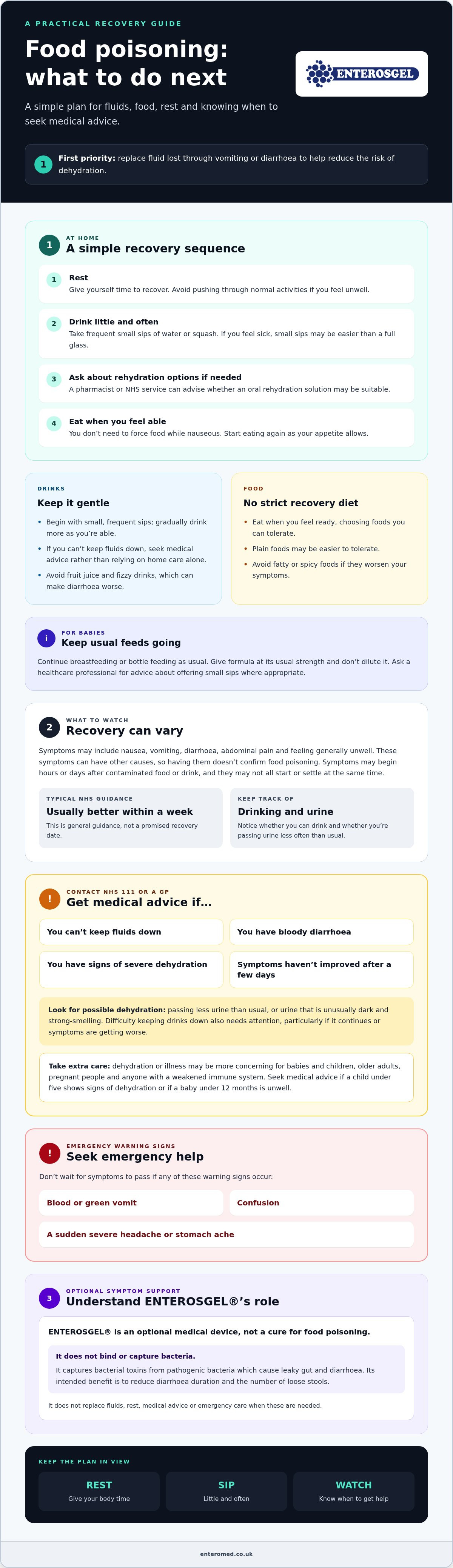
- For food poisoning recovery, prioritise rest and frequent small sips of fluid. Ask a pharmacist or NHS service about oral rehydration options if needed.
- Eat when you feel able. Start with plain foods if these are easier to tolerate, and avoid fatty or spicy options until you feel better.
- Contact NHS 111 or a GP if you can’t keep fluids down, have bloody diarrhoea, signs of severe dehydration, or symptoms that don’t improve after a few days.
- Seek emergency help for warning signs such as blood or green vomit, confusion, or a sudden severe headache or stomach ache.
- ENTEROSGEL® is an optional medical device, not a cure for food poisoning. It doesn’t bind or capture bacteria; it captures bacterial toxins from pathogenic bacteria, with the intended benefit of reducing diarrhoea duration and the number of loose stools.
Food poisoning recovery: what to expect and how symptoms develop
Food poisoning is an illness that can follow eating or drinking something contaminated. Symptoms may include nausea, vomiting, diarrhoea, abdominal pain and feeling generally unwell. These symptoms can also have other causes, so having them doesn’t confirm that you have food poisoning.
The timing and pattern vary from person to person, depending on the cause. Symptoms may begin hours or days after consuming contaminated food or drink, and they may not all start or settle at the same time. During food poisoning recovery, keep track of whether you can drink and how often you’re passing urine. Vomiting and diarrhoea can cause fluid loss.
Many cases improve on their own, but severe, worsening or persistent symptoms may need medical assessment. The sections below explain what to do at home and when to seek advice.
How long can food poisoning recovery take?
The NHS says food poisoning symptoms usually get better within a week. This is general guidance, not a promised recovery date. Symptoms may start and settle at different times, and the course can vary with the cause and the individual. If symptoms aren’t improving after a few days, or you’re concerned, seek advice rather than waiting for a particular day.
Why diarrhoea and vomiting can leave you feeling unwell
Vomiting and diarrhoea can cause your body to lose more fluid than usual. This can contribute to dehydration and leave you feeling weak or washed out. Notice whether you’re managing to drink and whether you’re passing urine less often than usual. If you can’t keep fluids down or are worried about dehydration, contact NHS 111 or a GP for guidance.
Food poisoning recovery at home: fluids, food and rest
A simple sequence can help you manage symptoms at home. Replacing fluid lost through vomiting or diarrhoea is the main self-care priority because it helps reduce the risk of dehydration.
- Rest. Give yourself time to recover. Avoid pushing through normal activities if you feel unwell.
- Drink little and often. Take frequent sips of water or squash. If you feel sick, small sips may be easier to manage than a full glass.
- Ask about rehydration options if needed. A pharmacist or NHS service can advise whether an oral rehydration solution may be suitable.
- Eat when you feel able. You don’t need to force food while you’re nauseous. Start eating again as your appetite allows.
How to drink when you feel sick
Start with small, frequent sips, then gradually drink more as you’re able. If vomiting makes it difficult to keep fluids down, seek medical advice rather than relying on home care alone. For babies, continue breastfeeding or bottle feeding as usual. Give formula at its usual strength and don’t dilute it. Ask a healthcare professional for advice about offering small sips where appropriate.
When to eat during food poisoning recovery
There’s no need to follow a strict recovery diet. Eat when you feel ready, choosing foods you can tolerate. Avoid fatty or spicy foods if they worsen your symptoms. The NHS also advises avoiding fruit juice and fizzy drinks, which can make diarrhoea worse. These are practical adjustments, not a reason to restrict food more than necessary.
If you’re unsure whether you’re drinking enough or whether an oral rehydration solution is appropriate, ask a pharmacist or contact the NHS for guidance. If you can’t keep fluids down, seek medical advice promptly.
When food poisoning needs medical advice: warning signs and next steps
Most cases can be managed at home, but some symptoms need professional assessment. Use this checklist to decide what to do. If you’re worried about yourself or someone in your care, seek advice rather than waiting for symptoms to pass.
Signs of dehydration or symptoms that are not improving
Vomiting and diarrhoea can make it harder to replace lost fluids. Watch for passing less urine than usual, or urine that is unusually dark and strong-smelling. Difficulty keeping drinks down also needs attention, particularly if it continues or symptoms are getting worse.
Contact a pharmacist or NHS 111 for advice. Call NHS 111 or speak to a GP if:
- you can’t keep fluids down;
- you have bloody diarrhoea;
- you have signs of severe dehydration; or
- your symptoms haven’t improved after a few days.
When to contact NHS 111 or seek emergency care
Take extra care with babies and children, older adults, pregnant people and anyone with a weakened immune system, as dehydration or illness may be more concerning. Seek medical advice if a child under five shows signs of dehydration or if a baby under 12 months is unwell. Parents and carers should get advice whenever they’re concerned.
Severe or rapidly worsening symptoms need urgent help. Call 999 or go to A&E for emergency warning signs. These include:
- vomit containing blood or that looks like coffee grounds, or green vomit;
- a stiff neck with pain when looking at bright lights;
- a sudden, severe headache or stomach ache; or
- confusion.
Don’t delay emergency care to try home treatments. Once you’ve checked the appropriate next step, you can read the ENTEROSGEL® Tube 225g product information for details about its role and use.
ENTEROSGEL® and food poisoning recovery: understand its role and limits
Alongside hydration, rest and knowing when to seek medical advice, some people may consider additional symptom support. ENTEROSGEL® is an oral intestinal adsorbent and a medical device. It’s optional support, not a cure for food poisoning, and shouldn’t replace NHS guidance or delay assessment if symptoms are concerning.
What an intestinal adsorbent does, and does not do
An intestinal adsorbent binds certain materials within the digestive tract. ENTEROSGEL® does not bind or capture bacteria, and it doesn’t kill them. Its stated action is to capture bacterial toxins from pathogenic bacteria which cause leaky gut and diarrhoea. This non-systemic action takes place in the gut. The intended diarrhoea benefit is to reduce its duration and the number of loose stools.
ENTEROSGEL® is not a pharmaceutical medicine. Its role in symptom support doesn’t establish what’s causing your illness or remove the need to maintain fluid intake. If you’re unsure whether it’s suitable for you, or your symptoms are severe or worsening, speak to a healthcare professional.
Using product information and clinical evidence responsibly
Research findings need to be read in context. The NHS randomised controlled trial involving 440 patients studied ENTEROSGEL® for IBS-D, not acute food poisoning. For IBS-D symptoms and daily usage, Enterosgel should be taken in 30-day courses, with each course followed by a short break. This is not advice for acute food poisoning. Read more about ENTEROSGEL® clinical research, noting which condition each study examined.
If you’re considering the product, check the current directions and warnings before use, and ask a healthcare professional if you have questions. For an optional next step, see the Enterosgel 225g tube information. Keep self-care and medical escalation first: seek NHS advice when symptoms meet the warning signs described above.
Keep your recovery steady and know when to seek help
A practical food poisoning recovery plan starts with rest and frequent fluids. Take small sips if you feel sick. Eat when you’re able rather than forcing food, and avoid items that may worsen diarrhoea. Keep an eye on your symptoms and how well you’re drinking. If you can’t keep fluids down, see blood in your diarrhoea or notice signs of severe dehydration, contact NHS 111 or a GP. Seek emergency care for the serious warning signs described above.
ENTEROSGEL® is an oral intestinal adsorbent medical device, not a pharmaceutical medicine or a cure for food poisoning. It doesn’t bind or capture bacteria; it captures bacterial toxins from pathogenic bacteria which cause leaky gut and diarrhoea. Its intended diarrhoea benefit is to reduce duration and the number of loose stools. The NHS randomised controlled trial involving 440 patients studied IBS-D, not food poisoning, so its findings shouldn’t be taken as evidence for food poisoning recovery.
To review the product’s role and directions, read the ENTEROSGEL® 225g tube product information. Keep fluids and appropriate medical advice at the centre of your recovery, and seek NHS guidance if warning signs arise.
Frequently Asked Questions
How long does food poisoning recovery usually take?
The NHS says food poisoning symptoms usually get better within a week, although timing can vary. The cause, severity and person affected may influence how long symptoms last, so there’s no guaranteed recovery date. Rest and drink fluids regularly while you recover. Seek medical advice if symptoms are severe, getting worse or meet current NHS urgent-care guidance. If you’re unsure what to do, contact NHS 111 or a GP for advice.
What should I drink during food poisoning recovery?
Drink fluids regularly, taking small sips if nausea makes larger drinks difficult. Replacing fluid lost through vomiting or diarrhoea is a key part of home care. Follow NHS advice about oral rehydration options, particularly if you’re worried about dehydration or the person affected is a child. A pharmacist or healthcare professional can advise on what’s suitable. If you can’t keep fluids down, contact NHS 111 or a GP.
Can I eat normally while recovering from food poisoning?
Eat when you feel able; there’s no need to force food while you’re sick. Follow NHS advice about foods and drinks that may worsen diarrhoea, such as fatty or spicy foods, fruit juice and fizzy drinks. As your appetite returns, you can move back towards your usual diet. Seek advice from a healthcare professional if symptoms prevent you from eating or drinking, worsen, or cause concern.
When should I call NHS 111 for food poisoning?
Contact NHS 111 or a GP if you can’t keep fluids down, have bloody diarrhoea, show signs of severe dehydration or symptoms haven’t improved after a few days. Seek advice sooner if you’re concerned about dehydration or worsening illness, especially for a child or someone more vulnerable. Call 999 or go to A&E for emergency warning signs such as confusion, green vomit, or vomit containing blood or looking like coffee grounds.
Can children use ENTEROSGEL® for diarrhoea?
ENTEROSGEL® is described as a gentle option for children because it contains no sugar, gluten or preservatives. It is safe for children under 12 years, unlike other antidiarrhoeal drugs. For children under 3 years old, it is advisable to consult a doctor prior to use. Check the current Instructions for Use for directions, and seek medical advice if a child has worrying symptoms or signs of dehydration.
Does ENTEROSGEL® capture bacteria that cause food poisoning?
No. ENTEROSGEL® does not bind or capture bacteria. It captures bacterial toxins from pathogenic bacteria which cause leaky gut and diarrhoea. Its intended diarrhoea benefit is to reduce the duration of diarrhoea and the number of loose stools. It isn’t a cure for food poisoning and doesn’t replace fluids, self-care or medical advice. Seek professional help if symptoms are severe, worsening or meet NHS urgent-care guidance.
Share this article