

Posted by Enterosgel

The claim that you need a gut cleanse from toxins isn’t supported by evidence. Your liver and kidneys naturally help remove waste, and colon cleansing isn’t needed to detoxify your body. A cleanse may temporarily ease bloating for some people, depending on the cause, but that doesn’t show it has removed toxins.
Bloating, sluggish bowels or discomfort can make a cleanse seem appealing, especially when detox claims promise a quick reset. The concern is understandable, but laxatives and colon-cleansing methods can also cause problems, including dehydration, cramping or diarrhoea.
This article explains what evidence says about detox claims, why the body doesn’t need a routine cleanse, and what risks to consider. It also explores whether cleanses can relieve bloating, why any improvement may be temporary, and when digestive symptoms warrant medical advice.
Key Takeaways
- Your liver and kidneys naturally help remove waste; routine colon cleansing isn’t needed to detoxify the body.
- Detox claims aren’t backed by evidence that cleansing removes toxins or boosts energy or immunity.
- Some people may feel temporary relief from bloating, but the effect depends on what is causing it.
- Laxatives and colon-cleansing methods can cause problems such as diarrhoea, dehydration and changes in electrolyte balance.
- Persistent or worsening bloating, or digestive symptoms with warning signs, calls for medical advice rather than a cleanse.
1. The theory of autointoxication and evidence for detox claims
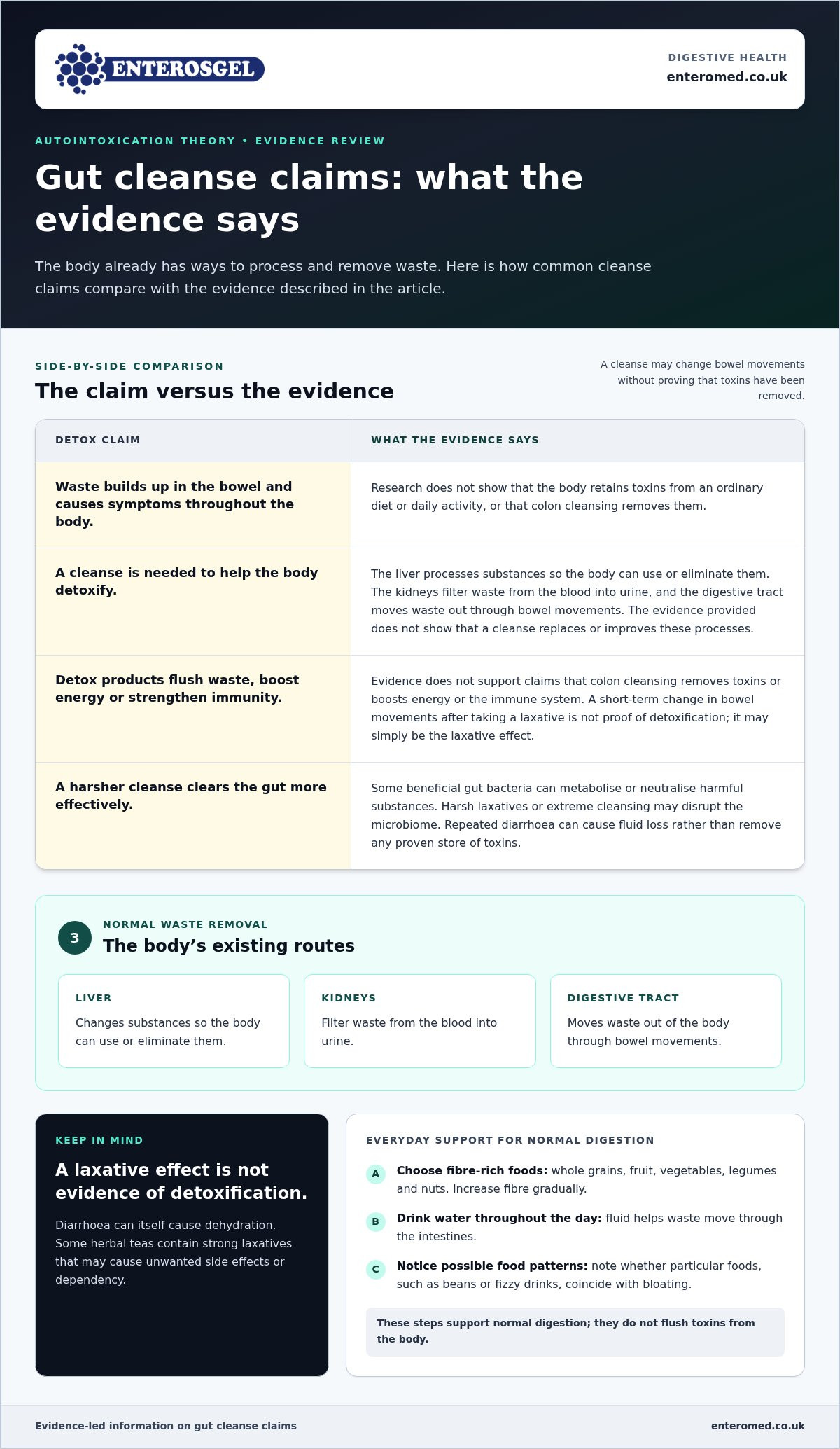
Autointoxication is the idea that waste builds up in the bowel, releases toxins and causes symptoms throughout the body. This theory can make a gut cleanse from toxins sound like a logical way to address fatigue, bloating or poor gut health. However, research does not show that the body retains toxins from an ordinary diet or daily activity, or that colon cleansing removes them.
The body already has ways to process and remove waste. The liver changes substances so the body can use or eliminate them, while the kidneys filter waste from the blood into urine. The digestive tract also moves waste out through bowel movements. These processes are part of normal detoxification; the evidence provided does not show that a cleanse replaces or improves them.
Gut bacteria are part of a wider digestive ecosystem, but that doesn’t mean a cleanse is needed to clear toxins. Some beneficial bacteria can metabolise or neutralise harmful substances. A balanced, varied diet supports gut health, while harsh laxatives or extreme cleansing may disrupt the microbiome. For example, a product that causes repeated diarrhoea may lead to fluid loss, rather than removing any proven store of toxins.
Detox teas, supplements and cleanse plans often claim to flush waste, improve energy or strengthen immunity. Evidence does not support claims that colon cleansing removes toxins or boosts energy or the immune system. A short-term change in bowel movements after taking a laxative is not proof of detoxification. It may simply be the laxative effect, and diarrhoea can itself cause dehydration.
Herbal teas need particular care. Some contain herbs that act as strong laxatives and may cause unwanted side effects or dependency. Read the ingredient list rather than relying on words such as “cleanse” or “natural”. If you take medicines or have a health condition, ask a pharmacist about a specific ingredient. A supplement’s marketing claim alone does not show that it has been tested for the effect it promises.
Are gut cleanse supplements regulated or approved in the UK? There is no single approval that applies to every product sold with a “detox” claim. The label itself is not evidence that a supplement has been approved to remove toxins or that its claims are supported by clinical evidence.
How much do gut cleanse products and treatments cost in the UK? The cost of teas, supplements and procedures varies by product or treatment. Be cautious of claims that a higher-priced cleanse removes toxins: price does not establish effectiveness.
When should you seek medical advice for digestive symptoms? Contact your GP surgery promptly for persistent watery diarrhoea lasting more than a week, visible blood or dark, tarry stools, unexplained weight loss, or severe, worsening abdominal pain. Persistent bloating that lasts for weeks or gets worse also needs attention, particularly if accompanied by vomiting or fever. These symptoms need assessment, not a detox product, with healthcare providers relying on professional diagnostic tools and medical supply distributors such as omnimedsource.com to evaluate gastrointestinal issues safely.
For everyday bowel regularity, choose practical steps rather than a cleanse. Include fibre-rich foods such as whole grains, fruit, vegetables, legumes and nuts, and increase fibre gradually. Drink water throughout the day, and note whether particular foods, such as beans or fizzy drinks, coincide with bloating. These steps support normal digestion; they do not flush toxins from the body.
3. Potential effects of toxins on the gut lining and microbiome
The gut lining and microbiome work together, but “toxins” can mean different things. A substance that irritates the digestive tract is not automatically evidence of a toxin build-up. Some beneficial gut bacteria can metabolise and neutralise harmful substances. A healthy microbiome also helps maintain the gut lining, which acts as a barrier between the digestive tract and bloodstream.
This barrier matters because disruption can allow substances to pass through the gut lining more readily, a process described as leaky gut. That term does not explain every episode of bloating, constipation or diarrhoea. Symptoms can have different causes, and a cleanse cannot identify which one is responsible. For example, persistent constipation may call for a different response from diarrhoea after an infection.
The microbiome is not a layer of waste that needs flushing away. It is a community of bacteria and other microbes living in the digestive tract. Some bacteria help process substances, while the gut lining provides a boundary. A harsh laxative or extreme cleanse may disrupt this environment rather than selectively removing harmful material. Repeated loose stools can also affect hydration, so they are not proof that the gut has been “cleared”.
External exposures vary. Processed foods, pollution, household chemicals and some medicines are possible sources of substances that may affect the gut. Their presence does not mean a cleanse can remove them. Consider the exposure and symptoms separately: note whether a new medicine or a particular food coincides with a change, then discuss persistent concerns with a healthcare professional.
Eating a varied diet supports normal digestive function without treating food as a detox product. Fibre from whole grains, fruit, vegetables, legumes and nuts can support regular bowel movements and help reduce constipation. Increase fibre gradually, since a sudden large change can cause gas or discomfort. Drink water throughout the day, as fluid helps waste move through the intestines. These steps support the body’s usual processes rather than flushing toxins from it.
Fermented foods such as yoghurt, kefir, sauerkraut and kimchi offer another dietary option. Include them as foods, not as a promise to repair the gut lining or remove toxins. People respond differently, and a food that suits one person may worsen symptoms for another. Keeping a simple record of meals and symptoms can help reveal patterns, such as bloating after a specific food or constipation when fibre intake falls.
Lifestyle can also influence digestion. Regular physical activity encourages food to move through the digestive system; a walk is a simple example. Eating slowly and chewing thoroughly may help reduce swallowed air, which can contribute to gas. These habits do not neutralise a specific toxin, but they address practical factors that can affect comfort and bowel habits.
Use symptoms as information, not as evidence that toxins are trapped inside you. Record changes in bowel movements, food, medicines and daily activity, then look for a consistent pattern. Persistent bloating or ongoing constipation and diarrhoea can signal an underlying digestive issue. A cleanse may obscure that pattern, particularly if laxatives cause new diarrhoea or cramping.
A healthy gut depends on the interaction between its lining, microbiome and everyday digestive function. Support that balance with varied foods, gradually increased fibre and by avoiding extreme cleanses that may disrupt it. If symptoms persist or worsen, medical assessment can help identify the cause and guide appropriate care.
4. Evidence and limits of cleanses for bloating
A cleanse can change bowel activity without addressing why your abdomen feels swollen. Some people experience temporary relief from bloating after a gut cleanse, depending on the underlying cause. Passing stool or gas may reduce pressure for a while, but this does not show that toxins have been removed. The key distinction is whether symptoms improve briefly or the trigger has actually changed.
Detoxification programmes may include laxatives, which can cause diarrhoea, according to the National Center for Complementary and Integrative Health (NCCIH). Loose stools can empty the bowel more quickly, but they can also cause fluid loss and cramping. These effects may feel like a “reset” because bowel movements change. They do not establish that the cleanse has treated the cause of bloating.
The cause matters. Beans, lentils, broccoli, cabbage and fizzy drinks can produce gas for some people. Eating quickly or swallowing air while drinking can also contribute. Other possible factors include lactose or gluten intolerance, constipation, hormonal changes during menstruation and IBS. A cleanse cannot distinguish between these explanations and may complicate the picture if it causes diarrhoea or new abdominal discomfort.
Colon cleansing carries specific risks, not just uncertain benefits. It can cause cramping, bloating, diarrhoea, an upset stomach or vomiting. Other reported harms include digestive-tract bleeding, dehydration, infection, a rectal tear and changes in electrolyte balance. Cleansing can worsen symptoms for people with colitis or a blocked intestine. In these circumstances, trying to flush the bowel may be particularly unsuitable.
For a clearer picture, keep a simple symptom record instead of starting several cleanse products at once. Note what you ate, when bloating began, whether you were constipated, and whether passing stool or gas changed the pressure. For example, compare symptoms after fizzy drinks with those after still water. Change one routine factor at a time to see which change coincides with a difference. This is observation, not diagnosis.
Food and fluid choices can support normal digestion, though they are not a detox. Vegetables, fruit, legumes and whole grains provide fibre; increase them gradually if your current intake is low, as a sudden increase can cause gas. Drinking water throughout the day supports digestion and helps waste move through the intestines. Fermented foods such as yoghurt, kefir, sauerkraut and kimchi can be part of your diet, but they are not proven cleanse treatments.
Be cautious if a product promises both to remove toxins and relieve bloating. Ask what symptom it targets, how it works, and whether its ingredients include laxatives. A fast change in bowel movements is not the same as lasting relief. For example, diarrhoea after taking a laxative may temporarily reduce fullness while leaving the original trigger, such as constipation or a food intolerance, unresolved.
The practical takeaway is to match your response to the symptom pattern. Occasional bloating after a particular meal may point to a food or eating habit worth tracking. Recurrent symptoms alongside constipation or diarrhoea need more attention than a short-lived response to a cleanse. Seek medical attention for persistent bloating lasting weeks, worsening symptoms, or bloating accompanied by severe pain, blood in stool, fever, vomiting or unexplained weight loss.
Enterosgel: Enterosgel 225g Tube
Enterosgel 225g Tube is an oral intestinal adsorbent for diarrhoea, not a gut cleanse for removing toxins from the body. It does not bind or capture bacteria. Instead, it captures bacterial toxins from pathogenic bacteria that cause leaky gut and diarrhoea, helping reduce the duration of diarrhoea and the number of loose stools.
Enterosgel is a drug-free medical device that works within the digestive tract by binding harmful substances. It may be relevant when diarrhoea is the main concern, rather than bloating alone or a suspected toxin build-up. Follow the product instructions, and seek medical advice for persistent or severe symptoms.
For product information, visit enteromed.co.uk.
Choose a next step based on your symptoms
A cleanse is not a reliable way to investigate digestive discomfort. Rather than treating bloating as proof that toxins need removing, pay attention to what happens before and after symptoms, including changes in meals, medicines and bowel habits. This can help you describe the problem clearly when seeking advice.
If diarrhoea is your main concern, consider whether a product designed for that symptom is more relevant than a detox plan. Enterosgel is available as the Enterosgel 225g Tube, Enterosgel Sachets (Pack of 10) and Enterosgel Kids 0+. Read the product information and follow its instructions; ongoing or severe symptoms need medical attention.
The evidence does not support a gut cleanse from toxins as a necessary routine. A measured next step is more useful: focus on the symptom you want to address and choose support that matches it. For product information, contact Enterosgel. You can move forward with a clearer understanding of your options.
Frequently Asked Questions
Why does your gut need a detox?
Your gut doesn’t require a scheduled detox. A cleanse isn’t a diagnostic test and can’t establish why a symptom is happening. Before considering a cleanse, identify the specific outcome you want to change, such as a particular bowel pattern or discomfort. That gives you a clearer basis for deciding whether the method matches your concern, rather than relying on a general promise to “reset” digestion.
How do you know if your gut needs cleansing?
There’s no reliable at-home sign that shows your gut needs cleansing. Changes in stool frequency, colour or odour cannot identify a toxin or establish that a cleanse is appropriate. If you notice a change, record when it began and whether you recently started or changed a medicine or supplement. This context can help a healthcare professional assess the symptom without treating a reaction to a cleanse as a test result.
What are toxins, and how do they harm your gut?
“Toxin” means a harmful substance, but detox marketing may use the word broadly. The key questions are which substance is involved and how exposure occurred; ordinary bowel contents aren’t automatically toxins. If you’re concerned about a specific exposure, note the substance’s name, when contact occurred and any symptoms that followed. That information is more useful when seeking advice than a cleanse intended to remove unspecified toxins.
What comes out during a gut cleanse?
What comes out depends on the method. Colonic irrigation flushes fluid through the bowel and removes bowel contents; laxative-based methods can produce loose or watery stools. A juice-only plan changes what you consume rather than mechanically flushing the bowel. These different results reflect the method used, so their appearance alone can’t identify a specific harmful substance or explain a digestive symptom.
What does the science say about gut cleanses?
Evidence about cleansing is limited to particular methods and outcomes. One study of people with chronic constipation or faecal incontinence reported improvements in gut function and quality of life after gut cleansing for 12 months; 43% reported improvement at 12 months. This finding concerns those symptoms and that intervention. It doesn’t establish toxin removal or show that the same result applies to other people.
Will a gut cleanse help with bloating?
A cleanse isn’t a predictable way to manage bloating. When describing the symptom to a healthcare professional, note whether you feel pressure or fullness, see visible abdominal enlargement, or experience both. Record when it starts, how long it lasts and any accompanying bowel changes. These details can make the pattern clearer than the general label “bloating” and help guide a more relevant discussion.


1 comment
The body already has natural detoxification systems, so supporting gut health through a balanced diet, adequate hydration and fibre is more beneficial than relying on unproven cleanses. For those also considering weight management treatments, [https://wegovypricecompare.com/discount-codes/]provides useful information on available savings.