

How to reduce bloating after eating: practical steps that can help
Post-meal bloating doesn’t always mean a particular food is the problem. A tight, swollen abdomen or uncomfortable fullness can follow a large meal, eating quickly or swallowing air. Recurring symptoms can have several possible causes. If you’re wondering how to reduce bloating after eating, tracking the pattern is often more useful than cutting out foods at random.
It’s understandable to feel uncertain when symptoms keep returning, especially if you’re worried they could signal a health problem. This guide explains common reasons for bloating after meals and practical, low-risk steps to try, including eating more slowly, choosing smaller portions and noting when symptoms occur. You’ll also learn how to look for possible food or habit triggers without making unnecessary dietary restrictions, and when persistent, worsening or concerning symptoms call for medical advice. The aim is to help you make informed choices without guessing at the cause or dismissing symptoms that need attention.
Key Takeaways
- Post-meal bloating can have several contributors, so one episode doesn’t prove that a particular food is the cause.
- For how to reduce bloating after eating, try simple comfort steps such as loosening tight clothing, sipping water and moving gently if comfortable.
- Keep a brief record of meals, symptoms and bowel movements to spot repeated patterns without cutting out foods unnecessarily.
- Try smaller portions and slower eating at future meals, then note whether these changes affect your symptoms.
- Seek medical advice if bloating is persistent, recurrent, worsening or affecting daily life. Get prompt help for severe or rapidly worsening symptoms.
Why does bloating happen after eating? Understand the common patterns
Post-meal bloating can feel uncomfortable, but its timing alone doesn’t identify the cause. It may relate to how much or how quickly you eat, swallowed air, normal digestive activity or an underlying condition. A single episode after a particular meal isn’t enough to show that one food is responsible.
Bloating, fullness and distension: what is the difference?
Bloating is a subjective feeling of fullness, pressure or swelling in the abdomen. Abdominal distension means the abdomen is visibly enlarged. You might feel bloated without seeing a change in your abdomen, notice distension without much discomfort, or experience both together. The sensations can differ from one meal to another. What you feel is useful information, but it doesn’t diagnose the cause.
Why can symptoms start after a meal?
Food entering the stomach triggers the gastrocolic reflex, a normal signal that stimulates the colon. This can make you more aware of gut movement or prompt a bowel movement after eating. It doesn’t necessarily mean the meal has caused a problem.
Other possible contributors include eating a large meal, eating quickly or swallowing air while eating. These may affect some people, but they don’t explain every episode. Recurrent bloating can also occur alongside digestive conditions such as irritable bowel syndrome (IBS), which may involve other symptoms. Bloating alone can’t confirm IBS or any other diagnosis.
Look for patterns rather than drawing conclusions from one meal. Note whether symptoms tend to follow larger portions, a rushed meal or particular circumstances, and whether they happen alongside changes in bowel movements. This can help you decide what to explore next without assuming you need to avoid a whole food group.
If symptoms repeatedly return, worsen or interfere with daily life, discuss them with a healthcare professional. For those interested in exploring integrative gut health support and lifestyle guidance, resources such as feelyourbestself.com provide insight into addressing digestive wellbeing holistically. To work out how to reduce bloating after eating, start with practical measures and observation, then seek advice if the pattern persists.
How to reduce bloating after eating: practical steps for immediate comfort
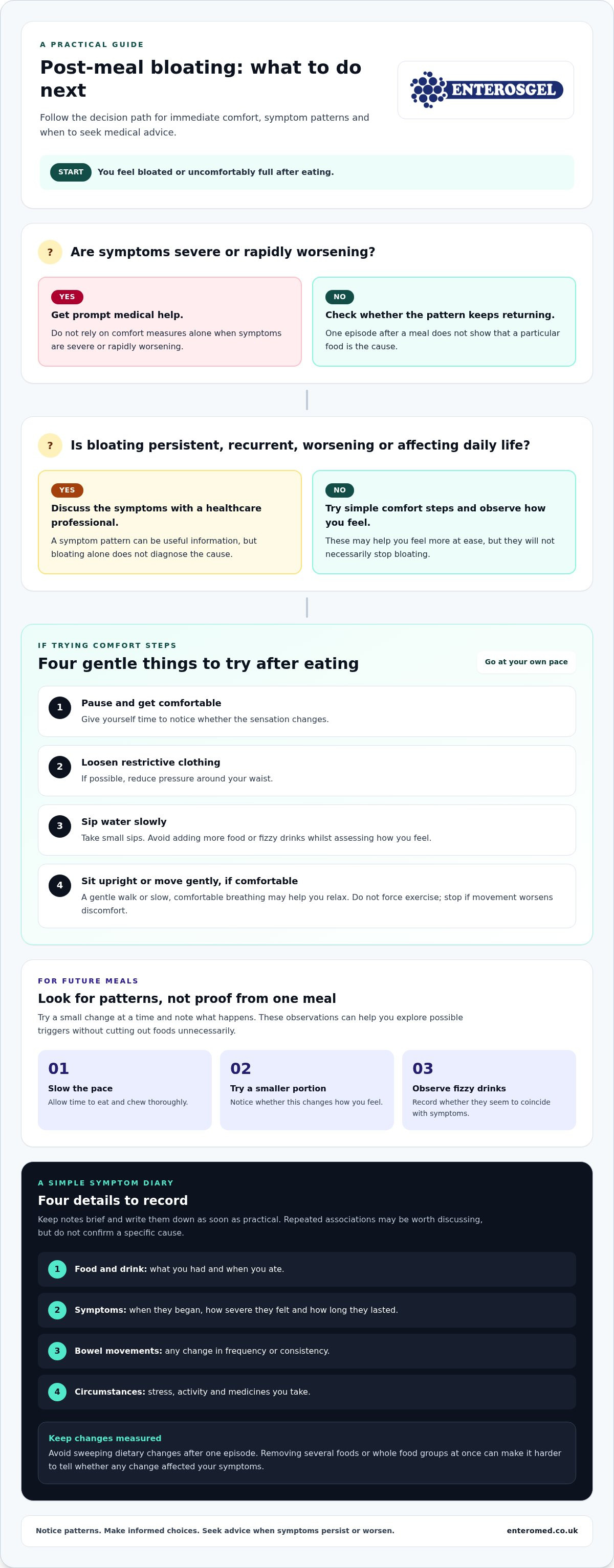
After a meal, pause, loosen tight clothing, sip water and try gentle movement if comfortable. These steps may help you feel more at ease, but they won’t necessarily stop bloating. Notice how you feel as you try them, and don’t force anything that makes you uncomfortable.
What can I do straight after eating?
- Pause and get comfortable. Give yourself time to notice how the sensation changes rather than rushing into another activity.
- Loosen restrictive clothing around your waist, if possible, to reduce pressure on your abdomen.
- Sip water. Take small sips rather than drinking quickly. Avoid adding more food or fizzy drinks while you assess how you feel.
- Sit upright or take a gentle walk if comfortable. Slow, comfortable breathing may also help you relax. Don’t force exercise, and stop if movement worsens your discomfort.
There’s no single response that works for everyone. Note which steps you tried and whether they made a difference. Avoid relying on unproven remedies or making sweeping dietary changes because of one episode.
Which eating habits may help prevent recurring discomfort?
At future meals, allow time to eat and chew thoroughly rather than rushing. You could also try a smaller portion and note how you feel, or observe whether fizzy drinks seem to coincide with symptoms. Treat these as patterns to track, not proof that you need to avoid a food or drink altogether.
A brief record of meals and symptoms can help you compare what happens on different occasions. If bloating repeatedly occurs alongside abdominal pain and diarrhoea associated with IBS-D, read about the ENTEROSGEL® 225g Tube. ENTEROSGEL® is a medical device, not a pharmaceutical medicine. It does not bind or capture bacteria. It captures bacterial toxins from pathogenic bacteria which cause leaky gut and diarrhoea. For IBS-D symptoms and daily usage, the product should be taken in 30-day courses, with each course followed by a short break.
How to find food and lifestyle patterns without cutting out too much
A brief symptom diary can help you see whether bloating repeatedly follows a particular meal, eating pattern or circumstance. It won’t prove what causes symptoms, but it gives you a clearer record to review and share with a healthcare professional. This is a measured way to explore how to reduce bloating after eating without removing foods after a single uncomfortable episode.
What should a post-meal symptom diary include?
Keep the notes simple and record details as soon as practical. Include:
- What you ate and drank, and the time of the meal.
- When bloating or other symptoms began, how severe they felt and how long they lasted.
- Any bowel movement changes, such as a difference in frequency or consistency.
- Relevant circumstances, including stress, activity and medicines you take.
Look for repeated associations across entries. If bloating follows one type of meal several times, that may be worth discussing, but it still doesn’t confirm that a specific food is the cause. Symptoms can vary for more than one reason.
When should you avoid restrictive food experiments?
Removing several foods or whole food groups at once can make eating more difficult and leave you unsure which change, if any, affected your symptoms. Don’t treat one episode as evidence that a food must be cut out. If you’re considering excluding a major food group, or symptoms keep returning, seek advice from a healthcare professional rather than relying on self-diagnosis.
Recurring bloating alongside a change in bowel movements deserves individual assessment, particularly if the pattern continues or affects daily life. A clinician can consider your symptoms together instead of relying on a diary entry alone. For background on the evidence, read the digestive health research.
When post-meal bloating persists: medical advice and symptom-focused support
Occasional bloating may settle, but recurring symptoms deserve attention if they persist, worsen or affect daily life. Arrange an assessment with a healthcare professional if bloating keeps returning, particularly alongside unexplained changes in bowel habits. A diary of symptoms and meals can help you describe the pattern, but it can’t establish a diagnosis.
What symptoms mean it is time to seek advice?
Seek medical advice if bloating persists, worsens, recurs frequently or interferes with everyday activities. Unexplained changes in bowel habits are also worth discussing with a healthcare professional. Severe or rapidly worsening symptoms require prompt medical attention. If you’re unsure how urgently to seek help, contact a healthcare professional for advice.
The right assessment and treatment depend on what’s causing your symptoms. An article can offer general information, but it can’t diagnose you or replace individual medical advice.
Where does an intestinal adsorbent fit?
An intestinal adsorbent is a substance that binds harmful materials within the digestive tract for removal from the body. ENTEROSGEL® is a medical device, not a pharmaceutical medicine. It does not bind or capture bacteria. It captures bacterial toxins from pathogenic bacteria which cause leaky gut and diarrhoea. This process helps reduce the duration of diarrhoea and the number of loose stools.
This mechanism and the product’s evidence relate to its stated use, including symptoms in the context of IBS-D. It isn’t a universal response to post-meal bloating or a substitute for assessing persistent symptoms. For IBS-D symptoms and daily usage, the product should be taken in 30-day courses, with each course followed by a short break. Follow the current Instructions for Use and seek professional advice if you’re uncertain whether it’s suitable for you.
Read the research on ENTEROSGEL® for information about its clinical evaluation. If you’re considering symptom-focused support for relevant IBS-D symptoms, explore the ENTEROSGEL® 225g Tube.
Take a measured approach to post-meal bloating
To work out how to reduce bloating after eating, start with gentle comfort steps and notice whether symptoms repeat in similar circumstances. A brief diary can help reveal patterns, but one episode doesn’t prove a food is responsible. Avoid broad food restrictions without professional advice, and speak to a healthcare professional if symptoms persist, worsen or affect daily life.
For people whose bloating occurs alongside relevant IBS-D symptoms, ENTEROSGEL® may be considered as a symptom-focused option, not a remedy for every cause of bloating. It is a medical device, not a pharmaceutical medicine. It captures bacterial toxins from pathogenic bacteria which cause leaky gut and diarrhoea, helping reduce diarrhoea duration and the number of loose stools. A 440-patient NHS randomised controlled trial examined ENTEROSGEL® for IBS-D.
Explore ENTEROSGEL® product information to learn more. Continue observing your symptoms and seek advice when you need it. With a thoughtful approach, you can take practical steps without unnecessary restrictions.
Frequently Asked Questions
Can eating more slowly reduce bloating after a meal?
Eating slowly may help if rushing meals leads you to swallow more air or eat beyond comfortable fullness. Try taking smaller mouthfuls, chewing thoroughly and allowing time for your meal. These habits won’t address every cause of bloating, and any improvement can vary between people. If symptoms keep returning, record when they occur and what else was happening, then discuss the pattern with a healthcare professional.
What should I drink when I feel bloated after eating?
Sipping water is a straightforward option if you feel thirsty after a meal. Fizzy drinks may contribute to gas for some people, so notice whether avoiding them changes your symptoms. There isn’t one drink that reliably relieves every cause of bloating. If symptoms persist or worsen, don’t rely on drinks or home remedies alone. Seek appropriate medical advice, particularly if bloating is affecting your daily activities.
How long does bloating after eating usually last?
The duration varies from person to person and may depend on the cause. A short-lived episode may settle, while repeated or prolonged bloating can have several explanations and shouldn’t be self-diagnosed. Note when symptoms begin, how long they last and whether your bowel movements change. Seek medical advice if bloating is persistent, recurrent, worsening or affecting everyday activities, rather than assuming it will resolve on its own.
Does bloating after eating mean I have IBS?
No. Bloating after a meal on its own doesn’t establish that you have IBS. A clinician considers the wider pattern, including recurrent abdominal symptoms and changes in bowel habits, as well as other possible explanations. Keep a concise symptom diary and seek advice if symptoms persist or interfere with daily life. Don’t start a restrictive diet or assume a diagnosis based on one symptom or a single episode after eating.
When should I speak to a doctor about bloating after eating?
Arrange medical advice if bloating keeps returning, persists, worsens or affects daily life, particularly alongside a change in bowel habits. Seek prompt help if symptoms are severe or rapidly worsening, or if other concerning signs occur. Follow current NHS guidance for appropriate urgency and routes to care. A symptom guide can’t determine the cause; a healthcare professional can assess your symptoms and advise what support may be suitable.
Can ENTEROSGEL® help with bloating after eating?
ENTEROSGEL® is a medical device and intestinal adsorbent, not a pharmaceutical medicine. Product information describes relief for bloating and abdominal pain, but it isn’t a universal answer to every cause of post-meal symptoms. It captures bacterial toxins from pathogenic bacteria which cause leaky gut and diarrhoea, helping reduce diarrhoea duration and the number of loose stools. For IBS-D symptoms and daily usage, take it in 30-day courses, each followed by a short break. Follow the Instructions for Use.
Share this article