

IBS Diarrhoea Relief: A UK Buying Guide to Choosing the Right Treatment
Understanding IBS Diarrhoea (IBS-D) and the Quest for Relief
Living with Irritable Bowel Syndrome with Diarrhoea (IBS-D) is more than just a physical challenge; it's a daily negotiation with your own body. The unpredictable nature of urgency, the discomfort of loose stools, and the persistent abdominal pain can disrupt work, social life, and travel. For many in the UK, the search for effective IBS diarrhoea relief becomes a frustrating cycle of trial and error.
Many traditional anti-diarrhoeal drugs work by slowing down gut motility. While this can provide temporary relief, it often fails to address the underlying cause of the irritation. This approach can lead to a common and disruptive side effect known as "rebound constipation," where the gut swings from one extreme to the other, leaving you feeling just as uncomfortable as before. Beyond the physical symptoms, there is a significant emotional toll. The constant "urgency anxiety"—the fear of a sudden flare-up whilst away from home—can be debilitating.
This guide shifts the focus away from simply masking symptoms. Instead, we explore a clinically proven, drug-free approach centred on removing the intestinal irritants that trigger IBS-D in the first place. By understanding how to trap and eliminate these triggers, you can move towards more predictable and long-term control over your gut health.
In addition to physical treatments, many patients find that working with a clinician who utilises TeleDIETS for medical nutrition therapy helps them gain even greater control over their dietary triggers.
Common Symptoms: Urgency, Bloating, and Cramping
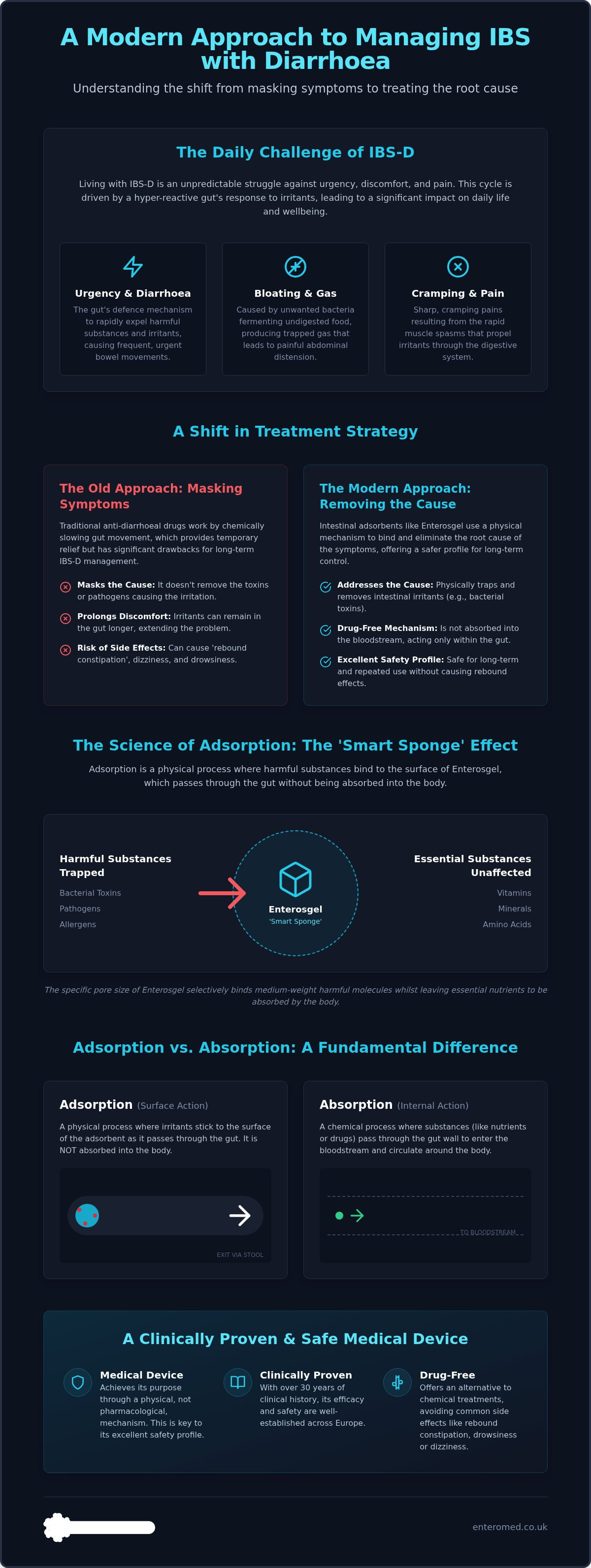
The core symptoms of IBS-D are driven by a hyper-reactive gut. When harmful substances like bacterial toxins, pathogens, or other irritants enter the digestive system, the gut's natural defence mechanism is to expel them as quickly as possible. This rapid transit results in the characteristic urgency and loose, watery stools associated with a flare-up.
- Urgency and Diarrhoea: This is a direct response to irritants. The gut lining becomes inflamed, triggering muscle contractions to flush the harmful substances out, leading to frequent and urgent bowel movements.
- Bloating and Gas: Unwanted bacteria in the gut can ferment undigested food, producing excess gas. This gas becomes trapped, causing painful abdominal bloating and distension, which adds to the overall discomfort.
- Cramping and Pain: The rapid muscle spasms (motility) that cause diarrhoea are often felt as sharp, cramping pains. This discomfort is a key reason why IBS-D has such a significant impact on quality of life.
These symptoms frequently worsen during periods of stress or after consuming certain trigger foods, as both can alter the gut environment and make it more susceptible to irritants.
The Limitations of Traditional Anti-Diarrhoeal Medicines
For decades, the standard approach to managing diarrhoea has been medication that slows down the bowel. These are known as anti-motility drugs. While they can be effective for acute, one-off instances of diarrhoea, they present several limitations for long-term IBS-D management.
- Masking the Cause: Chemical treatments primarily work by paralysing the muscles in the gut wall. This slows everything down but doesn't remove the toxins or pathogens causing the problem. These irritants can remain in the gut longer, potentially prolonging discomfort.
- Risk of Side Effects: Long-term use of anti-motility drugs can lead to the aforementioned rebound constipation, as well as other side effects like dizziness, drowsiness, and abdominal pain. For a sensitive IBS gut, these can be particularly problematic.
- A Drug-Free Alternative: A physical method of treatment offers a significant advantage. Instead of chemically altering the body's functions, a physical approach works within the gut to bind and remove the source of the problem. This method is not absorbed into the bloodstream, offering a much safer profile for long-term and repeated use.
The Science of Adsorption: Why Trapping Toxins is Key
To understand the modern approach to IBS-D relief, it's essential to grasp the scientific principle of adsorption. Unlike absorption, where a substance is taken into the bloodstream, adsorption is a physical process where harmful substances bind to the surface of another material.
Enterosgel is an intestinal adsorbent. It acts like a "smart sponge" within the gut, featuring a porous structure with a specific pore size. This structure allows it to physically trap medium-weight harmful molecules such as bacterial toxins, pathogens, and allergens. Crucially, it does not bind essential nutrients like vitamins and minerals, which are too small or too large to fit into its pores. Once the harmful substances are trapped, Enterosgel passes through the body, carrying the irritants with it to be excreted naturally in the stool. Because it is not absorbed, it doesn't interact with the body systemically, making it a safe option for long-term IBS management and for those with sensitive systems.
Adsorption vs Absorption: Clearing the Confusion
It's a common point of confusion, but the difference between adsorption and absorption is fundamental to understanding how Enterosgel works.
- Absorption is when molecules (like from food or medicine) pass through the gut wall and enter the bloodstream to be circulated around the body.
- Adsorption is a surface-level action. Enterosgel is not absorbed; it remains entirely within the digestive tract. It functions by having irritants physically stick to its vast surface area as it travels through.
In a single sentence: Adsorption is a physical process that traps irritants on the gel’s surface, allowing them to be safely removed from the body without chemical interaction.
A Clinically Proven Medical Device for the UK
The classification of Enterosgel as a medical device, rather than a drug, is significant. This means it achieves its intended purpose through a physical mechanism of action, not a chemical or pharmacological one. This is a key reason for its excellent safety profile. With a clinical history spanning over 30 years and widespread use across Europe, its efficacy and safety are well-established.
This background provides reassurance that you are choosing a treatment grounded in scientific evidence, not a passing trend. For a comprehensive overview of the clinical evidence, read our guide: Enterosgel: The Clinically Proven, Drug-Free Solution for Gut Health & IBS.
Buying Guide: Choosing the Right Enterosgel Format for Your Needs
Managing IBS-D effectively requires a solution that fits your lifestyle. Whether you need daily support at home or an emergency remedy for your travel bag, the Enterosgel IBS Diarrhoea collection offers a tailored format for every situation. When choosing, consider the frequency of your flare-ups, your daily routine, and your budget. All formats contain the same effective gel and are suitable for the whole family, from infants to adults, providing a safe and reliable option for everyone.
The Enterosgel 225g Tube: Your Home Essentials
The 225g tube is the cornerstone of a consistent IBS-D management plan at home. It is designed for regular users who want to maintain control over their symptoms day-to-day.
- Best for: Daily management, long-term symptom control, and families.
- Cost-Effective: This format offers the best value for money for those who use Enterosgel regularly.
- Precise Dosing: The tube makes it simple to dispense the exact dose required for adults, children, and even infants, ensuring accurate administration every time.
Enterosgel Sachets: Travel-Friendly Relief
For those whose IBS-D is triggered by travel, stress, or eating out, the Enterosgel sachets are an indispensable tool. They provide peace of mind in a convenient, portable format.
- Best for: An "emergency kit" for your handbag, car, or desk drawer.
- Convenience: Each sachet contains a pre-measured adult dose, eliminating guesswork and making it easy to take on the go without needing water or a spoon.
- Discreet and Fast: Essential for managing sudden urgency in public places, allowing you to quickly address symptoms before they escalate.
IBS Starter Packs: The Comprehensive Solution
If you are new to using an intestinal adsorbent or want a complete solution for both home and away, the IBS Starter Pack is the ideal choice. It provides the best of both worlds.
- Best for: New users establishing a management routine or those wanting complete coverage.
- All-in-One: The pack typically combines a 225g Tube for home use with a pack of Sachets for travel, ensuring you are prepared for any situation.
- Definitive Choice: The IBS Starter pack is the definitive option for first-time buyers, allowing you to integrate Enterosgel into all aspects of your life from day one.
Browse the Full IBS Diarrhoea Collection
Key Considerations When Shopping for IBS Relief
When navigating the options for IBS diarrhoea relief, it’s crucial to look beyond marketing claims and focus on what truly matters for a sensitive gut: safety, purity, and clinical validation. Making an informed choice can be the difference between temporary relief and long-term, sustainable management.
Safety and Purity: What to Avoid
For anyone with IBS, the gut is already in a sensitive state. The last thing you want is a treatment that adds to the burden. Always check the ingredient list for common irritants.
- Avoid Allergens and Additives: Look for products free from sugar, gluten, dairy, fat, and preservatives. Enterosgel is free from all of these, as well as artificial flavours and colours, making it suitable for even the most sensitive systems.
- Prioritise Non-Systemic Treatments: A key benefit of a non-systemic treatment like an intestinal adsorbent is that it isn't metabolised by the body. It doesn't affect the liver or kidneys, which is a critical safety consideration for long-term use or for individuals taking other medications.
Clinically Proven vs Trendy "Detox" Products
The "gut health" market is flooded with trendy supplements and "detox" products that often lack scientific backing. It is vital to differentiate between these and evidence-based medical devices.
- Look for Clinical Proof: The term "clinically proven" signifies that a product has undergone rigorous testing to validate its efficacy and safety for a specific medical purpose. Always choose treatments that are supported by clinical studies.
- Check for Official Classification: In the UK and Europe, look for CE-marked medical devices. This certification indicates that the product meets health and safety standards.
- Trust in Experience: With over 8 million packs sold in Europe last year, Enterosgel has earned its place as a trusted solution. This widespread use is a mark of consumer trust and real-world effectiveness.
How to Use Enterosgel for Maximum Efficacy
To get the best results from Enterosgel, it’s important to use it correctly. Establishing a simple routine can help you manage both acute flare-ups and maintain long-term gut stability. It is available in the UK without a prescription, making it easily accessible for immediate and ongoing needs.
Step-by-Step Administration Guide
Follow these simple steps for smooth and effective administration:
- Dilute the Gel: Always mix the recommended dose of Enterosgel in a glass of water (or another room-temperature liquid) until it is evenly dispersed. The standard adult dose is one tablespoon (15g) or one sachet.
- Time Your Doses Correctly: Take Enterosgel 1-2 hours before or after meals and any other oral medications. This timing is crucial to ensure it binds to intestinal irritants and not your food or medicine.
- Stay Hydrated: It is important to maintain adequate fluid intake whilst using any intestinal adsorbent. Be sure to drink plenty of water throughout the day to support your digestive system and overall health.
Where to Secure Your Supply
To ensure you are purchasing a genuine and high-quality product, it is best to buy from a reputable source. The official online store offers the complete range of Enterosgel products, including the exclusive starter kits and multi-packs.
Visiting the official IBS Diarrhoea collection provides the most direct and reliable access to the latest product formats. This ensures you receive a product that has been stored correctly and is well within its use-by date, giving you peace of mind and the most effective relief for your IBS diarrhoea symptoms.
Frequently Asked Questions about Enterosgel for IBS Diarrhoea
Is Enterosgel safe for children with IBS-type symptoms?
Yes, Enterosgel is safe for children of all ages, including infants from 0+. Its drug-free, non-allergenic formula is free from sugar, gluten, and preservatives, making it a gentle option for a child's sensitive digestive system. Its physical mechanism of action means it is not absorbed into the bloodstream. However, it is always recommended to consult a healthcare professional for a proper diagnosis before treating a child for IBS-type symptoms.
Can I take Enterosgel alongside my other IBS medications?
Yes, Enterosgel can generally be used alongside other medications as it is not absorbed by the body. However, because it works by adsorption, it is crucial to space out the doses. You should take Enterosgel at least 1-2 hours before or after taking any other oral medications to ensure they are absorbed properly and their efficacy is not reduced.
How quickly does Enterosgel work for diarrhoea and urgency?
Many users report feeling relief from acute diarrhoea and urgency within a few hours of the first dose. For ongoing IBS-D management, consistent use over a treatment course (typically 7-14 days) helps to stabilise the gut environment and reduce the frequency and severity of flare-ups. Response times can vary depending on the individual and the severity of symptoms.
Does Enterosgel cause constipation like other diarrhoea treatments?
Enterosgel is not known to cause rebound constipation, a common side effect of chemical anti-motility drugs. Because it works by physically removing irritants rather than paralysing the gut muscles, it helps to normalise stool consistency without halting bowel function. It is important to maintain adequate fluid intake to support this process.
Is it better to buy the tube or the sachets for IBS-D?
The best format depends on your lifestyle. The 225g tube is the most cost-effective choice for regular, at-home use and for families. The 15g sachets are perfect for travel, work, or keeping in your bag for managing unexpected flare-ups, offering pre-measured convenience when you are on the move.
Can I use Enterosgel every day for my IBS symptoms?
Enterosgel is safe for long-term use as part of an ongoing IBS management plan. Many people take it daily during periods of high sensitivity or as a preventative measure. The standard course for chronic conditions like IBS is up to 21 days, followed by a short break. Always follow the instructions for use or consult your healthcare provider for a personalised management plan.
What does Enterosgel taste like and how do I take it?
Enterosgel is completely tasteless and odourless. It has the consistency of a thick gel. To take it, you should mix the required dose thoroughly in a glass of room-temperature water until it is suspended. It can then be drunk easily. Some people prefer to mix it with a small amount of juice or another liquid, but water is recommended.
Is Enterosgel suitable for vegans and those with gluten intolerance?
Yes, Enterosgel is suitable for both vegans and individuals with coeliac disease or gluten intolerance. Its formula contains only two ingredients: polymethylsiloxane polyhydrate (the active substance) and purified water. It is completely free from animal products, gluten, sugar, dairy, fat, and preservatives.
Share this article