

Loose stools remedy UK: 1 drug-free solution for fast relief
When you need a loose stools remedy UK households can rely on, start by matching the cause of your acute diarrhoea to a gentle, drug-free response. A gentle drug-free intestinal adsorbent (a substance that binds harmful materials) provides rapid relief by capturing targeted bacterial toxins rather than stopping natural bowel movements, so you can stabilise loose stools while you keep up proper oral hydration.
Key Takeaways: Manage loose stools by combining continuous oral rehydration with a drug-free intestinal adsorbent to capture bacterial toxins without slowing natural bowel motility.
- 76% of IBS-D patients reported adequate relief in a 440-person trial across 28 NHS sites.
- Unless you have a bowel blockage or complete gut immobility, these adsorbents are generally safe.
- Take intestinal adsorbents in 30-day courses for chronic IBS-D or short bursts for stomach bugs.
- The RELIEVE IBS-D trial published in the article provides the primary evidence for symptom reduction.
Match your loose stools remedy UK choice to the trigger for faster recovery
Selecting a loose stools (acute diarrhoea) remedy depends on your specific underlying triggers. Matching the treatment to the root cause speeds up recovery. Identifying whether sudden symptoms stem from a stomach bug (gastroenteritis), stress, or diet guides your immediate choices.
Typical situations and a concrete next step:
- Sudden stomach bug after a meal out: prioritise oral rehydration and a drug-free intestinal adsorbent that captures bacterial toxins.
- IBS-D flare with repeated loose stools: plan a structured 30-day course of adsorbent gel support, then a short break.
- Upset while travelling: pack a non-systemic gel so you can act quickly without slowing bowel motility.
When a sudden bout strikes while travelling, you need swift, targeted help, and fast relief becomes your top priority. Traditional medications often work by slowing down a bowel movement (pooing), which can inadvertently trap harmful toxins inside your digestive tract.
Instead, a gentle medical device offers an intelligent alternative by acting like a targeted microscopic sponge. Discover how drug-free digestive relief works by physically capturing bacterial toxins without entering your bloodstream. This drug-free treatment reduces diarrhoea duration effectively and suits family use when you want a non-systemic option.
Tip: Assess whether your symptoms stem from food, stress, or recent travel to select the correct supportive approach immediately.
What infections, IBS-D and diet do to your bowel habits
Infections, chronic gut disorders, dietary triggers, and medications frequently cause loose stools.
A stomach bug from viral or bacterial infections often triggers sudden digestive upsets. According to the WHO diarrhoeal disease facts, severe diarrhoea remains a leading cause of child mortality globally.
Long-term issues often stem from IBS-D. Food intolerances, stress, or course side-effects from antibiotics also disrupt normal bowel function.
You can find convenient support options via the Products, ENTEROSGEL® Store page. Many traditional anti-diarrhoeal drugs simply slow down a bowel movement (pooing), which can trap harmful toxins inside your body. Targeted gut support acts like a molecular sponge instead: it captures bacterial toxins without binding useful nutrients, helping reduce both the duration and frequency of symptoms. Identifying your specific trigger ensures you choose the right approach.
Spot fluid-loss symptoms before dehydration takes hold
Recognising frequent loose stools early helps you protect your body from rapid fluid loss.
You should track how often you visit the toilet. Every extra bowel movement removes vital water and essential mineral salts. Watch closely for signs like dry mouth, dark urine, persistent headaches, or dizziness when standing up. These signal that dehydration is setting in.
Thirst is one homeostatic cue your body uses when fluid balance shifts, so treat dry mouth, darker urine, and light-headedness as prompts to rehydrate at once rather than waiting for discomfort to build. Think of your body like a leaking radiator: the earlier you top up water and salts, the more stable you stay.
Replenishing water and electrolytes remains the essential foundation of recovery. You can read our Shipping policy, ENTEROSGEL® Store to get fast home delivery for oral intestinal adsorbent supplies.
Seek immediate medical attention if you notice severe abdominal pain, high fever, or blood in your stool.
Red-flag symptoms that need emergency care now
Call 999 or visit A&E immediately if loose stools occur alongside severe chest pain, sudden breathlessness, severe confusion, or heavy rectal bleeding.
Patients often mistake severe dehydration symptoms for simple fatigue during a sudden stomach bug, as observed in clinical practice, and that delay risks kidney strain. Seek emergency medical attention if you cannot keep fluids down, experience dark vomit, or notice blood in your stool. Urgent care is vital for high fever or stiff neck symptoms.
For mild to moderate cases, non-systemic treatments help manage symptoms. You can buy the ENTEROSGEL® Tube 225g, Drug-Free Digestive Support Gel to cleanse gut toxins.
Why intestinal adsorbents differ from motility-slowing drugs
Selecting the right over-the-counter remedy depends on whether you need oral rehydration salts or an intestinal adsorbent to address loose stools. Conventional motility drugs slow down bowel movements (pooing), which can trap harmful irritants inside your gut.
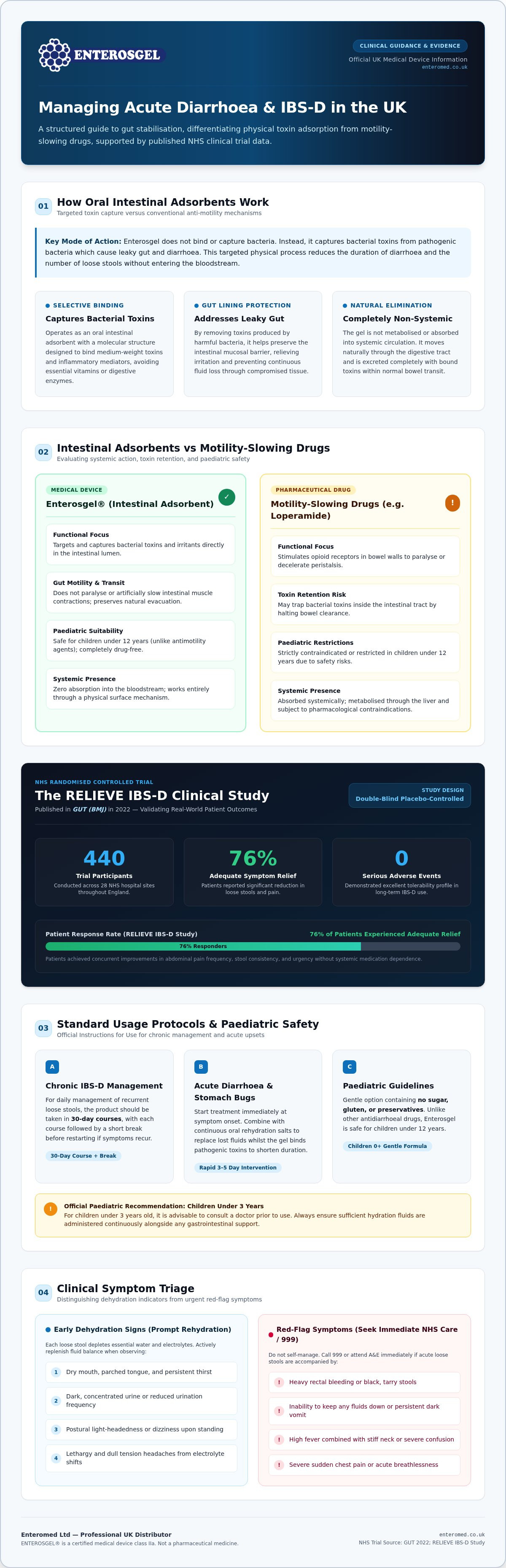
Situation: adults with IBS-D needed adequate control of abdominal pain and loose stools without serious side effects. Solution: a non-systemic gel was evaluated in a 440-patient trial across 28 NHS sites in England. Result: published trial evidence confirmed that 76% of patients reported adequate symptom relief without serious side effects.
| Option Type | Primary Action | Ideal Situation |
|---|---|---|
| Oral Rehydration Salts | Restores fluid and electrolyte balance | Dehydration risk from fluid loss |
| Intestinal Adsorbent | Captures bacterial toxins causing diarrhoea | Targeted relief without slowing gut motility |
| Traditional Anti-motility Drugs | Slows intestinal transit time | Short-term emergency delay |
When treating digestive upset, consider how different products function within the body. What works for quick rehydration may not remove the underlying toxins causing a stomach bug. For daily management of chronic symptoms, take the gel in 30-day courses followed by a short break. Before administering any treatment to children under 3 years old, a doctor should always be consulted.
How to stop acute loose stools in 4 practical steps
Managing sudden loose stools requires immediate, structured action to restore balance and prevent dehydration.
- Hydrate continuously: Drink plenty of fluids mixed with oral rehydration salts to replace lost electrolytes.
- Target toxins: Use an oral intestinal adsorbent (ENTEROSGEL®) to capture bacterial toxins from pathogenic bacteria without binding bacteria or trapping bowel movements (pooing).
- Eat plainly: Rest your digestive tract by consuming small portions of simple foods like toast or white rice.
- Rest thoroughly: Avoid exertion to help your body recover swiftly from sudden stomach bug symptoms.
Slowing down bowel movements can trap harmful toxins inside your body for longer, whereas a drug-free medical device such as the Tube 225g safely adsorbs those harmful substances for natural removal. Choose physical adsorbents over gut-slowing drugs to address the cause directly.
Tip: Always take intestinal adsorbents 1–2 hours before or after oral medications to prevent interaction.
Stabilise chronic IBS-D flare-ups with structured 30-day courses
Managing chronic IBS-D requires structured, non-systemic interventions rather than short-term fixes. Daily usage routines provide better stability for ongoing loose stools than intermittent symptom chasing. This structured strategy helps maintain digestive calm without disrupting normal bowel function.
Traditional options that slow every pooing (bowel movement) can trap harmful substances inside the gut. Instead, targeting underlying triggers offers a safer path. A fine microscopic sponge-like gel captures bacterial toxins from pathogenic bacteria which cause leaky gut and diarrhoea.
For long-term management, you should take the product in 30-day courses, with each course followed by a short break. You can choose the 4-Week Digestive Support Bundle or individual tubes depending on your routine. This drug-free medical device provides an effective option for long-term daily support and can also fit beside simple diet adjustments you already use.
- 30-day course: Provides continuous daily gut support.
- Short break: Allows regular assessment of natural bowel habits.
If you worry about long-term safety, this non-systemic approach acts physically without absorbing into the body. Request product details from the team if you want help choosing a bundle length.
Drug-free digestive support that suits young children and toddlers
Young children need drug-free treatments for loose stools that work gently inside the gut without entering the bloodstream.
Unlike conventional anti-diarrhoeal drugs, ENTEROSGEL® is safe for children under 12 years because it contains no sugar, gluten, or preservatives.
Situation: a parent of a one-year-old faced two weeks of loose stools after teething, vaccinations, and an ear infection treated with antibiotics. Solution: the parent gave the gel directly by spoon, followed by water. Result: symptoms eased after the second dose, the child ate normally again, and the product became a household essential.
This medical device captures bacterial toxins from pathogenic bacteria without trapping bowel contents, reducing both the duration of diarrhoea and the frequency of loose stools. The company states that the gel has an established clinical evidence base of safety and efficacy in this age group and for similar conditions. For children under 3 years old, it is advisable to consult a doctor prior to use.
When an adsorbent gel is the wrong tool for your gut
Drug-free gels are not suitable when you experience complete gut immobility or bowel blockage.
In clinical practice, patients taking medications that require precise dosing must space them carefully around gel treatments. Physical adsorbents bind target substances inside the digestive tract before exiting naturally. This sweeping action can reduce the absorption of oral medicines if taken together, so you should allow two hours between taking your routine prescription and the gel.
Certain medical scenarios demand immediate emergency assessment instead of self-care. Severe constipation (infrequent bowel movements) needs distinct medical evaluation rather than self-directed adsorbent use.
Seek urgent help for high fever or bloody stools. Select a targeted treatment based on your diagnosis: the Tube 225g fits adults managing loose stools, whereas severe blockage requires immediate clinical care.
Frequently asked questions
What is diarrhoea?
Diarrhoea means passing loose stools or watery pooing more frequently than usual. This common condition often develops when pathogenic bacterial toxins disrupt normal gut function. Many traditional medications simply slow down bowel movements, which can trap harmful toxins inside your body. Instead of trapping toxins, an intestinal adsorbent (a substance that binds harmful materials within the digestive tract for removal from the body) captures bacterial toxins to shorten symptom duration.
How does a drug-free intestinal adsorbent help loose stools?
A drug-free oral intestinal adsorbent works physically in the gut: it binds bacterial toxins so they can leave the body with the stool, without entering your bloodstream. In the 440-patient RELIEVE IBS-D trial conducted across 28 NHS sites, 76% of patients reported adequate relief when using this approach. For chronic IBS-D symptoms, you should take the product in 30-day courses, with each course followed by a short break.
Is this approach suitable for IBS-D as well as a short stomach bug?
Yes. Short stomach-bug episodes and longer IBS-D patterns both involve loose stools, and the same non-systemic adsorbent method is used in different schedules. Acute upsets often need short, focused use beside rehydration; chronic IBS-D is commonly managed in 30-day courses with a short break so you can review your natural bowel habit. Published randomised controlled trial evidence underpins the IBS-D symptom data already cited above.
How much fluid should I drink?
Drink plenty of water and oral rehydration solutions continuously throughout the day to replace lost fluids. Staying hydrated matters because loose stools drain critical electrolytes from your body quickly. Sip fluids slowly in small amounts rather than gulping large quantities at once. Proper hydration supports your recovery while targeted treatments eliminate the underlying bacterial toxins safely. Clear product information on packs and the shop pages helps you pair rehydration with the gel schedule you choose.
What foods help relieve diarrhoea?
Eat bland, plain foods like bananas, white rice, applesauce, and toast to avoid aggravating your gut. Avoid greasy meals, caffeine, and dairy products until your digestive system settles. A sugar-free, gluten-free, preservative-free gel offers a gentle option for children under 12 years and works without disrupting normal intestinal movement, which helps to make plain meals easier to keep down during recovery.
Proven Relief for Your Family's Digestive Health
Finding a reliable loose stools remedy in the UK still comes down to the same decision you met at the start: match the trigger, protect hydration, and choose targeted toxin capture when a drug-free gel is appropriate. ENTEROSGEL® works as a gentle molecular sponge. Instead of trapping toxins by simply stopping bowel movements, it physically captures bacterial toxins causing your distress.
The medical team at Enteromed brings you published randomised controlled trial evidence. Recognised with a Red Dot Award, the gel supports adults and children. Adults managing IBS-D take 30-day courses, with each course followed by a short break. Visit the online shop to Order Enterosgel Direct, or contact the team for tailored advice on which pack size fits your household.
Share this article