

Posted by Enterosgel

Exam stress can unsettle digestion, but steady meals, regular fluids, enough sleep and simple ways to manage stress can help you look after your gut. Managing digestive issues during exams also means taking diarrhoea seriously: it causes fluid loss, so replace fluids and watch for signs of dehydration. Teenagers need 8 to 10 hours of sleep per night to have enough energy and feel at their best.
It’s understandable to feel anxious as exams approach, especially when stomach discomfort or urgent bowel movements make it harder to concentrate. These symptoms can add to the pressure, but practical changes to your routine may support your wellbeing and revision.
This guide explains how stress can affect digestion, what to eat and drink, why sleep matters, and how to respond to diarrhoea and fluid loss. You’ll find calm, practical steps to support your digestive health during exam season.
Key Takeaways
- Use short study breaks, calming breathing and regular movement to help manage exam stress without giving up your usual routines.
- Keep meals balanced and regular, drink water throughout the day and protect your sleep to support focus and digestion.
- Teenagers need 8 to 10 hours of sleep per night; practising your exam-day routine can help you feel more alert.
- Diarrhoea causes fluid loss, so replace fluids and pay attention to how you feel as you recover.
- Learn how an intestinal adsorbent such as Enterosgel 225g Tube may fit into managing diarrhoea alongside practical food, fluid and stress habits.
1. Exam stress - friend or enemy?
Exam anxiety can trigger physical stress responses, such as a churning stomach, cramps or urgent bowel movements. The gut and brain communicate closely, so worry may affect gut movement and make existing digestive symptoms harder to manage. Stress does not mean your symptoms are imaginary. It can add to the strain of a busy revision day, especially if you skip breaks or meals. One study found that students told exam anxiety could enhance their performance improved their test scores six months later. Treat nerves as a cue to prepare and use coping strategies, not as proof that you will fail.
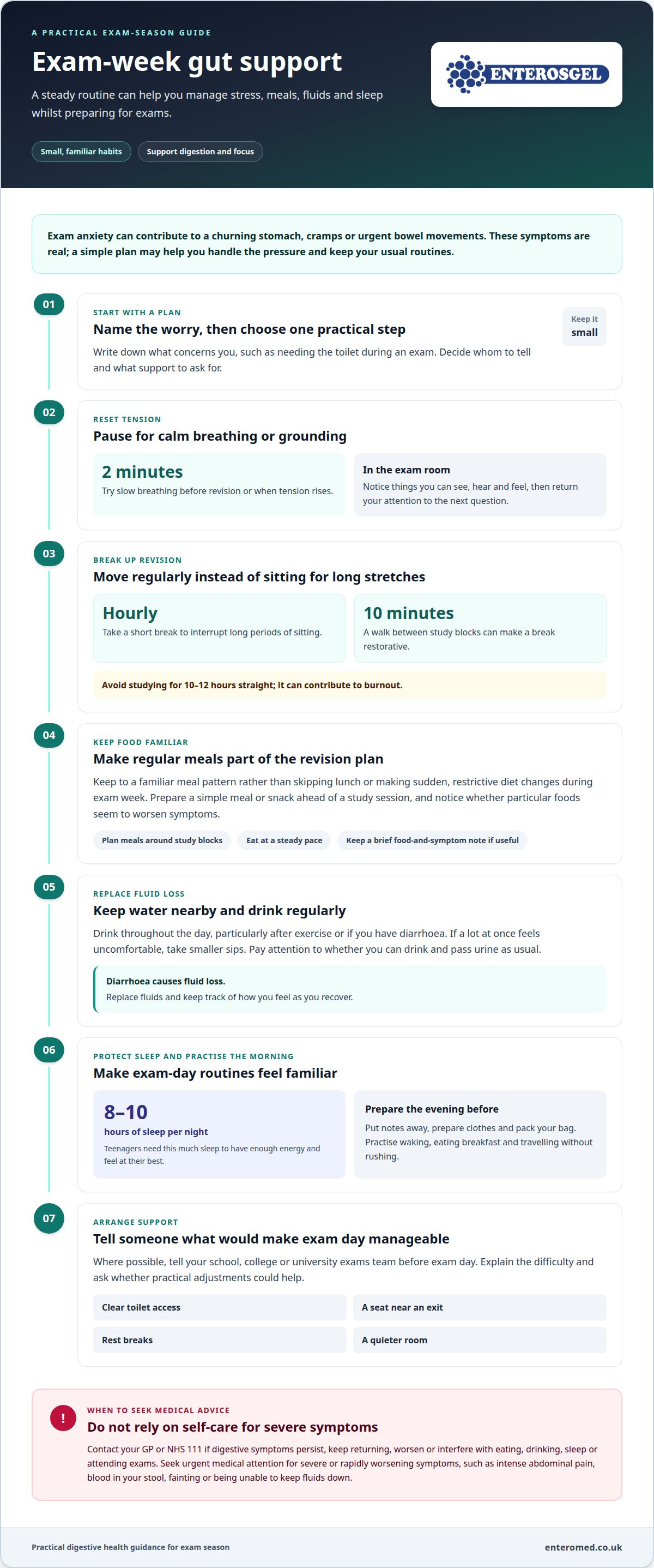
Start with a small plan. Write down the concern, such as “I’m worried I’ll need the toilet during the exam”, then decide whom to tell and what practical support to request. Try slow breathing for two minutes before revision or when you notice tension rising. A grounding exercise can also help in the exam room: name things you can see, hear and feel, then return your attention to the next question. Short breaks hourly can interrupt long periods of sitting and help you reset. Avoid studying for 10-12 hours straight, as this can contribute to burnout.
Movement can help make breaks restorative. Take a 10-minute walk between study blocks, or keep a familiar activity such as a gentle run or cycle in your weekly routine. A suggested goal is 5,000 steps per day, increasing gradually towards 10,000; choose a pace that suits your current routine. You could also set aside 30-60 minutes for exercise, 3-5 days per week. You don’t need to turn exam preparation into a training plan. A walk with a friend, stretching or a screen-free break can be easier to maintain.
Contact your GP or NHS 111 if digestive symptoms persist, keep returning, worsen, or interfere with eating, drinking, sleep or attending exams. Explain when symptoms began, what they feel like and how they affect your day. Seek urgent medical attention rather than relying on self-care for severe or rapidly worsening symptoms, such as intense abdominal pain, blood in your stool, fainting or being unable to keep fluids down.
Where possible, tell your school, college or university exams team about the difficulty before exam day. Ask whether practical adjustments could help, such as clear toilet access, a seat near an exit, rest breaks or a quieter room. Arrangements depend on the setting and your needs, so explain the specific problem and what support would make the exam manageable.
2. Nutrition, hydration and sleep
Revision can disrupt meals if you work through lunch or rely on snacks. Try to keep to a familiar meal pattern, with breakfast before a morning paper and a planned lunch between study sessions. For example, pack a sandwich, fruit and water the night before. Regular meals can help you notice whether particular foods worsen symptoms. Avoid sudden, restrictive diet changes during exam week, especially if you usually tolerate your meals well.
Pay attention to hydration throughout the day, not just before an exam. Keep water nearby during revision and drink regularly, particularly after exercise or if you have diarrhoea. A bottle can remind you to drink during long study sessions. If drinking a lot at once feels uncomfortable, take smaller sips. If nausea or urgency affects how much you drink, keep track of whether you can drink and pass urine as usual.
Sleep supports concentration, mood and day-to-day wellbeing. Teenagers need 8 to 10 hours of sleep per night to have enough energy and feel at their best. Protect a consistent bedtime where possible, and avoid turning the final evening into an all-night revision session. A simple wind-down routine might include putting notes away, preparing clothes and packing a school bag before bed. These steps reduce last-minute tasks and give the mind a clearer stopping point.
Prepare for the exam timetable gradually. If a paper starts at 9.30, practise waking up in time to eat breakfast and travel without rushing. Use a similar morning routine during revision, so the first meal and wake-up time feel familiar on exam day. Keep revision materials ready the evening before, and set an alarm rather than repeatedly checking the time. Familiar routines can help students arrive prepared without sacrificing sleep for another late study block.
Can students safely take anti-diarrhoea or antacid products before an exam? Suitability depends on age, symptoms, other medicines and the product instructions. Ask a pharmacist or GP before trying an unfamiliar product. Don’t take someone else’s medicine or exceed the stated dose. For healthcare students revising how these medications work ahead of their own assessments, high-yield overviews of quick pharmacology can provide a helpful study companion. Seek medical advice if symptoms are severe, persistent or worsening.
If discomfort seems linked to a meal, drink or timing, keep a brief food-and-symptom note during revision. Record, for example, whether cramps follow a rushed breakfast or a missed lunch, then discuss recurring symptoms with a GP. This can help distinguish a one-off disruption from a pattern that needs assessment, without adding a complicated diet plan during exam preparation.
3. Balanced eating and hydration
Build meals around familiar foods rather than testing a new diet during exam week. A simple plate might include brown rice, chicken or beans, vegetables and a little olive oil. Fruit, vegetables and whole grains add fibre, whilst lean proteins and healthy fats help make meals varied. For students seeking extra support alongside their diet, guides on essentialifeshop.com explore how natural supplements can help maintain everyday nutritional wellbeing. Increase fibre gradually if you’re not used to it; a sudden change, such as adding several high-fibre foods at once, can increase bloating. The planning exercise in this article uses an approximate target of ~30 g/day of fibre. Individual tolerance matters, so adapt choices to what you already eat comfortably.
Keep to your usual meal routine rather than missing lunch for another revision block. For example, prepare a cheese sandwich, banana and water before starting a morning study session. Eating at a steady pace and chewing thoroughly may also help if rushed meals leave you uncomfortable. If constipation is a concern, include fibre-containing foods and drink water regularly. If bloating follows a particular meal, note the ingredients and timing, then compare them with another day before removing whole food groups. A familiar routine can support managing digestive issues during exams without unnecessary restrictions.
Water is a practical choice during revision and breaks. Keep a bottle beside your notes, refill it when you finish a study block, and drink with meals. If you have diarrhoea, replace lost fluid with frequent drinks; small sips may feel easier than a large drink at once. If you’re unwell, don’t rely on thirst alone. Watch for signs such as a dry mouth, dizziness or passing less urine, and seek medical advice if you’re concerned about dehydration.
How can you reduce the risk of diarrhoea, constipation, bloating or nausea during exams? Keep meal times and foods familiar, drink water regularly, and make changes gradually. A brief record of meals and symptoms can help you identify personal triggers without imposing unnecessary restrictions.
Caffeine, energy drinks and skipped meals affect people differently, but may aggravate digestive discomfort. If coffee before a paper brings on urgency, try reducing it or choosing a familiar alternative. Avoid switching to an unfamiliar energy drink instead. Skipping breakfast may leave you hungry or nauseous during the exam, so choose a manageable option, such as toast or yoghurt, if you usually tolerate it.
Make exam-day choices predictable: pack a familiar snack, bring water where permitted, and allow time for breakfast before travelling. Avoid a very large meal immediately before the exam if fullness tends to trigger discomfort. If symptoms repeatedly follow certain foods or drinks, discuss the pattern with a GP rather than cutting out multiple food groups without guidance. This practical approach can make managing digestive issues during exams feel more planned and less disruptive.
4. Dehydration and fluid loss from diarrhoea
Diarrhoea can remove fluid faster than you replace it, so concentration and comfort may suffer during an exam day. A 70 kg adult can lose approximately 2.0 litres of fluid stool over 24 hours. This is an illustrative example, not a prediction for every person. Loss depends on the amount and frequency of diarrhoea, alongside how much the person drinks.
Replace lost fluid regularly rather than waiting until revision ends. If nausea makes larger drinks difficult, take small, frequent sips and keep water nearby during study breaks. If diarrhoea continues, a pharmacist can advise whether an oral rehydration solution is suitable. Follow the packet instructions for mixing it, as adding too much or too little water changes the solution.
Notice changes in your body as well as how often you use the toilet. A dry mouth, dizziness when standing, unusual tiredness or passing less urine can signal fluid loss. During a study session, note whether you can drink and urinate as usual. If you feel faint, symptoms worsen or you cannot keep fluids down, seek urgent medical advice instead of continuing self-care.
Mild dehydration is less than 5% fluid loss, moderate dehydration is 5-10%, and severe dehydration is greater than 10%. These percentages describe levels of fluid loss, not a way to diagnose yourself at home. Don’t wait to estimate a percentage before responding to symptoms. A person’s condition and ability to replace fluids matter more than a calculation.
Diarrhoea can disrupt exam plans because toilet urgency may interrupt revision or a paper. If symptoms begin before an exam, tell a trusted adult or the exams team, and keep water accessible where permitted. Note when the diarrhoea started and whether you’re managing to drink. These details can help you explain the problem to a clinician.
For a practical check, pause during the day and ask: have I had regular drinks, am I passing urine, and do I feel dizzy or unusually weak? If fluid loss is continuing, increase small sips and contact a GP or NHS 111 for advice. Seek emergency help for collapse, confusion, severe weakness or other rapidly worsening symptoms. Children and people with existing health conditions may need prompt assessment.
The main takeaway is simple: replace lost fluid early, monitor how you feel, and don’t let exam preparation delay medical help. If diarrhoea persists or you notice signs of dehydration, contact a healthcare professional rather than relying on drinks alone.
Enterosgel: Enterosgel 225g Tube
Enterosgel 225g Tube is a CE-certified medical device and oral intestinal adsorbent for diarrhoea. It does not bind or capture bacteria. Instead, it captures bacterial toxins from pathogenic bacteria which cause leaky gut and diarrhoea. This action helps reduce the duration of diarrhoea and the number of loose stools. It may be relevant when diarrhoea disrupts revision or exam routines, alongside replacing lost fluids. Follow the product instructions and seek medical advice if symptoms persist, worsen or include signs of dehydration. Enterosgel is not a substitute for professional care when symptoms are severe. For ongoing digestive symptoms, discuss the pattern with a healthcare professional. Visit enteromed.co.uk to learn about Enterosgel.
Make a plan that works on exam day
Before your next paper, write a short plan for what you’ll eat and drink, and what you’ll do if digestive symptoms disrupt your routine. Include who you can tell at school, college or university and how you’ll access the toilet if needed. A clear plan can reduce last-minute decisions and help you focus on the exam.
If diarrhoea remains a concern, consider whether an intestinal adsorbent could be relevant alongside fluid replacement and appropriate medical advice. Enterosgel offers Enterosgel 225g Tube, Enterosgel Sachets (Pack of 10) and Enterosgel Kids 0+. Follow the product instructions, and speak to a healthcare professional about persistent or worsening symptoms. Managing digestive issues during exams can include practical preparation as well as choosing support that suits your circumstances.
Contact Enterosgel for support about its product options. Take the next step at a pace that feels manageable, and give yourself room to focus on your exams.
Frequently Asked Questions
Exam stress - friend or enemy?
Exam stress can sharpen attention for some students, but it can also intensify physical discomfort. It isn’t automatically helpful or harmful; its effect depends on how much it disrupts sleep, concentration and everyday routines. If symptoms appear around particular papers, note when they occur and whether they ease afterwards. This pattern can help you decide whether to seek support for anxiety, digestive symptoms or both.
What are common causes of digestive issues during exams, including stress and anxiety?
Stress and anxiety can contribute to stomach discomfort and changes in bowel habits, but they aren’t the only possible causes. A disrupted routine, missed meals, changes in caffeine intake, familiar food triggers, an existing digestive condition or an unrelated illness may also play a part. Consider what changed when the symptoms began. If problems continue beyond exam periods, discuss them with a GP rather than assuming stress explains everything.
How can you manage exam stress that triggers stomach symptoms?
Write a plan for moments when symptoms and anxiety rise together. For example, note a calming action, who you can speak to at school or college, and what you’ll do if you need a pause. Practise the plan during revision so it feels familiar, not like another task on exam day. If worry affects daily life or feels difficult to manage, tell a trusted adult or seek professional support.
What foods and drinks are best before and during an exam for digestion?
There’s no single exam-day menu that prevents digestive symptoms for everyone. Choose familiar foods you usually tolerate, and avoid trying a restrictive diet or unusual meal just before a paper. Water is a practical drink. If a particular food or drink repeatedly causes discomfort, avoid it on exam day and discuss recurring reactions with a GP. Follow the exam venue’s rules about bringing drinks or snacks into the room.
What over-the-counter medicines can help with exam-related digestive issues in the UK?
A pharmacist can help you consider whether an over-the-counter product suits your symptoms and other medicines. Antidiarrhoeal products and antacids work differently, so the right choice depends on whether diarrhoea, indigestion or another symptom is troubling you. Read the pack directions before use, and don’t take a product simply because someone else found it helpful. Persistent, worsening or severe symptoms call for medical advice rather than repeated self-treatment.


