

Managing IBS Without Medication: A Clinical Guide to Drug-Free Relief
What if managing IBS without medication could involve more than restrictive diets or simply slowing the bowel? If urgency makes leaving home stressful, or you are concerned about unwanted effects from antispasmodics or anti-diarrhoeal medicines, it is reasonable to consider practical, evidence-based options that do not rely on systemic drugs.
More predictable bowel movements and less painful bloating may be useful goals, but IBS symptoms can have several triggers, so there is no single solution for everyone. This guide covers practical steps such as regular meals, movement and stress management, and explains how they can fit into an IBS care plan.
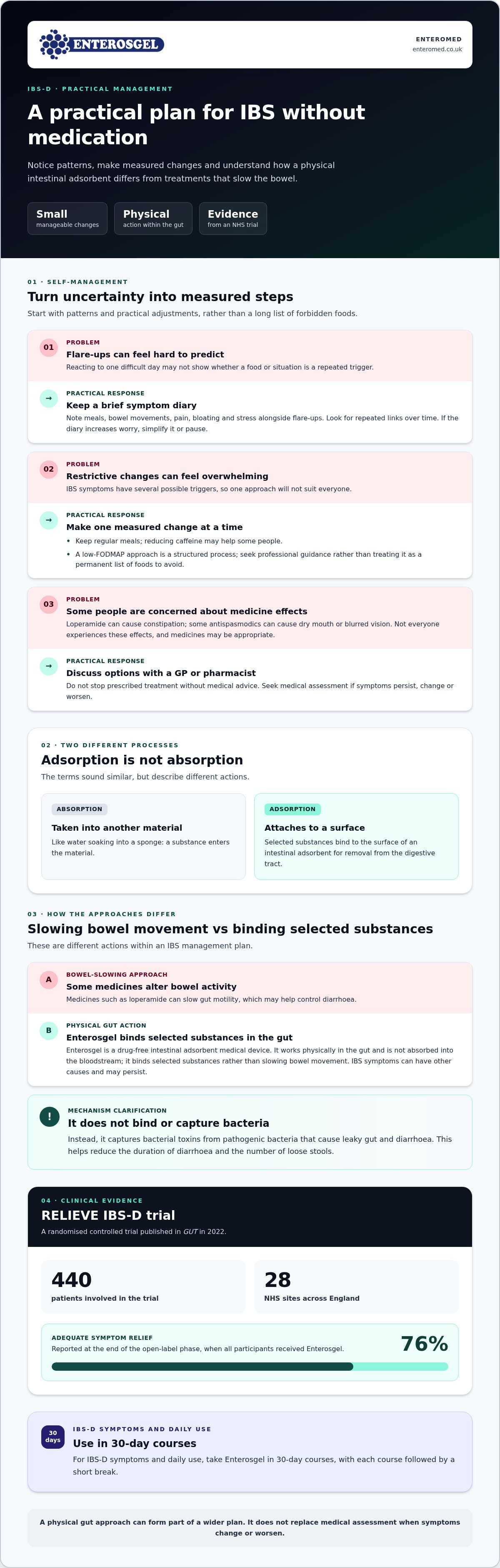
It also explains the role of Enterosgel, a drug-free intestinal adsorbent medical device that works physically in the gut and is not absorbed into the bloodstream. It does not bind or capture bacteria. Instead, it captures bacterial toxins from pathogenic bacteria that cause leaky gut and diarrhoea, helping reduce the duration of diarrhoea and the number of loose stools.
We look at the evidence, ways to build a flare-up toolkit and when to seek medical advice. In a 440-patient NHS randomised controlled trial, 76% of participants reported adequate symptom relief at the end of the open-label phase, when all participants received Enterosgel.
Key Takeaways
- Build an IBS without medication plan around practical self-management, rather than relying on restrictive changes alone.
- Use a symptom diary to identify possible personal triggers, then consider measured dietary adjustments such as reducing caffeine or trying a low-FODMAP approach.
- Adsorption binds selected substances in the gut. Enterosgel works physically within the intestine as a medical device.
- Enterosgel does not bind or capture bacteria. It captures bacterial toxins from pathogenic bacteria that cause leaky gut and diarrhoea, helping reduce diarrhoea duration and the number of loose stools.
- For IBS-D symptoms and daily use, take Enterosgel in 30-day courses, with each course followed by a short break.
Understanding IBS Management Without Systemic Medication
IBS can involve abdominal pain, bloating and changes in bowel habits, including IBS-D, where diarrhoea is the predominant pattern. UK guidance takes a stepwise approach, with self-management, dietary changes and lifestyle advice among the first measures. Medicines may also be considered to manage symptoms. If you are concerned about side effects or taking tablets regularly, a drug-free approach can form part of a wider plan. Do not stop prescribed treatment without medical advice.
Symptom relief and changing the gut environment are different approaches. Some medicines alter bowel activity or ease spasms, while a physical treatment works within the digestive tract. Drug-free IBS management can combine trigger awareness with an option that binds selected substances in the gut.
Why Patients Seek Alternatives to Traditional Drugs
People may look for alternatives when treatment side effects make day-to-day management harder. For example, loperamide can cause constipation, while some antispasmodics can cause effects such as dry mouth or blurred vision. Not everyone experiences these effects, and medicines can be appropriate. A GP or pharmacist can help you weigh the benefits and risks, particularly if symptoms persist.
Some people also prefer options that do not enter the bloodstream. This may matter when symptoms are ongoing and regular tablets feel burdensome. A non-systemic approach offers a different way to manage symptoms, but it does not replace medical assessment if symptoms change or worsen.
The Clinical Status of Non-Medicated Solutions
“Drug-free” does not mean “untested”. A medical device is a regulated product intended for medical use, and its action is not necessarily the same as a medicine’s. Enterosgel is a drug-free intestinal adsorbent medical device. It works physically in the gut and is not absorbed into the bloodstream. An intestinal adsorbent binds selected substances within the digestive tract for removal.
Enterosgel does not bind or capture bacteria. It captures bacterial toxins from pathogenic bacteria that cause leaky gut and diarrhoea, helping reduce the duration of diarrhoea and the number of loose stools. Evidence for IBS-D includes the RELIEVE IBS-D randomised controlled trial, involving 440 patients across 28 NHS sites in England and published in GUT in 2022. Read about Enterosgel clinical research. For IBS-D symptoms and daily use, take it in 30-day courses, with each course followed by a short break.
The Science of Gut Irritants: Why Adsorption is a Clinical Alternative
IBS symptoms can have more than one driver. For some people, bowel sensitivity, food triggers or changes in how bile acids act in the gut may contribute to urgency, loose stools or discomfort. Irritants in the digestive tract are one part of this picture, not a complete explanation for IBS. Noting your personal symptom patterns can help shape a management plan. A physical treatment offers a way to bind selected substances within the gut rather than acting on the body as a whole.
Adsorption vs Absorption: A Critical Distinction
Adsorption means molecules attach to the surface of another material. Think of a magnet attracting particular metal objects: an intestinal adsorbent has a selective binding structure that can capture certain substances as they pass through the gut. Absorption is different. It means a substance is taken into another material, more like water soaking into a sponge. These terms describe different processes.
Enterosgel is an intestinal adsorbent medical device. Its high molecular weight structure binds selected substances in the digestive tract, and it is not absorbed into the bloodstream. It does not bind or capture bacteria. It captures bacterial toxins from pathogenic bacteria that cause leaky gut and diarrhoea. By binding these toxins for removal, it helps reduce the duration of diarrhoea and the number of loose stools.
How Removing Irritants May Help
Medicines such as loperamide can slow gut motility, which may help control diarrhoea. Adsorption works differently: it binds selected substances in the gut rather than slowing bowel movement. This physical action targets substances in the digestive tract, while IBS symptoms can also have other causes and may persist.
For a closer look at how intestinal adsorbents work, read the clinical research on Enterosgel. This evidence can help you understand how a physical approach may fit into a plan for IBS without medication.
Creating a Drug-Free IBS Management Strategy
A practical plan for IBS without medication does not need to begin with a long list of forbidden foods. Start with small, manageable changes and keep what helps. The aim is to notice patterns without letting symptoms govern every meal or daily activity.
- Track patterns briefly. Note meals, bowel movements, pain, bloating and stress alongside flare-ups. Look for repeated links over time rather than reacting to one difficult day. If keeping a diary increases worry, simplify it or pause.
- Make measured food changes. Regular meals and reducing caffeine may help some people. A low-FODMAP approach can be complex, so treat it as a structured process with professional guidance, rather than a permanent list of foods to avoid. Where possible, change one thing at a time.
- Support the gut-brain connection. Gentle exercise, such as walking, and relaxation practices such as slow breathing or mindfulness may support symptom management. Choose an activity you can repeat comfortably. Do not push through pain or urgency.
- Plan for flare-ups. Enterosgel is an intestinal adsorbent medical device that works physically in the gut. For IBS-D symptoms and daily use, take it in 30-day courses, with each course followed by a short break.
Food, fibre and routine
Fibre affects people differently. Soluble fibre, found in foods such as oats, may be easier for some people with IBS to tolerate, while increasing coarse insoluble fibre can worsen symptoms for some. Adjust gradually and note the effect. Drink enough fluids to stay hydrated, particularly during diarrhoea, and follow the product’s instructions for use when taking an adsorbent.
Regular meals can support a steadier routine. The gastrocolic reflex is the natural signal that stimulates the colon after food enters the stomach. If large meals seem to trigger urgency, try smaller portions and observe whether that changes your symptoms. Responses vary.
Movement and calming techniques
Gentle movement may support digestion and help some people feel less bloated. Stress-management techniques may also help because the brain and gut communicate closely, and stress can intensify symptoms for some people. These steps support symptom management; they do not replace medical assessment if symptoms are severe, persistent or changing. For more practical guidance, read about the clinical research on Enterosgel.
To add a physical option to your flare-up plan, explore the Enterosgel 225g Tube.
Enterosgel: A Clinically Proven Medical Device for IBS Relief
Enterosgel is a drug-free intestinal adsorbent medical device designed to work within the gut, not through the bloodstream. It can form part of an IBS-D management plan for diarrhoea, urgency and abdominal discomfort. It is not a cure for IBS, and individual responses vary.
Clinical evidence includes the RELIEVE IBS-D randomised controlled trial, involving 440 patients across 28 NHS sites in England. Published in GUT in 2022, the trial found that 37.4% of participants taking Enterosgel met the primary composite outcome, compared with 24.3% taking placebo. During the later open-label phase, when all participants received Enterosgel, 76% reported adequate symptom relief. See the Enterosgel research and clinical evidence for further details.
How the Physical Action Works
Enterosgel passes through the digestive tract and binds certain substances in the gut for removal from the body. Because it works physically and is not absorbed into the bloodstream, its action differs from medicines that affect gut motility. Follow the Instructions for Use and seek medical advice if symptoms persist or worsen.
For IBS-D symptoms and daily use, take Enterosgel in 30-day courses, with each course followed by a short break. Take it 2 hours before or after food and other medications, as directed in the product instructions.
Choosing a Format and Using It Safely
The Enterosgel 225g Tube may suit use at home, while sachets are convenient to carry for work or travel. The Enterosgel IBS Starter Pack includes a 225g tube and a pack of sachets. Choose the format that fits your routine and follow the product instructions.
Enterosgel is a gentle option for children because it contains no sugar, gluten, or preservatives. Unlike other antidiarrhoeal drugs, Enterosgel is safe for children under 12 years. For children under 3 years old, it is advisable to consult a doctor prior to use.
To explore the tube format for your drug-free IBS toolkit, view the Enterosgel 225g Tube.
Build a Steadier IBS Management Plan
Managing IBS without medication can involve several practical steps: tracking patterns without becoming preoccupied, making measured dietary adjustments, and using movement or relaxation techniques to support day-to-day symptom management. These measures can help you build a routine around your own triggers instead of relying on broad, restrictive rules.
For IBS-D, Enterosgel is a clinically proven, drug-free medical device that works physically in the gut and is not absorbed into the bloodstream. It has been used clinically for over 30 years. For IBS-D symptoms and daily use, take it in 30-day courses, with each course followed by a short break.
Explore the Enterosgel range for drug-free IBS relief as one option within a broader management plan. Keep changes gradual, follow the product instructions and seek medical advice if symptoms persist, worsen or change. Take a practical next step by finding the Enterosgel format that fits your routine.
Frequently Asked Questions
Can I really manage IBS without any medication at all?
Some people manage IBS symptoms with self-management, dietary adjustments and lifestyle measures, but this is not suitable or sufficient for everyone. IBS without medication can include identifying personal triggers, eating regular meals, moderating caffeine and using stress-management techniques. A drug-free medical device may also be an option for IBS-D. Do not stop prescribed treatment without speaking to your GP, and seek medical advice if symptoms persist, worsen or change.
How does a drug-free medical device like Enterosgel work compared to anti-diarrhoeal medicines?
Enterosgel works differently from medicines that slow bowel activity. It is a drug-free intestinal adsorbent medical device that acts physically within the gut and is not absorbed into the bloodstream. Instead, it captures bacterial toxins from pathogenic bacteria that cause leaky gut and diarrhoea, helping reduce diarrhoea duration and the number of loose stools. Follow the product instructions.
Are there any side effects to using intestinal adsorbents for IBS?
Side effects cannot be ruled out, so read the product’s Instructions for Use before taking an intestinal adsorbent. In the 440-patient RELIEVE IBS-D randomised controlled trial, no serious adverse events were reported with Enterosgel. This does not mean side effects are impossible or that everyone will respond in the same way. Stop use and seek medical advice if you experience a concerning reaction or your symptoms worsen.
Is it safe to use drug-free IBS treatments alongside my other prescriptions?
Ask your GP or pharmacist before combining treatments, particularly if you take regular prescriptions. Enterosgel can affect the absorption of medicines taken at the same time, so take it 2 hours before or after other medications and follow its Instructions for Use. Do not stop or change prescribed treatment without professional advice. For daily use to manage IBS-D symptoms, take Enterosgel in 30-day courses, with each course followed by a short break.
How long does it take for non-medicated treatments to show results?
There is no single timeframe: response depends on the person, the approach and the symptom being managed. A brief symptom diary can help you assess changes after a measured dietary or lifestyle adjustment, rather than changing several things at once. Enterosgel’s clinical evidence includes an eight-week study phase, but this does not predict how quickly an individual will feel better. Follow the product instructions and consult a healthcare professional if symptoms persist or worsen.
Can children use Enterosgel for IBS symptoms?
Children may use Enterosgel only according to its Instructions for Use and for an appropriate indication. Enterosgel is a gentle option for children because it contains no sugar, gluten, or preservatives. Unlike other antidiarrhoeal drugs, Enterosgel is safe for children under 12 years. For children under 3 years old, it is advisable to consult a doctor prior to use. Ask a doctor about recurring bowel symptoms in a child, including suspected IBS.
Share this article