

Posted by Enterosgel

What if your diarrhoea is linked to your stress response, but stress isn’t the only possible cause? A tense day, an important journey or a difficult meeting can affect gut motility and sensitivity, making bowel movements faster or more urgent. When loose stools disrupt work, travel or social plans, it’s understandable to look for practical stress induced diarrhoea relief and reassurance about what’s happening.
Stress can contribute to diarrhoea, but it doesn’t confirm the cause. Infection, food and other triggers can also lead to symptoms, so recurring or severe episodes deserve attention. You can take practical steps during an episode, protect hydration and keep track of how symptoms develop.
This guide explains the gut-brain link, outlines steps that may help during an episode and describes an option for diarrhoea symptom relief. It also covers signs of dehydration and situations when it’s sensible to seek advice from a healthcare professional, so you can make informed decisions without assuming stress is the whole explanation.
Key Takeaways
- Loose stools that follow stress may point to a trigger, but timing alone can’t confirm the cause.
- The two-way communication between the brain and digestive system may affect gut motility and bowel urgency.
- For practical stress induced diarrhoea relief, take steps to manage an episode and look after hydration.
- Know when symptoms or difficulty keeping fluids down mean it’s time to seek medical advice.
- Enterosgel is an option for diarrhoea symptom relief. It captures bacterial toxins from pathogenic bacteria, not the bacteria themselves.
What is stress-induced diarrhoea, and how can you recognise it?
Stress-related diarrhoea describes loose stools that occur in connection with stress or anxiety. You might notice a sudden need to use the toilet before a presentation, during a difficult journey or around another demanding event. Seeing a pattern can help you understand what may be contributing, but timing alone doesn’t prove stress is the cause. Infection, food, medication and other factors can produce similar symptoms.
In brief: Stress-induced diarrhoea is loose stools that happen alongside stress or anxiety. A pattern in the timing may suggest a trigger, but it cannot confirm the cause.
Noting what happens before and during an episode can help you describe it clearly if you seek advice. It’s a useful first step towards stress induced diarrhoea relief, without assuming every episode has the same explanation.
What symptoms can accompany a stress-related episode?
You may have looser or more frequent bowel movements, urgency, or a sudden need to find a toilet. Some people also notice abdominal discomfort, bloating or nausea. Stress may coincide with physical or emotional changes, such as feeling tense or unsettled, but symptoms vary and aren’t a diagnostic checklist.
Make a brief note of when symptoms occur, what you were doing and whether they recur in similar situations. This may help reveal a pattern. One episode, however, can’t identify its cause.
When should diarrhoea not be assumed to be stress-related?
Acute diarrhoea can have several triggers, including infection, food and medication. It may also occur for reasons unrelated to stress, even if it starts during a tense moment. Consider the whole picture: whether symptoms are new, changing or recurring, and whether they’re accompanied by other signs. A connection with anxiety is one possible clue, not a diagnosis or a reason to dismiss symptoms.
Seek professional medical advice if diarrhoea is severe, persistent, getting worse or otherwise concerning. Blood in your stools, severe abdominal pain or signs of dehydration, such as passing much less urine than usual, also warrant prompt attention. If you’re struggling to keep fluids down or aren’t sure what to do, contact a healthcare professional for advice. If you’re worried, you don’t need to wait for a particular pattern before asking for help.
How stress affects the gut: the gut-brain connection explained
The gut-brain axis is the two-way communication system between the brain and digestive system. Signals travel between them through nerves, hormones and other pathways. As a result, changes in emotional state may coincide with changes in digestive activity, while gut sensations can also affect how you feel.
This connection helps explain why stress may coincide with bowel urgency. It doesn’t mean every episode has the same cause, or that addressing stress alone will resolve diarrhoea. Understanding the link can help you consider practical stress induced diarrhoea relief while staying alert to other explanations.
What happens to digestion during a stress response?
Gut motility is the movement of material through the digestive tract. A possible stress response can be understood in a few steps:
- A stressful situation, such as a difficult conversation or an upcoming commitment, is registered by the brain.
- The body responds to the perceived demand, sending signals that can influence digestive activity.
- For some people, gut motility or sensitivity may change, contributing to urgency or looser stools.
This is a possible pathway, not a fixed pattern. People respond differently, and stress doesn’t affect everyone’s digestion in the same way. A stressful moment may come before symptoms, but that timing alone can’t establish what’s happening in the gut or rule out another cause.
How can recurring symptoms relate to IBS-D?
IBS-D is irritable bowel syndrome in which diarrhoea is the predominant bowel pattern. Stress may be one factor associated with symptoms for some people, but experiencing stress-related diarrhoea doesn’t by itself establish IBS-D. A clinician can help assess recurring symptoms and consider whether another explanation needs attention.
If bowel symptoms keep returning, record their frequency, pattern and effect on daily life to help you discuss them with a healthcare professional. You can also explore the Enterosgel 225g Tube for diarrhoea symptom relief. It isn’t intended to remove stress or change the gut-brain response.
Stress-induced diarrhoea: practical relief and safety
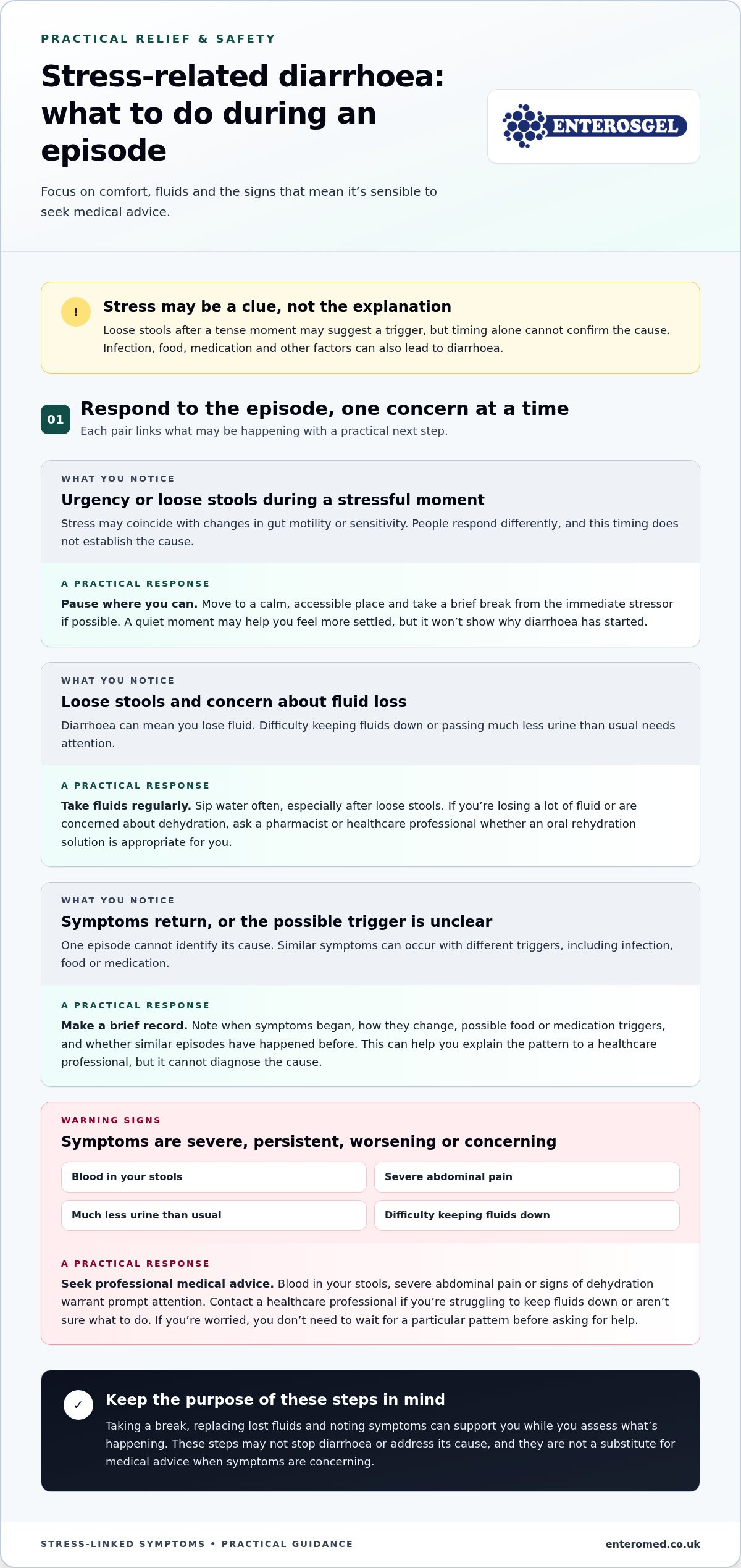
During an episode, focus first on comfort and replacing lost fluids. These steps can support you while you assess what’s happening, but they may not stop diarrhoea or address its cause. Use this sequence as a guide, not as a substitute for medical advice if symptoms are concerning.
Immediate steps for an episode
- Pause where you can. Move to a calm, accessible place and take a brief break from the immediate stressor if possible. A quiet moment may help you feel more settled, although it won’t establish why diarrhoea has started.
- Take fluids regularly. Sip water often, especially after loose stools. If you’re losing a lot of fluid or are concerned about dehydration, a pharmacist or healthcare professional can advise whether an oral rehydration solution is appropriate for you.
- Note what’s happening. Record when symptoms began, how they change, possible food or medication triggers, and whether similar episodes have happened before. This can help you explain the pattern, but it can’t diagnose the cause.
- Consider whether you need advice. Think about the severity of symptoms, whether you can keep fluids down and whether anything feels unusual or is getting worse. If the cause is uncertain, don’t assume stress is responsible.
These steps may support comfort and hydration, but they don’t guarantee relief. For stress induced diarrhoea relief, respond to the immediate symptoms while staying open to other possible causes. Where stress also triggers persistent physical tension or discomfort, multidisciplinary clinics such as heartlandphysiotherapy.ca highlight how broader rehabilitation and wellness practices can help restore overall physical comfort.
When to seek medical advice
Contact a healthcare professional if diarrhoea is severe, persistent, worsening or recurrent. Seek prompt advice if you notice blood in your stools, significant abdominal pain or signs of dehydration, such as passing much less urine than usual, dark urine, a dry mouth or feeling dizzy. If you can’t keep fluids down, get medical advice rather than relying on self-care alone.
A change in your usual symptom pattern, or uncertainty about what’s causing it, is also a good reason to ask for help. Enterosgel is a drug-free option for diarrhoea symptom relief; explore the Enterosgel 225g Tube. It isn’t a treatment for stress, and concerning symptoms still need appropriate medical advice.
Where Enterosgel fits: diarrhoea relief, mechanism and next steps
Stress induced diarrhoea relief can involve two related but distinct needs: responding to stress and managing diarrhoea symptoms. Enterosgel is a drug-free intestinal adsorbent medical device, not a pharmaceutical medicine. It provides an option for diarrhoea symptom relief, but it doesn’t treat stress or change the gut-brain response, and it isn’t a treatment for every cause of diarrhoea.
How an intestinal adsorbent works, and what it does not do
An intestinal adsorbent is a substance that binds harmful materials within the digestive tract for removal from the body. Enterosgel works through physical binding in the gut rather than by changing the stress response. It captures bacterial toxins from pathogenic bacteria, which cause leaky gut and diarrhoea. It does not bind or capture the bacteria themselves, and it does not bind stress hormones.
Its intended role is to help reduce the duration of diarrhoea and the number of loose stools. In the 2022 RELIEVE IBS-D randomised controlled trial, 76% of patients reported adequate relief of IBS-D symptoms. The trial involved 440 patients across 28 NHS sites in England. Read more about the published research on Enterosgel.
Choosing a relevant next step
For recurring symptoms, including IBS-D, discuss your pattern with a healthcare professional rather than assuming stress is the only factor. For IBS-D symptoms and daily use, the product should be taken in 30-day courses, with each course followed by a short break. Follow the product’s Instructions for Use, and seek medical advice if symptoms are concerning, persistent or not clearly linked to stress.
To review product information, explore the Enterosgel 225g Tube. It can be used for diarrhoea symptom relief, but it doesn’t remove stress or replace an assessment when symptoms need medical attention.
Make your next step a confident one
For a more useful approach to stress induced diarrhoea relief, separate what may help you feel calmer from what supports diarrhoea symptoms. If episodes keep interrupting daily life, discuss them with a healthcare professional and agree a plan that fits your symptoms and circumstances. Where managing ongoing stress or emotional pressure is a key part of your wellbeing, professional support through services such as mindbender-counseling.com can help you develop effective coping strategies. You deserve support that takes both the discomfort and the uncertainty seriously.
Enterosgel is a drug-free option for diarrhoea symptom relief, but it doesn’t treat stress or change the gut-brain response. Keep that distinction in mind as you decide what support is appropriate, and seek medical advice if symptoms are persistent, concerning or different from your usual pattern.
Explore Enterosgel for diarrhoea relief and read more about how it works. With clear information and appropriate advice, you can make a considered plan and feel better prepared if symptoms return.
Frequently Asked Questions
Is stress-induced diarrhoea a recognised gut-brain response?
Yes, stress can affect gut function through communication between the brain and digestive system. Diarrhoea may occur alongside a demanding situation, such as a difficult commute or presentation, but that association doesn’t confirm stress caused your symptoms. Infection, food, medication and other triggers are also possible. Seek professional advice if symptoms are severe, persistent, recurring or concerning.
Can stress cause diarrhoea even when I do not feel anxious?
Yes, bowel changes can happen around a stressful situation even if you don’t feel anxious at the time. For example, you might notice urgency before an appointment without identifying as worried. This doesn’t mean you have hidden anxiety, and stress isn’t the only possible cause. Consider whether symptoms recur in similar circumstances, but seek medical advice if they’re severe, persistent, changing or concerning.
How long does stress-related diarrhoea usually last?
There isn’t one usual duration, because it varies and depends on the cause. Symptoms may not stop as soon as a stressful situation passes. Keep taking fluids and note whether bowel changes are settling, continuing or returning. Contact a healthcare professional if diarrhoea persists, worsens, recurs or causes concern. If you’re unsure whether you’re replacing enough fluid, ask for tailored advice.
Does one episode of stress-related diarrhoea mean I have IBS-D?
No. One episode doesn’t establish IBS-D, which means irritable bowel syndrome in which diarrhoea is the predominant bowel pattern. A single bout can follow a temporary trigger, and timing alone can’t confirm a diagnosis. If symptoms keep recurring or affect everyday activities, discuss the pattern with a healthcare professional rather than self-diagnosing. Mention any change in symptoms or other concerns during that conversation.
Can Enterosgel treat the stress that triggers diarrhoea?
No. Enterosgel doesn’t treat stress or alter the gut-brain response. It’s a drug-free intestinal adsorbent medical device that provides diarrhoea symptom relief, but it isn’t a treatment for every cause of diarrhoea. Consider it separately from steps to manage stress, and seek medical advice if symptoms are severe, persistent or concerning. It shouldn’t replace an assessment when you’re unsure what’s causing your symptoms.
What should I do if stress-related diarrhoea keeps returning?
Keep a brief record of when episodes occur, what was happening beforehand and whether the pattern changes. You could also note changes in food or medication and how symptoms affect your routine. This can help you explain the recurrence to a healthcare professional, but it won’t identify the cause by itself. Keep up fluid intake, and seek advice if episodes continue, worsen or worry you.


