

Upset Stomach Relief UK: Safe, Practical Steps for Symptom Relief
Could the best first step for an upset stomach be simpler than reaching for a remedy? If you’re dealing with cramps, nausea, bloating or diarrhoea, it’s understandable to want relief while also wondering what’s causing it. This guide to upset stomach relief UK starts with the basics: rest, fluids and checking whether symptoms need medical attention.
You’ll find clear, practical steps to help manage common stomach discomfort safely, along with guidance on when to contact a healthcare professional. The right next step depends on the symptoms. General discomfort isn’t the same as acute diarrhoea or IBS-D, so treatments aren’t interchangeable.
We’ll cover common causes, self-care and warning signs, then explain where targeted options may fit. For diarrhoea, ENTEROSGEL® is a drug-free medical device and intestinal adsorbent. It doesn’t bind or capture bacteria; it captures bacterial toxins from pathogenic bacteria which cause leaky gut and diarrhoea, with the intended effect of reducing diarrhoea duration and the number of loose stools. It isn’t a remedy for every upset stomach, and symptom-specific guidance can help you choose a sensible next step.
Key Takeaways
- An upset stomach is a general description, not a diagnosis. Recognising whether you have nausea, discomfort, bloating or diarrhoea can help guide your next step.
- For upset stomach relief UK, start by assessing your symptoms and prioritising fluids if you have diarrhoea; supportive care and targeted options serve different purposes.
- Monitor how symptoms change and seek medical advice if you’re concerned or symptoms seem serious. The article explains how to make safer decisions about self-care.
- ENTEROSGEL® is intended for specific symptoms, including diarrhoea, not every kind of stomach discomfort. It doesn’t bind or capture bacteria; it captures bacterial toxins from pathogenic bacteria which cause leaky gut and diarrhoea, with the intended effect of reducing diarrhoea duration and the number of loose stools.
Upset stomach symptoms: what may be causing them and what relief means
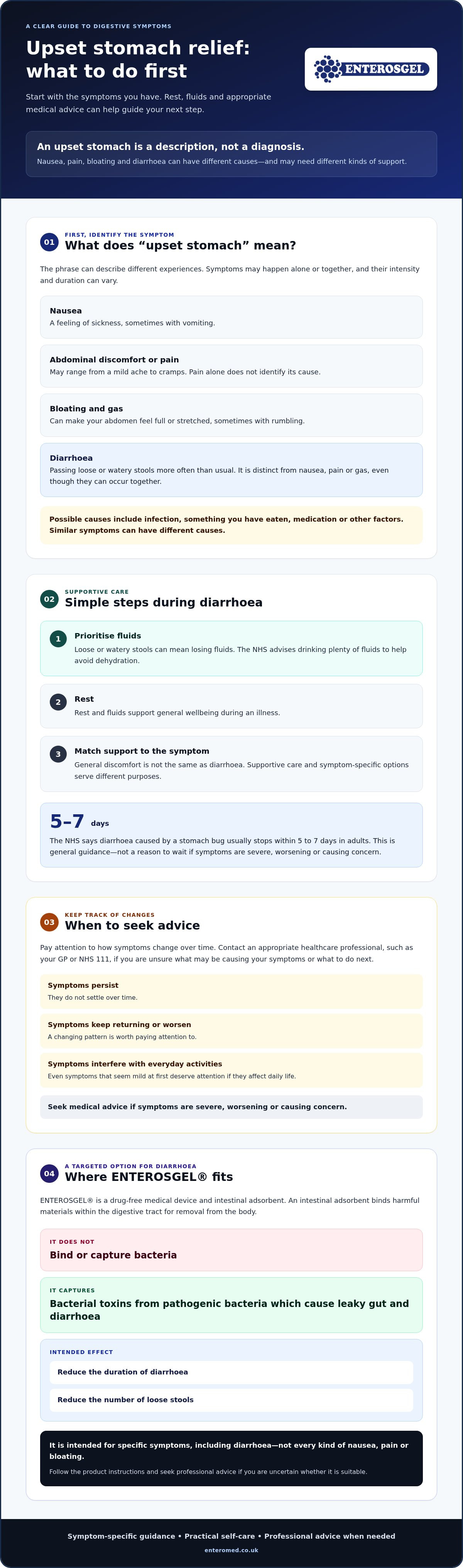
An “upset stomach” is a general description of digestive symptoms, not a diagnosis or one specific condition. The phrase can refer to different experiences, and the cause isn’t always clear from symptoms alone. Infection, something you’ve eaten, medication or other factors may be involved. This guide to upset stomach relief UK explains general information, not individual medical advice.
Which symptoms can an upset stomach include?
Symptoms can occur alone or together, and their intensity and duration vary. The distinctions matter because relief that suits one symptom may not address another:
- Nausea is a feeling of sickness, sometimes with vomiting.
- Abdominal discomfort or pain can range from a mild ache to cramps. Pain alone doesn’t identify its cause.
- Bloating and gas can make your abdomen feel full or stretched, sometimes with rumbling.
- Diarrhoea means passing loose or watery stools more often than usual. It’s different from nausea, pain or gas, even though these symptoms can happen at the same time.
A short-lived episode may settle, while symptoms can also recur or become more intense. The pattern, what else is happening and how you feel overall all help determine an appropriate response.
When is an upset stomach more than a temporary problem?
Pay attention to change over time. Symptoms that persist, keep returning, worsen or interfere with everyday activities deserve attention, even if they seem mild at first. A single episode of bloating, pain or diarrhoea doesn’t confirm a particular condition; different causes can produce similar symptoms.
The NHS says diarrhoea caused by a stomach bug usually stops within 5 to 7 days in adults and children. This is general guidance, not a reason to wait if symptoms are severe, worsening or causing concern. If you’re unsure what may be causing your symptoms or what to do next, contact an appropriate healthcare professional, such as your GP or NHS 111, for advice. Children, older adults and people with other health concerns may need advice suited to their circumstances.
How upset stomach relief works: fluids, symptoms and targeted support
Different symptoms call for different kinds of support. Rest and fluids support your general wellbeing during an illness, whilst a targeted approach may be relevant to a particular symptom, such as diarrhoea. Neither replaces medical advice when symptoms are severe, worsening or causing concern. For upset stomach relief UK, first consider what you’re experiencing rather than treating every stomach symptom as the same problem.
Why hydration matters during diarrhoea
Loose or watery stools can mean losing fluids, so hydration is a central part of caring for yourself during diarrhoea. The NHS advises drinking plenty of fluids to help avoid dehydration, alongside rest. Follow current NHS guidance for advice that suits your circumstances, particularly if you’re caring for a child or are unsure what fluids are appropriate. Don’t let a symptom-relief option distract from replacing fluids or getting medical advice when needed.
What an intestinal adsorbent does
An intestinal adsorbent is a substance that binds harmful materials within the digestive tract for removal from the body. Think of it as a physical binding process, rather than an action that relies on absorption into the bloodstream. Adsorption means materials attach to a surface; absorption means they are taken into another substance. An intestinal adsorbent is a category of product, not automatically a medicine. ENTEROSGEL® is a drug-free medical device, and it is not a pharmaceutical medicine.
ENTEROSGEL® does not bind or capture bacteria. It captures bacterial toxins from pathogenic bacteria which cause leaky gut and diarrhoea. Its intended effect is to reduce the duration of diarrhoea and the number of loose stools. This is a targeted option for stated symptoms, not a treatment for every cause of nausea, pain or bloating. Follow the product instructions and seek professional advice if you’re uncertain whether it’s suitable.
For a closer look at the evidence, read the ENTEROSGEL® research information. The central distinction remains: supportive care such as fluids addresses general needs during diarrhoea, whilst an intestinal adsorbent acts physically within the digestive tract.
Upset stomach: safe steps and when to seek help
Use this sequence to decide what to do next. It supports safer self-care, but it can’t identify the cause of your symptoms or replace professional assessment. These practical steps for upset stomach relief UK follow general NHS advice; check current guidance for your situation.
- Assess your symptoms. Note what you’re experiencing, when it started and whether it’s changing. Record diarrhoea, vomiting, pain or bloating separately rather than treating them as the same symptom.
- Prioritise fluids if you have diarrhoea or vomiting. The NHS advises drinking plenty of fluids to help avoid dehydration. Rest, and follow current NHS guidance for advice on managing diarrhoea and vomiting.
- Monitor what happens. Keep track of whether symptoms improve, persist or worsen, and notice any changes that concern you.
- Choose appropriate advice. A pharmacist may help with questions about symptom relief. Contact your GP or NHS 111 if you’re unsure what to do or need medical advice, or explore Fee-for-service private medical consultations and assessments if you want a dedicated appointment to investigate ongoing stomach concerns.
Seek prompt medical advice if symptoms are concerning. Contact NHS 111 or your GP for advice if you have blood in your diarrhoea, can’t keep fluids down, or notice possible dehydration, such as passing much less urine than usual. Don’t wait for a symptom-relief option to work before seeking assessment.
Get emergency help for severe symptoms. Sudden, severe abdominal pain, collapse or serious confusion needs urgent attention. Call 999 if someone is seriously ill or in immediate danger.
Symptoms that are severe, worsening or not settling deserve attention. Be especially cautious if you’re looking after a child or someone who may be more vulnerable to dehydration or illness. Seek professional advice promptly if you’re worried about them, rather than relying on general self-care guidance.
For an overview of evidence relating to targeted diarrhoea support, read the ENTEROSGEL® clinical research. Research information doesn’t replace individual medical advice, and it shouldn’t delay assessment when symptoms need attention.
Could ENTEROSGEL® help with diarrhoea-related upset stomach symptoms?
ENTEROSGEL® may be relevant when diarrhoea is the main symptom, including in people with IBS-D. It isn’t a general remedy for every upset stomach and shouldn’t be used to explain or dismiss symptoms that need medical attention. Hydration and appropriate professional advice remain important.
Mechanism, evidence and the limits of symptom relief
ENTEROSGEL® is a drug-free oral intestinal adsorbent and medical device. It is not a pharmaceutical medicine. It works physically within the digestive tract and isn’t absorbed into the bloodstream. It does not bind or capture bacteria. Instead, it captures bacterial toxins from pathogenic bacteria which cause leaky gut and diarrhoea. Its intended effect is to reduce the duration of diarrhoea and the number of loose stools, but individual results aren’t guaranteed.
The RELIEVE IBS-D randomised controlled trial involved 440 patients across 28 NHS sites in England. Published in Gut in 2022, it reported that the primary composite outcome, improvement in both pain and stool consistency, was met by 37.4% of participants using ENTEROSGEL® and 24.3% using placebo. These results relate to IBS-D studied in the trial; they don’t show that the product treats every cause of stomach discomfort. You can read more in the ENTEROSGEL® clinical research.
Use, children and appropriate next steps
For IBS-D symptoms and daily usage, the product should be taken in 30-day courses, with each course followed by a short break. Follow the product’s Instructions for Use and consult a healthcare professional if you’re uncertain whether it’s suitable for you.
ENTEROSGEL® contains no sugar, gluten, or preservatives. Unlike other antidiarrhoeal drugs, Enterosgel is safe for children under 12 years. For children under 3 years old, it is advisable to consult a doctor prior to use. Seek medical advice if a child’s symptoms are severe, worsening or causing concern.
If diarrhoea is the symptom you’re looking to address, explore information from Enteromed Ltd, the official UK distributor, and consider whether this targeted option fits your circumstances. It isn’t a substitute for fluids or professional assessment when needed.
Choose a next step that fits your symptoms
Safe upset stomach relief UK starts with recognising what you’re experiencing. Nausea, bloating, abdominal discomfort and diarrhoea aren’t interchangeable, so match self-care to the symptom and keep fluids in mind during diarrhoea. If symptoms are severe, worsening or causing concern, seek professional advice rather than waiting for a remedy to work.
For diarrhoea-related symptoms, ENTEROSGEL® is a drug-free intestinal adsorbent medical device, not a pharmaceutical medicine. It doesn’t bind or capture bacteria; it captures bacterial toxins from pathogenic bacteria which cause leaky gut and diarrhoea, with the intended effect of reducing diarrhoea duration and the number of loose stools. A 440-patient NHS randomised controlled trial investigated its use for IBS-D. Peer-reviewed research is available, but trial findings shouldn’t be taken as a guarantee of individual results or as evidence that it treats every upset stomach.
If this option may be relevant to your symptoms, explore ENTEROSGEL® information from the official UK distributor. With a clearer understanding of your symptoms and when to seek help, you can take your next step with greater confidence.
Frequently Asked Questions
What is the best way to get upset stomach relief at home?
The safest first steps depend on your symptoms. If you have diarrhoea or vomiting, rest and drink plenty of fluids, following current NHS advice. Eat when you feel able, and avoid fatty or spicy foods if you have diarrhoea or vomiting. Note what symptoms you have and whether they’re changing. These general steps can help you choose an appropriate next action, but they don’t replace medical advice if you’re concerned.
How can I tell whether an upset stomach needs medical advice?
Seek medical advice if symptoms are severe, getting worse, persistent or causing concern. Contact NHS 111 or your GP if you have blood in your diarrhoea, can’t keep fluids down or notice signs such as passing much less urine than usual. Sudden severe abdominal pain, collapse or serious confusion needs urgent attention. Don’t rely on symptom relief to delay assessment. If you’re worried about a child or someone vulnerable, seek advice promptly.
Can an intestinal adsorbent help with diarrhoea?
An intestinal adsorbent may be an option for diarrhoea, depending on the product’s stated use and your circumstances. ENTEROSGEL® is a drug-free oral intestinal adsorbent and medical device, not a pharmaceutical medicine. It does not bind or capture bacteria. It captures bacterial toxins from pathogenic bacteria which cause leaky gut and diarrhoea, with the intended effect of reducing diarrhoea duration and the number of loose stools. It isn’t for every cause of stomach discomfort.
Is ENTEROSGEL® suitable for children with diarrhoea?
ENTEROSGEL® is intended for diarrhoea and is described as safe for children under 12 years, unlike other antidiarrhoeal drugs. It contains no sugar, gluten, or preservatives, making it a gentle option for children. For children under 3 years old, it is advisable to consult a doctor prior to use. Read the Instructions for Use carefully and contact a healthcare professional if you’re unsure whether it’s suitable or the child’s symptoms are worrying.
How should ENTEROSGEL® be used for IBS-D symptoms?
For IBS-D symptoms and daily usage, ENTEROSGEL® should be taken in 30-day courses, with each course followed by a short break. Follow the product’s Instructions for Use for how to take it, and seek advice from a healthcare professional if you have questions about suitability or use. IBS-D involves diarrhoea as the predominant bowel pattern; recurring symptoms or a change in your usual pattern may also warrant medical advice.
Is an upset stomach always caused by something I have eaten?
No. Food can be one possible trigger, but an upset stomach can also be associated with infection, medication or other causes. Nausea, abdominal discomfort, bloating and diarrhoea can have different explanations, and symptoms alone don’t confirm what’s behind them. If symptoms keep returning, persist, worsen or feel severe, contact a healthcare professional for advice rather than assuming food is responsible or relying on a general upset stomach remedy.
Share this article