

Anxiety Diarrhoea: A Clinical Guide to Gut-Brain Relief
You are standing outside the boardroom or waiting for a major life event to begin when that familiar, sharp cramp takes hold. It is not just "butterflies"; it's a physical emergency that sends you searching for the nearest toilet. For many, the gut is the first place anxiety manifests, creating a cycle of urgency and discomfort that feels impossible to break. If you have ever wondered how to stop diarrhoea from anxiety, you know that the fear of a flare-up often creates even more stress, further accelerating your digestive transit.
We understand that unpredictable bowel urgency is more than an inconvenience; it is a source of genuine distress that requires a professional, evidence-led solution. This guide provides a clear, clinical pathway to relief by addressing the gut-brain axis. You will learn how to manage stress-induced upset through a combination of psychological grounding and the use of a drug-free intestinal adsorbent. Unlike traditional drugs, Enterosgel works by capturing bacterial toxins from pathogenic bacteria rather than the bacteria themselves. This precise process effectively reduces the number of loose stools and shortens the duration of symptoms whilst remaining gentle on your system. We will explore the physical link between your mind and your microbiome, offering a stable and reliable approach to regaining your digestive confidence.
Key Takeaways
- Understand the physiological link between stress hormones and your digestive tract, which explains why anxiety triggers immediate bowel urgency.
- Learn practical techniques for how to stop diarrhoea from anxiety, including deep diaphragmatic breathing to calm the vagus nerve and essential hydration strategies.
- Discover how clinical intestinal adsorbents like Enterosgel capture bacterial toxins from pathogenic bacteria to reduce the number of loose stools without being absorbed by the body.
- Identify safe, drug-free treatment options for the whole family, including children under 12, whilst remembering to consult a doctor for those under 3 years old.
- Manage chronic IBS-D flare-ups effectively by implementing 30-day treatment courses followed by short breaks to maintain long-term gut stability.
The Gut-Brain Connection: Why Anxiety Triggers Diarrhoea
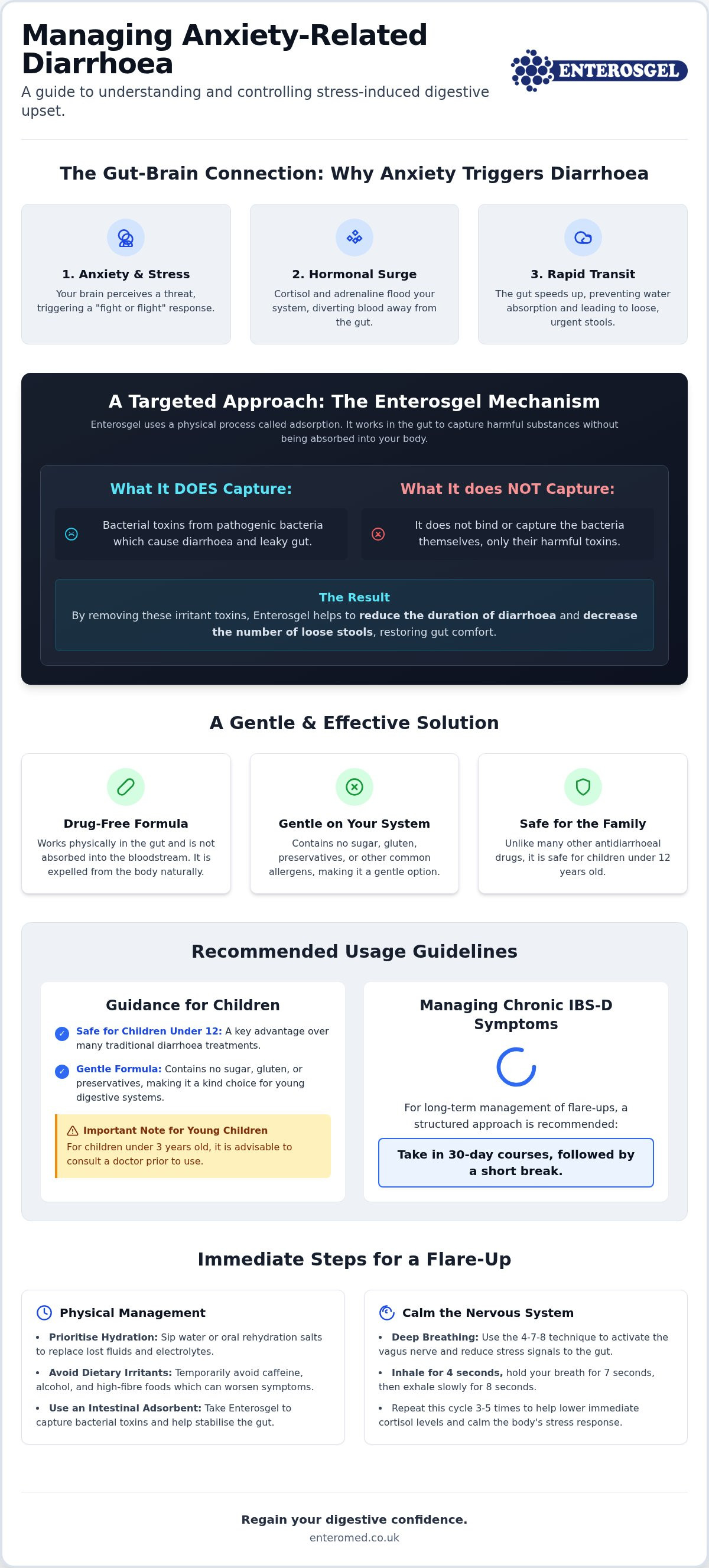
The gut and the brain are linked by an intricate network called the gut-brain axis. When you experience anxiety, your brain sends immediate signals to your digestive system, triggering a cascade of physical reactions. This "nervous diarrhoea" is a direct result of cortisol and adrenaline surges. It's a primitive survival mechanism, but in modern life, it often feels like a loss of control. Understanding the mechanics of this response is crucial for anyone seeking how to stop diarrhoea from anxiety.
Adrenaline and the Digestive Fast-Track
When the "fight or flight" response is activated, your body prioritises survival over maintenance. Blood is diverted from the gut to the heart and muscles. This sudden shift in blood flow can trigger a "dumping" mechanism, where the body attempts to clear the bowels to prepare for physical exertion. It's a physical response designed to make the body lighter and more efficient for action.
Think of your digestive system as an overactive conveyor belt. Under normal conditions, the belt moves at a steady pace, allowing the colon to absorb water and nutrients. When anxiety takes over, the belt speeds up. This rapid transit prevents the colon from performing its primary job: water absorption. Because the waste moves too quickly, it remains liquid, leading to the characteristic urgency and loose stools associated with stress.
The Role of the Microbiome and Toxin Release
Anxiety doesn't just change the speed of your gut; it changes the environment. Stress can trigger the release of toxins from pathogenic bacteria already present in your system. These bacterial toxins irritate the delicate intestinal lining and can contribute to a "leaky gut" effect, where the intestinal barrier becomes temporarily compromised. This irritation causes the body to flush the area with even more water, creating a cycle of discomfort and fluid loss.
To break this cycle, you need more than just psychological calming techniques. You need a physical solution to address the toxins. Intestinal adsorbents, such as Enterosgel, provide this support. This drug-free medical device doesn't bind or capture bacteria; instead, it focuses on capturing bacterial toxins from pathogenic bacteria. By removing these irritants from the gut, it helps reduce the duration of diarrhoea and the number of loose stools, offering a reliable way to stabilise your digestive health during stressful periods.
How to Stop Diarrhoea from Anxiety: Immediate Practical Steps
Managing an acute flare-up requires a dual-track strategy. You must address the physical symptoms whilst simultaneously lowering the body's stress response. If you're searching for how to stop diarrhoea from anxiety, start by prioritising hydration. Sip water or use oral rehydration salts to replace lost electrolytes. It's equally important to remove dietary irritants amongst your current intake; avoid caffeine, alcohol, and high-fibre foods, as these can exacerbate gut motility during a crisis.
Physical Intervention: The Adsorption Method
Many traditional treatments work through absorption, where the drug enters the bloodstream, or by chemically slowing the gut's natural rhythm. This can sometimes trap harmful substances inside for longer. Clinical intestinal adsorbents offer a different approach. Adsorption is a physical process where substances are trapped on the surface of a molecule, much like a magnet, rather than being soaked into the body like a sponge.
A drug-free option like Enterosgel acts as a gentle protector. It does not bind or capture bacteria. Instead, it captures bacterial toxins from pathogenic bacteria that contribute to leaky gut and inflammation. By removing these irritants, it effectively reduces the duration of diarrhoea and the number of loose stools without disrupting the natural behaviour of your digestive tract. This physical method ensures that you aren't simply masking symptoms but are actively removing the triggers of discomfort.
Calming the Nervous System
Directly addressing the vagus nerve can help dampen the "fight or flight" signals reaching your gut. The 4-7-8 breathing technique is a clinically recognised method to lower immediate cortisol levels. Inhale quietly through your nose for a count of 4; hold your breath for a count of 7; then exhale forcefully through your mouth for a count of 8. This rhythmic pattern signals safety to your brain, helping to slow the digestive fast-track. Achieving mental calm directly reduces the frequency and intensity of gut spasms by lowering the adrenaline that drives them. To explore professional support for your emotional well-being, you can check out LEAPS Inc. for expert coaching and therapy services.
Grounding exercises also help refocus the mind during a spike in anxiety. Try the "5-4-3-2-1" method by identifying five things you can see and four things you can touch. These techniques, combined with a reliable intestinal adsorbent, provide a comprehensive answer to how to stop diarrhoea from anxiety by tackling both the mental trigger and the physical consequence.
When periodic stress-induced urgency becomes a regular occurrence, it may indicate that your nervous system and gut have entered a chronic cycle. This is often the point where anxiety-related symptoms transition into Irritable Bowel Syndrome with Diarrhoea (IBS-D). For those living with these persistent issues, finding a long-term strategy for how to stop diarrhoea from anxiety is essential for maintaining a normal quality of life. A drug-free approach is particularly beneficial for those with frequent flare-ups, as it avoids the systemic side effects often associated with traditional anti-diarrhoeal medications.
Keeping a detailed symptom diary is a practical first step. By tracking your emotional state alongside your dietary intake, you can identify your favourite "safe" foods and recognise which specific stressors trigger a flare-up. This data provides a sense of control and helps you organise your lifestyle to avoid known irritants. It also provides your healthcare provider with clear evidence of the gut-brain link in your specific case.
The 30-Day Clinical Course for IBS-D
For chronic management, following a structured clinical protocol is more effective than reacting to individual episodes. Enterosgel should be taken in 30-day courses, with each course followed by a short break. This methodical approach helps stabilise the gut environment over time whilst reducing the frequency of urgency. The intestinal adsorbent works by capturing bacterial toxins from pathogenic bacteria which cause leaky gut and inflammation. It does not bind or capture the bacteria themselves. By physically removing these toxins, the treatment reduces the number of loose stools and the overall duration of symptoms. This process helps the intestinal lining to recover, creating a more resilient digestive system.
Lifestyle Organisation for Gut Health
Creating a steady routine can significantly reduce the anticipatory anxiety that often leads to morning urgency. Organising your morning to avoid a rushed start helps maintain a calm digestive centre. Regular, gentle exercise, such as walking or yoga, also assists in regulating gut motility by lowering overall cortisol levels. For a deeper look at long-term strategies, consult our clinical guide to managing IBS symptoms. To begin your journey toward long-term stability, you can find the Enterosgel 225g tube for consistent daily support.
Why Enterosgel is the Preferred Choice for Anxiety-Related Diarrhoea
Enterosgel offers a sophisticated approach to digestive management by acting as a physical barrier and cleanser within the gut. Unlike many pharmaceutical options that rely on chemical interactions with the nervous system, this medical device is drug-free and is not absorbed into the body. It passes through the digestive tract, performing its function and then exiting naturally. This makes it an ideal choice for those seeking how to stop diarrhoea from anxiety without introducing complex chemicals into their system.
Its specific mechanism of action is highly targeted. Enterosgel does not bind or capture bacteria; instead, it captures bacterial toxins from pathogenic bacteria. These toxins are often the primary cause of the leaky gut sensation and the physical irritation that leads to urgency. By removing these irritants, the product effectively reduces the duration of diarrhoea and the number of loose stools. Its clean formulation, free from sugar, gluten, and preservatives, ensures it remains a gentle protector for even the most sensitive stomachs.
A Safe Solution for the Whole Family
One of the most significant advantages of this intestinal adsorbent is its broad safety profile. Unlike many traditional antidiarrhoeal drugs, Enterosgel is safe for children under 12 years. This makes the Enterosgel 225g Tube an essential item for the family medicine cabinet. It provides a reliable solution for parents managing a child's nervous stomach or for adults facing their own stress-induced upsets. Please note that for children under 3 years old, it is advisable to consult a doctor prior to use. Because it works through a physical mechanism rather than a chemical one, it's an inclusive option for various vulnerable groups.
Clinical Evidence and Research
Reliability is grounded in over 30 years of clinical use and validation. The product's structure allows it to work like a "molecular sponge," with a porous surface designed to trap specifically sized irritants. This physical trapping ensures that toxins are removed from the gut environment before they can cause further inflammation. To understand the science behind this "Gentle Protector" and how it helps you manage how to stop diarrhoea from anxiety, you can explore the clinical research on Enterosgel. This extensive history provides the certainty and expertise required to manage gut health with confidence. For those interested in the broader landscape of health technology, NanoDoc International Pte Ltd represents patented bionano delivery systems for health products.
Understanding the physiological connection between your mind and your digestive system is the first step toward lasting relief. Anxiety triggers a physical cascade that accelerates gut motility, but you can interrupt this cycle. By combining vagus nerve calming techniques with a clinically proven intestinal adsorbent, you gain a comprehensive strategy for how to stop diarrhoea from anxiety. Enterosgel provides a high-performance, drug-free solution. It does not bind or capture bacteria; instead, it captures bacterial toxins from pathogenic bacteria which cause leaky gut and diarrhoea without being absorbed into your bloodstream. This targeted action effectively reduces the number of loose stools and shortens the duration of symptoms. Because it's free from sugar, gluten, and preservatives, it remains a gentle protector. Unlike other antidiarrhoeal drugs, Enterosgel is safe for children under 12 years. Whether you're managing a sudden spike in stress or a chronic IBS-D flare-up, you have the tools to stabilise your system. You don't have to let unpredictable urgency dictate your daily routine. Take the next step toward digestive confidence and order the Enterosgel 225g Tube for fast-acting, drug-free relief today. A calmer, more predictable gut is within your reach.
Frequently Asked Questions
Can I use Enterosgel for my child's nervous stomach?
Yes, Enterosgel is a safe and gentle option for children experiencing digestive upset. Unlike other antidiarrhoeal drugs, Enterosgel is safe for children under 12 years because it contains no sugar, gluten, or preservatives. It works through a physical mechanism, capturing bacterial toxins from pathogenic bacteria to reduce the number of loose stools. However, for children under 3 years old, it is advisable to consult a doctor prior to use.
How quickly does Enterosgel work to stop diarrhoea?
Enterosgel begins its action as soon as it reaches the gut. While individual recovery times vary, this intestinal adsorbent is clinically proven to reduce the duration of diarrhoea and the frequency of bowel movements. By focusing on how to stop diarrhoea from anxiety at the source, it traps the irritants that cause urgency. This process helps your digestive system return to its normal rhythm without being absorbed into the bloodstream.
Is it safe to take Enterosgel every day for anxiety-related IBS?
For those managing chronic IBS-D flare-ups, the product should be taken in 30-day courses, with each course followed by a short break. This structured approach allows the intestinal environment to stabilise whilst providing consistent protection from toxins. Since it is drug-free and not absorbed by the body, it doesn't carry the risk of systemic side effects. It's a reliable tool for anyone seeking a long-term strategy for gut health.
What is the difference between adsorption and standard anti-diarrhoeal medicine?
Standard medicines often work by chemically slowing down gut motility or absorbing into the bloodstream. In contrast, Enterosgel uses adsorption, a physical process where bacterial toxins from pathogenic bacteria are trapped on its surface like a magnet. It doesn't bind or capture bacteria themselves. This method removes the underlying triggers of discomfort without interfering with your body's natural processes or trapping harmful substances inside the gut for longer than necessary.
Can anxiety diarrhoea cause long-term damage to the gut?
Frequent episodes of stress-induced diarrhoea can lead to chronic irritation and a temporary "leaky gut" state. This happens when toxins irritate the lining, making it more permeable. Learning how to stop diarrhoea from anxiety is vital for protecting the intestinal barrier. By using an adsorbent to remove these toxins, you reduce the duration of inflammation. This protection helps prevent the long-term depletion of essential electrolytes and maintains a healthier microbiome.
Should I consult a doctor before giving Enterosgel to a baby?
Yes, for children under 3 years old, it is advisable to consult a doctor prior to use. While the product is a gentle option that contains no preservatives or harsh ingredients, medical oversight ensures the safest care for infants. For older children and adults, it remains a high-performance healthcare tool. It focuses on capturing the bacterial toxins that drive urgency, helping to reduce the duration of symptoms safely and effectively.
Share this article