

Binding Gut Toxins: A Guide to Intestinal Adsorbents
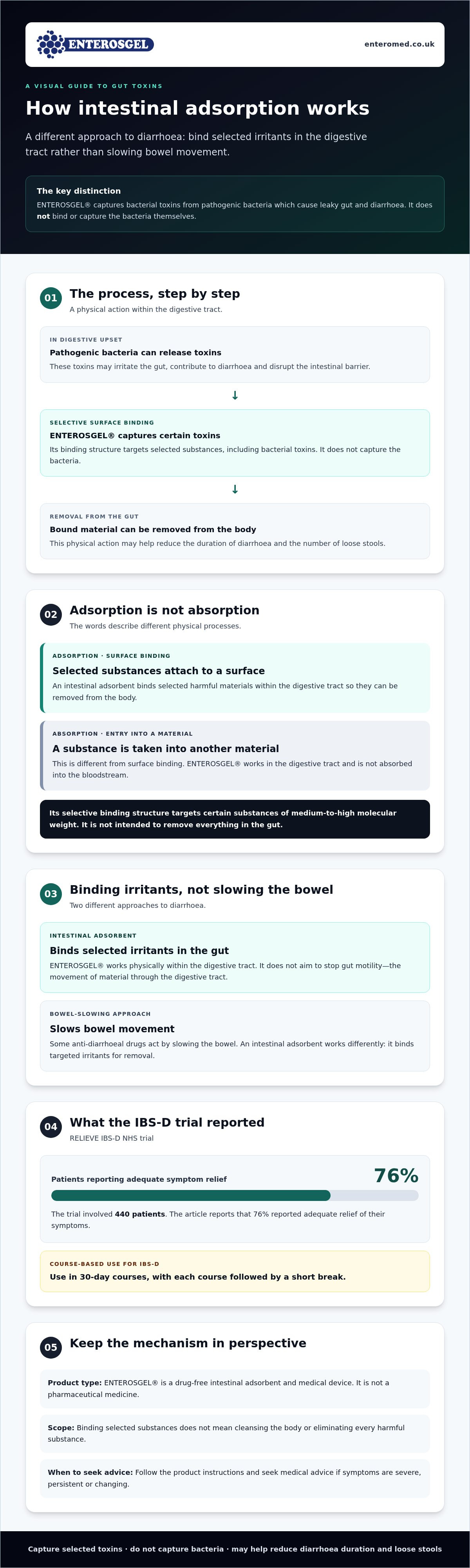
What if easing diarrhoea starts with capturing irritants in the gut rather than slowing the bowel? If you’re asking how to bind toxins in gut, first distinguish bacterial toxins from bacteria themselves. ENTEROSGEL® captures certain toxins produced by pathogenic bacteria. It does not bind or capture the bacteria. This physical action may help reduce the duration of diarrhoea and the number of loose stools.
Urgency, cramps and bloating can disrupt daily life. Recurring symptoms may also leave you concerned about gut irritation or leaky gut. ENTEROSGEL® is a drug-free intestinal adsorbent and medical device. It isn’t a pharmaceutical medicine and isn’t absorbed into the bloodstream. Instead, it works within the digestive tract.
This guide explains how intestinal adsorbents work, what the evidence says about acute diarrhoea and IBS-D, and how to use them safely. In the 440-patient RELIEVE IBS-D NHS trial, 76% of patients reported adequate relief of their symptoms. For IBS-D, use is in 30-day courses, with each course followed by a short break. You’ll also learn what to consider when choosing an adsorbent and when to seek medical advice.
Key Takeaways
- Learn how to bind toxins in gut with an intestinal adsorbent, and how this differs from a treatment that slows bowel movement.
- Understand the difference between adsorption, which traps substances on a surface, and absorption, which draws them into a material.
- See how gut irritants, including bacterial toxins and inflammatory mediators, may contribute to diarrhoea, urgency and digestive discomfort.
- Find out why a structured approach matters when managing recurrent IBS-D symptoms, and what guidance to follow for course-based use.
- Review the clinical evidence for Enterosgel and what to consider when choosing an intestinal adsorbent.
What Are Gut Toxins and Why Do They Cause Digestive Distress?
“Gut toxins” is a broad, informal term for harmful substances in the digestive tract. These include toxins released by pathogenic bacteria and inflammatory mediators, which are molecules involved in initiating or regulating inflammation. Bacterial toxins can irritate the gut, contribute to diarrhoea and disrupt the intestinal barrier, a change often described as leaky gut. Symptoms may include urgency, cramps and bloating.
Leaky gut describes disruption of the intestinal barrier, allowing substances to pass through the gut lining more readily. It isn’t a diagnosis that explains every digestive symptom. Persistent or severe symptoms need appropriate medical assessment rather than assumptions about a toxin build-up.
The Role of Bacterial Toxins in Diarrhoea
Some pathogenic bacteria release toxins that can disrupt normal fluid handling in the intestine. The gut may then secrete more water or absorb less, producing loose stools. Irritation and increased gut activity can also contribute to abdominal pain and urgency.
Eating can prompt the gastrocolic reflex, a natural signal that stimulates the colon after food enters the stomach. During digestive upset, this response may coincide with an urgent need for a bowel movement. The reflex is not itself a toxin, but it can help explain why symptoms sometimes arise after meals.
Inflammatory Mediators and Gut Irritation
Inflammatory mediators are signalling molecules involved in the body’s inflammatory response. During digestive upset, they may contribute to sensitivity and changes in intestinal function. Ongoing symptoms can occur with functional abdominal pain disorders, a group of conditions involving recurrent abdominal pain without an identifiable structural or biochemical cause. A clinician can help assess recurring pain, diarrhoea or urgency.
Clinical toxin removal has a specific meaning: binding selected substances in the digestive tract so they can be removed. It does not mean cleansing the body or eliminating every harmful substance. ENTEROSGEL® captures bacterial toxins from pathogenic bacteria that can cause diarrhoea and leaky gut; it does not bind or capture bacteria. If you’re researching how to bind toxins in gut, look for a clearly described mechanism rather than broad detox claims.
The Science of Adsorption: How to Bind Toxins Safely
An intestinal adsorbent binds selected harmful materials within the digestive tract so they can be removed from the body. To understand how to bind toxins in gut, it helps to distinguish adsorption from absorption. Adsorption is surface binding: imagine a surface acting a little like a magnet, holding targeted substances against it. Absorption is different. It means a substance is taken into another material, like water soaking into a sponge.
Adsorption vs Absorption: Why It Matters
ENTEROSGEL® works physically in the gut and isn’t absorbed into the bloodstream. This non-systemic action means it doesn’t circulate through the body like a medicine that acts after absorption. It may reduce exposure to systemic effects, although no treatment is free of possible risks and product instructions should always be followed.
Learn about the Enterosgel 225g Tube and its intended use. ENTEROSGEL® is a medical device, not a pharmaceutical medicine. It captures bacterial toxins produced by pathogenic bacteria, not the bacteria themselves. These toxins can contribute to diarrhoea and disruption of the intestinal barrier.
Targeting High Molecular Weight Substances
The gel has a selective binding structure that targets certain substances of medium-to-high molecular weight, including bacterial toxins. This selectivity matters: an adsorbent isn’t intended to remove everything in the gut. The product’s physical action takes place within the digestive tract, and it is not absorbed into the body.
Unlike anti-diarrhoeal drugs that slow the bowel, an intestinal adsorbent binds targeted irritants for removal. It doesn’t aim to stop gut motility, the movement of material through the digestive tract. By helping remove bacterial toxins, ENTEROSGEL® may reduce the duration of diarrhoea and the number of loose stools. Follow the product’s instructions, and seek medical advice if symptoms are severe or persistent.
Practical Strategies for Managing Gut Irritants and IBS-D
A structured approach can help you manage recurring symptoms without treating every episode as the same problem. Note patterns such as urgency after meals, loose stools, bloating or cramps, and seek medical advice if symptoms are severe, persistent or changing. An intestinal adsorbent works by binding selected irritants in the gut. ENTEROSGEL® captures bacterial toxins from pathogenic bacteria, not the bacteria themselves. These toxins can contribute to diarrhoea and leaky gut; capturing them may help reduce diarrhoea duration and the number of loose stools.
Managing IBS-D and Chronic Symptoms
IBS-D is irritable bowel syndrome in which diarrhoea is the predominant bowel pattern. Urgency, abdominal pain and bloating can affect everyday routines, so a consistent management plan is useful. For IBS-D symptoms, Enterosgel should be taken in 30-day courses, with each course followed by a short break. Follow the product’s Instructions for Use and ask a healthcare professional if you’re unsure whether it’s suitable for you. For more information, read this clinical guide to irritable bowel syndrome relief.
Practical needs differ. Adults managing recurring symptoms may want a clear course routine; travellers may value having a familiar option with them; families need age-appropriate guidance and clear instructions. In each case, check the product instructions rather than changing how it’s used based on symptoms alone.
Safe Use for Children and Babies
Enterosgel is a drug-free, tasteless gel and contains no sugar, gluten or preservatives, making it a gentle option for children. Unlike other antidiarrhoeal drugs, Enterosgel is safe for children under 12 years. For children under 3 years old, it is advisable to consult a doctor before use. Follow the age-specific instructions, and seek medical advice if a child’s symptoms are severe or persistent.
To review the product and its directions for use, visit the Enterosgel 225g Tube information.
Enterosgel: The Clinically Proven Intestinal Adsorbent
ENTEROSGEL® is a drug-free intestinal adsorbent and medical device with a 30-year clinical track record. It works physically within the digestive tract and is not absorbed into the bloodstream. It captures bacterial toxins produced by pathogenic bacteria, not the bacteria themselves. By binding these toxins for removal, it may help reduce diarrhoea duration and the number of loose stools.
Evidence-Based Relief
The RELIEVE IBS-D randomised controlled trial involved 440 patients across 28 NHS sites in England. Results were published in GUT in 2022. The primary composite responder rate, which measured improvement in both abdominal pain and stool consistency, was 37.4% with Enterosgel compared with 24.3% with placebo. Separately, 76% of patients taking Enterosgel reported adequate symptom relief. These are different trial outcomes, and neither guarantees an individual result.
Enterosgel is listed on the NHS Drug Tariff. The trial reported no serious adverse events attributable to Enterosgel. For further study information, see the Enteromed research page.
Why Choose a Drug-Free Approach?
Some anti-diarrhoeal drugs slow bowel movement. Enterosgel instead acts as a physical adsorbent within the gut, capturing selected irritants without being absorbed into the body. It is NOT a pharmaceutical medicine. This difference may matter to people seeking a non-systemic option, although suitability depends on the person and their symptoms. Follow the Instructions for Use and seek medical advice for severe or persistent symptoms.
The 225g tube may suit use at home, whilst sachets offer a pre-portioned format that can be convenient to carry when travelling. Both provide a way to use an intestinal adsorbent according to its directions. For IBS-D, use Enterosgel in 30-day courses, with each course followed by a short break.
To check the tube format and product information, visit the Enterosgel 225g Tube page.
Choose a Clear, Evidence-Led Next Step
Understanding how to bind toxins in gut starts with knowing what an intestinal adsorbent does: it binds selected irritants for removal rather than slowing bowel movement. ENTEROSGEL® captures bacterial toxins produced by pathogenic bacteria, not the bacteria themselves. It is a drug-free medical device and is NOT a pharmaceutical medicine.
Evidence and correct use matter. In the RELIEVE IBS-D trial, 76% of patients reported adequate symptom relief. Enterosgel has a 30-year clinical track record and has received a Red Dot Award for design and functionality. For IBS-D, follow the Instructions for Use: take it in 30-day courses, with each course followed by a short break. Individual results can vary, and persistent or severe symptoms warrant medical advice.
If you’re ready to consider this physical, non-systemic approach, order the Enterosgel 225g Tube for drug-free gut relief. With clear product information and a structured approach, you can make a more confident choice about managing digestive symptoms.
Frequently Asked Questions
How exactly does a gut toxin binder work?
An intestinal adsorbent binds selected harmful substances within the digestive tract so they can be removed from the body. Adsorption means substances attach to the adsorbent’s surface rather than being soaked into it. ENTEROSGEL® captures bacterial toxins produced by pathogenic bacteria, not the bacteria themselves. It isn’t absorbed into the bloodstream. By binding these toxins, it may help reduce the duration of diarrhoea and the number of loose stools.
Is it safe to use Enterosgel for children with diarrhoea?
Enterosgel is a gentle option for children because it contains no sugar, gluten or preservatives. Unlike other antidiarrhoeal drugs, Enterosgel is safe for children under 12 years. For children under 3 years old, it is advisable to consult a doctor before use. Always follow the age-specific instructions for use, and seek medical advice if a child’s diarrhoea is severe, persistent or accompanied by concerning symptoms.
Can I take a gut binder if I have IBS-D?
Enterosgel may be used for IBS-D, irritable bowel syndrome in which diarrhoea is the predominant bowel pattern. Its physical action captures bacterial toxins from pathogenic bacteria; it does not bind or capture bacteria. This may help with diarrhoea symptoms, including loose stools and urgency. For IBS-D, take it in 30-day courses, with each course followed by a short break. Follow the product instructions and consult a healthcare professional if you’re unsure whether it’s suitable.
What is the difference between adsorption and pharmaceutical anti-diarrhoeals?
Adsorption is a physical process: an intestinal adsorbent binds selected substances on its surface inside the gut. ENTEROSGEL® is a medical device, not a pharmaceutical medicine, and isn’t absorbed into the bloodstream. Some anti-diarrhoeal medicines, such as loperamide, work by slowing bowel movement. These approaches differ in how they act, so follow the relevant product instructions and seek professional advice about which option is appropriate for your symptoms.
How long should I take a toxin binder for chronic gut issues?
For IBS-D symptoms, Enterosgel should be taken in 30-day courses, with each course followed by a short break. Don’t treat this schedule as general advice for every chronic digestive problem; use the product only as directed in its Instructions for Use. If symptoms continue, worsen or change, speak with a healthcare professional about assessment and suitable management rather than extending or repeating courses without guidance.
Does Enterosgel remove “good” bacteria from the gut?
Enterosgel does not bind or capture bacteria, whether pathogenic or beneficial. Its stated action is to capture bacterial toxins produced by pathogenic bacteria, which can contribute to diarrhoea. This distinction matters: it acts on selected substances in the gut rather than acting as a bacteria-removing treatment. If you have concerns about persistent digestive symptoms or changes in bowel habits, ask a healthcare professional for advice.
Share this article