

Chronic Diarrhoea Management: A Clinical Guide to Drug-Free Relief
Effective chronic diarrhoea management requires removing the toxins that irritate the gut, not just slowing down bowel movement. For many, the reality of life with a sensitive digestive system is defined by unpredictable urgency, abdominal discomfort, and the persistent fear of being too far from a bathroom. You might feel that traditional medications offer only a temporary fix, or you may worry about the impact of long-term drug use on your overall health. It is a frustrating cycle that often leaves you feeling restricted and exhausted.
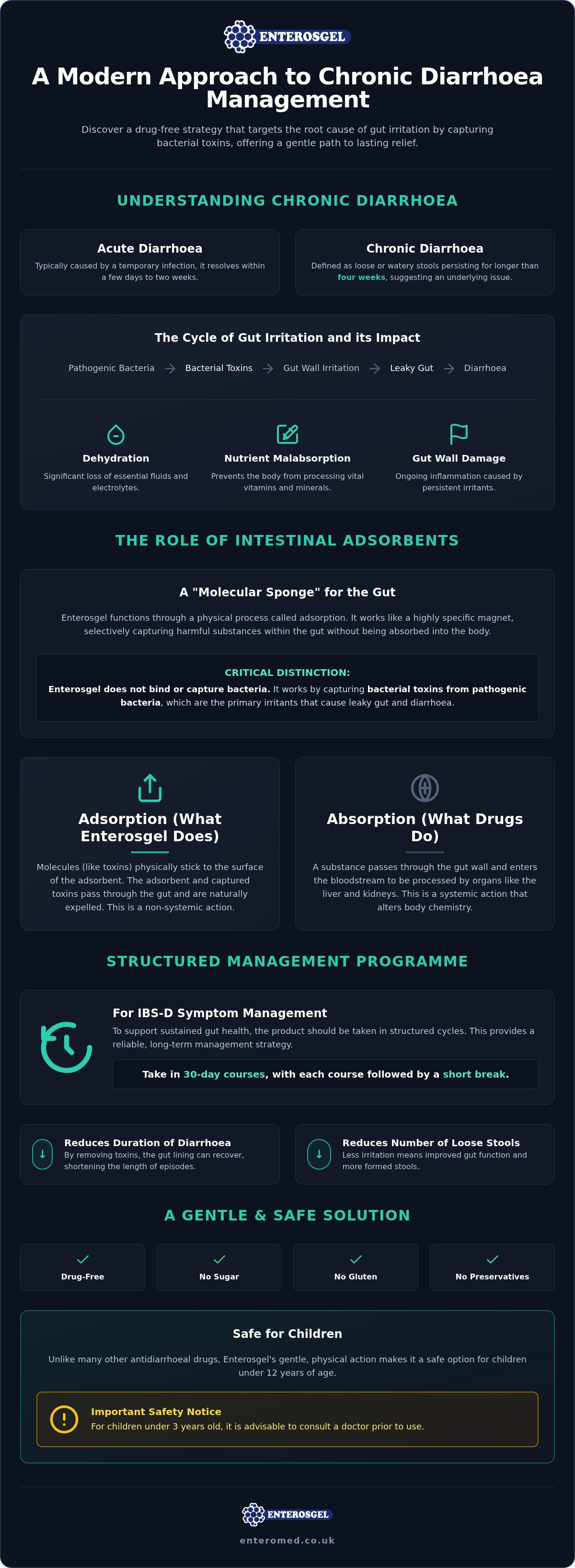
This clinical guide introduces a sophisticated, drug-free approach to gut health that prioritises safety and scientific rigor. You will discover how intestinal adsorbents work to capture bacterial toxins from pathogenic bacteria, which cause leaky gut and diarrhoea, rather than just masking symptoms. By targeting these underlying irritants, it's possible to reduce the duration of diarrhoea and the number of loose stools. We will outline a reliable management programme, explaining how these treatments are taken in 30-day courses followed by a short break to provide a gentle yet high-performance solution for lasting relief.
Key Takeaways
- Establish a reliable long-term strategy for chronic diarrhoea management by targeting the root causes of gut irritation rather than simply slowing bowel transit.
- Understand the physical mechanism of intestinal adsorbents, which capture bacterial toxins from pathogenic bacteria to reduce the duration and frequency of loose stools.
- Implement a structured 30-day course for IBS-D symptoms, ensuring a short break is taken between each cycle to support sustained gut health.
- Discover a gentle, drug-free solution that contains no sugar, gluten, or preservatives, making it safe for children under 12 years of age.
- Learn the essential safety protocols for vulnerable groups, including the requirement to consult a doctor before use for children under 3 years old.
Understanding Chronic Diarrhoea and Its Impact on Gut Health
Chronic diarrhoea is clinically defined as the passage of loose or watery stools that persists for longer than four weeks. Whilst acute diarrhoea often results from a temporary viral infection or food poisoning, chronic symptoms suggest a more complex underlying issue. Identifying the root cause is the first step toward effective chronic diarrhoea management. Common triggers include inflammatory conditions, food intolerances, and functional disorders like IBS-D. These conditions often involve significant gut wall irritation and a phenomenon known as "leaky gut."
When the intestinal lining becomes irritated, its barrier function is compromised. This allows bacterial toxins from pathogenic bacteria to penetrate the gut wall, triggering further inflammation and fluid secretion. The result is a cycle of frequent bowel movements that can lead to systemic issues. The impact of persistent symptoms often includes:
- Dehydration: A significant loss of essential electrolytes and fluids.
- Nutrient Malabsorption: The rapid transit of waste prevents the body from processing vitamins and minerals.
- Gut Wall Irritation: Ongoing inflammation caused by the presence of bacterial toxins.
Over time, the rapid transit of waste prevents the body from absorbing vital nutrients and water. This often results in chronic dehydration and fatigue, making it essential to address the irritation rather than just the frequency of stools.
The Difference Between Acute and Chronic Symptoms
It can be difficult to determine when a temporary upset stomach has transitioned into a chronic concern. Monitoring the duration of symptoms is vital. If urgency, abdominal pain, and bloating continue beyond a month, it's no longer a simple acute episode. You should seek professional medical advice if you experience "red-flag" symptoms. These include unexplained weight loss, blood in the stool, or symptoms that wake you up during the night. A formal diagnosis ensures that serious underlying pathologies are ruled out before starting a management programme.
The Emotional and Social Toll of Urgency
Living with unpredictable bowel urgency is exhausting. It dictates daily schedules, travel routes, and social interactions. Many people find themselves "mapping" bathrooms before they even leave the house. This constant vigilance creates a significant psychological burden, often leading to social withdrawal or anxiety. Moving from reactive "emergency" fixes to a proactive chronic diarrhoea management strategy is transformative. By focusing on stabilising the gut environment, you can regain a sense of control over your daily life and reduce the distress caused by unpredictable gut behaviour.
The Role of Intestinal Adsorbents in Toxin Removal
While traditional pharmacological options often focus on slowing down bowel movements, intestinal adsorbents offer a distinct pathway for chronic diarrhoea management. These substances function as a physical barrier and cleanser within the digestive tract. Think of an adsorbent as a "molecular sponge" or a magnet. It possesses a specific porous structure designed to attract and hold harmful substances without being absorbed into the body itself. This physical action is what sets it apart from systemic drugs that alter your body's natural chemistry.
It is vital to clarify that Enterosgel does not bind or capture bacteria. Instead, its function is capturing bacterial toxins from pathogenic bacteria which cause leaky gut and diarrhoea. By trapping these microscopic irritants, the adsorbent prevents them from damaging the intestinal lining. Once these toxins are securely held within the gel's structure, they cannot be reabsorbed. They are simply expelled naturally from the body during normal bowel movements. This process effectively breaks the cycle of gut wall irritation and inflammation.
Adsorption vs Absorption: Why the Difference Matters
The distinction between these two terms is fundamental to understanding gut health. Absorption occurs when a substance enters the bloodstream and is processed by internal organs. Adsorption is a purely physical process where molecules are "trapped" on the surface of the adsorbent material. This non-systemic approach is significantly gentler on the liver and kidneys because the substance never enters the systemic circulation. You can learn more about gut adsorption therapy to see how this physical mechanism supports long-term recovery.
Reducing Loose Stools and Diarrhoea Duration
When the gut is no longer under constant attack from bacterial toxins, the intestinal mucosa finally has the opportunity to recover. This healing process allows the gut wall to resume its primary job: absorbing water and essential nutrients. As the inflammation subsides, you will notice a clinical reduction in the number of loose stools and a return to firmer consistency. Enterosgel reduces the duration of diarrhoea by binding pathogenic toxins that would otherwise perpetuate gut irritation. For those seeking a reliable way to stabilise their digestive health, the Enterosgel 225g Tube offers a clinical-grade, drug-free solution for home use.
Practical Strategies for Long-Term Management
Achieving stability in your digestive health requires more than just reactive measures. Effective chronic diarrhoea management is built on a structured, proactive programme designed to support the gut's natural recovery processes. For those living with IBS-D, consistency is the key to reducing the frequency of flare-ups and improving daily comfort. By integrating clinically proven adsorbents into a daily routine, you can create a stable environment that allows the intestinal mucosa to function correctly.
The protocol for managing chronic symptoms involves taking Enterosgel in 30-day courses. This duration is significant. It ensures that bacterial toxins are consistently removed, giving the gut lining sufficient time to repair itself and reduce the number of loose stools. Each 30-day course must be followed by a short break. This cyclical approach prevents the gut from becoming overly reliant on external aids whilst maintaining the benefits of toxin removal. It's a methodical way to build resilience in your digestive system.
Implementing a 30-Day Management Programme
Success depends on timing. To ensure the gel captures bacterial toxins effectively, it should be taken two hours before or after meals and other medications. This prevents any interference with nutrient absorption or drug efficacy. Many users find it helpful to track their progress using a simple diary to monitor stool frequency and gut comfort levels. You can explore the IBS Starter Kit for comprehensive management, which provides the tools needed to start your first 30-day cycle with confidence.
Dietary Adjustments to Complement Adsorption
Whilst toxin removal is essential, identifying personal dietary triggers remains a vital part of long-term care. Common irritants such as caffeine, spicy foods, and artificial sweeteners can exacerbate gut sensitivity. Incorporating soluble fibre, such as oats or psyllium, can also help by adding bulk to stools and supporting regularity. Enterosgel serves as an excellent companion to the low FODMAP diet. Whilst the diet reduces fermentable carbohydrates that cause gas, the adsorbent works in tandem to capture the toxins that trigger diarrhoea, offering a dual-action approach to gut comfort.
Safety and Efficacy for the Whole Family
Safety is a paramount concern in chronic diarrhoea management, especially when treating vulnerable family members. Enterosgel is classified as a medical device rather than a systemic drug. This means it is not absorbed into the bloodstream. Instead, it travels through the gut, performing its physical function, and is excreted naturally. This high level of purity is maintained because the gel contains no sugar, gluten, or preservatives. Such a clean profile makes it an appropriate choice for those with allergies or sensitivities who require a high-performance healthcare tool that remains gentle on the system.
Unlike other antidiarrhoeal drugs, Enterosgel is safe for children under 12 years. This is a significant advantage for parents who often find themselves with limited options for paediatric gut issues. By capturing bacterial toxins from pathogenic bacteria which cause leaky gut and diarrhoea, the gel reduces the duration of diarrhoea and the number of loose stools. It provides a reliable management option without the risk of the harsh side effects associated with systemic medications.
Managing Diarrhoea in Babies and Toddlers
For parents of infants, the safety threshold is even higher. For children under 3 years old, it is advisable to consult a doctor prior to use to ensure the underlying cause is correctly identified. Once approved, the gel can be easily administered by mixing it with water or a small amount of expressed breast milk or formula. It's a gentle option for children because it contains no sugar, gluten, or preservatives. You can read our guide on toddler bloating and gas relief for more age-specific advice.
A Reliable Solution for Adults and the Elderly
For adults and the elderly, the non-systemic approach offers a layer of smart protection. Because the gel isn't absorbed, there is a significantly reduced risk of interaction with other daily medications. This makes it a stable choice for those managing multiple health conditions. When managing IBS-D symptoms, the product should be taken in 30-day courses, with each course followed by a short break. This methodical cycle ensures that long-term chronic diarrhoea management is both effective and sustainable. Keeping an Enterosgel 225g Tube in the family medicine cabinet ensures that every household member has access to reliable, drug-free relief whenever gut discomfort arises.
Empowering Your Long-Term Gut Recovery
Effective chronic diarrhoea management is built on understanding that your gut needs a gentle protector rather than a harsh stimulant. By transitioning from reactive "emergency" fixes to a structured approach, you address the irritation at its source. This drug-free, non-systemic method focuses on capturing bacterial toxins from pathogenic bacteria, which allows the intestinal mucosa to repair itself. This physical removal process is clinically proven to reduce the duration of diarrhoea and the number of loose stools, providing a reliable path back to predictable gut comfort.
Whether you're managing IBS-D symptoms through 30-day courses followed by a short break, or seeking a safe solution for your children, it's possible to find relief that fits into daily life. This treatment is safe for all ages from birth and contains no sugar, gluten, or preservatives. You can order the Enterosgel 225g Tube for long-term gut management to begin stabilising your digestive health today. With a consistent programme and clinical-grade support, you can look forward to a future defined by confidence rather than urgency.
Frequently Asked Questions
How long does it take for Enterosgel to work for chronic diarrhoea?
Relief from acute symptoms often begins within the first few doses as the gel starts capturing bacterial toxins from pathogenic bacteria. However, for effective chronic diarrhoea management, consistency is vital. Most users see a significant reduction in the frequency of loose stools and improved gut comfort within a few days. To achieve lasting stability and allow the intestinal mucosa to recover fully, it is essential to complete the recommended treatment cycle.
Can I take Enterosgel every day for my IBS symptoms?
Yes, Enterosgel is designed for the long-term management of IBS-D symptoms. However, you must follow a structured schedule rather than indefinite daily use. The product should be taken in 30-day courses, with each course followed by a short break. This cyclical approach ensures the gut remains supported whilst allowing the digestive system to maintain its own natural balance between treatment periods. Always monitor your symptoms and adjust your programme as needed.
Is it safe to give Enterosgel to a baby or young child?
Enterosgel is safe for children under 12 years, which distinguishes it from many other antidiarrhoeal drugs. It is a gentle option for children because it contains no sugar, gluten, or preservatives. For children under 3 years old, it is advisable to consult a doctor prior to use. Parents often prefer this drug-free approach as it works physically within the gut and is not absorbed into the child's bloodstream.
Does Enterosgel interfere with other medications I am taking?
Because Enterosgel is a physical adsorbent, it can bind other oral medications if taken at the same time. To avoid this, you should take the gel two hours before or after any other medicines. This gap ensures that your other treatments are absorbed correctly by the body whilst the gel focuses on capturing bacterial toxins. Since the gel itself is non-systemic and not absorbed into the blood, it does not cause chemical drug interactions.
What is the difference between Enterosgel and standard anti-diarrhoeal pills?
Standard antidiarrhoeal pills often work pharmacologically to slow down the movement of the gut. In contrast, Enterosgel is a medical device that acts as an intestinal adsorbent. It works physically by capturing bacterial toxins from pathogenic bacteria which cause leaky gut and diarrhoea. Rather than simply masking the urge to go, it targets the underlying irritation. This process reduces the duration of diarrhoea and the number of loose stools without entering the bloodstream.
Should I consult a doctor before starting a chronic diarrhoea management programme?
You should always consult a healthcare professional before beginning a long-term chronic diarrhoea management programme. It is important to receive a formal diagnosis to rule out serious underlying conditions. A doctor can help you establish the cause of your symptoms and confirm that a drug-free adsorbent is the right choice for your specific needs. This is particularly important if you experience red-flag symptoms like blood in the stool or unexplained weight loss.
Share this article