

Diarrhoea After Eating: A UK Buying Guide for Fast, Drug-Free Relief
Nearly three-quarters of Britons face the sudden, uncomfortable reality of digestive distress at least once a week. If you find yourself scanning for the nearest toilet before the restaurant bill even arrives, you're all too familiar with the social anxiety and physical discomfort of post-meal urgency. It's frustrating to feel like your body is overreacting to your favourite foods, leaving you confused about triggers and exhausted by painful bloating and cramps.
Many people searching for solutions to diarrhoea after eating are understandably sceptical of harsh, systemic medications that simply slow down the gut's natural rhythm. You deserve a sophisticated, medical-first solution that addresses the root cause of irritation without being absorbed into your bloodstream. This guide explains exactly why these sudden episodes occur and how to choose a clinically proven, drug-free treatment to regain your digestive control. We will examine the science of intestinal adsorbents and how they act like a smart sponge to trap and remove irritants, helping you return to a life free from the fear of your next meal.
Key Takeaways
- Identify the specific dietary and environmental triggers for diarrhoea after eating, UK residents frequently encounter, from spicy dishes to fatty takeaway meals.
- Understand the science of adsorption, a drug-free approach that physically traps toxins in the gut rather than being absorbed into your bloodstream.
- Compare the benefits of the Enterosgel 225g Tube and travel-friendly Sachets to find the most convenient format for your digestive health needs.
- Learn the "Golden Rule" of timing and the importance of hydration to maximise the efficacy of your treatment and regain digestive control.
Understanding Diarrhoea After Eating: Triggers and Causes in the UK
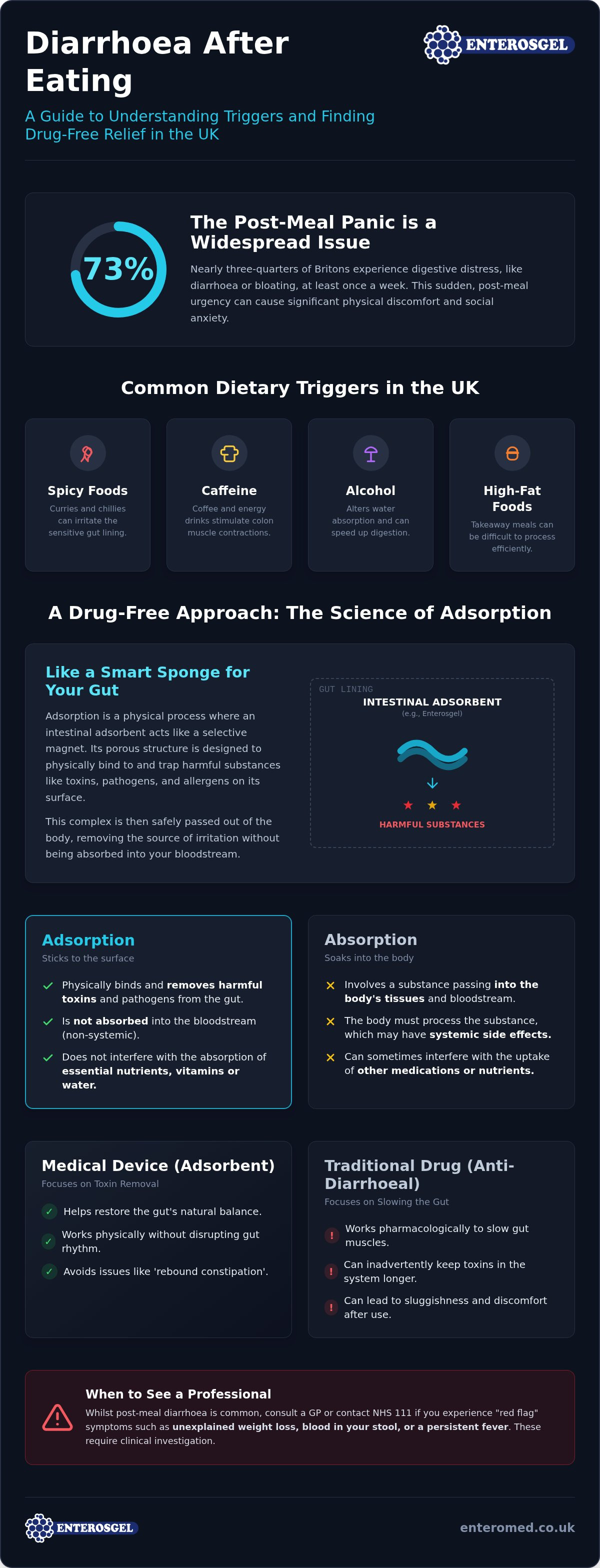
Experiencing a sudden, urgent need to visit the bathroom shortly after a meal is medically known as postprandial diarrhoea. It's a common issue amongst the 73% of Britons who experience digestive symptoms like diarrhoea or bloating at least once a week. Whilst the gastrocolic reflex is a natural signal that tells the colon to make room for new food, those dealing with diarrhoea after eating UK wide often find their system reacts with excessive speed and intensity. This hyper-sensitivity is a hallmark of Irritable Bowel Syndrome (IBS), where the gut-brain axis becomes misaligned, leading to rapid bowel contractions immediately following food intake.
Common triggers in the British diet frequently include:
- Spicy foods, such as curries or chillies, which irritate the gut lining.
- Caffeine from morning coffees or energy drinks that stimulate muscle contractions in the colon.
- Alcohol consumption, which can alter water absorption in the intestines.
- High-fat "takeaway" meals that are difficult for the small intestine to process efficiently.
Is it IBS or Food Intolerance?
Distinguishing between Irritable Bowel Syndrome and a specific food intolerance is essential for effective management. Chronic IBS-related diarrhoea typically recurs over months and is often exacerbated by stress or social anxiety or certain allergens. In contrast, acute food poisoning is usually a sudden, intense event caused by pathogens. Tracking your symptoms in a food diary helps identify personal triggers and patterns. You should consult a GP or contact NHS 111 if you notice "red flag" symptoms like unexplained weight loss, blood in your stool, or persistent fever, as these require professional clinical investigation.
The Role of Gut Toxins and Pathogens
When harmful substances, allergens, or pathogens enter the digestive tract, they irritate the intestinal mucosa. This irritation triggers the body to secrete excess fluid into the bowel to flush the irritants out, resulting in loose stools. Many traditional treatments focus on "slowing down" gut motility, but this can inadvertently keep toxins in your system for longer. Managing diarrhoea after eating UK effectively involves addressing the source of the irritation rather than just the speed of the gut motion. Unlike standard anti-diarrhoeals that slow bowel movements, an intestinal adsorbent physically binds to and removes harmful substances from the digestive tract. This drug-free approach ensures that the underlying irritants are cleared from the body safely and efficiently.
The Science of Adsorption: A Drug-Free Approach to Gut Health
Understanding the mechanism behind your treatment can help with your long-term digestive health. Adsorption is a sophisticated physical process where harmful substances, such as pathogens and toxins, are trapped on the surface of a material or within the pores. You can imagine the process as a powerful magnet that specifically targets irritants. This physical mode of action is supported by extensive clinical evidence, demonstrating its efficacy in managing gut distress.
Because the treatment is non-systemic, it isn't absorbed into your bloodstream. This makes it a safer, gentler choice for chronic conditions. It works entirely within the gut and is eventually excreted naturally along with the toxins it has captured. This approach is particularly beneficial for managing diarrhoea after eating UK wide, as it addresses the underlying irritation thereby significantly reducing symptoms.
Adsorption vs. Absorption: Why it Matters
The distinction between adsorption and absorption is the key to how your gut recovers. Whilst absorption involves a substance entering the body's internal systems, adsorption acts like a smart sponge. The gel’s porous structure is designed to bind only to molecules of a certain size, specifically targeting harmful toxins and allergens. Crucially, this means the gel does not interfere with the natural absorption of essential nutrients, vitamins, or water. Maintaining this "clean" gut environment allows your digestive system to function optimally, reducing the frequency of post-meal urgency and improving overall comfort.
Why Choose a Medical Device for Diarrhoea?
Selecting a medical device such as Enterosgel an intestinal adsorbent over a traditional pharmaceutical drug offers several clinical advantages. Drugs typically work pharmacologically, often by slowing down the muscles in your gut to delay bowel movements. This can lead to "rebound constipation," where the system becomes sluggish and uncomfortable. In contrast, an intestinal adsorbent focuses on toxin removal. It helps restore the gut's natural balance without disrupting its rhythm. For those seeking reliable, drug-free relief, the Enterosgel 225g Tube is an excellent starting point for regaining digestive control and managing diarrhoea after eating UK effectively.
Buying Guide: Choosing the Right Enterosgel Format for Your Needs
Selecting the correct format for your lifestyle is the first step towards consistent digestive management. The Enterosgel range is designed to provide flexibility, whether you're managing a chronic condition at home or facing the unpredictability of dining out. For those dealing with diarrhoea after eating UK residents often find that having a specific strategy for different environments reduces the social anxiety associated with sudden urgency. All formats contain the same clinically proven, drug-free mineral-based gel that's appropriate for adults, children, and even babies from birth.
The Enterosgel 225g Tube: Best for Home and Chronic IBS
The large tube is the most cost-effective option for daily symptom management or long-term care. It is ideal for keeping in your kitchen or bathroom cabinet for routine use. To ensure a smooth consistency, simply mix the required dose into a glass of water. This format allows for precise dosing tailored to your specific needs, making it a staple for those with frequent flare-ups. You can find the Enterosgel Tube 225g product page here to learn more about its application and storage.
Enterosgel Sachets: The Ultimate Travel Companion
Sudden episodes of post-meal diarrhoea whilst eating out or on holiday require a portable, rapid solution. The pack of 10 sachets offers pre-measured doses that fit easily into a pocket, handbag, or laptop bag. They allow for discreet usage in a restaurant setting without the need for measuring. Simply tear the sachet, mix the contents with water, and drink. This format is a vital inclusion in any holiday first-aid kit, as detailed in our Traveller's Diarrhoea Prevention guide.
IBS Starter Pack: A Targeted Strategy for Flare-Ups
For chronic sufferers of IBS-D, the IBS Starter Pack provides a comprehensive approach to gut health. It combines the 225g tube for home use with a pack of sachets for on-the-go protection. This combination is particularly effective for managing the initial "loading" doses often required during an acute flare-up to achieve fast relief. It ensures you're never caught without protection, regardless of your location. Additionally, for families, the Enterosgel Kids 0+ option provides the same gentle, non-systemic protection for the youngest members of the household. To find the right format for your specific symptoms, browse the full collection of diarrhoea relief products and regain your digestive confidence.
How to Use Enterosgel for Maximum Post-Meal Relief
Precise timing. Consistent application. These are the foundations of effective gut management. To achieve the best results when managing diarrhoea after eating UK residents should follow the "Golden Rule" of timing: take Enterosgel 1-2 hours before or after a meal. This window ensures the adsorbent has the optimal environment to bind with irritants without being hindered by the bulk of food processing. Hydration is equally critical. Taking the gel with plenty of water or a clear liquid helps the substance move through the digestive tract efficiently, enhancing the physical adsorption process as it travels.
Dosage varies depending on the severity of your symptoms and your age. Adults and children over 15 typically require 15g (one tablespoon or one sachet) three times a day. For children and babies under 15, the dose is adjusted proportionally to ensure gentle yet effective relief. Consistency is key for lasting recovery.
Integrating Enterosgel into Your Daily Routine
The morning rush can be a significant source of anxiety for those with bowel urgency. Using Enterosgel before your morning commute provides a physical layer of protection that can help prevent sudden episodes during your journey. If you take other medications, safety is paramount. You must leave a two-hour gap between taking Enterosgel and any other oral medicines to ensure the gel does not interfere with their absorption. Enterosgel acts purely as a physical adsorbent, travelling through the digestive system without entering the bloodstream and eventually leaving the body naturally during bowel movements.
Long-Term Management and Lifestyle Tips
While Enterosgel provides fast relief, long-term control often requires a holistic approach. Combining daily treatment use with a low-FODMAP diet can help identify and manage chronic IBS-D triggers over time. By addressing both the immediate irritation and your long-term dietary habits, you can regain complete confidence in your digestive health. Choose your drug-free diarrhoea relief today and start your journey toward a more stable, comfortable lifestyle.
Regaining Your Digestive Confidence
Managing post-meal urgency requires more than just avoiding your favourite foods; it requires a proactive, evidence-led strategy that addresses the source of irritation. By utilising a clinically proven intestinal adsorbent, you can physically trap and remove the toxins that cause distress instead of merely masking the symptoms. This drug-free and non-allergenic approach offers a gentle yet high-performance alternative to traditional pharmaceutical options that often cause secondary issues like constipation. You now understand that timing your treatment and selecting the right format, whether for home use or travel, is essential for maintaining a stable gut environment.
Securing effective relief for diarrhoea after eating UK wide means choosing a solution that works in harmony with your body's natural rhythm. Our team offers UK-based expert support to help you navigate your journey toward better digestive health. You don't have to let the fear of your next meal dictate your social life or travel plans. With the right tools and a methodical approach to gut protection, you can return to dining with peace of mind. Shop the Food Allergy & Diarrhoea Collection for Fast Relief and start reclaiming your comfort today.
Frequently Asked Questions
Can I take Enterosgel immediately after I've had diarrhoea following a meal?
Yes, you can take Enterosgel as soon as symptoms occur to help manage diarrhoea after eating. It works quickly to bind the specific toxins or pathogens that triggered the episode. For the best results, ensure you drink plenty of water with the dose. Following the initial dose, you can continue the course for 3 to 5 days which ensures your gut environment is thoroughly cleared. For those with chronic IBS-D a more structured approach taking Enterosgel daily, can help prevent future episodes after a meal.
Is Enterosgel safe for children and babies with sensitive stomachs?
Enterosgel is entirely safe for children and babies from birth because it's a non-systemic medical device. This means the gel isn't absorbed into the bloodstream; it stays within the intestinal tract. The Enterosgel Kids 0+ package is designed for younger patients and can be found on the children's shelf in Pharmacies. It contains no sugar, gluten, or preservatives, making it a gentle option for children, and unlike antidiarrhoeal drugs is safe for children under 12 years.
How long does it take for Enterosgel to stop post-meal diarrhoea?
Many users report a significant reduction in urgency and discomfort shortly after their first dose. However, the exact timing depends on the volume of toxins present in your gut. For acute episodes of diarrhoea after eating UK residents are advised to maintain a consistent schedule for three to five days. This duration allows the gel to physically remove the underlying pathogens and irritants and restore a natural balance to your digestive system, preventing a rapid return of symptoms.
Does Enterosgel cause constipation like other anti-diarrhoeal medicines?
Enterosgel doesn't typically cause "rebound constipation" because it doesn't affect the muscles or nerves that control gut motility. Traditional anti-diarrhoeal medications work pharmacologically to slow down the bowel's movement, which often leads to sluggishness in the gut and constipation. Enterosgel simply cleanses the intestinal environment by binding to irritants. By removing the cause of the inflammation rather than just slowing the system down, it allows your body to return to its natural, healthy rhythm without the risk of blockage.
Can I use Enterosgel every day for my IBS-D symptoms?
You can safely use Enterosgel for the long-term management of chronic IBS-D symptoms. Because it's drug-free and non-systemic, it doesn't lead to dependency or lose efficacy over time. The Instructions for use recommend taking each 30 day course followed by a short break. For chronic sufferers, the IBS Starter Pack is often the most practical choice. It provides both the 225g tube for daily home use and sachets for on-the-go protection. This dual approach helps maintain a consistent gut environment, reducing the frequency of painful flare-ups and urgency.
What is the difference between Enterosgel and charcoal tablets?
The primary difference lies in the selectivity of the adsorption process. While charcoal is a non-selective adsorbent that can bind to beneficial nutrients and medications, Enterosgel is a sophisticated organic mineral gel. Its structure is engineered to specifically target harmful toxins, allergens, and pathogens based on their molecular size. This ensures that essential vitamins and healthy gut bacteria remain untouched. It's a "smarter" sponge that offers precise protection without interfering with your body's chemistry.
Share this article