

Drug-Free Toddler Diarrhoea Relief: The UK Parent’s Buying Guide 2026
It’s 3:00 AM, and you’re standing over a cot for the fourth time tonight, watching your toddler struggle with yet another bout of tummy upset. You likely know the official NHS guidance by heart: regular fluids, plenty of rest, and the frustrating instruction to simply wait it out. Because standard anti-diarrhoeal medicines are strictly off-limits for children under 12, many parents feel a sense of helplessness whilst their child is in distress. Finding safe, drug-free toddler diarrhoea relief is often the top priority, but the "no medicine" rule makes the options feel incredibly limited.
You don’t have to just watch the clock. It’s possible to take a proactive, clinical approach to shorten the duration of symptoms using intestinal adsorbents that physically remove the root cause of the upset. This guide explains how these "toxin magnets" work to cleanse the gut without being absorbed into the bloodstream. We’ll review the best UK-available options for 2026, helping you find a tasteless, travel-friendly solution that even a fussy toddler will actually take, providing you with a reliable tool for your family’s first-aid kit.
Key Takeaways
- Understand why UK medical guidelines advise against pharmacological treatments for children under 12 and how a physical approach offers a safer alternative.
- Discover the science of "adsorption" and how a drug-free toddler diarrhoea relief solution acts like a magnet to bind and remove pathogens without entering the bloodstream.
- Compare the cost-efficiency of the 225g tube against the convenience of travel-ready sachets to find the best fit for your household's specific needs.
- Learn age-appropriate dosing techniques for babies and toddlers, including simple methods to blend the tasteless gel into water or milk for stress-free administration.
- Identify the specific benefits of the Enterosgel Kids 0+ range to ensure you have a clinically proven remedy that is safe for even the youngest family members.
Managing Toddler Diarrhoea: Why Drug-Free Relief is the Standard
Nursery stomach bugs and post-antibiotic loose stools are common fixtures in early childhood. When these episodes occur, the primary goal is often to stop the discomfort as quickly as possible. However, in the UK, the clinical approach to paediatric gut health differs significantly from adult care. Drug-free toddler diarrhoea relief is the medical standard because it focuses on a physical rather than a pharmacological intervention. Instead of using chemicals to alter the body's natural processes, a physical approach supports the gut whilst it works to clear the underlying infection.
Common triggers for these upsets range from viral infections picked up in playgroups to the disruption of gut flora following a course of antibiotics. Understanding what is gastroenteritis helps explain why the body reacts with sudden, loose stools. It is essentially a defensive mechanism designed to flush out pathogens. By using a drug-free intestinal adsorbent, parents can help "mop up" these irritants without interfering with the body's necessary recovery phase.
The 'No Medicine' Rule for Children
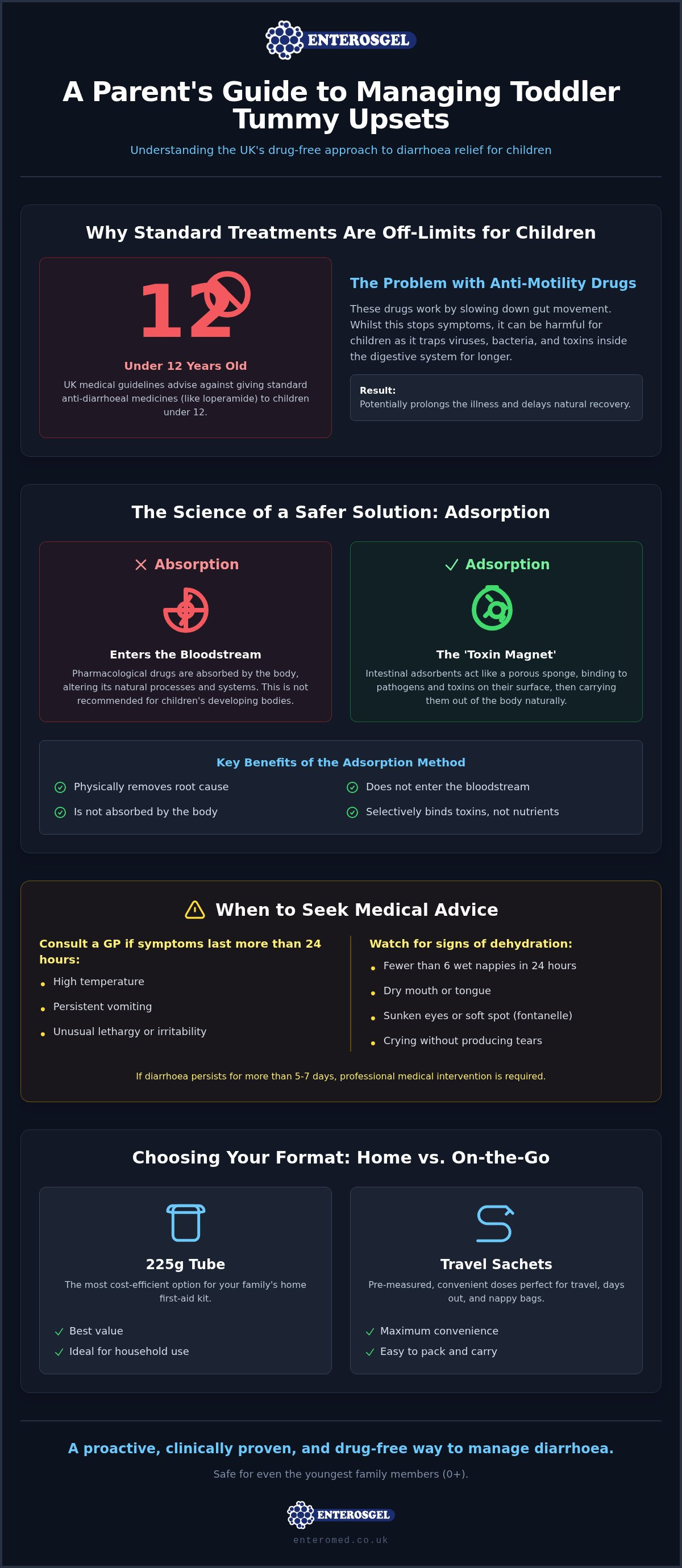
UK healthcare professionals explicitly advise against giving traditional anti-diarrhoeal drugs, such as loperamide, to children under 12. These are known as anti-motility drugs. They work by slowing down the movement of the gut, which effectively "freezes" the bowel. Whilst this stops the symptoms, it can be counterproductive for toddlers. It traps the viruses or bacteria inside the digestive tract for longer, potentially prolonging the illness.
Physical medical devices offer a safer alternative. They don't enter the bloodstream and don't affect the nervous system or gut motility. This drug-free toddler diarrhoea relief respects the child's developing digestive system by simply binding to toxins and carrying them out of the body naturally through the stool.
When to Seek Medical Advice
While most cases of toddler diarrhoea can be managed safely at home, monitoring for red flags is essential. Parents should follow the "24-hour rule" for certain symptoms. If a child has a high temperature or persistent vomiting that lasts more than 24 hours, a GP consultation is necessary. You should also seek advice if you notice significant changes in your child's behaviour, such as unusual lethargy or irritability.
Dehydration is the most serious risk for infants. Keep a close eye on the following signs:
- Fewer than six wet nappies in a 24-hour period.
- A dry mouth or tongue.
- Sunken eyes or a sunken soft spot (fontanelle) on the head.
- Crying without producing tears.
If these signs appear, or if diarrhoea persists for more than five to seven days, professional medical intervention is required to ensure the child remains stable and hydrated.
Adsorption vs Absorption: The Science of the 'Toxin Magnet'
When a child suffers from a stomach upset, the conventional medical advice in the UK focuses heavily on oral rehydration therapy to prevent fluid loss. Whilst hydration is critical, it doesn't address the pathogens currently irritating the intestinal lining. Most parents are told there's "no medicine" suitable for young children, but this typically refers to pharmacological drugs that enter the bloodstream. There's a significant clinical distinction between those absorbed drugs and physical medical devices that use adsorption to provide drug-free toddler diarrhoea relief.
Adsorption is a physical trapping mechanism for gut irritants. Unlike absorption, where a substance is taken into the body's systems, adsorption involves molecules sticking to the surface of a solid or liquid. Enterosgel acts as a "toxin magnet" because of its unique molecular structure. It travels through the digestive tract, binds to harmful substances like viruses and bacteria, and carries them out of the body naturally. Because the gel itself is non-systemic, it isn't absorbed by the body, making it a high-performance yet gentle solution for sensitive young tummies.
How the Adsorption Process Works
Visualise the gel as a microscopic, porous sponge. Its structure is specifically designed to identify and trap medium-weight molecules, which include the most common pathogens and toxins responsible for diarrhoea. Crucially, this porous design is selective. It doesn't strip away essential nutrients, vitamins, or water that the child needs for recovery. By physically removing the root cause of the irritation, the gel helps to shorten the duration of the episode without interfering with the natural gut flora or the body's metabolic processes.
Safety Profile for Babies and Toddlers
Safety is the primary concern for any parent managing a child's health. Enterosgel is specifically formulated to be as pure as possible, ensuring it's appropriate for even the most vulnerable groups. The gel is completely free from common allergens, containing no gluten, sugar, lactose, or preservatives. This purity makes it suitable for newborns in the Kids 0+ range and for children who may have multiple food allergies or intolerances.
One of the biggest hurdles in paediatric care is administration. Many remedies have a medicinal taste that a fussy toddler will reject. This gel is entirely tasteless and odourless, which makes it much easier to organise and administer during a stressful illness. If you're looking for a reliable addition to your home medicine cabinet, you can explore the children’s diarrhoea collection to find the right format for your family. This drug-free toddler diarrhoea relief offers a stable, clinical solution that prioritises both efficacy and the gentle protection of your child’s developing system.
Choosing Your Format: Tubes vs Sachets for Family Life
Preparation is the foundation of effective home care. When managing a sudden illness, the format of your medical supplies can be just as important as the treatment itself. UK parents often find that having the right tools on hand prevents the panic that sets in during a midnight pharmacy run. This approach aligns with the NICE guidelines on childhood gastroenteritis, which prioritise stable, non-invasive management over aggressive pharmacological intervention. Selecting the most appropriate format ensures you can provide drug-free toddler diarrhoea relief the moment symptoms appear.
The 225g Tube: The Home Essential
The Enterosgel 225g Tube is the primary staple for any family medicine cabinet. It is designed for longevity and versatility, making it the most cost-effective option for a household. This larger volume is particularly useful when managing longer episodes of diarrhoea or when a stomach bug spreads amongst multiple children. It allows for precise, age-appropriate dosing; you simply measure the required amount onto a spoon based on the child's weight and age.
Beyond acute upsets, the tube format is also ideal for families dealing with chronic digestive sensitivities. It provides a reliable source of irritable bowel syndrome relief UK families can depend on for long-term gut health management. Having a high-capacity tube ensures you never run out mid-treatment, providing a sense of clinical stability during a stressful week.
Sachet Packs: Convenience on the Go
Nursery bags and holiday suitcases require a different level of portability. Enterosgel Sachets (Pack of 10) are specifically designed for these scenarios. Each sachet contains a pre-measured 15g dose, which eliminates the need for measuring spoons whilst you are away from home. This pre-measured format ensures an accurate dosage every time, reducing the risk of error during a mess-free administration at a motorway service station or in a hotel room.
Holiday readiness is about more than just packing sun cream. A change in diet or local water can often trigger "traveller's diarrhoea" in young children. Including sachets in your travel first-aid kit means you have immediate access to drug-free toddler diarrhoea relief without needing to navigate foreign pharmacies. They are lightweight, discreet, and have a robust shelf life, making them an essential component of any family travel plan for 2026.
Maintaining your supplies is a simple process. Both the tubes and sachets should be stored at room temperature, away from direct sunlight. By keeping a tube at home for daily security and a pack of sachets in your change bag for emergencies, you ensure your child’s gut health is protected regardless of where you are.
How to Administer Enterosgel to Babies and Toddlers
Administering treatment to an unwell child is often a source of significant stress for parents. When your toddler is already distressed, the last thing you want is a battle over a medicinal-tasting liquid. Because Enterosgel is completely tasteless and odourless, providing drug-free toddler diarrhoea relief becomes a much simpler, more clinical process. Success depends on correct timing and appropriate mixing techniques to ensure the gel can work effectively within the gut.
A critical rule for administration is the timing interval. You should give the gel 1 to 2 hours before or after your child takes any other oral medications or eats a meal. This gap prevents the gel from binding to the active ingredients in other medicines or the essential nutrients in their food. By maintaining this window, you ensure both the gel and their nutrition are fully effective.
Dosing for Infants (0-1 Years)
For the youngest family members, the Enterosgel Kids 0+ range is designed for gentle administration. You can easily blend the required dose with a small amount of breast milk, formula, or water. For an infant under one year, the standard dose is approximately 2.5g (half a teaspoon) mixed with 5 to 10ml of liquid. This mixture can be given via a plastic spoon or a standard oral syringe for ease. During acute episodes, this dose can be repeated up to six times a day; however, it's always advisable to consult your GP for children under three.
Tips for Toddlers and Older Children
As children grow, their dosing requirements increase to approximately 5g (one teaspoon) per dose. The primary advantage of a tasteless gel is that it can be subtly incorporated into bland, familiar foods if your child is reluctant to take it from a spoon. Mixing the gel into a small portion of plain yoghurt or a fruit purée is an effective strategy that doesn't alter the flavour or texture of their snack.
Encouraging a sense of independence can also reduce resistance. Allowing a toddler to choose which "recovery drink" (water or very diluted juice) they use to wash down the gel can make the experience feel less like a clinical requirement and more like a normal part of their routine. If you are ready to stock your home cabinet with these essentials, you can find the right format in the children’s diarrhoea collection today. Providing relief doesn't have to be a struggle; with the right approach, you can manage your child's symptoms calmly and effectively.
The Children’s Diarrhoea Collection: Finding Your Best Value
Effective management of paediatric digestive health requires a combination of clinical efficacy and practical accessibility. For parents navigating the challenges of an unwell household, having a reliable source of drug-free toddler diarrhoea relief on hand is essential. The Children’s Diarrhoea collection is curated to meet these needs, offering solutions that range from single-use starter tubes to comprehensive family bundles.
A significant portion of this collection focuses on the Enterosgel Kids 0+ range. This specific formulation is tailored for the most vulnerable family members, providing a high-performance solution that is safe from birth. Because it is non-systemic and free from preservatives, it has become a trusted choice amongst UK healthcare specialists and parents alike. It offers a gentle yet powerful way to address the root cause of tummy upsets without the risks associated with pharmacological drugs.
Standout Value Options for Families
Choosing the right format often depends on your family's specific circumstances, whether you're managing an acute episode at home or preparing for a trip abroad. The following options represent the best value within the current range:
- ENTEROSGEL® Relief for Children 0+ (£18.9): This is the ideal starter tube for many households. It provides enough volume to manage a standard episode of diarrhoea whilst ensuring you have a clinical-grade adsorbent ready in your medicine cabinet.
- The 4-Pack Bundle (£59.9): For larger families or those managing chronic conditions, the 4-pack bundle offers the highest level of value. Bulk buying ensures a lower cost per dose and guarantees that you're never caught unprepared.
- Multi-Pack Convenience: Stocking up is particularly important for travellers diarrhoea prevention. Having multiple tubes or sachet packs allows you to maintain a consistent treatment protocol even during long-haul family holidays.
Ready to Protect Your Family’s Gut Health?
By opting for a physical intestinal adsorbent, you're choosing a treatment path that respects your child's natural development. Enterosgel doesn't mask symptoms; it actively removes the pathogens and toxins that cause distress. This drug-free toddler diarrhoea relief provides a stable, evidence-led alternative to the "wait and see" approach often suggested when traditional medicines are prohibited.
Ensuring you have these supplies ready before an illness strikes is the most effective way to reduce stress for both you and your child. We invite you to browse the full Children’s Diarrhoea collection today to find the solution that best fits your family’s lifestyle and budget for 2026.
Securing Your Family’s Digestive Health for 2026
Managing a toddler’s tummy upset requires a solution that is both clinically effective and exceptionally gentle. By choosing a physical intestinal adsorbent, you move beyond simply waiting for symptoms to pass. This approach provides drug-free toddler diarrhoea relief by binding to harmful pathogens and removing them from the body without interfering with the bloodstream or natural gut motility. Whether you choose the cost-effective 225g tube for your home medicine cabinet or pre-measured sachets for family travel, you are equipped with a "toxin magnet" that respects your child’s developing system.
Enterosgel is a clinically proven medical device that remains safe for infants from birth (0+). It is entirely free from sugar, gluten, and preservatives, ensuring suitability for children with various sensitivities. To ensure you are prepared for the next unexpected upset, you can shop the Children’s Diarrhoea Collection today. With free next-day UK delivery available, professional-grade protection is always within reach. You can feel confident and empowered as you guide your little one back to full health.
Frequently Asked Questions
Is Enterosgel safe for newborn babies with acute diarrhoea?
Yes, Enterosgel is safe for newborns from birth (0+) as it is a drug-free medical device that works physically within the gut. It isn't absorbed into the bloodstream, which makes it suitable for infants with acute diarrhoea. However, for children under the age of three, you should always consult a GP before starting treatment. This ensures that any underlying causes are professionally reviewed whilst you manage the symptoms at home with the gel.
How quickly will my toddler see relief after the first dose?
Most parents notice an improvement in stool consistency and frequency within the first 24 to 48 hours of administration. Whilst every child’s recovery is unique, Enterosgel is clinically proven to shorten the duration of acute diarrhoea episodes. By physically removing the viruses and toxins that cause the upset, the gel allows the intestinal lining to begin its natural healing process more rapidly than if the infection were left to clear entirely on its own.
Can I give Enterosgel alongside rehydration salts like Dioralyte?
You can safely give Enterosgel alongside oral rehydration solutions like Dioralyte to manage your child’s health. These treatments serve different purposes: rehydration salts replace lost fluids and electrolytes, whilst the gel removes the pathogens causing the fluid loss. This combined approach provides effective drug-free toddler diarrhoea relief. Just remember to maintain a one to two-hour gap between giving the gel and any other oral medications to ensure maximum efficacy for both treatments.
Does Enterosgel have a flavour that might put my child off?
No, the gel is completely tasteless and odourless, which is a significant advantage when treating a reluctant or fussy toddler. It doesn't contain any artificial flavours, sweeteners, or sugars that might further irritate a sensitive digestive system. Its neutral profile means children often don't realise they are taking it, especially when it's mixed into a small amount of water or a bland food they already enjoy, such as plain yoghurt or fruit purée.
How many days should I continue the treatment for my child?
Treatment typically continues for three to five days during an acute episode of diarrhoea. You should continue to administer the doses until the child's bowel movements return to their normal frequency and consistency. If the symptoms persist beyond seven days or if you notice any red flag signs like blood in the stool or extreme lethargy, you must seek immediate medical advice from a healthcare professional or contact NHS 111 for further guidance.
Can Enterosgel help with diarrhoea caused by a course of antibiotics?
Yes, the gel is highly effective for managing loose stools caused by a course of antibiotics. Antibiotics often disrupt the natural balance of gut bacteria, leading to the production of toxins that irritate the bowel. The gel acts as a physical adsorbent, binding to these irritating substances and removing them from the digestive tract. This helps to stabilise the gut environment without interfering with the action of the antibiotic medication itself, provided the timing gap is respected.
What is the difference between Enterosgel and standard anti-diarrhoeal drugs?
The primary difference lies in the mechanism of action. Standard anti-diarrhoeal drugs are pharmacological; they enter the bloodstream and slow down the movement of the gut. In contrast, Enterosgel is a physical medical device. It isn't absorbed by the body and doesn't affect gut motility. Instead, it works like a magnet to trap pathogens on its surface. This makes it a safer, drug-free option for children whose bodies are still developing.
Can I mix Enterosgel with my toddler’s favourite juice or food?
You can mix the gel with water or bland foods like fruit purée and yoghurt to make administration easier. Whilst mixing with juice is possible, it is often better to use water or milk to avoid the high sugar content found in many fruit juices, which can sometimes worsen diarrhoea symptoms. The gel’s ability to blend seamlessly into familiar textures makes it a reliable choice for achieving drug-free toddler diarrhoea relief without causing additional distress.
Share this article