

Fast-Acting IBS Relief: A Clinical Guide to Managing IBS-D Symptoms
In a major NHS randomised controlled trial involving 440 patients, 76% of participants achieved significant symptom relief using a targeted intestinal adsorbent. For those living with IBS-D, the daily reality is often defined by sudden bowel urgency and chronic abdominal pain. You likely know the exhausting cycle of constant anxiety whilst out, always scanning for the nearest toilet and wondering when the next flare-up will strike. It is a disruptive condition that affects your confidence and your physical well-being.
Finding fast acting IBS relief does not have to mean relying on pharmaceutical drugs that simply slow down your gut motility. You can manage your symptoms more effectively by targeting the root cause of the irritation. This clinical guide explains how a drug-free medical device works physically within the gut to capture the bacterial toxins that trigger leaky gut and inflammation. You will discover how this approach reduces the frequency of loose stools and provides a predictable routine for long-term intestinal stability. We will examine the evidence behind this treatment and how a structured 30-day course can help you finally regain control over your digestive health.
Key Takeaways
- Identify why capturing bacterial toxins is more effective for managing the root cause of symptoms than simply slowing the bowel with traditional pharmaceutical drugs.
- Learn how to achieve fast acting IBS relief during a flare-up by using a physical medical device that targets gut irritants directly.
- Review the clinical evidence from the 440-patient NHS trial which demonstrates a 76% responder rate for symptoms like urgency and abdominal pain.
- Adopt a structured management plan involving 30-day treatment courses followed by short breaks to support ongoing intestinal stability.
- Understand the safety benefits of drug-free, non-systemic treatments that are safe for children under 12, providing a gentle option for the entire family.
Understanding the Need for Fast-Acting IBS Relief
IBS-D, or Irritable Bowel Syndrome with predominant diarrhoea, creates a challenging environment for the digestive system. It is defined by a cluster of symptoms, most notably sudden bowel urgency and recurrent abdominal pain. For many, the physical discomfort is compounded by the psychological stress of being far from a toilet. This unpredictability makes fast acting IBS relief a primary requirement during a flare-up. When symptoms strike, the priority is to regain control and restore intestinal stability as quickly as possible.
Most patients are familiar with systemic pharmaceutical drugs, which are absorbed into the bloodstream to affect the body's processes. However, a modern alternative exists in the form of non-systemic medical devices. These treatments work physically within the gut rather than through chemical absorption. The goal of this approach is not just to stop symptoms, but to address the underlying irritation that causes the gut to overreact in the first place.
Common Triggers of IBS-D Flare-Ups
Sudden bowel movements are often triggered by an exaggerated gastrocolic reflex. This is a natural signal that tells the colon to empty when food enters the stomach. In those with IBS-D, this reflex is often hypersensitive. This sensitivity can be worsened by the presence of inflammatory mediators and bacterial toxins. These toxins, produced by pathogenic bacteria, irritate the gut lining and contribute to leaky gut. Whilst emotional stress and specific food triggers like high-FODMAP ingredients play a role, the physical presence of these toxins is a major driver of gut irritation.
Why Traditional Anti-Diarrhoeals May Not Be Enough
Traditional pharmaceutical medicines, such as loperamide, work primarily by slowing gut motility. They essentially put the "brakes" on the digestive system. Whilst this can stop diarrhoea, it does not remove the toxins or irritants causing the problem. This can lead to several issues:
- Rebound constipation: Slowing the gut too much can cause the opposite problem, leading to further discomfort.
- Lingering irritants: If the underlying bacterial toxins remain in the gut, the irritation continues even if the bowel movements have slowed.
- Systemic side effects: Some drugs can cause dizziness or fatigue because they are absorbed into the body.
For those with sensitive digestive systems, a drug-free treatment that physically captures irritants is often a more gentle and effective choice. By removing the cause of the irritation, you can achieve relief without the risk of intestinal atony or systemic complications.
How Intestinal Adsorbents Work to Relieve IBS
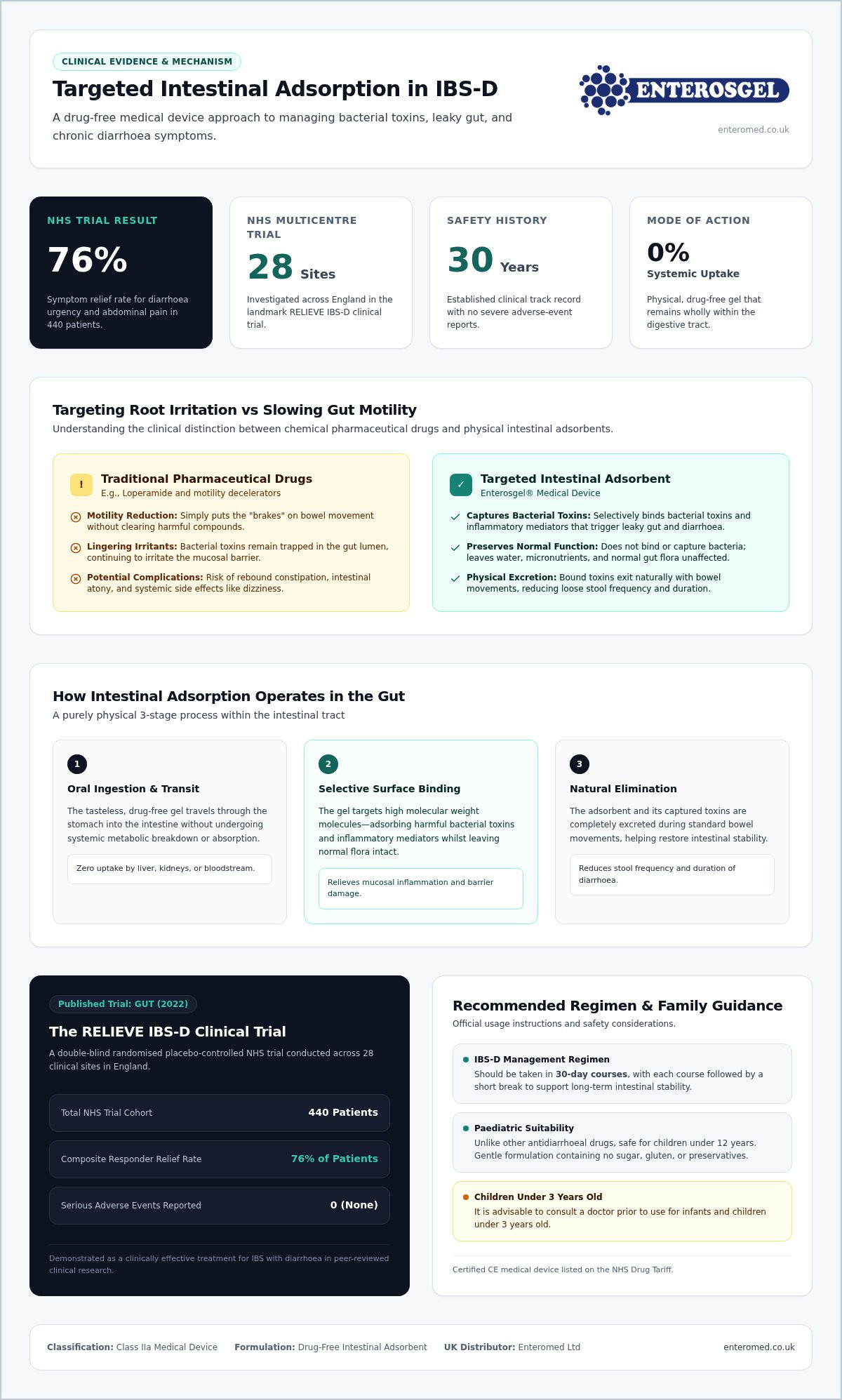
An intestinal adsorbent is a regulated substance that binds harmful materials within the digestive tract for physical removal from the body. Unlike pharmaceutical medicines, these products are not absorbed into the bloodstream. This non-systemic action is a modern standard for gut health treatment in the UK, offering a way to achieve fast acting IBS relief without affecting the liver or kidneys. Because the gel remains entirely within the gut, it doesn't cause the systemic side effects often associated with traditional drugs.
The mechanism is purely physical. Adsorption differs from absorption; whilst absorption involves a substance being soaked up, adsorption involves molecules sticking to the surface of the adsorbent. The gel's selective structure targets high molecular weight molecules, including inflammatory mediators and toxins, whilst leaving essential nutrients and water alone. This selective binding ensures that the body's natural processes aren't disrupted during treatment.
Capturing Bacterial Toxins and Irritants
A critical distinction in this treatment is that the gel does not bind or capture bacteria. Instead, its function is capturing bacterial toxins from pathogenic bacteria which cause leaky gut and diarrhoea. These toxins are the primary irritants that damage the intestinal barrier and trigger the release of fluids that lead to urgency. By physically removing these irritants, the process reduces the duration of diarrhoea and the number of loose stools. This allows the intestinal lining to recover naturally from the injury caused by pathogenic activity.
The Clinical Advantage of a Drug-Free Gel
Using a tasteless, drug-free gel provides a significant safety advantage for families. It contains no sugar, gluten, or preservatives, making it a gentle option for sensitive systems. Unlike other antidiarrhoeal drugs, Enterosgel is safe for children under 12 years. It offers a reliable alternative for parents managing acute symptoms in their households. However, for children under 3 years old, it is advisable to consult a doctor prior to use. The gel and its bound toxins leave the body naturally with a normal bowel movement, ensuring that no residue remains in the system. For those who require consistent support for chronic symptoms, the Enterosgel 225g tube provides a clinically proven solution for home use.
Practical Steps for Managing an IBS-D Flare-Up
Managing an IBS-D flare-up requires a swift and methodical response. When you feel the first signs of abdominal pain or sudden urgency, immediate action can prevent a minor irritation from becoming a prolonged episode. Taking an intestinal adsorbent at the first indication of distress allows the gel to begin capturing bacterial toxins before they further irritate the gut lining. This proactive approach is essential for achieving fast acting IBS relief and reducing the overall number of loose stools.
During an acute episode, hydration is a priority. Diarrhoea causes significant fluid and electrolyte loss, which can lead to fatigue and worsen gut motility issues. Drinking small, frequent sips of water or using an oral rehydration solution supports the body whilst the adsorbent works physically to restore intestinal stability. Once the acute symptoms subside, you can transition from emergency relief to a structured management plan.
Your IBS-D Emergency Toolkit
The psychological anxiety of being away from a toilet can often trigger the gastrocolic reflex. Having a reliable backup plan is vital for regaining confidence when travelling or attending social events. Enterosgel Sachets provide portable, on-the-go protection that fits easily into a bag or pocket. This drug-free gel settles an upset stomach by physically binding the bacterial toxins that cause leaky gut. Having a clinical solution ready at any moment helps manage the mental stress of bowel urgency.
The 30-Day IBS Management Course
Whilst acute relief is necessary for flare-ups, chronic IBS-D requires a more consistent approach to achieve long-term intestinal stability. For the treatment of IBS-D symptoms and daily usage, the product should be taken in 30-day courses, with each course followed by a short break. This rhythm allows the gut to maintain a balanced environment whilst providing periods of rest between treatments. Tracking improvements in bowel movement frequency and quality of life during these courses helps you establish a predictable and effective management routine. To begin your journey toward more predictable gut health, you can order the Enterosgel 225g tube for convenient home use.
Enterosgel: Clinically Proven Relief for UK Patients
Enterosgel is the leading intestinal adsorbent in the UK, standing as a high-performance healthcare tool for those seeking fast acting IBS relief. It's a CE-certified medical device with a 30-year track record of safety and efficacy. This status is reinforced by the Red Dot Award for design and its widespread acceptance by official health bodies across the country. For the everyday consumer, this clinical background provides a level of certainty that typical retail treatments cannot match.
The credibility of this drug-free solution comes from its physical mode of action. It isn't a pharmaceutical medicine; it doesn't enter the bloodstream or interfere with the liver. Instead, it works entirely within the gut to restore intestinal stability by capturing the irritants that cause distress. This methodical approach ensures that the body's natural rhythms are supported rather than suppressed.
Evidence from the NHS Randomised Controlled Trial
The RELIEVE IBS-D trial, published in the journal GUT in 2022, provides the most significant clinical evidence for this treatment. Conducted across 28 NHS sites with 440 adult patients, the study showed a statistically significant composite responder rate of 37.4% compared to 24.3% for the placebo group. This means participants saw simultaneous improvements in both stool consistency and abdominal pain. Specific data points from the trial further highlight its performance:
- Normalisation of stool consistency was achieved in 48.5% of subjects.
- Significant reduction in abdominal pain was recorded in 53.3% of patients.
- No serious treatment-related adverse events occurred during the study.
These figures demonstrate that the majority of sufferers can expect a meaningful improvement in their quality of life. Because the gel targets the bacterial toxins that cause leaky gut, it addresses the underlying triggers of a flare-up rather than just masking the symptoms.
Choosing the Right Format for Your Lifestyle
Maintaining a consistent routine is key to managing chronic symptoms. The Enterosgel 225g Tube is the standard for home use, providing enough gel for your 30-day courses. If you're new to the physical mechanism of adsorption, the IBS Starter Kit offers a detailed starting point. We also encourage healthcare specialists and patients to examine the latest research to see how this drug-free solution continues to set the standard for intestinal stability.
Restoring Your Digestive Confidence
Managing IBS-D shouldn't be a constant struggle against urgency and discomfort. By shifting your focus from simply slowing the bowel to physically capturing the bacterial toxins that cause irritation, you can achieve a more stable and predictable routine. The clinical evidence is clear. In a major trial conducted across 28 NHS sites, 76% of patients reported relief from their symptoms using this drug-free, non-systemic approach. This treatment doesn't enter the bloodstream, making it a safe choice for long-term management and for families with children under 12.
Adopting a proactive management plan helps you move past the anxiety of being near a toilet whilst out. Whether you are dealing with a sudden flare-up or seeking a consistent 30-day treatment course, these intestinal adsorbents provide a reliable foundation for gut health. You now have the tools and clinical insights to manage your condition with confidence and precision. It's time to prioritise your well-being with a solution grounded in three decades of research. You can shop the Enterosgel range for fast acting IBS relief to start your journey toward lasting intestinal stability. A more comfortable and active lifestyle is within your reach.
Frequently Asked Questions
Is Enterosgel safe for children under 12?
Yes, it is safe for children under 12 years, offering a drug-free option without sugar, gluten, or preservatives. Unlike many pharmaceutical anti-diarrhoeals, it is appropriate for use from birth. However, for children under 3 years old, it is advisable to consult a doctor prior to use. It works physically to capture bacterial toxins, reducing the duration of diarrhoea and the number of loose stools whilst remaining gentle on a child's developing digestive system.
How quickly can I expect relief from IBS-D symptoms?
Many users find fast acting IBS relief starting from the first dose as the gel moves through the digestive tract. By capturing the irritants that trigger bowel urgency, it helps settle the gut's response to food and stress. Because it is non-systemic and works purely through physical adsorption, it begins its function as soon as it enters the gut. This provides a reliable way to manage acute flare-ups and restore intestinal stability.
Can I take Enterosgel alongside other medications?
You can use this clinical gel alongside most other medications, provided you manage the timing correctly. Because it is an intestinal adsorbent, it may bind other oral medicines if taken at the same time. To ensure your other treatments remain effective, you should take the gel at least 1 to 2 hours before or after any other oral medication. If you're unsure about specific drug-to-drug interactions, consult your healthcare professional.
Do I need a prescription for Enterosgel in the UK?
You do not require a prescription to buy Enterosgel in the UK, as it is a CE-marked medical device available over-the-counter. However, it is officially listed on the NHS Drug Tariff under Part IXA. This means it can be prescribed by GPs and registered prescribers on an NHS FP10 prescription for patients managing chronic conditions. This dual access ensures that clinical-grade relief is available both through private purchase and the health service.
How long should a course of treatment for IBS last?
For the effective management of chronic symptoms, the product should be taken in 30-day courses, with each course followed by a short break. This specific schedule follows the official Instructions for Use to ensure the best outcomes for intestinal stability. Following this routine helps you move away from the unpredictability of flare-ups toward a more controlled digestive environment. It is a methodical way to integrate clinical gut protection into your daily life.
Does Enterosgel capture "good" gut bacteria?
Enterosgel does not bind or capture "good" gut bacteria. Its physical structure is engineered to selectively target high molecular weight molecules, specifically the bacterial toxins from pathogenic bacteria which cause leaky gut. This ensures that the essential flora needed for healthy digestion remains undisturbed. By removing only the harmful irritants, the gel supports the natural balance of your microbiome whilst providing fast acting IBS relief and reducing gut inflammation.
Share this article