

Food Poisoning Toxins: A Clinical Recovery Guide
What if the standard medical advice to simply "wait it out" is actually prolonging your physical distress? Persistent diarrhoea, sharp abdominal cramping, and the constant fear of dehydration can leave you feeling completely out of control whilst you wait for a gastric bug to clear your system. It's a debilitating experience that often feels like a passive battle against your own digestive tract. Most people assume that recovery is a slow, natural process that cannot be hurried, yet this approach leaves the underlying cause of your symptoms unaddressed for longer than necessary.
This clinical recovery guide explains exactly how to get rid of food poisoning toxins by focusing on physical removal rather than just masking the symptoms. You'll discover scientific methods for physically trapping and eliminating harmful pathogens from your gut to accelerate your recovery time. We'll explore how a safe, drug-free intestinal adsorbent can act as a sophisticated physical trap to clear the digestive system. By understanding the mechanism of toxin removal, you can reduce abdominal pain and regain control over your health with confidence and precision.
Key Takeaways
- Identify how bacterial endotoxins irritate the intestinal lining and why physically removing these substances is the most direct path to reducing inflammation.
- Understand the clinical science of adsorption, a process that uses a "molecular sponge" effect to trap pathogens on a surface rather than absorbing them into the body.
- Follow a structured protocol on how to get rid of food poisoning toxins by combining immediate electrolyte rehydration with active toxin clearance.
- Discover why a drug-free, non-systemic medical device offers a safer recovery route for vulnerable groups, including children and those with sensitive digestive systems.
Understanding Food Poisoning Toxins and the Body’s Response
Food poisoning is more than a simple gastric "bug." It's a physiological reaction to harmful substances produced by bacteria, viruses, or parasites amongst contaminated food. These substances, known as toxins, act as chemical irritants within the digestive tract. When endotoxins come into contact with the intestinal lining, they trigger an immediate inflammatory response. This inflammation causes the gut to contract rapidly, leading to the sudden urgency and cramping that define the condition.
Whilst diarrhoea is the body’s natural defence mechanism, a frantic attempt to "flush" the system, it's also the primary cause of dehydration and severe physical distress. The dilemma lies in the fact that whilst the body is purging, the toxins remaining in the tract continue to cause damage. Learning how to get rid of food poisoning toxins effectively involves more than just waiting for the body to finish its natural, often exhausting, cycle.
Common Pathogens and Their Toxic Byproducts
In the UK, the most common culprits include Salmonella, E. coli, and Norovirus. These pathogens release specific toxins that signal the gut to dump water and electrolytes into the stool. It's a high-speed exit strategy. However, these toxins are remarkably resilient. They can linger in the digestive system and continue to cause inflammation even after the initial bacteria have been neutralised or passed through the system. This persistence is why symptoms often last much longer than the initial infection, a topic explored in depth through clinical research into gastrointestinal pathogens.
Why "Stopping" the Gut Can Be Counterproductive
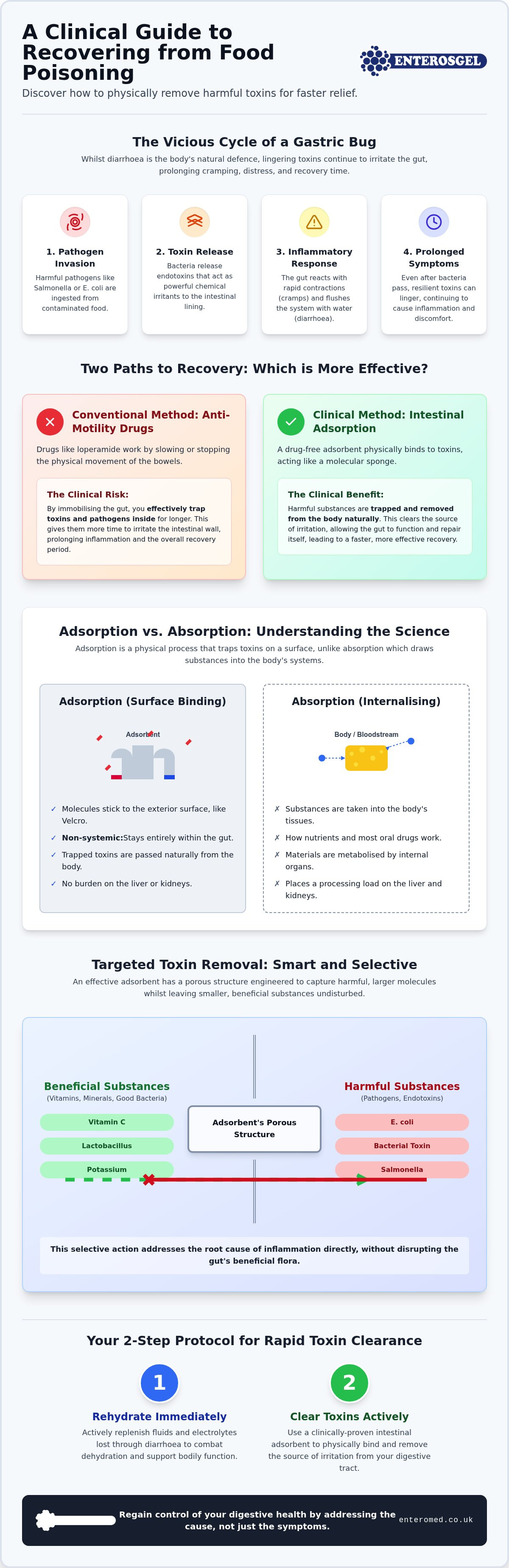
Many people reach for anti-motility drugs, such as loperamide, to stop diarrhoea quickly. These products work by slowing down the physical movement of the bowels. Whilst this provides temporary relief from the urgency, it creates a significant clinical risk. By immobilising the gut, you effectively trap the toxins and pathogens inside the digestive tract for longer. This gives them more time to irritate the intestinal wall and prolongs the overall recovery period. A more sophisticated approach focuses on how to get rid of food poisoning toxins by binding them physically, allowing the gut to continue its natural function without the inflammatory burden.
Adsorption: The Physical Science of Toxin Removal
Adsorption is a physical process that differs fundamentally from the chemical interactions of traditional medicines. It occurs when molecules, such as bacterial endotoxins, become trapped on the surface of a specific material. Think of it as a molecular sponge or a high-performance trap. By introducing a material with a high surface area into the digestive tract, we can actively capture the irritants that cause inflammation. This provides a direct answer to the question of how to get rid of food poisoning toxins without disrupting the body's delicate internal chemistry.
Unlike substances that are absorbed into the bloodstream, intestinal adsorbents remain entirely within the gut. They travel through the digestive system, binding to harmful pathogens and their toxic byproducts along the way. Once the "toxic load" is captured, the adsorbent and the trapped toxins are excreted naturally during a bowel movement. This non-systemic approach ensures that the liver and kidneys are not burdened with processing additional drugs whilst you are already unwell.
Adsorption vs. Absorption: What is the Difference?
The distinction between these two terms is critical for understanding clinical recovery. Absorption is the process of taking substances into the body, much like how your gut absorbs nutrients from food or how the bloodstream carries medication to different organs. Adsorption, conversely, is a surface-level phenomenon. It works like a magnet or a piece of Velcro. Harmful molecules stick to the exterior of the adsorbent material rather than entering your cells. You can learn more about how adsorption heals the gut by reviewing the clinical data behind this physical mechanism.
The Mechanism of Intestinal Adsorbents
The efficacy of an intestinal adsorbent relies on its porous structure. A sophisticated gel creates a vast network of pores that are specifically sized to target medium and large-sized molecules, such as those produced by E. coli or Salmonella. This selectivity is vital. It allows the gel to capture harmful pathogens whilst leaving smaller, beneficial gut flora undisturbed. It is a highly effective strategy for how to get rid of food poisoning toxins because it addresses the cause of the inflammation directly. By reducing the concentration of toxins on the intestinal mucosa, the adsorbent allows the gut wall to begin repairing itself. For those seeking immediate support, the Enterosgel 225g Tube offers a clinically proven way to facilitate this physical clearance.
Step-by-Step Protocol for Rapid Toxin Clearance
Recovery from gastric distress requires a methodical approach that prioritises both stabilisation and active clearance. Following a structured protocol ensures that you aren't just waiting for the condition to pass, but are actively supporting your body’s return to balance. This clinical sequence focuses on how to get rid of food poisoning toxins whilst protecting your system from the secondary effects of the infection.
- Step 1: Immediate Hydration. Focus on re-establishing electrolyte balance. Whilst the body is purging, it loses vital minerals alongside water.
- Step 2: Introduce an Intestinal Adsorbent. Start binding toxins physically to reduce inflammation. This active step addresses the underlying cause of the irritation.
- Step 3: Rest and Gut Support. Give your digestive system time to settle. Avoid known irritants such as caffeine, alcohol, and fatty foods that can trigger further urgency.
- Step 4: Gradual Reintroduction. Move slowly from clear fluids to the BRAT diet (Bananas, Rice, Applesauce, Toast) once your appetite returns.
Hydration Strategies for Adults and Children
Effective hydration is about frequency rather than volume. Take small, frequent sips to avoid triggering further vomiting or a "flush" response from the gut. Utilising oral rehydration salts (ORS) is essential to replace lost minerals like sodium and potassium. For those looking for comprehensive guidance, understanding how to stop diarrhoea fast involves combining these hydration efforts with physical toxin clearance. For home use, keeping an Enterosgel 225g Tube in your first-aid kit ensures you can begin the binding process as soon as symptoms appear.
When to Seek Urgent Medical Attention
Whilst most cases of food poisoning resolve within a few days, certain "red flag" symptoms require a professional medical consultation. Contact your GP or call 111 in the UK if you experience a high fever, blood in your stools, or a complete inability to keep fluids down. It's particularly important to monitor infants and the elderly, as these groups are at a much higher risk of rapid dehydration. If symptoms persist beyond 48 hours without improvement, seek clinical advice to rule out more severe bacterial infections.
Why Enterosgel is the Preferred Choice for Toxin Removal
Enterosgel represents a clinical advancement in gastric care, functioning as a drug-free medical device rather than a chemical medicine. It's backed by over 30 years of clinical use in gastrointestinal health, providing a reliable foundation for those managing acute digestive distress. Because it doesn't interfere with the body's metabolism and isn't absorbed into the bloodstream, it offers a high-performance solution that aligns with the body’s natural recovery processes. It's free from sugar, gluten, and preservatives, making it suitable for even the most sensitive systems.
When considering how to get rid of food poisoning toxins, the choice of treatment must prioritise safety alongside efficacy. Enterosgel's physical mechanism of action ensures that it captures pathogens and irritants without causing systemic side effects. This makes it a preferred choice for those seeking a gentle yet authoritative approach to gut health. It provides a sense of stability when you feel most out of control.
Versatile Formats for Home and Travel
Having the right tools available is essential for managing sudden symptoms. The Enterosgel 225g Tube is an ideal addition to the family medicine cabinet, providing multiple doses for home-based recovery. For those travelling abroad, sachet packs are an essential component of a first-aid kit to combat "Delhi Belly" or other travel-related gastric issues. The gel is remarkably easy to use; you can simply mix it with water or take it directly from the sachet whilst on the move.
A Safe Option for the Whole Family
The safety profile of this medical device allows it to be used by all age groups, including infants from birth. Enterosgel Kids 0+ provides parents with a reassuring, drug-free option for toddlers and babies who may be too vulnerable for harsher treatments. It's a gentle protector for young digestive systems. If you're managing toddler bloating and gas relief, this physical approach offers comfort without systemic interference. Whilst it can be used alongside other treatments, it's important to allow a 2-hour gap between Enterosgel and other oral products to ensure their absorption isn't affected by the binding process. This structured approach provides a safe, smart way to understand how to get rid of food poisoning toxins for every family member.
Take Control of Your Digestive Recovery
Recovery from gastric distress is a methodical process that moves beyond mere symptom management. By prioritising the physical removal of pathogens, you address the underlying cause of inflammation rather than simply masking the discomfort. This clinical approach has shown that understanding how to get rid of food poisoning toxins is the most direct route to reducing abdominal pain and regaining your physical stability. By utilising a non-systemic medical device, you can clear your system whilst protecting the delicate balance of your gut flora.
Enterosgel provides a sophisticated, drug-free solution that has been clinically proven for over 30 years. It acts as a molecular trap, binding harmful substances so they can be excreted naturally without being absorbed into your bloodstream. It is safe for all ages, from infants to the elderly, and is available in convenient travel sachets for protection whilst abroad. Order Enterosgel today for fast, drug-free relief from food poisoning toxins. You don't have to wait passively for a gastric bug to pass; with the right clinical support, you can accelerate your journey back to health and comfort.
Frequently Asked Questions
How long do food poisoning toxins stay in your system?
Food poisoning toxins typically remain in your digestive tract for 24 to 72 hours, depending on the specific pathogen involved. Whilst the initial bacteria or virus may be neutralised quickly, the toxic byproducts often linger on the intestinal mucosa, prolonging inflammation and diarrhoea. Using a physical binder is an effective strategy for how to get rid of food poisoning toxins more rapidly by trapping these irritants and escorting them out of the body naturally.
Can you flush out food poisoning toxins by drinking water?
Drinking water is essential for rehydration, but it does not physically flush toxins from the intestinal lining. Water is absorbed into the bloodstream, whereas toxins often remain bound to the gut wall or trapped amongst the intestinal folds. To effectively clear the system, you require an intestinal adsorbent that remains in the gut to physically bind pathogens and toxins, ensuring they are excreted rather than simply diluted by fluid intake.
Is it better to let food poisoning run its course or take something?
Waiting for the condition to run its course is a passive approach that can lead to unnecessary distress. However, taking anti-motility drugs can be counterproductive as they trap toxins inside your body for longer. A superior clinical alternative is to use a drug-free medical device that binds toxins whilst allowing the gut to continue its natural movements. This active clearance supports a faster recovery without the risks associated with slowing down your bowel function.
How does an intestinal adsorbent help with food poisoning?
An intestinal adsorbent works through a physical process called adsorption, where it acts like a molecular sponge. It travels through the digestive tract and specifically traps medium and large-sized molecules, such as bacterial endotoxins and pathogens, on its surface. Because the adsorbent is not absorbed into your bloodstream, it safely carries these harmful substances through the system until they are excreted, significantly reducing the toxic load on your intestinal lining.
Can children use Enterosgel for food poisoning?
Yes, Enterosgel is safe for children and infants from birth. The Enterosgel Kids 0+ format is specifically designed to provide a gentle, drug-free solution for younger patients who may be more vulnerable to dehydration. Since it works physically rather than chemically and is not absorbed into the body, it doesn't interfere with a child's developing metabolism, making it a reassuring and non-systemic choice for parents managing paediatric gastric upsets.
What foods should I avoid whilst recovering from food poisoning toxins?
Whilst recovering, you should avoid foods that act as gastrointestinal irritants. This includes:
- Caffeine and alcohol, which can worsen dehydration.
- Fatty or fried foods that are difficult to process.
- Spicy dishes that further inflame the intestinal lining.
- Dairy products, as temporary lactose intolerance is common.
Sticking to the BRAT diet helps stabilise the system whilst you focus on how to get rid of food poisoning toxins.
Share this article