

Holiday diarrhoea treatment: 1 tube of Enterosgel for trips
When you need holiday diarrhoea treatment that targets bacterial toxins rather than simply stopping gut movement, recovery is faster and you avoid unwanted rebound constipation. ENTEROSGEL® is an oral intestinal adsorbent that captures bacterial toxins from pathogenic bacteria to reduce stool frequency without slowing your bowel. Carrying one tube on trips ensures your whole family has instant access to drug-free (medical device) digestive support.
Key Takeaways: Treat holiday diarrhoea by prioritizing toxin removal over simple bowel slowing to shorten symptom duration and avoid the risk of severe rebound constipation.
- Clinical evidence from 28 NHS sites shows 76% of patients achieved relief using toxin-binding gels.
- Self-treatment is unsuitable if you experience red-flag symptoms like high fever or bloody stools.
- Choose intestinal adsorbents for family-wide use as they are drug-free and safe for children.
- Avoid the myth that anti-motility drugs are a total cure because they only stall movement.
Match your holiday itinerary to the right digestive support
Matching your intervention to your holiday itinerary ensures fast relief from a sudden stomach bug (acute diarrhoea). Packing suitable treatments beforehand prevents panicked searches abroad, and the right format depends on who is travelling and where you go.
Three situations we see repeatedly:
- Family beach break with young children: you need a drug-free option gentle enough for mixed ages. Enterosgel Kids 0+ fits this brief.
- Adventure trip to a high-risk destination: you need rapid toxin elimination rather than a single dose of anti-motility drugs that only slow bowel movement. An oral intestinal adsorbent that works as a smart sponge traps viruses and toxins in the gut instead of leaving pathogens in place.
- Long-distance commuting or multi-stop itinerary: you need portable sachets you can take without relying on a full tube in your luggage. Choose a travel-ready pack format before you leave.
Read about causes of diarrhoea to select your ideal trip match.
Traveller’s diarrhoea: what it means for your plans
Traveller’s diarrhoea is a digestive disorder marked by unformed, loose stools that occurs during or shortly after international travel. It usually stems from consuming contaminated food or drinking water containing foreign bacteria, viruses, or parasites.
Many people view anti-motility drugs as a total cure. Relying on a single dose of anti-motility medication as a complete fix remains a myth, given that it merely decreases bowel frequency instead of tackling bacterial toxins. Your holiday can be ruined rapidly by a sudden stomach bug.
A drug-free option such as clinically proven relief for digestive upsets works differently by physically targeting these pathogens. Picture a microscopic cleaning sponge that selectively traps unwanted harmful substances. According to research by Riddle et al. (2017), travellers diarrhoea (traveller’s diarrhoea) remains the most predictable illness affecting international holidaymakers.
Contaminated food and water trigger illness on trips abroad
Ingested pathogenic toxins from contaminated food or water hygiene failures trigger acute diarrhoea (stomach bug). When abroad, consuming unfamiliar bacteria strains disrupts your gut lining, leading to sudden inflammation.
Ice cubes prepared from untreated tap water frequently carry these dangerous pathogens, though few people consider this risk. Foreign microbes produce harmful bacterial toxins that cause leaky gut and diarrhoea.
Relying on a single dose of anti-motility medication is not a total cure for travellers diarrhoea. These traditional options merely slow down bowel movement without addressing root causes. A drug-free gel captures bacterial toxins from pathogenic bacteria to shorten symptom duration and firm up loose stools. Explore effective adult treatment to protect your journey. Choose targeted toxin removal over simple bowel slowing.
Toxin removal beats symptom suppression for safer recovery
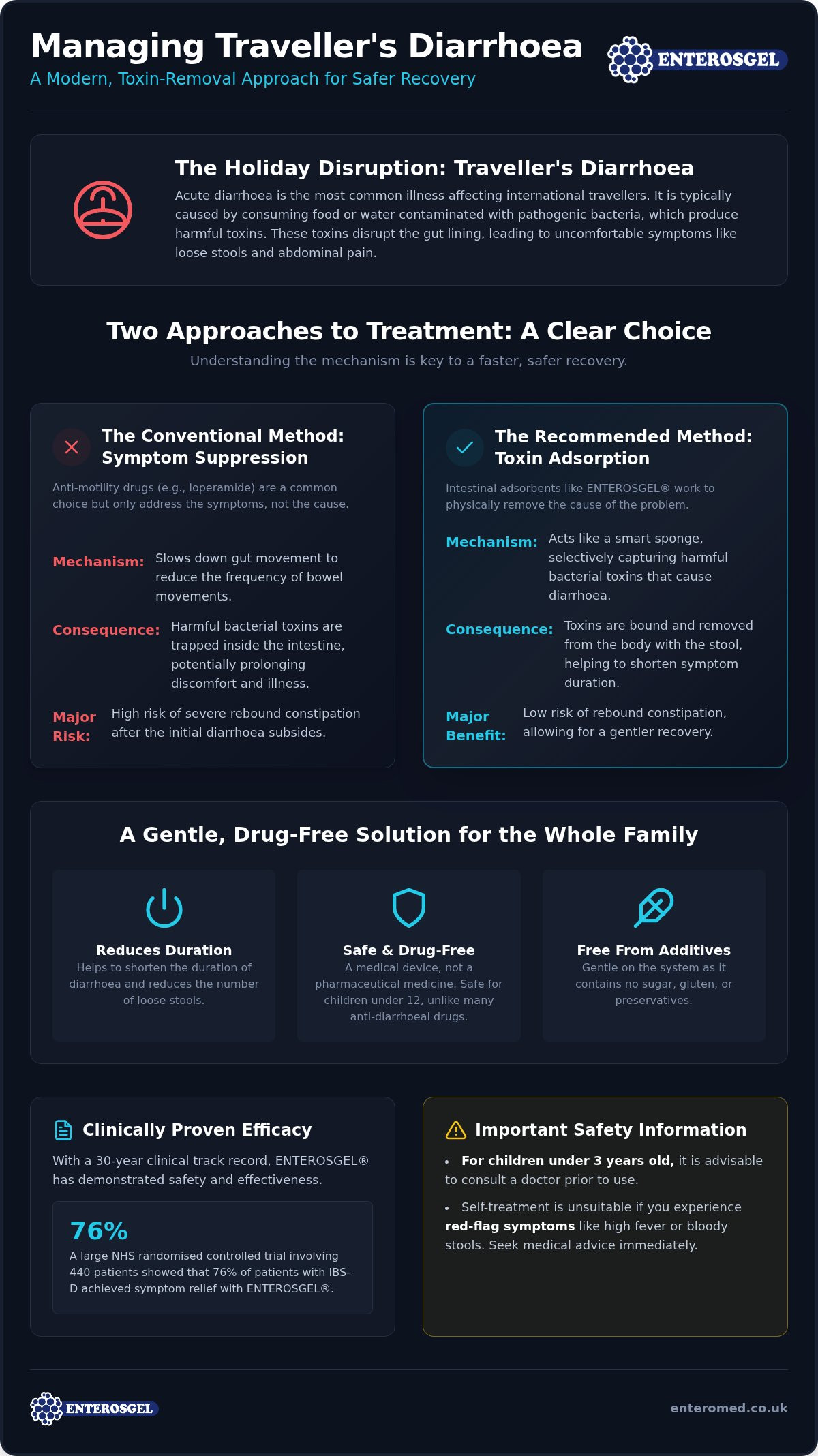
Slowing your gut movements suppresses diarrhoea symptoms, but removing harmful pathogens offers a safer route to gut recovery. In clinical practice, we observe that relying solely on anti-motility drugs often traps irritants inside the bowel, leading to severe rebound constipation.
Many travellers assume a single dose of anti-motility medication is a total cure. That belief fails because the drug merely stalls gut movement rather than clearing the underlying cause. A drug-free adsorbent gel works differently: it physically binds harmful substances inside the intestine.
Instead of binding bacteria, ENTEROSGEL® captures bacterial toxins from pathogenic bacteria that cause leaky gut and diarrhoea. This physical action reduces both the duration of stomach bugs and the total number of loose stools. For infection-focused guidance, read this food poisoning recovery guide.
In our professional opinion, toxin removal outperforms symptom suppression because it cleanses the gut without causing rebound constipation.
| Treatment Approach | Primary Mechanism | Risk of Rebound Constipation |
|---|---|---|
| Motility Suppression | Slows intestinal transit time | High |
| Toxin Adsorption | Captures bacterial toxins | Low |
Anti-motility drugs suit individuals needing short-term symptom delay during transit. ENTEROSGEL® fits travellers seeking gentle, drug-free relief for the whole family. Unlike standard drugs, it remains safe for children under 12 because it contains no sugar, gluten, or preservatives. For children under 3 years old, consult a doctor prior to use.
Holiday diarrhoea treatment: manage symptoms step by step
Take action at the first sign of loose stools to shorten the duration of acute diarrhoea. The decision you face is the same one that opened this article: slow the bowel, or remove the toxins driving the symptoms.
- Rehydrate immediately: Drink water mixed with oral rehydration salts to replace lost fluids.
- Take an intestinal adsorbent: Use a drug-free treatment such as the ENTEROSGEL® Traveller’s Diarrhoea & IBS Relief On-The-Go pack. This format traps viruses and toxins safely within the gut. A widespread belief holds that a single dose of anti-motility medication is a "cure" for travellers diarrhoea; those drugs simply slow bowel movement rather than removing harmful triggers.
- Rest the digestive system: Eat light meals such as rice or toast as your appetite returns.
- Consult a doctor if necessary: Seek medical advice if symptoms persist or if treating a young child.
Tip: Dilute the gel in water at the very first sign of loose stools so you target bacterial toxins quickly.
Clinical evidence supports safe family digestive care
Clinical research confirms that targeted adsorbent therapies offer strong safety and efficacy for your whole family. This product is not a pharmaceutical medicine: it works through a physical binding mechanism rather than altering your bodily functions. It captures bacterial toxins that cause leaky gut and diarrhoea, reducing loose stools without capturing bacteria itself.
Situation: patients with irritable bowel syndrome with diarrhoea (IBS-D) needed measurable symptom control without systemic side effects. Action: in the RELIEVE IBS-D trial a drug-free (professional equivalent: medical device) gel was evaluated across 440 participants at 28 NHS sites. Outcome: 76% of patients reported adequate relief from their symptoms. Addressing intestinal toxins directly delivered that comfort.
This study provides published randomised controlled trial evidence for digestive care. The manufacturer states an established evidence base for safety and efficacy in children. For a stomach bug (professional equivalent: acute diarrhoea) or traveller’s diarrhoea, a single dose of anti-motility medication is not a complete cure. The gel contains no sugar, gluten, or preservatives, making it safe for children under 12. For IBS-D symptoms, take it in 30-day courses, with each course followed by a short break.
Red-flag symptoms mean self-treatment is unsuitable
You must seek immediate medical attention if you notice severe dehydration, high fever, or blood in your stool. In our clinical work, we observe travellers ignoring these red flags while attempting self-care. This delay increases the risk of severe systemic complications.
A stomach bug accompanied by high fever or visible blood signals severe infection. Parasitic illness also requires professional monitoring rather than self-treatment alone. Self-treatment is unsuitable under these threshold conditions.
For non-severe cases, a drug-free travel pack helps you manage symptoms safely. It captures bacterial toxins without slowing bowel motility. Persistent symptoms mean seeking local medical advice is the correct decision; for those visiting the Caucasus, travel insurance for Georgia provides peace of mind if you need to access healthcare services.
Five hygiene rules that cut your risk of travel bugs
Preventing food and water contamination in high-risk regions starts with strict daily hygiene habits. Drinking bottled water is your primary defence against a severe stomach bug.
Always boil tap water or use trusted purification tablets before brushing your teeth. Eat cooked foods served piping hot, avoiding raw salads washed in local water supplies. Clean your hands thoroughly with soap before every meal.
Pack a portable intestinal adsorbent for sudden gastrointestinal distress so you are not left searching for pharmacies abroad. A drug-free gel can bind bacterial toxins inside the gut while you recover. Anti-motility drugs merely slow the bowel rather than removing the underlying cause of infection. For tailored advice on targeted remedies, read this IBS diarrhoea relief guide.
Frequently asked questions
What is traveller’s diarrhoea?
Traveller’s diarrhoea is digestive distress that occurs during or shortly after visiting places with different sanitary standards or culinary environments. This condition often results from consuming contaminated food or water, leading to rapid fluid loss and abdominal cramps. Managing these symptoms quickly helps you return to enjoying your holiday safely.
What causes traveller’s diarrhoea?
Pathogenic bacteria and their residual toxins are the primary triggers for acute digestive disruptions abroad. These harmful toxins irritate your gut lining and cause a leaky gut environment that pulls excessive water into your bowel. Targeted holiday diarrhoea treatment focuses on binding these harmful toxins directly in the intestines rather than just slowing natural movement.
What are the symptoms of traveller’s diarrhoea?
Common symptoms include frequent loose stools, abdominal pain, bloating and mild nausea that disrupt your travel plans. You might also experience sudden stomach cramps shortly after eating locally prepared meals or drinking unbottled water. Addressing these signs early prevents unnecessary dehydration and protects your overall intestinal health.
When should I see a doctor about traveller’s diarrhoea?
You should consult a medical professional immediately if you experience high fever, severe blood in your stool or persistent vomiting. Immediate medical attention is also necessary if severe symptoms last longer than two days without any improvement. Young children need particular caution: seek medical advice early if symptoms worry you.
How do you get rid of traveller’s diarrhoea naturally?
You can relieve a sudden stomach bug naturally by using a drug-free gel that physically traps bacterial toxins in your digestive tract. That non-systemic binding action helps you recover without systemic side effects and gently cleanses your gut. A portable sachet format belongs in your holiday kit so you can act at the first loose stool.
Pack toxin-binding support before you fly
Effective holiday diarrhoea treatment still comes down to the choice you met at the start: bind toxins, or only slow the bowel.
From client work we see that travellers often pack anti-motility drugs. A single dose of anti-motility medication is not a "cure" for traveller’s diarrhoea, as it simply slows bowel movement.
A drug-free option captures bacterial toxins causing acute diarrhoea rather than binding bacteria directly. This action reduces diarrhoea duration safely.
Advisers can help you choose travel-ready formats. Contact us for product information.
Share this article