

IBS Flare Up Relief: A Clinical Checklist for Fast, Drug-Free Comfort
The most effective way to stop a flare-up is not to mask the pain, but to physically remove the irritants causing it. Sudden bowel urgency. Painful abdominal bloating. Persistent cramps. These symptoms require more than just a temporary fix. Finding lasting IBS flare up relief involves a "trap and remove" strategy that targets the underlying cause of your distress. By focusing on the physical removal of toxins and pathogens, it's possible to manage diarrhoea whilst regaining control of your digestive health safely.
We recognise that the constant anxiety of being away from a toilet is exhausting. It's both a physical and mental burden that limits your freedom and confidence. This article provides a structured, medical-led checklist designed to offer fast, drug-free comfort through clinically proven adsorption technology. You'll learn how to physically remove gut irritants for a rapid reduction in urgency. We will also explore evidence-based lifestyle adjustments to ensure a steady, reliable return to your normal daily activities.
Key Takeaways
- Implement a 60-minute clinical checklist to stabilise your system, focusing on specific hydration strategies and the removal of immediate environmental triggers.
- Master a short-term "low-residue" dietary approach to provide your bowel with essential rest whilst avoiding common irritants like artificial sweeteners.
- Discover how intestinal adsorbents provide fast IBS flare up relief by physically trapping and removing toxins rather than simply masking physical discomfort.
- Organise a personal "IBS Emergency Kit" to reduce bathroom-related anxiety and ensure you remain prepared for daily activities during a flare.
- Learn the clinical distinction between adsorption and absorption to understand how a "molecular sieve" captures pathogens whilst leaving essential nutrients alone.
Immediate Action: Your 60-Minute IBS Flare Up Relief Checklist
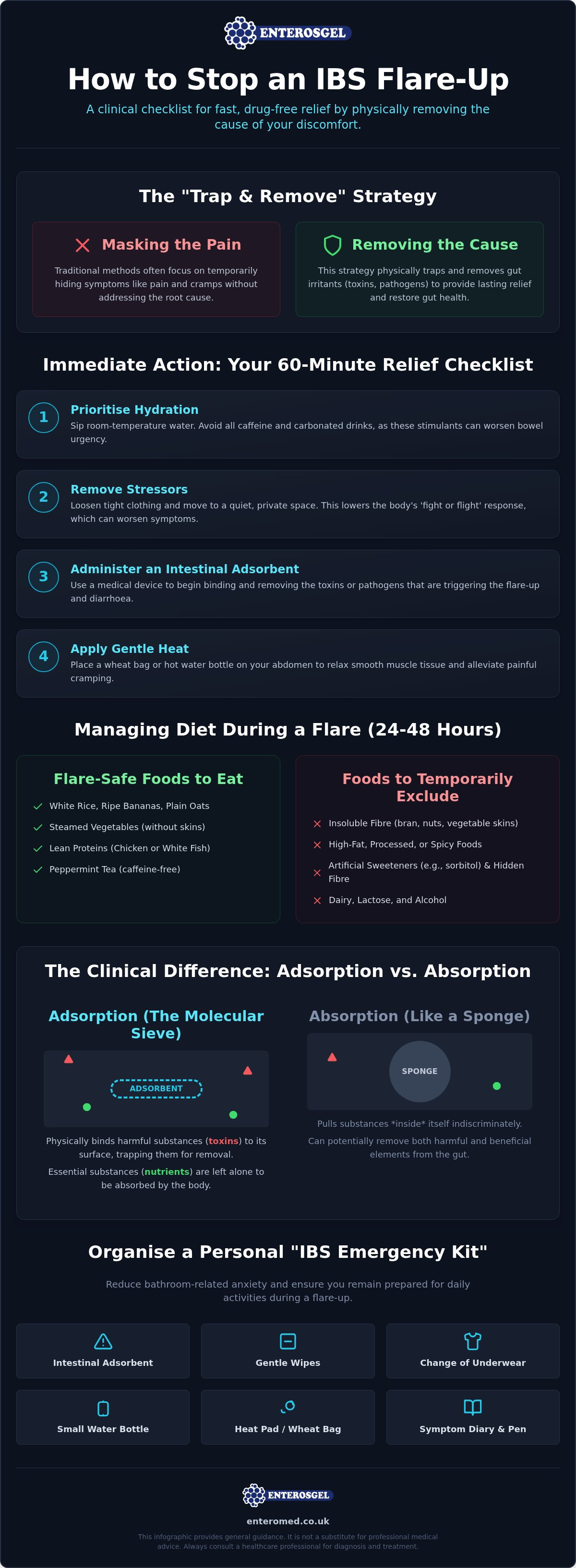
The first hour of an IBS attack is critical. Rather than waiting for symptoms to subside, taking immediate, structured steps can significantly reduce the duration and intensity of the episode. This checklist focuses on calming the enteric nervous system whilst physically addressing the irritants in your gut.
- Prioritise hydration: Sip room-temperature water. Avoid all caffeine and carbonated drinks, as these act as stimulants that can worsen bowel urgency.
- Remove physical and environmental stressors: Loosen tight waistbands and move to a quiet, private space to lower your body’s "fight or flight" response.
- Administer an intestinal adsorbent: Use a medical device like Enterosgel to begin binding and removing the toxins or pathogens triggering the flare and associated diarrhoea.
- Apply gentle heat: Use a wheat bag or hot water bottle on the abdomen to relax smooth muscle tissue and alleviate cramping.
Stabilising the Gut Environment
Temperature matters when seeking IBS flare up relief. Whilst an ice-cold drink might feel refreshing, it can actually trigger the gastrocolic reflex, leading to further spasms. Sips of room-temperature water are gentler on a hyper-sensitive digestive tract. Finding a "safe space" near a toilet is equally vital; it reduces the psychological stress of urgency, which otherwise creates a feedback loop of anxiety and physical pain. You can use this time to start a food and symptom diary, noting the time the flare began and any potential triggers, which helps in identifying patterns for future management.
Physical Comfort Measures
Calming the gut requires calming the mind. Diaphragmatic breathing, often called "belly breathing," stimulates the vagus nerve and helps shift your body from a sympathetic stress state to a parasympathetic rest state. If you're struggling with trapped gas, try lying on your left side or bringing your knees towards your chest to help move air through the colon. It's vital to avoid pro-kinetic movements during this first hour. High-impact exercise or heavy lifting increases intra-abdominal pressure and stimulates gut motility, which is the opposite of what a flaring bowel needs.
Managing Dietary Triggers Whilst Navigating a Flare
Dietary management during an active episode isn't about long-term nutrition; it's about mechanical rest. Adopting a low-residue approach for 24-48 hours allows the bowel to recover from hyper-motility. This temporary shift reduces the volume and frequency of stool, providing much-needed IBS flare up relief whilst the gut lining stabilises.
- Introduce gentle binders: Use white rice, ripe bananas, or plain oats to help stabilise stool consistency and provide easily digestible energy.
- Limit insoluble fibre: Avoid wheat bran, nuts, and vegetable skins, which act as mechanical irritants during active inflammation.
- Avoid stimulants: Steer clear of high-fat processed foods and spicy seasonings that can trigger the gastrocolic reflex too aggressively.
The Flare-Safe Food List
Focus on steamed vegetables without skins and lean proteins like chicken or white fish. These are easily broken down and absorbed by the body. You should limit fresh fruit to no more than three portions a day, as excessive fructose can overwhelm a sensitised gut. For comfort, peppermint tea is an excellent natural, caffeine-free carminative that helps relax the intestinal muscles. Achieving consistent IBS flare up relief requires this delicate balance between what you consume and how you support your body’s natural recovery process.
Foods to Temporarily Exclude
Exclude common irritants like artificial sweeteners, specifically sorbitol, which can draw water into the colon and worsen urgency. Be wary of hidden triggers in "health" foods, such as chicory root or inulin, which are often added for fibre but can cause severe bloating. Dairy and lactose should also be paused, as the enzyme lactase is often temporarily depleted during a flare. Finally, alcohol must be strictly avoided until at least 48 hours after your symptoms subside to ensure the gut barrier has fully recovered. For those seeking a drug-free way to manage these triggers, using a medical device to bind irritants can complement these dietary changes effectively.
The Role of Intestinal Adsorbents in Gut Irritant Removal
Effective IBS flare up relief depends on more than just slowing down the bowel. Whilst many traditional treatments focus on masking pain or suppressing movement, intestinal adsorbents offer a mechanical solution. It's essential to understand the distinction between absorption and adsorption. Absorption involves a substance being soaked up into the body, whereas adsorption is a surface-level process where harmful substances are trapped and held by a binder before being naturally expelled.
Enterosgel acts as a "molecular sieve" within the digestive tract. Its porous structure is specifically designed to capture medium-weight molecules, such as bacterial toxins and inflammatory mediators, whilst leaving essential nutrients, vitamins, and water alone. This targeted approach addresses the root cause of the flare rather than just the symptoms.
How Adsorption Works for IBS
The organic mineral gel travels through the gut without being absorbed into the bloodstream. Because it is a drug-free medical device, it does not cause systemic side effects or interact with other medications. This makes it a safe, gentle protector for various ages, including children. By physically removing the cause of the irritation, the gel helps to reduce bowel urgency and abdominal pain. This mechanism is supported by over 30 years of clinical use and extensive gut health research showing its efficacy in managing diarrhoea-predominant IBS.
Choosing the Right Format for Your Lifestyle
Consistency is key to managing a flare successfully. The Enterosgel 225g Tube is the most cost-effective option for home use, allowing for precise dosing during a multi-day recovery period. For those who need to maintain their daily routine, convenient sachets provide portable protection that fits easily into a bag or pocket. If you're new to this therapy, the IBS Starter pack is particularly useful. It combines both formats, allowing you to track a full clinical treatment cycle whilst ensuring you have relief available wherever you are. You can purchase the 225g tube here to start your journey towards drug-free comfort.
Building a Long-term Flare Management Plan
Transitioning from crisis management to sustained stability requires a proactive strategy. Whilst immediate IBS flare up relief is the priority during an attack, long-term comfort is achieved by reducing the frequency and intensity of future episodes. A structured plan provides the psychological security needed to resume normal activities without the constant fear of sudden urgency.
- Organise an IBS Emergency Kit: Keep Enterosgel sachets, biodegradable wipes, and a change of clothes in a discreet bag. This "smart protection" reduces bathroom-related anxiety when you're away from home.
- Establish a maintenance routine: Using intestinal adsorbents during periods of high stress or dietary transition can help bind potential irritants before they trigger a full flare.
- Stay informed: Regularly review the latest gut health research to understand emerging evidence-based treatments and clinical validations.
- Track your triggers: Continue using a symptom diary to identify whether specific behaviours, such as poor sleep or specific foods, precede your symptoms.
The Gut-Brain Connection
The enteric nervous system is in constant communication with the brain. Chronic stress primes the gut for sensitivity, making it more likely to overreact to minor irritants. Techniques that calm the vagus nerve, such as mindfulness, yoga, or slow diaphragmatic breathing, are essential tools for long-term IBS flare up relief. Additionally, prioritising sleep hygiene is vital. Sleep is the primary period for gut wall repair and inflammation control; a lack of rest can compromise the intestinal barrier and increase visceral hypersensitivity.
When to Seek Medical Advice
Whilst drug-free adsorption therapy is effective for many, it's important to recognise "red flag" symptoms that require professional clinical intervention. You should book an urgent GP appointment if you experience blood in your stool, unintentional weight loss, or symptoms that frequently wake you during the night. When discussing your management plan with a healthcare professional, you can explain how you're using adsorption therapy as a non-systemic medical device to manage diarrhoea and urgency. For a deeper dive into professional management strategies, read our Irritable Bowel Syndrome Relief UK: A Clinical Guide.
Reclaiming Your Digestive Freedom
Managing a flare-up effectively requires a dual approach: immediate physical stabilisation and the mechanical removal of gut irritants. By implementing a 60-minute clinical checklist and adopting a temporary low-residue diet, you can significantly reduce bowel urgency and abdominal distress. Achieving consistent IBS flare up relief is possible when you move beyond masking symptoms and focus on clearing the underlying toxins and pathogens causing the irritation.
Enterosgel offers a clinically proven drug-free treatment that has been used by medical professionals for over 30 years. It is recommended by UK gut health specialists as a safe, non-systemic medical device that protects the gut lining without being absorbed into the body. This methodical approach provides a reliable pathway back to normal daily activities whilst ensuring your digestive health is supported by scientific rigor.
Shop the Enterosgel IBS Starter Pack for targeted flare-up relief and take the first step towards a more predictable and comfortable lifestyle. You have the tools to manage your symptoms effectively and regain your confidence.
Frequently Asked Questions
How long do IBS flare-ups typically last?
The duration of an episode varies significantly between individuals, typically lasting anywhere from a few hours to several days. In some instances, symptoms may persist for weeks if the underlying trigger isn't identified and removed. Early intervention using a structured clinical checklist can help to shorten this window. It's helpful to track the duration in a symptom diary to identify your personal baseline for recovery.
Can I stop an IBS flare-up once it has already started?
Yes, you can mitigate the severity and duration of a flare-up through immediate intervention. Using an intestinal adsorbent helps to physically trap and remove the irritants, such as toxins or pathogens, that are driving the symptoms. By targeting the cause rather than just masking the pain, you provide your body with the best chance of returning to a stable state quickly. This proactive approach is central to achieving IBS flare up relief.
What is the fastest way to relieve IBS bloating and pain?
The most rapid relief often comes from a combination of physical comfort measures and toxin removal. Apply gentle heat to the abdomen to relax cramped muscles whilst using a medical device like Enterosgel to bind gas-producing irritants in the digestive tract. Diaphragmatic breathing can also lower the body's stress response, which often exacerbates physical pain. These steps work together to address both the mechanical and neurological aspects of bloating.
Is Enterosgel safe to use with other IBS medications?
Enterosgel is a drug-free medical device that is not absorbed into the body, making it generally safe to use alongside other treatments. It works through physical adsorption rather than chemical interaction. However, because it is a binder, you should leave a gap of at least two hours between taking Enterosgel and any oral medications to ensure their absorption isn't affected. Always consult your healthcare professional when combining different treatments.
What should I eat during the first 24 hours of an IBS flare-up?
Focus on a low-residue diet that prioritises easily digestible, binding foods during the first day. Stick to white rice, ripe bananas, and steamed white fish or chicken without skin. These foods provide essential energy without overworking a sensitive bowel. Avoid all caffeine, alcohol, and insoluble fibres like nuts or raw vegetables during this window. This period of mechanical rest is a vital component of IBS flare up relief.
Can stress alone cause an IBS flare-up?
Stress is a powerful trigger that can independently cause a flare-up via the gut-brain axis. High levels of cortisol and adrenaline can alter gut motility and increase visceral sensitivity, meaning your gut may react painfully to normal digestive processes. Managing the psychological aspect of a flare is just as important as addressing the physical symptoms. Relaxation techniques can help break the cycle of anxiety and gut distress effectively.
Share this article