

IBS Travel Relief: How to Prevent Flare-Ups and Journey with Confidence
The conventional instinct to chemically freeze your digestion before boarding a long-haul flight often backfires, replacing acute urgency with days of uncomfortable rebound constipation. Lasting IBS travel relief requires capturing intestinal irritants directly rather than paralysing natural gut motility.
If you live with IBS, you already understand the quiet dread of sitting in a stationary motorway queue or waiting for the seatbelt sign to extinguish at 30,000 feet. Altered eating schedules, travel stress, and unfamiliar ingredients can easily overstimulate your digestion, triggering sudden abdominal cramps and loose stools that quickly overshadow your trip.
You can break this exhausting cycle and journey with genuine peace of mind. In this guide, you will discover clinically validated strategies to steady your digestive system, calm sudden bowel urgency, and secure predictable habits without relying on systemic medications. We examine practical packing routines, transit-friendly meal planning, and targeted approaches to protect your gut health from departure to arrival.
Key Takeaways
- Understand how transit disruption and stress stimulate the vagus nerve, accelerating the natural gastrocolic reflex and triggering sudden urgency.
- Discover why lasting IBS travel relief relies on capturing gut irritants rather than chemically halting bowel transit, avoiding uncomfortable rebound constipation.
- Master practical pre-departure routines, including strategic transit planning and gentle snack preparation, to protect your intestinal stability across changing schedules.
- Learn how an oral intestinal adsorbent medical device physically captures bacterial toxins from pathogenic bacteria to calm loose stools without entering the bloodstream.
Why Travel Triggers IBS Flare-Ups and Digestive Urgency
Long journeys subject the digestive system to sudden physiological shocks. For the estimated 10% of the population living with irritable bowel syndrome, travel is rarely just a change of scenery. It represents an abrupt disruption to the delicate mechanisms that regulate transit time, fluid absorption, and bowel movement patterns. Achieving meaningful IBS travel relief starts with understanding why transit disrupts normal gut stability.
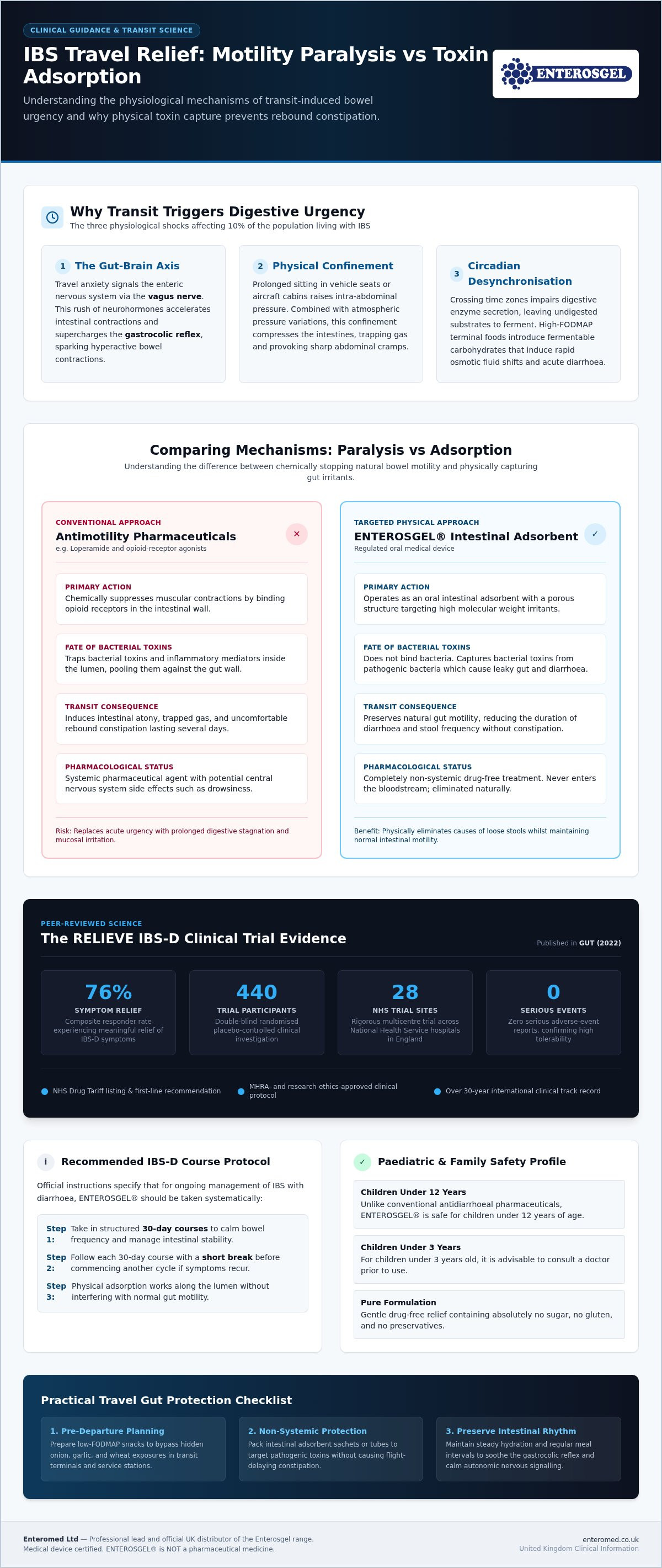
Sitting stationary in an aircraft cabin or vehicle seat increases intra-abdominal pressure. Paired with atmospheric cabin pressure changes, this physical confinement compresses the intestines, trapping gas and provoking sharp abdominal cramps. Simultaneously, travelling exposes the digestive tract to unfamiliar foods and potential pathogens, introducing irritants and bacterial toxins that inflame a vulnerable gut lining.
The Gut-Brain Axis Under Transit Stress
Travel anxiety triggers immediate physiological changes. When departures induce stress, your brain communicates directly with the enteric nervous system via the vagus nerve. This rush of neurohormones accelerates intestinal contractions and supercharges the gastrocolic reflex. The sudden fear of bowel urgency, particularly when restricted by an illuminated seatbelt sign or motorway gridlock, creates a self-fulfilling loop: anticipation of an accident heightens nervous signaling, which immediately forces hyperactive bowel contractions.
Circadian Disruption and Changing Food Schedules
Shifting routines throw internal body clocks into disarray. The human digestive tract operates on strict circadian rhythms that govern motility, digestive enzyme secretion, and microbiome activity. Disrupting this schedule triggers distinct issues:
- Enzyme desynchronisation: Crossing time zones impairs your stomach's ability to break down food efficiently, allowing undigested substrates to ferment rapidly in the colon.
- High-FODMAP exposure: Airport terminals and service stations rely heavily on convenience foods packed with hidden onions, garlic, and wheat, introducing fermentable carbohydrates that cause sudden osmotic fluid shifts and acute diarrhoea.
- Erratic gastrocolic responses: Eating meals at irregular intervals destabilises your natural colonic contractions, replacing regular bowel habits with unpredictable, painful spasms.
Targeted IBS travel relief requires stabilising these dual triggers, calming both neurological urgency and the toxic burden within the lumen itself.
Comparing IBS Travel Relief Options: Stopping Motility vs Adsorbing Toxins
When bowel urgency strikes mid-journey, reaching for a conventional antimotility drug like loperamide is a common reflex. While slowing transit stops loose stools temporarily, it often triggers a secondary crisis: severe rebound constipation that can stall your digestive system for days. Long-term IBS travel relief requires targeting the root irritants rather than chemically freezing your bowel motility.
The Hidden Problem with Conventional Antimotility Drugs
Antimotility pharmaceuticals work by binding to opioid receptors in the intestinal wall, chemically suppressing the muscular contractions that propel contents forward. While this halts fluid loss, it also traps bacterial toxins and inflammatory mediators inside the lumen. Keeping these irritants pooled against the gut wall exacerbates mucosal irritation. Many holidaymakers subsequently experience prolonged intestinal atony, trapped gas, and cramping, effectively replacing acute diarrhoea with painful systemic stagnation.
How Intestinal Adsorbents Provide Physical Relief
An oral intestinal adsorbent operates through an entirely different, non-systemic approach. Rather than paralysing the intestinal tract, it moves through the gut like a porous cleansing structure, working entirely as a physical medical device. It offers distinct clinical advantages during transit:
- Targeted toxin capture: It selectively binds bacterial toxins from pathogenic bacteria and inflammatory mediators that provoke leaky gut and bowel hyperreactivity.
- Preserved motility: Natural peristalsis continues undisturbed, allowing your body to excrete trapped irritants without causing rebound constipation.
- Zero systemic absorption: Because the substance never enters the bloodstream, it produces no central nervous system side effects such as drowsiness or lethargy.
Travellers seeking dependable symptom management can examine the clinical research on intestinal adsorption to see how physical toxin removal supports digestive stability without pharmacological side effects.
Step-by-Step Guide: Preparing for Smooth Travel with IBS
Navigating long journeys with bowel instability requires a chronological management plan. Implementing proactive habits before boarding and during transit dramatically reduces the incidence of urgent flare-ups. A structured timeline ensures reliable IBS travel relief throughout your trip.
Pre-Trip Preparation: 48 Hours Before Departure
Stabilising your digestive system begins two days before departure. Focus on simple, well-tolerated meals based on low-FODMAP principles, avoiding excessive insoluble fibre, legumes, and greasy takeaways. Understanding clinical protocols for managing IBS symptoms gives you clear steps to calm baseline inflammation ahead of schedule. Pack portable adsorbent sachets directly into your hand luggage so you never risk losing your symptom support in transit.
In-Transit Management: Navigating Flights, Trains, and Roads
Transit presents physical hurdles that demand active control over your environment and nervous system:
- Select an aisle seat: Securing an aisle position on planes or coaches eliminates the psychological worry of being trapped away from toilet facilities, reducing anticipatory anxiety.
- Prioritise plain hydration: Drink room-temperature still water. Avoid fizzy beverages that expand in pressurised cabins, and skip caffeine, which artificially accelerates the gastrocolic reflex.
- Practise diaphragmatic breathing: Slow, deep breaths down-regulate hyperactive stress signals along the vagus nerve, calming sudden colonic spasms.
Dining Out Abroad Without Triggering Urgency
Arriving at your destination brings new dietary variables. Review foreign menus in advance to locate straightforward protein and rice dishes, requesting food prepared without concentrated garlic, onion powders, or rich sauces. For exotic travel or warm climates, review clinical advice on travellers diarrhoea prevention to distinguish between functional flare-ups and bacterial food contamination.
For consistent protection across every stage of your trip, secure portable gut support today: buy the Enterosgel 225g tube to maintain digestive control wherever you travel.
Enterosgel for IBS-D: Clinically Proven Gut Protection on the Move
Enterosgel is an oral intestinal adsorbent medical device designed to target gastrointestinal irritants physically without entering the bloodstream. Validated in the RELIEVE IBS-D trial involving 440 patients across 28 NHS sites, published in GUT in 2022, it relieved symptoms in 76% of participants with no serious adverse events. For passengers seeking dependable IBS travel relief, it provides an evidence-based approach that preserves natural gut motility.
Targeted Action Against Bacterial Toxins
Enterosgel does not bind or capture bacteria. Instead, its microscopic structure captures bacterial toxins from pathogenic bacteria which cause leaky gut and diarrhoea. By physically trapping these irritants, it shields the mucosal barrier, reducing the duration of diarrhoea and the number of loose stools. Travellers can review the peer-reviewed clinical research to examine its non-systemic mechanism of action in detail.
Dosing Protocols and Portable Sachet Convenience
Consistency is vital when managing chronic gut instability on the road:
- Structured cycles: For IBS-D symptoms and daily management, take Enterosgel in 30-day courses, with each course followed by a short break.
- Hand luggage convenience: Individual single-dose sachets fit easily into cabin bags, ensuring immediate availability at cruising altitude while meeting airport security guidelines.
- Destination supplies: Packing the larger Enterosgel 225g tube supports family stays and extended holidays.
Gentle, Family-Safe Digestive Care
Formulated without sugar, sweeteners, lactose, gluten, fat, colours, or preservatives, Enterosgel offers clean tolerability. Unlike conventional antidiarrhoeal drugs that can trigger sedation or motor slowing, Enterosgel is safe for children under 12 years. For children under 3 years old, it is advisable to consult a doctor prior to use. This makes it an ideal option for maintaining family digestive health during holidays without the risk of systemic side effects.
Journey with Confidence: Reclaim Your Freedom to Explore
Sudden bowel urgency should never dictate where you go or how you enjoy your holidays. By pacing transit meals, supporting your gut-brain axis, and targeting harmful irritants rather than halting natural digestion, you can secure dependable IBS travel relief without the risk of rebound constipation.
Clinical evidence demonstrates that physical intestinal adsorption works safely alongside your body's natural rhythms. In a 440-patient double-blind randomised NHS clinical trial published in GUT, Enterosgel delivered significant symptom relief in 76% of IBS-D patients with zero severe adverse events. Supported by over 30 years of established clinical safety across Europe, it gives you reliable control when boarding planes, trains, or long car rides.
Order your Enterosgel travel sachets today for clinically proven, drug-free protection wherever you journey. Pack your bags, trust your digestive system, and look forward to discovering new destinations with calm assurance.
Frequently Asked Questions
Can I take an intestinal adsorbent on an aeroplane in my hand luggage?
Yes. Single-dose sachets easily comply with hand luggage rules and fit neatly inside standard clear liquids bags for security screening. If you prefer travelling with a 225g tube, place it in your hold luggage or carry supporting medical documentation at airport security checkpoints. Keeping individual sachets in your cabin bag ensures immediate access to gut relief throughout long flights.
How does an intestinal adsorbent differ from conventional antidiarrhoeal tablets?
Conventional tablets are pharmaceutical medicines that chemically slow gut motility, often trapping irritants and causing painful rebound constipation. An oral intestinal adsorbent is a certified medical device, not a medicine. It works physically within the gut lumen to capture bacterial toxins from pathogenic bacteria which cause leaky gut and diarrhoea. Irritants are excreted naturally without the gel entering the bloodstream.
What happens if I experience an acute IBS flare-up during a long flight?
Take an intestinal adsorbent sachet promptly with a glass of plain, still water. This delivers targeted IBS travel relief by adsorbing the luminal toxins driving sudden bowel contractions. Pair this with diaphragmatic breathing to lower transit stress along the vagus nerve. Once the seatbelt sign extinguishes, walking down the aisle helps release intra-abdominal gas pressure built up from prolonged sitting.
Is Enterosgel safe for children experiencing holiday diarrhoea?
Yes. Enterosgel contains no sugar, gluten, or preservatives, making it a gentle option for family travel. Unlike many conventional antidiarrhoeal drugs, Enterosgel is safe for children under 12 years. For children under 3 years old, it is advisable to consult a doctor prior to use. It works without systemic absorption, gently capturing irritants before passing out naturally in the stool.
Can I use Enterosgel daily throughout an extended holiday abroad?
Yes, provided you follow the standard clinical protocol. For IBS-D symptoms and daily usage, the product should be taken in 30-day courses, with each course followed by a short break. This regimen provides dependable IBS travel relief across extended itineraries without causing intestinal atony, allowing your digestive tract to maintain regular muscular transit while staying protected from unexpected dietary triggers.
How quickly does an oral intestinal adsorbent begin working for bowel urgency?
The gel begins working immediately upon entering the gastrointestinal tract. As it travels down the digestive tract, it binds medium-weight inflammatory mediators and bacterial toxins from pathogenic bacteria. Clinical data show this targeted physical mechanism effectively reduces the duration of diarrhoea and the number of loose stools, helping calm gut hyperreactivity and urgent toilet trips shortly after administration.
Share this article