

Managing Chronic IBS Symptoms: A Clinical Buyer’s Guide to Long-Term Relief
Living with a digestive disorder shouldn't mean constantly scanning for the nearest public toilet. Frequent bowel urgency. Unpredictable diarrhoea. Chronic bloating. You are likely familiar with the social anxiety these symptoms create whilst managing chronic IBS symptoms on a daily basis. It's exhausting to rely on temporary remedies that never quite offer the physical certainty you require to navigate a busy schedule with confidence.
This clinical guide explores how to move beyond masking discomfort to find a sustainable approach for long-term relief. We'll examine how drug-free, non-systemic medical tools can help reduce the frequency of flare-ups and restore predictability to your bowel movements. By focusing on evidence-led solutions that work physically within the gut, you can discover a professional treatment programme that fits seamlessly into your lifestyle without the need for systemic drugs. This methodical approach ensures you feel informed and empowered to choose the right tools for your recovery.
Key Takeaways
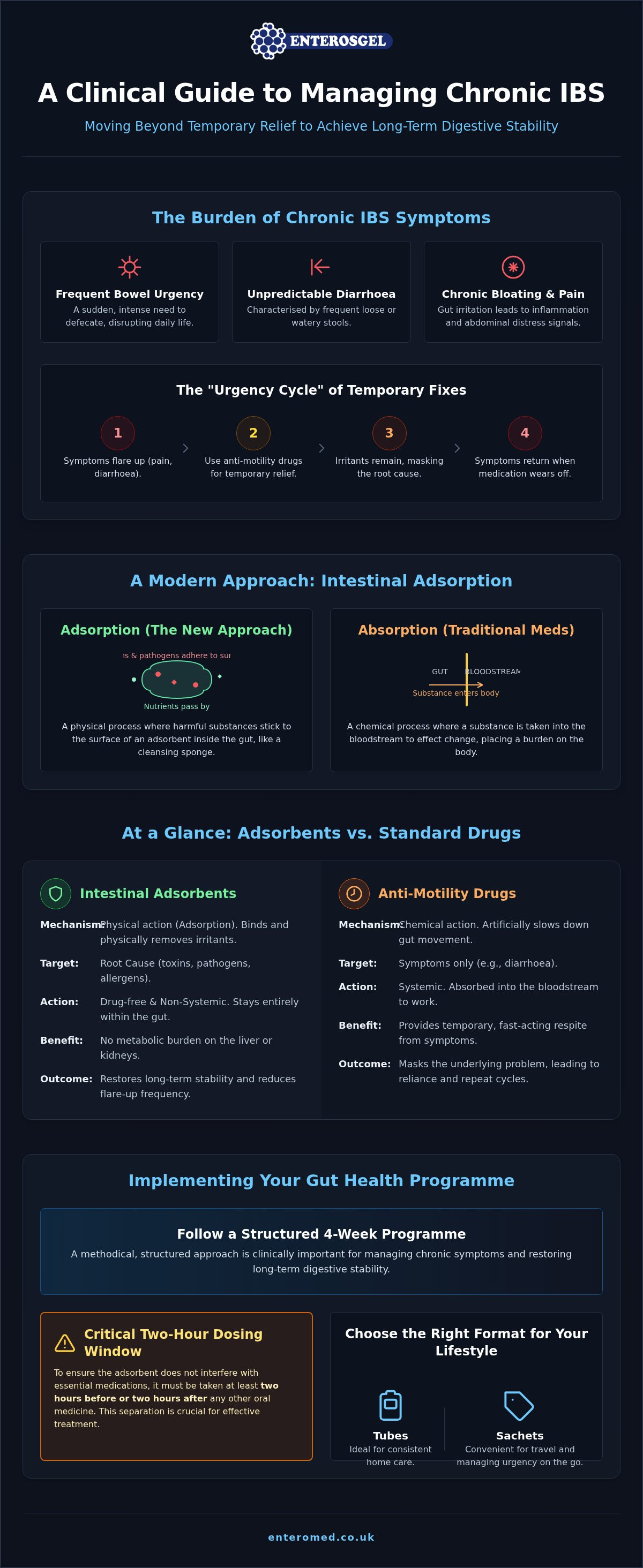
- Understand how intestinal adsorption acts like a "cleansing sponge" to physically remove toxins and pathogens from the gut rather than just masking symptoms.
- Compare the benefits of non-systemic adsorbents against traditional anti-motility drugs to find a drug-free solution for long-term relief.
- Discover the clinical importance of a structured 4-week programme for effectively managing chronic IBS symptoms and restoring long-term digestive stability.
- Learn how to choose the right format for your lifestyle, using tubes for home care and convenient sachets to manage urgency whilst travelling.
- Identify the critical two-hour dosage window to ensure your gut health programme does not interfere with the absorption of other essential medications.
Understanding Chronic IBS Symptoms and the Burden of Urgency
Chronic Irritable Bowel Syndrome is not a fleeting digestive upset. It is a persistent clinical condition where symptoms like diarrhoea, abdominal pain, and bloating continue for months or even years. For many, Understanding Irritable Bowel Syndrome involves recognising that the gut is in a state of constant hyper-reactivity. This sensitivity is often exacerbated by toxins and pathogens that linger within the digestive tract, creating a cycle of irritation that makes finding irritable bowel syndrome relief UK particularly challenging. Diarrhoea-predominant IBS (IBS-D) is clinically characterised by the frequent passage of loose or watery stools accompanied by a sudden, intense urge to defecate.
Many sufferers fall into the "Urgency Cycle." This typically involves using anti-motility drugs to slow down the gut. Whilst these offer temporary respite, they often mask the underlying issue rather than addressing the cause. They leave the irritants in place, meaning symptoms return the moment the medication wears off. This creates a reliance on "quick fixes" that fail to provide the stability needed for a normal lifestyle.
The Impact of IBS-D on Daily Life
Chronic symptoms dictate behaviour. Sufferers often engage in "toilet mapping," a process of mentally locating every public convenience before leaving the house. This constant vigilance leads to social withdrawal and significant anxiety. The link between gut irritation and abdominal pain is direct; as the intestinal lining becomes inflamed by pathogens, the nerves in the gut send distress signals to the brain. For those also addressing the inflammatory aspect of nerve discomfort, Relieve Therapeutics offers specialised support through dietary supplements. Managing chronic IBS symptoms effectively requires a shift from acute, "emergency" treatments to a methodical, long-term stabilisation strategy.
Why Diet Alone Often Fails Chronic Sufferers
Dietary changes are a standard first step, but they have limitations. The Low FODMAP diet is clinically validated but notoriously difficult to maintain for long periods. Adherence often drops after a few months, leading to symptom relapse. Beyond food, hidden triggers like bile acids and environmental toxins can continue to irritate the gut wall even when "safe" foods are consumed. This is why a physical barrier or adsorbent is often necessary. A drug-free medical device like Enterosgel works by binding these irritants physically, protecting the intestinal lining from further damage. This mechanical action provides a level of protection that diet alone cannot achieve.
The Role of Adsorption in Managing Chronic IBS
Traditional treatments for digestive distress often rely on absorption, where a substance is taken into the bloodstream to effect change. Adsorption is fundamentally different. It is a physical process where molecules, toxins, and pathogens adhere to the surface of an adsorbent. In clinical practice, Enterosgel acts like a "cleansing sponge" for the digestive tract. Its porous structure is designed to attract and trap medium-weight harmful molecules whilst leaving essential nutrients and water untouched. This mechanical action provides a targeted way of clearing the gut without introducing chemical agents into the system.
A significant clinical advantage of this approach is its non-systemic nature. Enterosgel is not absorbed into the body but passes through naturally, exiting with the trapped toxins during normal bowel movements. This makes it an ideal tool for managing chronic IBS symptoms over extended periods. Because the treatment remains entirely within the gut lumen, it does not place an additional metabolic burden on the liver or kidneys. For researchers investigating how various compounds affect systemic metabolic health, ascendlabstech.com provides high-purity research peptides and metabolic compounds for laboratory use.
Targeting the Root Cause: Toxins and Pathogens
Chronic IBS is often sustained by a cycle of inflammation triggered by harmful substances in the intestines. These may include bacterial toxins, viruses, or allergens that irritate the delicate gut lining. By binding these substances, an intestinal adsorbent reduces the physiological load on the gut microbiome. This reduction in "toxic noise" allows the intestinal wall to begin its natural healing process. Whilst IBS diet and nutrition strategies are vital for long-term health, they cannot always remove the pathogens already present. Using a physical adsorbent ensures these irritants are effectively neutralised and removed. Consistency is essential; maintaining hydration during this process helps the body flush away the bound toxins efficiently.
Safety and Long-Term Suitability
For many patients, managing chronic IBS symptoms is complicated by the use of other medications. Drug-free medical devices are often preferred in these cases because they do not interact chemically with systemic drugs. This high safety profile makes the treatment suitable for vulnerable groups, including children from birth and those with highly sensitive digestive systems. In modern gastroenterology, the shift towards non-pharmacological interventions reflects a growing need for "smart" protection that supports the body's own defences. If you are looking for a way to stabilise your gut health without harsh chemicals, you might consider exploring specialised IBS support options that focus on this gentle, physical mechanism.
Comparing IBS Management Tools: Adsorbents vs Standard Meds
Many patients rely on standard over-the-counter medications when first managing chronic IBS symptoms. Anti-motility drugs, such as loperamide, are frequently recommended to slow down the movement of the gut. Whilst effective for stopping diarrhoea quickly, these drugs do not remove the toxins or pathogens causing the irritation. In contrast, an intestinal adsorbent works physically. It binds the irritants and removes them from the body, rather than just chemically altering gut motility. This distinction is vital for those seeking long-term stability without the risk of drug-induced constipation.
When evaluating IBS treatment options, it is also important to consider antispasmodics. These medicines relax the gut muscles to reduce cramping. Adsorbents complement this by addressing the root cause; they remove the gas and toxins that trigger the spasms in the first place. Similarly, whilst probiotics aim to restore healthy bacteria, they are often more effective when the gut has been cleared of harmful pathogens by an adsorbent first. This creates a cleaner environment for beneficial flora to thrive.
Managing Flare-ups vs Daily Maintenance
Acute flare-ups require immediate action to manage urgency. However, managing chronic IBS symptoms effectively involves a shift towards daily maintenance. Using a consistent 4-week programme helps to stabilise the intestinal environment. This proactive approach is often more cost-effective than making frequent, reactive trips to the pharmacy for single packets of medication. Investing in larger formats or bundles ensures you have the tools necessary to prevent "bad days" before they start, providing a sense of stability that reactive treatments cannot match.
Avoiding the "Rebound Effect"
A common frustration with chemical IBS treatments is the "rebound effect." This occurs when anti-motility drugs work too effectively, leading to painful constipation that is subsequently followed by more diarrhoea. It's a disruptive cycle. Adsorbents based on organic minerals offer a gentler alternative. They do not interfere with the natural rhythm of the gut. Instead, they provide a predictable bowel habit by physically cleansing the digestive tract. This mechanical action ensures that irritants are gone without causing the system to "lock up," allowing for a more stable and comfortable daily routine. For readers interested in supporting their microbiome through other specialised health challenges, Velobiotics provides innovative probiotic solutions designed to maintain natural balance.
Buying Guide: Choosing the Right IBS Management Format
Selecting the appropriate tool for managing chronic IBS symptoms depends entirely on your daily routine and the severity of your flare-ups. Clinical success in stabilising the gut environment is rarely achieved through reactive, one-off treatments. Instead, it requires a methodical approach. A structured 4-week programme is often the most effective way to allow the intestinal lining to recover from persistent irritation. By choosing a format that matches your lifestyle, you ensure the consistency necessary for long-term relief. You might browse the full IBS and Chronic Diseases collection to find the specific combination that suits your recovery phase.
Best for Home Management: The 225g Tube Packs
The Enterosgel 225g Tube is the foundation of a professional home-care routine. For those committed to a full 4-week programme, purchasing these in bulk bundles is the most logical choice. It ensures you have a continuous supply for morning and evening doses without the interruption of frequent reordering. This format allows for clinical precision; you can easily measure the exact amount required to maintain a protective layer within the gut. Using the tube at home provides a sense of stability and control, forming the "anchor" of your daily digestive health strategy. It is particularly useful for those who experience symptoms at predictable times of the day.
Best for Travel and Urgency: On-The-Go Sachets
Managing urgency whilst away from home requires a different level of convenience. Enterosgel Sachets (Pack of 10) are designed for the modern traveller or the busy professional. These single-dose packets are discreet and can be carried in a bag or pocket without drawing attention. They are tasteless and have a smooth texture, making them easy to take even if you don't have immediate access to water. For anyone who experiences social anxiety due to unpredictable diarrhoea, having sachets on hand provides "smart" protection. They allow you to respond to the first signs of a flare-up immediately, preventing a minor irritation from becoming a significant disruption to your day.
Best for New Users: The IBS Starter Kit
If you are transitioning from traditional drug-based treatments to a non-systemic medical device, the Enterosgel IBS Starter pack Tube 225g and pack of Sachets is the ideal entry point. This kit is designed to provide versatile relief across all scenarios. You have the large tube for your consistent morning routine and the sachets for managing urgency whilst commuting or socialising. It is a practical way to test how your body responds to adsorption before committing to a larger bulk purchase. This multi-format approach ensures you are never without protection, regardless of where your day takes you. It's the most comprehensive way to begin managing chronic IBS symptoms with confidence.
Implementing Your Long-Term Gut Health Programme
Successfully managing chronic IBS symptoms requires more than just reactive treatment during a flare-up. It demands a methodical, time-bound programme. By following a clinical schedule, you give your digestive system the necessary environment to repair itself without the constant interference of pathogens. Consistency is the primary driver of success in chronic cases. This isn't about a single dose; it's about maintaining a protective adsorbent layer within the gut for a sustained period.
Timing is a critical factor for safety and efficacy. Because an intestinal adsorbent physically binds substances, it must be taken correctly to avoid interfering with other treatments. You must observe a two-hour window between taking the gel and any other oral medications. This prevents the adsorbent from binding your essential medicines, ensuring they are absorbed by the body as intended. It's a simple but vital rule for anyone on multiple prescriptions.
Monitoring your progress provides the evidence needed to refine your routine. Focus on tracking two key metrics: stool consistency and the frequency of sudden urgency. You don't need a complex diary; a simple daily log is sufficient. Over time, you should notice a gradual shift towards more predictable bowel habits. If you are ready to start a structured recovery, you can invest in the 4-Week Digestive Support Bundle (£119.00) for comprehensive chronic management.
The 4-Week Stabilisation Phase
A professional gut health programme is typically divided into two distinct stages. During weeks one and two, the focus is on "cleansing." The adsorbent works intensively to bind the existing irritants and bile acids that trigger urgency. In weeks three and four, the focus shifts to maintenance. As the toxic load decreases, the intestinal lining begins to recover, leading to a significant reduction in bloating and discomfort. The 4-week bundle, which includes four 225g tubes and twenty sachets, offers the best value for this process. It provides the high-volume supply needed for the initial phase and the portable sachets required for maintenance whilst you are away from home.
Managing IBS in Children
Chronic digestive issues aren't limited to adults; children also suffer from persistent tummy troubles that require gentle care. Enterosgel Kids 0+ (available in a 4-pack for £59.90) provides a safe, drug-free alternative for managing childhood symptoms. It's tasteless and has a smooth texture, making it easy to administer to fussy eaters without a struggle. Because it isn't absorbed into the bloodstream, it's a reassuring choice for parents who want to avoid systemic drugs. This gentle approach helps stabilise a child's sensitive system, restoring comfort and reducing the anxiety often associated with school-day urgency. Once your child is feeling better, you might visit SoftplayToys4kids to find safe, engaging play equipment that supports their active development.
Restoring Stability to Your Digestive Health
Transitioning from reactive treatments to a structured, clinical approach is the most effective way to break the cycle of gut irritation. By using a physical adsorbent to remove toxins and pathogens, you address the underlying cause of your discomfort rather than merely slowing down your system. This methodical shift is essential for managing chronic IBS symptoms over the long term. Consistency remains your strongest asset. A dedicated 4-week programme allows your intestinal lining the necessary time to recover and stabilise.
You can achieve this stability with a clinically proven, drug-free formula designed for high-performance gut health. It's a safer way to protect your system whilst avoiding the side effects of systemic drugs. Our bundles offer significant value, allowing you to save up to £60 with the 4-Week Digestive Support Bundle. We also provide free next-day delivery on selected bundles to ensure your recovery begins without delay. Shop the IBS & Chronic Diseases Collection for Clinically Proven Relief and take the first step towards a more predictable, comfortable lifestyle. With the right clinical tools, lasting relief is well within reach.
Frequently Asked Questions
How long does it take for Enterosgel to work for chronic IBS symptoms?
Initial relief from acute symptoms often occurs within a few hours of the first dose. For those managing chronic IBS symptoms, a structured 4-week programme is essential for long-term stabilisation. This duration allows the physical adsorbent to consistently remove toxins and pathogens, giving the intestinal lining the necessary environment to repair and settle. Following the full programme ensures a more predictable bowel habit rather than just temporary respite.
Can I take Enterosgel every day for long-term IBS management?
Yes, Enterosgel is safe for daily use over extended periods. Because it is non-systemic, it is not absorbed into the bloodstream and does not affect the liver or kidneys. This high safety profile makes it an ideal tool for long-term maintenance. Sufferers can use it as part of a daily routine to prevent flare-ups and maintain a protective barrier against the irritants that trigger chronic urgency and bloating.
Is Enterosgel safe to take alongside my other IBS medications?
Enterosgel is safe to use with other medications if you follow the two-hour dosing rule. Since the gel is a physical adsorbent, it may bind other oral medicines if taken simultaneously, potentially reducing their efficacy. By waiting two hours before or after other treatments, you ensure your essential medications are absorbed properly whilst the gel focuses on clearing harmful toxins and pathogens from the digestive tract.
What is the difference between the Enterosgel tube and the sachets?
The primary difference is the format rather than the formula. The 225g tube is the most cost-effective option for home management and allows for precise, adjustable dosing. In contrast, the sachets are pre-measured, single-dose packets designed for portability. They are particularly useful for managing urgency whilst travelling or socialising, as they are discreet and can be taken easily without the need for water or a spoon.
Does Enterosgel cause constipation like some other diarrhoea treatments?
Enterosgel does not typically cause constipation because it is not an anti-motility drug. Standard chemical treatments often slow down the gut's natural contractions, which can lead to rebound constipation. Enterosgel works through physical adsorption, acting like a sponge to soak up toxins and pathogens. This mechanical process cleanses the gut without interfering with its natural rhythm, allowing for a more predictable and comfortable bowel habit without the "lock up" effect.
Can I use Enterosgel for my child’s chronic stomach upsets?
Yes, Enterosgel Kids 0+ is entirely safe for children from birth. It is a drug-free, non-systemic medical device that is not absorbed by the body. Because it is tasteless and has a smooth texture, it is easy to administer even to fussy eaters. It provides a gentle way to manage chronic childhood tummy upsets, such as diarrhoea and bloating, by physically removing the irritants that cause digestive distress in sensitive systems.
Do I need a prescription to buy Enterosgel in the UK?
You don't need a prescription to buy Enterosgel in the UK. It is classified as a medical device and is available to purchase directly from our online store or from major pharmacies. This makes it easily accessible for anyone who wants to start managing chronic IBS symptoms without the delay of a medical consultation. However, we always recommend speaking with a healthcare professional if you have persistent or worsening symptoms.
How should I store Enterosgel to ensure it remains effective?
To maintain its clinical efficacy, Enterosgel should be stored at room temperature, ideally between 4°C and 30°C. You must ensure the cap is replaced tightly after every use to prevent the gel from drying out. It is critical that the product is never frozen. Freezing destroys the delicate porous structure of the adsorbent, which would prevent it from effectively binding the toxins and pathogens responsible for your IBS symptoms.
Share this article