

Stomach Bloating Remedies: A Clinical Guide to Fast, Drug-Free Relief
Stomach bloating is one of the most common yet misunderstood digestive complaints in the UK. That uncomfortable feeling of pressure, tightness, or visible swelling in your abdomen can disrupt your day, affect your confidence, and leave you searching for effective stomach bloating remedies. Whilst many turn to simple gas tablets or dietary changes, these often only mask the symptoms without addressing the root cause.
The most effective remedies don't just disperse gas; they target and remove the underlying irritants—such as bacterial toxins and pathogens—that trigger the inflammation and gas production in the first place. This guide offers a clinical perspective on achieving fast, drug-free relief by focusing on the science of gut health and the proven mechanism of intestinal adsorption.
Understanding Stomach Bloating and the Need for Effective Remedies
Stomach bloating is the sensation of increased abdominal pressure, often accompanied by a visibly swollen or distended stomach. It is more than just feeling 'full' after a large meal; it is a physical state caused by an accumulation of gas, fluid, or solid waste in the gastrointestinal tract. For many, it brings a frustrating collection of symptoms including abdominal tightness, audible rumbling, excessive flatulence, and a general sense of discomfort.
It is important to distinguish between occasional bloating, which might occur after a particularly rich meal, and chronic bloating that happens frequently and impacts your quality of life. Whilst simple lifestyle adjustments like chewing food more thoroughly or avoiding fizzy drinks can help, they are often insufficient for providing the immediate and reliable relief needed during a painful flare-up. This is because they fail to address the primary biological drivers of severe bloating: gut irritants and the toxic by-products of microbial activity.
The Biological Causes of Abdominal Pressure
To find a truly effective remedy, we must first understand the causes. Abdominal pressure and bloating are typically driven by three main factors:
- Intestinal Gas Production: Gas is a natural by-product of fermentation, the process by which gut bacteria break down undigested carbohydrates in the large intestine. An imbalance in gut flora, or the consumption of certain hard-to-digest foods, can lead to excessive fermentation and gas, trapping it in the gut and causing painful distension.
- Swallowed Air (Aerophagia): Eating too quickly, chewing gum, or drinking carbonated beverages can cause you to swallow excess air. This air can accumulate in the upper digestive tract, leading to burping and a feeling of fullness in the upper abdomen.
- Gut Irritants and Inflammation: This is a critical, often overlooked cause. Harmful bacteria, viruses, and allergens can release toxins that irritate the delicate lining of the gut. This irritation triggers an inflammatory response, which can impair gut motility (the coordinated muscular contractions that move food along) and lead to the trapping of gas and fluid, resulting in severe bloating and pain.
When to Seek Urgent Medical Advice
Whilst most cases of stomach bloating are benign and related to diet or minor digestive upsets, persistent or severe symptoms should always be evaluated by a healthcare professional. It is essential to rule out more serious underlying conditions.
According to UK health guidelines, you should contact your GP or seek advice from NHS 111 if your bloating is accompanied by any of the following red flag symptoms:
- Unintentional weight loss
- Blood in your stools or rectal bleeding - A persistent change in bowel habits (diarrhoea or constipation for several weeks)
- A palpable lump or mass in your abdomen
- Severe, persistent, or worsening abdominal pain
- Symptoms of anaemia, such as fatigue and shortness of breath
A GP can help investigate potential causes such as coeliac disease, inflammatory bowel disease (IBD), or, in rare cases, ovarian cancer. For chronic bloating, obtaining a professional diagnosis is the most important first step toward effective long-term management; for more specialised advice, you can visit Digestive Centre to learn about clinical screenings.
The Science of Gas: How Pathogens and Toxins Trigger Bloating
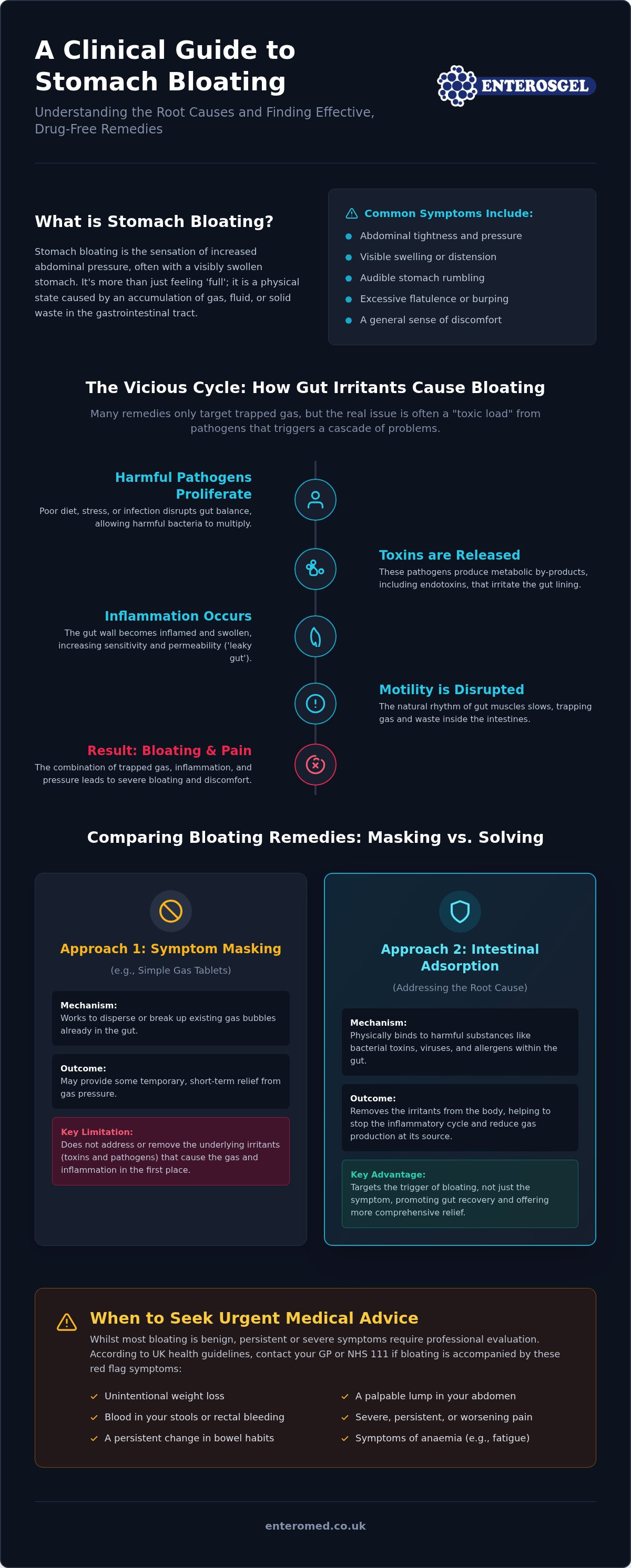
Many conventional stomach bloating remedies operate on the premise that bloating is simply trapped wind. This view is incomplete. The more pressing issue is often not the gas itself, but the reason it is being overproduced and trapped. The answer frequently lies in the "toxic load" within your gut.
Your intestines are home to a complex ecosystem of microorganisms. When this ecosystem is disrupted—by a poor diet, stress, or an infection—harmful (pathogenic) bacteria can proliferate. These pathogens produce metabolic by-products, including endotoxins, which act as powerful irritants to the gut lining. This irritation triggers a cascade of events:
- Inflammation: The gut wall becomes inflamed, leading to swelling and sensitivity.
- Altered Motility: The natural rhythm of the gut muscles is disrupted. This can slow down the transit of food and gas, causing it to become trapped.
- Increased Permeability: The inflamed gut lining can become more permeable (sometimes called 'leaky gut'), allowing toxins to provoke a wider systemic response.
This is why bloating often feels like more than just gas; the associated feelings of being unwell, heavy, and sluggish are a direct result of this toxic load. Therefore, a superior remedy is one that can effectively reduce this load. This is a core principle in modern IBS symptom management, where removing triggers is key to relief.
How Toxins Disrupt the Intestinal Barrier
The intestinal barrier is a sophisticated layer of cells responsible for absorbing nutrients whilst preventing harmful substances from entering the bloodstream. When toxins produced by pathogens irritate this barrier, they can damage the tight junctions between cells, increasing gut permeability. This not only causes local inflammation but can also aggravate the enteric nervous system—the "second brain" in your gut. This aggravation is why bloating is so often accompanied by painful cramps and spasms, rather than just simple wind.
This is where a specific class of treatments comes into play. Intestinal adsorbents are substances designed to physically bind to toxins, pathogens, and other irritants on their surface, trapping them within the gut before they can cause damage and ensuring they are safely removed from the body with the stool.
The Connection Between Food Poisoning and Bloating
Have you ever noticed that bloating lingers long after you've recovered from a stomach bug or a bout of food poisoning? This is a classic example of post-infectious gut disruption. The initial infection may have been cleared by your immune system, but residual pathogens and the toxins they produced can remain in the gut for weeks, continuing to irritate the intestinal lining.
This ongoing irritation can lead to chronic bloating, altered bowel habits, and even the development of post-infectious Irritable Bowel Syndrome (IBS). A crucial part of a full recovery is therefore to actively remove these lingering pathogens and toxins. Using an intestinal adsorbent during and after a gastrointestinal infection can help cleanse the gut environment, reduce inflammation, and allow the intestinal barrier to heal, breaking the cycle of post-infectious bloating.
Comparing Stomach Bloating Remedies: Adsorption vs. Symptom Masking
The UK market offers a wide array of over-the-counter stomach bloating remedies, but they are not all created equal. Their effectiveness depends entirely on their mechanism of action. Most fall into one of two categories: those that mask symptoms and those that remove the cause.
Traditional remedies like simeticone work by being a 'surfactant'. They reduce the surface tension of gas bubbles in the stomach, causing them to merge into larger bubbles that can be more easily passed as wind. This can provide temporary relief but does nothing to stop more gas from being produced.
In contrast, intestinal adsorbents work on a completely different principle. It is vital to understand the difference between absorption and adsorption:
- Absorption is when a substance is "soaked up" and integrated into another, like a sponge soaking up water. Some remedies, like activated charcoal, work this way.
- Adsorption is a surface-level process where molecules (like toxins) stick to the outer surface of the adsorbent, like lint sticking to a roller. This is a more selective and gentle process.
During an acute bloating flare-up, even beneficial remedies like probiotics may be of limited use. Adding more bacteria—even good bacteria—to an already irritated and imbalanced gut environment can sometimes worsen symptoms temporarily. The priority should be to first calm the system by removing the irritants.
Why Simeticone and Charcoal May Not Be Enough
Whilst widely available, simeticone and activated charcoal have significant limitations as stomach bloating remedies.
- Simeticone: As mentioned, it only addresses existing gas bubbles. It does not tackle the bacterial overgrowth or toxic load that is causing the excessive gas production. It is a temporary fix for a symptom, not a solution for the underlying problem.
- Activated Charcoal: Charcoal is a potent but non-selective absorbent. It soaks up everything in its path, including beneficial nutrients, digestive enzymes, and medications. This lack of selectivity can lead to nutritional deficiencies and may interfere with the efficacy of other drugs you are taking. Its messy, staining nature also makes it inconvenient for regular use.
A modern intestinal adsorbent like Enterosgel offers a more advanced solution. Its unique porous structure is engineered to be selective, binding to harmful substances like bacterial toxins, pathogens, and allergens, whilst sparing water, vitamins, and beneficial gut flora. It provides a targeted cleansing action without the collateral damage of older remedies.
The Benefits of a Drug-Free Approach
For those with sensitive systems or who prefer to minimise their reliance on pharmaceuticals, a drug-free medical device offers significant advantages. Many bloating treatments involve anti-spasmodic drugs, which work by relaxing the muscles in the gut wall. Whilst effective for cramping, they can have side effects and may not be suitable for everyone.
A treatment that is not absorbed into the bloodstream, like Enterosgel, has an excellent safety profile. It acts only within the gut lumen before being excreted from the body, carrying the bound toxins with it. This makes it a suitable remedy for a wide range of people, including vulnerable groups, and a safe choice for managing bloating without the risk of systemic side effects.
A Step-by-Step Plan for Rapid Bloating Relief and Gut Recovery
When you are in the midst of a painful bloating episode, you need a clear, actionable plan that goes beyond vague advice to "eat smaller meals." This 48-hour framework is designed to calm your digestive system, remove irritants, and provide rapid relief.
- Step 1: Administer an Intestinal Adsorbent. As soon as you feel the bloating begin, take a dose of a clinical-grade intestinal adsorbent like Enterosgel. This is the most critical step to begin binding and neutralising the gut irritants that are driving the inflammation and gas production. Take it with a glass of water, at least 1-2 hours apart from food or other medications.
- Step 2: Hydrate Strategically. Sip on water throughout the day to support gut motility and help flush out your system. Avoid fizzy drinks, caffeine, and alcohol, as these can all worsen bloating. If you have had diarrhoea, consider an oral rehydration solution to replenish lost electrolytes.
- Step 3: Implement a "Gut Rest" Period. Give your digestive system a break from hard-to-digest foods. For the next 24-48 hours, avoid common triggers like dairy, high-fibre vegetables (especially beans and cabbage), processed sugars, and greasy or spicy foods. This reduces the fuel available for gas-producing bacteria.
- Step 4: Encourage Gentle Movement. Physical activity can help stimulate the passage of trapped gas. A gentle walk or light stretching can be very effective. You can also try a gentle stomach massage, rubbing your abdomen in a clockwise motion to follow the path of the large intestine.
The British "Bland" Diet for Bloating Relief
During a gut rest period, your focus should be on simple, easily digestible foods. This is not the time for high-fibre salads. Instead, turn to comforting staples that are gentle on an irritated gut. This approach is often referred to as a "bland" or "white" diet.
- Safe Staples: Focus on plain oats (porridge made with water), boiled or mashed potatoes, plain white rice, steamed white fish, and boiled chicken breast.
- Common UK Bloat-Triggers to Avoid: Steer clear of cruciferous vegetables (broccoli, cauliflower, cabbage, Brussels sprouts), beans and pulses, onions, garlic, and highly processed foods with artificial sweeteners.
- Why Toast is Better Than a Salad: During an acute flare, high-fibre foods can be difficult to break down and may increase fermentation and gas. Simple carbohydrates like plain white toast or crackers are much easier for a compromised gut to handle, providing energy without adding to the digestive load.
Restoring Long-Term Gut Balance
Once the acute bloating episode has passed, the goal is to prevent future occurrences. This involves a transition from acute remedies to long-term gut health maintenance.
- Identify Personal Triggers: Start a food and symptom diary. As you gradually reintroduce foods, note any that trigger bloating. This will help you identify your personal sensitivities. You can continue to use an intestinal adsorbent for support during this phase to help manage reactions.
- Manage Stress: The gut-brain axis is a powerful connection. High levels of stress can directly impact gut motility and sensitivity. Incorporate stress-management techniques like mindfulness, deep breathing exercises, or gentle yoga into your routine.
- Prioritise Sleep: Your body performs essential repair and regulation processes while you sleep, including for your digestive system. Aim for 7-9 hours of quality sleep per night to support overall gut health and resilience.
Why Enterosgel is a Leading Choice for Stomach Bloating Remedies
Amongst the available stomach bloating remedies, Enterosgel stands out as a clinically proven, drug-free intestinal adsorbent. It is classified as a Class IIa medical device in the UK, signifying its established safety and efficacy for relieving symptoms of digestive upset, including bloating and diarrhoea associated with IBS.
Its mechanism is purely physical. The unique, hydrogel compound has a porous, sponge-like structure that is precisely engineered to adsorb medium-sized molecules. This allows it to selectively bind to harmful substances like:
- Bacterial toxins and endotoxins
- Pathogenic bacteria and viruses
- Allergens and other gut irritants
Crucially, its pore size is too small to bind large molecules like beneficial bacteria, and it does not adsorb essential nutrients, vitamins, or minerals. It simply traps the harmful substances and is then completely excreted from the body within 12-24 hours, taking the toxins with it. For convenient use, it is available in a large 225g Tube for the home medicine cabinet and easy-to-carry Sachets for relief on the go.
Clinical Efficacy and Safety Profile
With over 30 years of clinical use and extensive research backing its mechanism, Enterosgel has a well-established profile for both efficacy and safety. Because it is not a drug and is not absorbed into the bloodstream, it does not interfere with the body's natural functions. It does not cause constipation or shut down gut motility, instead working with your body to gently cleanse the gut environment.
This exceptional safety profile makes it suitable for the entire family, from adults to infants. A specific formulation, Enterosgel Kids 0+, is available for the gentle management of digestive upsets in children.
Essential for the Home First-Aid Kit
Having a reliable bloating remedy on hand can prevent a minor digestive issue from ruining your plans. Enterosgel is an essential addition to any home first-aid kit, providing a go-to solution for a range of common gut problems.
It is invaluable for managing the bloating that can follow a stomach bug, a case of food poisoning, or "traveller's diarrhoea." By having it ready, you can act quickly at the first sign of trouble, reducing the severity and duration of your symptoms and helping your gut recover faster. It provides a smart, clinical-grade line of defence for your family's digestive health.
Shop the Enterosgel range for fast, drug-free bloating relief
Frequently Asked Questions (FAQs)
How long does it typically take for bloating remedies to work?
The time it takes for a remedy to work depends on its mechanism. Symptom-masking remedies like simeticone may offer relief from gas within 30-60 minutes, but this is often temporary. Intestinal adsorbents like Enterosgel begin working as soon as they reach the gut, binding to toxins. Users often report a noticeable reduction in bloating and discomfort within a few hours to a day, especially when combined with dietary rest.
Can I take Enterosgel alongside oral rehydration salts?
Yes. Enterosgel is not absorbed and does not interact systemically. However, to ensure the full effect of both, it is recommended to take them at different times. A good rule is to take Enterosgel at least 1-2 hours before or after any other medications or supplements, including oral rehydration salts.
What is the best thing to eat after a severe bloating episode?
After a severe episode, it is best to reintroduce foods slowly. Stick to the "bland" diet for a day or two: plain rice, boiled potatoes, steamed chicken or fish, and plain toast. Avoid anything spicy, fatty, or high in fibre until your system feels fully settled.
Is Enterosgel safe to use during pregnancy for bloating?
Enterosgel is not absorbed into the bloodstream and has a strong safety profile. However, as with any treatment taken during pregnancy or breastfeeding, it is always recommended to consult with your GP or a healthcare professional before use.
When should I see a doctor about my stomach bloating?
You should see a doctor if your bloating is persistent, severe, or accompanied by red flag symptoms such as unexplained weight loss, blood in your stool, a change in bowel habits, or severe pain. Whilst most bloating is not serious, it is important to get a professional diagnosis for any chronic digestive issues.
How does an intestinal adsorbent differ from standard wind tablets?
Standard wind tablets (usually containing simeticone) are surfactants that break up existing gas bubbles in the stomach. They only manage a symptom. An intestinal adsorbent is a medical device that works by physically binding to and removing the root causes of the problem—such as bacterial toxins and pathogens—from the gut, preventing them from causing inflammation and gas in the first place.
Can food poisoning cause long-term bloating issues like IBS?
Yes, this is known as post-infectious IBS (PI-IBS). An episode of gastroenteritis or diarrhoea from food poisoning can disrupt the gut microbiome and cause low-grade inflammation that persists for months or even years, leading to chronic symptoms like bloating, pain, and altered bowel habits. Actively removing pathogens and toxins during and after the illness can help reduce this risk.
Is there a specific bloating remedy for children and babies?
Yes. Due to its high safety profile, Enterosgel is suitable for all ages. A specific product, Enterosgel Kids 0+, is available and can be used to manage digestive upsets like diarrhoea and associated bloating in infants and children, providing a gentle, drug-free option for parents.
Share this article