

Diarrhoea Treatment for Toddlers: Safe, Drug-Free Clinical Relief
Stopping diarrhoea by paralysing a young child's gut does far more harm than good. When loose stools strike, your immediate instinct is to ask what medicine can safely relieve the upset fast. Yet finding an appropriate diarrhoea treatment for toddlers is often confusing, particularly because the NHS advises against giving conventional anti-diarrhoeal drugs to children under 12. Watching your little one suffer while worrying about rapid dehydration is deeply distressing, leaving many parents unsure which remedies are truly safe.
You can protect your toddler's gut without resorting to harsh chemical ingredients. In this guide, you will discover how to safely manage acute loose stools, protect against fluid loss, and choose gentle, clinically proven treatments designed for delicate digestive systems. We examine why traditional adult medicines pose risks for young children, outline essential rehydration steps, and explore how drug-free adsorbents gently remove bacterial toxins to help your toddler recover comfortably.
Key Takeaways
- Understand why NHS guidance advises against standard adult anti-diarrhoeal medicines for young children, as restricting bowel motility traps harmful toxins inside the digestive tract.
- Learn practical clinical rehydration techniques to protect toddlers from rapid fluid loss using small, frequent sips that avoid triggering the stomach reflex.
- Discover how a gentle diarrhoea treatment for toddlers focuses on capturing bacterial toxins from pathogenic bacteria to reduce stool frequency safely.
- Identify why drug-free intestinal adsorbents provide a non-systemic option suitable for under-12s without relying on sugar, gluten, or preservatives.
Understanding Toddler Diarrhoea: Causes, Risks, and Red Flags
Acute diarrhoea disrupts gut balance rapidly. In toddlers, loose stools are rarely just an inconvenience; they represent a sudden shift in how the intestinal lining absorbs fluid. Finding an effective diarrhoea treatment for toddlers starts with understanding why the digestive tract has become inflamed and identifying whether the situation requires standard supportive care or urgent medical attention.
Young children face distinct physiological vulnerabilities. Toddlers dehydrate far faster than older children because their total body water volume is proportionally higher, while their renal reserves are still maturing. When fluid output through watery bowel movements outpaces intake, clinical decline can happen within hours. Establishing the root cause helps you organise protective home measures before dehydration takes hold.
Common Triggers of Acute Diarrhoea in Young Children
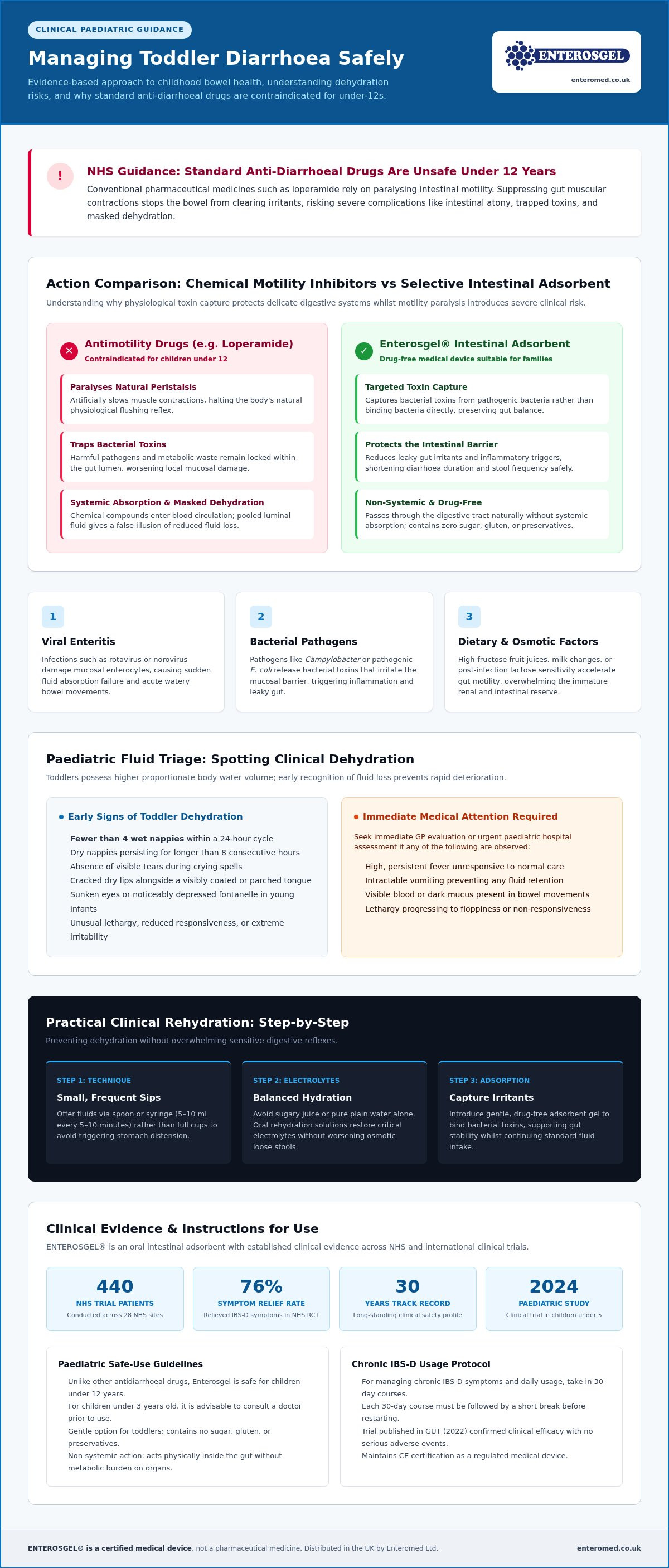
Most episodes trace back to one of three primary digestive disruptions:
- Viral infections: Pathogens such as rotavirus and norovirus damage enterocytes, the specialised cells lining the intestinal wall. This temporary mucosal injury prevents normal fluid absorption, causing rapid, watery bowel movements.
- Bacterial toxins: Common culprits like Campylobacter, Salmonella, or pathogenic E. coli produce harmful byproducts within the gut lumen. These bacterial toxins irritate the mucosal barrier, leading to sudden inflammation, increased secretions, and leaky gut symptoms.
- Dietary triggers and sensitivities: Excessive intake of fruit juices containing high fructose, sudden changes in cow's milk consumption, or temporary secondary lactose intolerance following a tummy bug can accelerate gut motility and cause loose stools.
Spotting Dehydration and Red Flag Symptoms
Parents must separate self-limiting tummy upsets from systemic dehydration. For accompanying digestive complaints, review our guide on toddler bloating and gas relief to distinguish routine abdominal discomfort from acute distension.
Monitor your child closely for these dehydration warning signs:
- Fewer than four wet nappies in 24 hours (or dry nappies lasting over eight hours)
- Absence of tears when crying, alongside cracked lips and a dry tongue
- Sunken eyes or a sunken fontanelle in younger toddlers
- Unusual lethargy, floppiness, or persistent irritability
Seek immediate GP or emergency paediatric evaluation if you observe high, unyielding fever, persistent vomiting preventing all fluid retention, or visible blood or dark mucus in the stool. These red flags indicate that home-based diarrhoea treatment for toddlers is insufficient and clinical diagnostic testing is required.
Why Standard Anti-Diarrhoeal Medications Are Unsafe for Children
Reaching into the medicine cabinet for standard adult relief is dangerous when caring for a sick child. Conventional pharmaceutical medicines for loose stools, particularly antimotility agents like loperamide, function by artificially slowing down normal gut motility. While halting bowel movements might seem helpful on the surface, paralysing digestive transit in young children carries severe clinical risks. An effective diarrhoea treatment for toddlers must support recovery without freezing normal muscular contractions.
When gut motility halts unnaturally, the bowel loses its natural flushing mechanism. Trapping fluids, pathogens, and metabolic waste inside developing intestines can lead to intestinal atony, severe abdominal distension, and life-threatening complications such as toxic megacolon. Chemical compounds also enter systemic circulation, placing unnecessary metabolic stress on a toddler's liver and kidneys. For these reasons, official NHS and MHRA clinical guidance strictly advises against giving antimotility medicines to children under 12 years old.
The Dangers of Motility-Slowing Drugs in Toddlers
Pharmaceutical anti-diarrhoeals carry specific contraindications in paediatric care:
- Paralysis of peristalsis: Suppressing muscular contractions stops the gut from expelling irritants, creating pooled fluid pockets that worsen internal swelling.
- Masked dehydration: Because fluid remains trapped within the dilated lumen rather than leaving as stool, parents may underestimate their child's true fluid loss.
- Systemic side effects: Active drug compounds circulate throughout the body, presenting risks of central nervous system depression, lethargy, and cardiovascular strain.
The Role of Bacterial Toxins in Childhood Diarrhoea
Watery stools are driven primarily by microbial irritants rather than muscular overactivity alone. Pathogenic bacteria produce harmful enterotoxins that bind to the mucosal surface, provoking inflammation and causing leaky gut. These bacterial toxins disrupt fluid transport across the intestinal barrier, drawing massive volumes of water into the bowel.
Safe clinical care prioritises binding these irritants rather than paralysing the intestinal tract. Unlike other antidiarrhoeal drugs, Enterosgel is safe for children under 12 years. As a drug-free oral intestinal adsorbent, it acts entirely within the gut lumen without entering the bloodstream. You can explore the published clinical research behind this approach on the Enteromed research portal to understand how physical adsorption supports gut recovery without chemical interference.
Step-by-Step Clinical Care: Rehydration and Safe Interventions at Home
Managing an acute digestive bug demands a calm, methodical routine. Immediate rehydration forms the core foundation of any successful diarrhoea treatment for toddlers, safeguarding circulating blood volume while the bowel lining settles. By pacing fluid intake and following a structured recovery plan, parents can support their toddler's natural healing process while minimising distress.
Fluid Management and Oral Rehydration Therapy
How you administer fluids is just as vital as what your toddler drinks. Large gulps distend an irritated stomach, triggering the vomiting reflex. Instead, use an oral rehydration solution (ORS) with balanced electrolytes to restore essential sodium and potassium lost in watery bowel movements.
- Administer 5 ml to 10 ml of fluid every five minutes using an oral syringe or teaspoon.
- Avoid offering large volumes of plain tap water, which can dilute essential blood electrolytes.
- Never give fruit squash, apple juice, or fizzy drinks, as simple sugars draw excess water into the bowel lumen and exacerbate loose stools.
Practical Feeding Strategies for Upset Tummies
Starving a gut infection is outdated clinical advice. Early refeeding provides essential nutrients that encourage mucosal repair. Continue normal milk feeds or breast milk throughout the illness to maintain intestinal stability. Once nausea subsides and appetite returns, introduce simple, easily absorbed starches such as plain white rice, toast, and bananas. Steer clear of rich sauces, high-fat items, and heavily seasoned meals until digestion normalises completely.
When to Seek Immediate Medical Evaluation
Home care has clear clinical limits. For children under 3 years old, it is advisable to consult a doctor prior to use of any targeted antidiarrhoeal interventions. Contact your GP or NHS 111 immediately if watery stools persist beyond 48 hours without improvement, if your toddler refuses fluids entirely, or if they appear unusually limp and difficult to wake.
To support your child's gut comfort alongside regular fluids, prepare your home medical cupboard in advance. Keep the drug-free Enterosgel 225g Tube ready to help calm digestive distress at the first sign of illness.
Enterosgel: A Drug-Free Intestinal Adsorbent for Toddlers
Enterosgel is a clinically proven medical device that works purely through physical action rather than chemical intervention. Unlike other antidiarrhoeal drugs, Enterosgel is safe for children under 12 years. Because it is completely non-systemic, the gel passes through the digestive tract without entering the bloodstream or placing stress on developing organs. Rather than artificially halting gut motility, it acts locally to target the root irritants driving stomach distress. You can examine clinical trial findings and safety data directly on the Enteromed research page.
How Physical Adsorption Traps Pathogenic Toxins
Understanding this approach requires distinguishing between bacteria and the toxins they create. Enterosgel does not bind or capture bacteria. Instead, it captures bacterial toxins from pathogenic bacteria which cause leaky gut and diarrhoea. Its porous mineral structure functions like a selective, microscopic sponge within the digestive tract. Our clinical guide on gut toxin binders explains how adsorption cleanses the bowel lumen by holding medium-sized toxic particles on its surface.
By preventing toxic substances from damaging the intestinal wall, the gel helps calm mucosal inflammation. Published research confirms this clinical benefit: in a 2025 paediatric feasibility trial involving children aged 6 to 59 months with acute diarrhoea, adding Enterosgel to standard care reduced the time to their last watery stool by a mean of 19.3 hours compared to control groups. Safely binding these irritants directly reduces the duration of diarrhoea and the number of loose stools while respecting natural gut clearance.
Safe Administration and Guidance for Young Children
Administering an effective diarrhoea treatment for toddlers shouldn't involve fighting over unpleasant flavours. Enterosgel is an exceptionally gentle option for children because it contains no sugar, gluten, or preservatives. It leaves behind no lingering taste or colour, making it straightforward to mix into a small amount of water, expressed milk, or oral rehydration fluids. For children under 3 years old, it is advisable to consult a doctor prior to use to confirm the underlying cause and ensure your toddler receives complete clinical supervision.
Restoring Toddler Gut Comfort Safely and Gently
Managing an upset tummy requires calm decisions, steady rehydration, and treatments that respect a child's natural physiology. Freezing intestinal muscle contractions with chemical drugs creates unnecessary risks for young children. Choosing an evidence-based diarrhoea treatment for toddlers means prioritising oral fluids and selecting non-systemic interventions that work gently where it matters most.
Enterosgel provides parents with dependable reassurance. Backed by over 30 years of established clinical use, this CE-certified Class IIa medical device is listed on the NHS Drug Tariff for prescription availability. It contains no sugar, gluten, lactose, or chemical preservatives, making it exceptionally gentle on developing digestive systems. By capturing harmful bacterial toxins directly in the gut lumen, it shortens recovery times without placing stress on small bodies.
Give your child comforting, targeted care when tummy bugs arrive. Explore Enterosgel 225g Tube for gentle, drug-free gut relief and help your little one return to happy, playful days with confidence.
Frequently Asked Questions
Can toddlers take adult antidiarrhoeal medicines?
No, toddlers must never take standard adult antidiarrhoeal medicines. The NHS explicitly advises against giving anti-motility medicines like loperamide to children under 12 without a prescription. These pharmaceutical drugs work by paralysing bowel muscles, which risks trapping harmful irritants inside small intestines and causing serious complications like severe distension or intestinal atony. When seeking a diarrhoea treatment for toddlers, focus on electrolyte replacement and non-chemical gut support.
Is Enterosgel safe for children under 12 years old?
Yes. It is a CE-marked Class IIa medical device that works through physical action rather than chemical disruption. It contains no sugar, gluten, or preservatives, making it gentle on delicate stomachs. Because it is non-systemic, the gel passes through the digestive system without entering the bloodstream or stressing immature organs.
How does an intestinal adsorbent differ from conventional diarrhoea medicine?
Conventional pharmaceutical medicines typically paralyse intestinal motility to halt bowel movements artificially. An intestinal adsorbent works entirely differently through a gentle physical mechanism. It does not bind or capture bacteria; instead, it captures bacterial toxins from pathogenic bacteria which cause leaky gut and diarrhoea. Safely trapping and expelling these irritants in the stool directly reduces the duration of diarrhoea and the number of loose stools without interfering with normal bowel function.
What should I feed my toddler while they have diarrhoea?
Continue normal milk feeds or breast milk alongside oral rehydration solutions to maintain essential nutrition. If your child feels hungry, offer bland, easily digestible carbohydrates such as dry toast, plain rice, porridge, crackers, and bananas. Avoid high-sugar juices, squashes, or dairy desserts, as simple sugars draw water into the digestive tract and worsen watery stools. Never force your toddler to eat if their stomach feels unsettled.
Can I give Enterosgel to a baby or child under three years old?
Yes, although for children under 3 years old, it is advisable to consult a doctor prior to use. This clinical recommendation ensures a healthcare professional correctly identifies the underlying cause of loose stools and checks fluid balance. The tasteless gel contains no sugar, gluten, or preservatives, allowing parents to blend it smoothly into drinking water or milk feeds once a GP confirms that targeted support is appropriate.
What are the earliest warning signs of dehydration in toddlers?
The earliest signs of paediatric dehydration include dry nappies persisting over eight hours, cracked lips, and crying without shedding tears. You might also notice dark yellow urine, unusual lethargy, or sunken eyes. Toddlers lose fluids rapidly during stomach upsets. Alongside starting an effective diarrhoea treatment for toddlers, prompt electrolyte fluids are essential. If your little one appears floppy or refuses drinks, contact your GP or NHS 111 immediately.
Share this article