

Gut Toxin Binders: A Clinical Guide to Intestinal Adsorbents and Digestive Relief
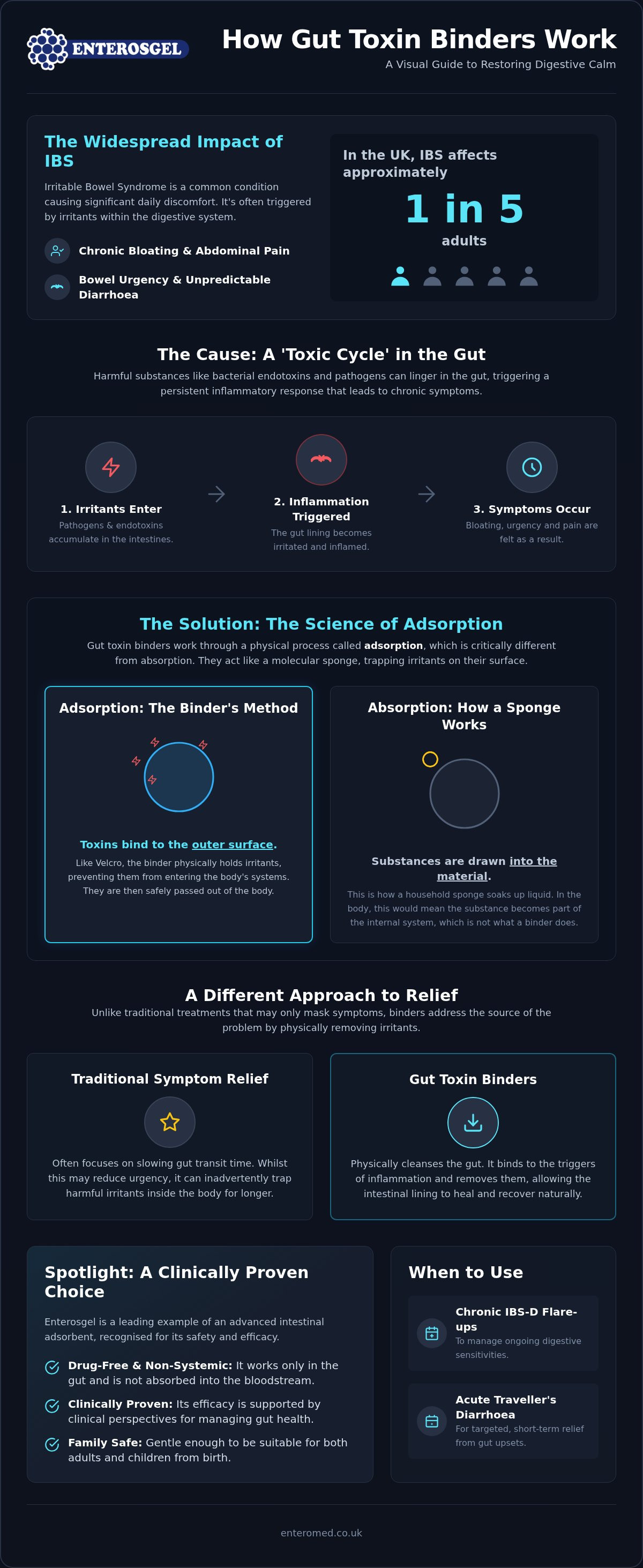
Approximately 1 in 5 adults in the UK live with the daily burden of Irritable Bowel Syndrome. This statistic represents millions of people facing chronic bowel urgency, persistent bloating, and the constant fear of unpredictable diarrhoea. When these symptoms strike, a gut toxin binder serves as a sophisticated, drug-free intervention. These intestinal adsorbents work like a physical sponge within the digestive tract. They don't interfere with your body's chemistry; instead, they capture and remove the toxins and pathogens that trigger your discomfort.
You likely feel frustrated by treatments that only mask symptoms or cause unwanted side effects. It's natural to want a solution that feels safe and grounded in clinical science. In this guide, we'll explain how gut toxin binders provide a mechanical barrier against digestive irritants. You'll learn how to use these tools to achieve a calmer, more predictable digestive system and reduce the frequency of loose stools. We'll examine the latest 2026 clinical perspectives on adsorbents like Enterosgel, ensuring you have the knowledge to manage your gut health with confidence.
Key Takeaways
- Identify how bacterial endotoxins and pathogens trigger the inflammatory responses that lead to chronic bloating and urgency.
- Understand the science of adsorption. This process uses a molecular sponge to trap irritants without them entering your bloodstream.
- Compare various materials to determine the most effective gut toxin binder for managing your specific digestive sensitivities.
- Learn when to apply targeted relief. This includes managing chronic IBS-D flare-ups and treating acute cases of traveller's diarrhoea.
- Discover why Enterosgel is the leading clinical, drug-free choice for families, suitable for adults and children from birth.
Understanding Gut Toxins and Their Impact on Digestive Health
The digestive system processes more than just nutrients. It acts as a primary gateway where the body encounters various environmental irritants, including food-borne pathogens and bacterial endotoxins. When these substances accumulate in the intestinal tract, they overwhelm the delicate mucosal lining. This buildup triggers a protective, yet uncomfortable, inflammatory response. Whilst inflammation is a natural defence mechanism, persistent irritation leads to the chronic symptoms of abdominal pain, bloating, and urgent bowel movements that many people find debilitating.
Many people suffer from what clinicians describe as a "toxic cycle" within the gut. In this scenario, irritants aren't efficiently eliminated through regular digestion. Instead, they linger or even recirculate in the intestinal tract, where they continue to provoke the immune system. This constant exposure keeps the gut in a highly reactive state, making it difficult for the internal environment to return to a balanced, calm baseline. Using a high-quality gut toxin binder helps break this cycle by physically trapping these substances so they can be safely excreted from the body.
The Role of Pathogens and Endotoxins
Bacterial endotoxins, specifically Lipopolysaccharides (LPS), are components of the cell walls of certain bacteria. When these bacteria die or multiply, LPS is released into the gut lumen. These molecules are highly irritating to the gut wall. They disrupt normal bowel behaviour by increasing permeability and stimulating the nerves that control intestinal contractions. Clearing these pathogens is essential for settling an upset stomach. Without removal, the body remains in a state of high alert, resulting in the unpredictable urgency often associated with IBS-D.
Why Traditional Treatments Sometimes Fall Short
Traditional pharmaceutical approaches for diarrhoea often focus on slowing down the transit time of the gut. Whilst this provides temporary relief from urgency, it can inadvertently keep harmful irritants inside the body for longer. Chemical symptom suppression doesn't address the underlying cause of the irritation. In contrast, physical removal offers a more direct solution. Methods such as using Activated charcoal or advanced intestinal adsorbents focus on cleansing the gut lumen.
A mechanical gut toxin binder works differently than a drug. It doesn't enter the bloodstream or interfere with the natural microbiome. Instead, it acts like a filter, capturing toxins whilst leaving beneficial bacteria undisturbed. This physical approach ensures that the "trigger" for inflammation is removed from the body entirely, allowing the intestinal lining to heal and recover naturally without the risk of long-term side effects.
The Science of Adsorption: How Toxin Binders Organise Gut Relief
The efficacy of a gut toxin binder relies on a specific physical phenomenon known as adsorption. Whilst the term sounds similar to absorption, the mechanical process is entirely different. Clinicians often describe high-quality binders as "molecular sponges." These substances possess a vast internal surface area filled with microscopic pores. These pores are precisely sized to capture medium-weight molecules, such as bacterial endotoxins and pathogens, whilst allowing smaller, beneficial nutrients to pass through undisturbed. This selective nature ensures that the treatment is both targeted and efficient.
Adsorption vs Absorption: A Critical Distinction
Adsorption is the physical adhesion of molecules to the surface of an adsorbent, ensuring they are trapped externally rather than being absorbed into the body's internal systems.
To visualise the difference, think of a household sponge versus Velcro. Absorption is like a sponge soaking up liquid; the substance travels deep inside the material and becomes part of it. Adsorption is like Velcro. The "hooks" of the binder catch the "loops" of the toxin, holding them firmly on the surface. For gut health, this distinction is vital. Because the toxins are stuck to the outside of the binder, they cannot be processed by the body. They remain trapped until they are naturally excreted, preventing them from recirculating or causing further irritation.
The Mechanical Action of Intestinal Adsorbents
Medical-grade intestinal adsorbents are non-systemic. This means they don't enter the bloodstream or interact with your organs. Instead, the binder travels through the digestive tract as a stable, inert structure. It doesn't get digested or altered by stomach acid. As it moves, it gathers irritants like a magnet. This mechanism is supported by rigorous evidence, such as a clinical study on intestinal adsorbents, which confirms how physical binding reduces the duration and severity of bowel distress.
The entire complex, consisting of the gut toxin binder and the trapped toxins, is eliminated naturally through the stool. This physical removal provides a clean, drug-free way to settle the gut. It's a medical-first approach that prioritises safety and purity. If you are seeking a reliable way to manage chronic symptoms, you might consider the professional range of intestinal adsorbents designed for long-term gut stability. Because the material is not absorbed, it remains an inclusive choice for vulnerable groups, including children and those with sensitive systems.
Comparing Different Types of Gut Toxin Binders
Selecting an appropriate gut toxin binder requires a careful evaluation of how different materials interact with the intestinal environment. Whilst many substances possess adsorbent properties, their clinical utility varies based on their molecular structure, selectivity, and safety profile. A medical-grade binder must be capable of removing pathogens without stripping the body of the essential nutrients it needs to recover. Understanding these differences helps you choose a solution that supports long-term digestive stability.
Activated Charcoal and Natural Clays
Activated charcoal is perhaps the most well-recognised adsorbent. It's been used for decades in emergency medicine to treat acute poisoning. However, its use for daily IBS management is often limited. Charcoal is non-selective; it binds to almost anything in its path, including medications and vital nutrients. This can lead to nutritional deficiencies over time. Patients also frequently report side effects such as constipation and black stools, which can complicate the clinical picture for those already suffering from bowel irregularities.
Natural clays, including bentonite and zeolites, are common alternatives found in health shops. These are typically processed into dry powders or capsules. Whilst they are effective at binding certain heavy metals, they often have a gritty texture or a distinctively earthy taste that many find off-putting. There is also a concern regarding purity. Unless a clay is certified as a medical device, it may contain trace amounts of contaminants that could further irritate a sensitive digestive system. This lack of precision makes them less ideal for targeted gut relief.
Modern Organic Mineral Gels
Polymethylsiloxane polyhydrate represents a modern, clinical evolution in gut health. This organic mineral gel is the active ingredient in Enterosgel. Unlike older-generation binders, it features a porous structure specifically designed to target medium-weight molecules. This includes bacterial endotoxins and pathogens, whilst leaving smaller, beneficial molecules like electrolytes and vitamins untouched. This selectivity is crucial for maintaining your health whilst you manage chronic symptoms.
Gel-based adsorbents offer several practical advantages over dry powders. They are pre-hydrated, meaning they don't draw moisture from the gut wall, which helps prevent the constipation often associated with charcoal. Modern gels are also tasteless and odourless, making them far easier to incorporate into a daily routine. For families, the availability of options like Enterosgel Kids 0+ ensures that even the most vulnerable patients can access safe, effective relief. Choosing a gel-based gut toxin binder provides a high-performance solution that balances clinical efficacy with patient comfort.
Identifying When to Use a Gut Toxin Binder for IBS and Diarrhoea
A gut toxin binder is most effective when used strategically to address specific intestinal disruptions. For many, this means reaching for relief during acute episodes of food poisoning or a sudden IBS-D flare-up. In these moments, the digestive tract is overwhelmed by pathogens and endotoxins that trigger rapid transit and discomfort. By introducing an adsorbent early, you can capture these irritants before they cause prolonged distress. This mechanical intervention provides a clear pathway to recovery without the use of harsh chemicals.
Travel often introduces unfamiliar bacteria to the digestive system, leading to significant disruption. Taking a binder preventatively or at the first sign of an upset stomach can reduce the severity of symptoms whilst abroad. For those planning a trip, The Essential Guide to Traveller’s Diarrhoea Prevention provides detailed protocols for maintaining gut stability during your holiday. Having a reliable solution on hand allows you to manage symptoms quickly, ensuring that digestive issues don't overshadow your travel experience.
For maximum efficacy, timing is critical. Binders are highly efficient at capturing molecules, so they should be taken approximately two hours away from food or other oral medications. This gap ensures the binder focuses solely on harmful toxins rather than interfering with your body’s absorption of nutrients or pharmaceutical treatments. Following this window allows the adsorbent to travel through the gut lumen unimpeded, gathering irritants as it moves through the system.
Managing IBS-D and Chronic Bloating
Chronic bloating often results from gas-producing irritants that linger in the intestinal tract. A gut toxin binder acts as a mechanical filter, removing the metabolic waste products of harmful bacteria that lead to painful distension and abdominal cramps. For those managing long-term conditions, reducing the "toxic load" can lead to a less reactive system and fewer instances of urgent bowel movements. You can find more structured advice in the Irritable Bowel Syndrome Relief UK: A Clinical Guide.
Safety for the Whole Family: From Infants to Adults
Safety is a primary concern when treating vulnerable groups. Because clinical adsorbents like Enterosgel are non-systemic and drug-free, they are suitable for infants from birth. They provide a gentle, protective layer that captures pathogens without the risk of systemic side effects or allergic reactions. This makes them an essential tool for parents dealing with Toddler Bloating and Gas Relief. These products are free from preservatives, gluten, and sugar, ensuring they meet the high standards required for paediatric care.
To ensure you're prepared for the next flare-up, you can browse medical-grade intestinal adsorbents that offer safe, drug-free relief for the whole family.
Enterosgel: The Clinically Proven Intestinal Adsorbent for Gut Relief
Enterosgel stands as the primary clinical choice for those seeking a high-performance gut toxin binder. It is a drug-free, non-allergenic gel that works by physically removing pathogens and irritants from the intestinal tract. Because it is non-systemic, it isn't absorbed into the bloodstream. This makes it an exceptionally safe option for individuals with sensitive systems or those who wish to avoid the side effects associated with pharmaceutical anti-diarrhoeals. It doesn't disrupt the natural balance of the gut; instead, it provides a clean, mechanical way to restore order.
Clinical Validation and 30 Years of Use
Enterosgel is a registered Class IIa medical device. This classification is significant. It confirms that the product's efficacy is based on a physical mechanism of action rather than a chemical or metabolic one. It is not a mere food supplement. With over 30 years of clinical application, it has become a staple in UK pharmacies for managing acute diarrhoea and IBS symptoms. You can read more about its rigorous testing and history in our detailed guide, Enterosgel: The Clinically Proven Solution.
Choosing Your Format: Tubes vs Sachets
The brand offers several formats to suit different lifestyles and clinical needs. The 225g tube is the most cost-effective choice for home use, providing a steady supply for chronic management of IBS-D or recurring bloating. For those on the move, the Enterosgel Sachets (Pack of 10) offer portability and convenience, fitting easily into a travel bag or desk drawer. These are ideal for travellers who need immediate access to relief without the need for measuring doses. New users often find the Enterosgel IBS Starter pack particularly helpful. It combines the 225g tube with a pack of sachets to cover both home and away scenarios.
This "medical-first" approach extends to the youngest members of the family. Enterosgel Kids 0+ is specifically formulated to provide the same gentle protection for babies and children. It is free from preservatives, sugar, and gluten, ensuring it remains an inclusive tool for paediatric care. By choosing a medical device over a simple food supplement, you ensure that your gut toxin binder meets the highest standards of purity and clinical validation. It is the smartest, safest way to restore intestinal balance and achieve lasting digestive relief.
Achieving Long-Term Stability for Your Digestive Health
Managing chronic bowel urgency or persistent bloating shouldn't feel like a constant battle. By incorporating a high-performance gut toxin binder into your daily routine, you move beyond mere symptom suppression. You address the underlying cause by physically removing the bacterial endotoxins and pathogens that trigger inflammation. This mechanical process ensures that irritants are trapped and safely excreted, allowing your intestinal lining the necessary space to recover naturally.
Enterosgel offers a medical-grade solution backed by over 30 years of clinical expertise. It's drug-free, non-systemic, and clinically proven to provide relief from IBS-D and acute diarrhoea. Because it isn't absorbed into the bloodstream, it remains a safe and gentle choice for the whole family, including infants from birth. You can trust in a solution that prioritises purity and scientific validation over temporary fixes.
Explore the Enterosgel range for clinically proven gut relief and take the first step towards a calmer, more predictable digestive system. You deserve the confidence that comes with lasting intestinal stability.
Frequently Asked Questions
What is the best gut toxin binder for IBS-D?
Enterosgel is widely considered the leading clinical option for IBS-D. It is a medical device specifically proven to reduce the duration of diarrhoea and abdominal pain. Unlike generic binders, its porous structure is optimised to capture the endotoxins that trigger bowel urgency without interfering with your body's chemistry. This mechanical action ensures you get reliable relief without the side effects often associated with pharmaceutical medications, providing a safer long-term solution for managing chronic symptoms.
Can I take a gut toxin binder every day?
Yes, you can use a gut toxin binder for both acute relief and long-term symptom management. Because Enterosgel is non-systemic and not absorbed into the bloodstream, it doesn't build up in the body or cause metabolic dependency. For chronic conditions like IBS, many users find that a daily maintenance dose helps keep their digestive system calm. However, you should always follow the specific dosage instructions provided on the packaging or by your healthcare professional.
Do toxin binders cause constipation?
Whilst some older-generation binders like activated charcoal can lead to constipation, modern gel-based adsorbents are designed to avoid this. Enterosgel is a pre-hydrated organic mineral gel. It doesn't draw water out of the intestinal tract, which is the primary cause of constipation with dry powder binders. This makes it a much gentler option for those with sensitive digestive systems who need to manage loose stools without swinging to the other extreme of discomfort.
How long does it take for a gut binder to work?
Most users experience relief within 1 to 2 hours of taking their first dose. The binder begins working as soon as it reaches the stomach and moves into the intestinal tract, where it starts adsorbing toxins immediately. For acute issues like food poisoning or sudden flare-ups, symptoms typically settle quickly. For chronic IBS-D, it may take a few days of consistent use to achieve full stability and a significant reduction in stool frequency and urgency.
Will a gut toxin binder interfere with my vitamins or medication?
Binders are highly efficient at capturing molecules, so they can potentially bind to oral medications or vitamins if taken at the same time. To prevent this, you should leave a gap of at least 2 hours between taking Enterosgel and any other medications or supplements. This timing ensures that the binder focuses on removing harmful pathogens whilst allowing your body to absorb the nutrients and pharmaceutical treatments it needs to stay healthy and functional.
Is Enterosgel safe for babies and children?
Enterosgel is entirely safe for babies and children from birth (0+). It is a drug-free, non-allergenic medical device that contains no preservatives, sugar, or gluten. Because it works mechanically and isn't absorbed by the body, it is an ideal "gentle protector" for young systems. Parents often use the Enterosgel Kids 0+ format to treat common paediatric issues like bloating, gas, and acute diarrhoea with complete peace of mind and professional confidence.
What is the difference between activated charcoal and Enterosgel?
The main difference lies in selectivity and physical form. Activated charcoal is a non-selective dry powder that binds to almost everything, including essential nutrients and medications. Enterosgel is a sophisticated organic mineral gel with a porous structure specifically calibrated to target medium-weight toxins and pathogens. It leaves smaller, beneficial molecules like vitamins and electrolytes alone. Additionally, Enterosgel's gel format is pre-hydrated, making it much less likely to cause constipation than older charcoal-based products.
Can I use a gut toxin binder for food poisoning relief?
A gut toxin binder is an excellent tool for managing the symptoms of food poisoning. It works by physically trapping the harmful bacteria and toxins that have entered your system through contaminated food. By capturing these irritants and carrying them out of the body through the stool, the binder helps reduce the severity and duration of vomiting and diarrhoea. It provides a clean, drug-free way to settle an upset stomach quickly without using harsh chemicals.
Share this article