

Foods to Avoid with Diarrhoea: A Clinical Checklist for UK Patients
What if the very foods you're eating to 'settle' your stomach are actually prolonging your discomfort? Physical discomfort. Sudden urgency. Persistent anxiety. When your digestive system is in distress, the constant worry about your next meal can feel overwhelming. You've likely encountered conflicting advice on what to eat, which only adds to the confusion during an already stressful time. Identifying the specific foods to avoid with diarrhoea UK patients often encounter is the first step toward regaining control. It isn't just about what you remove from your plate; it's about knowing why certain ingredients irritate an already sensitive gut lining.
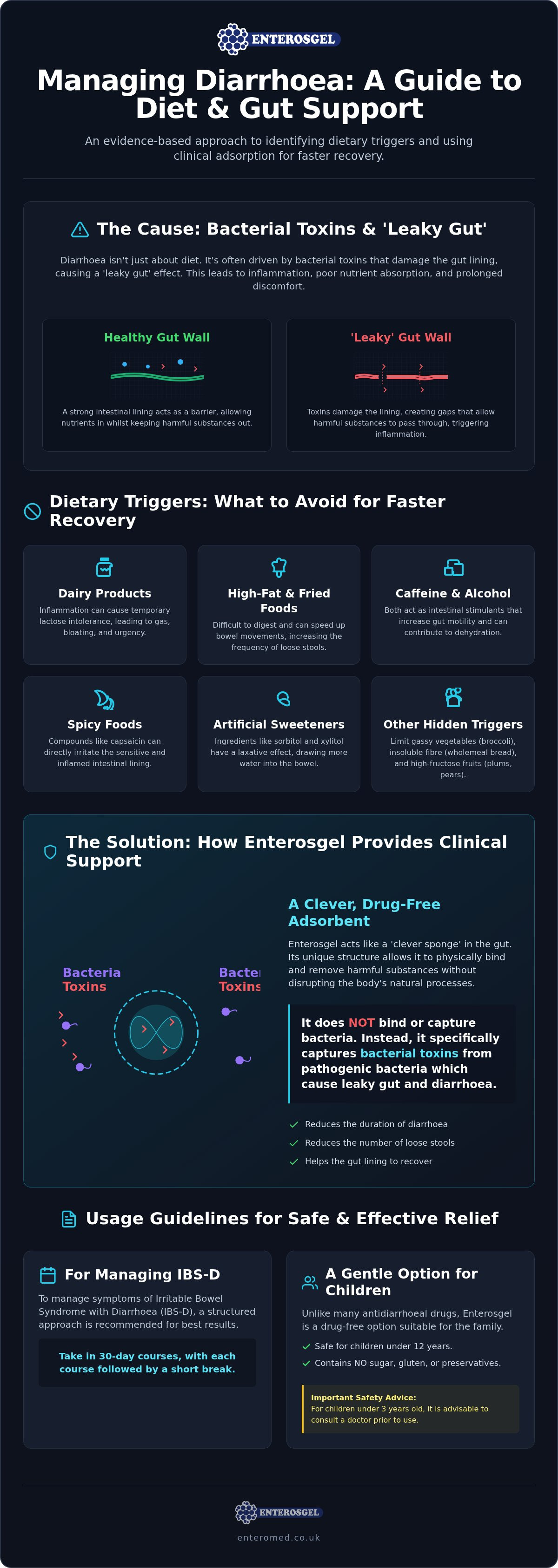
This guide provides a clear, clinical checklist of triggers, from high-fibre grains to hidden sugars, to help you navigate your recovery with confidence whilst supporting your gut health. Beyond simple avoidance, we'll explore how to support your body using advanced clinical adsorption. Enterosgel offers a gentle, drug-free solution that acts like a clever sponge in the gut. It doesn't bind or capture bacteria; instead, it specifically captures bacterial toxins from pathogenic bacteria which cause leaky gut and diarrhoea. By removing these harmful substances, you can significantly reduce the duration of diarrhoea and the number of loose stools, providing the stability your body needs.
Key Takeaways
- Identify the specific foods to avoid with diarrhoea UK patients typically encounter, such as dairy and high-fat triggers that can exacerbate physical discomfort.
- Understand the clinical link between bacterial toxins and 'leaky gut' to better manage the underlying causes of your digestive urgency.
- Discover safe, low-fibre dietary foundations and lean proteins that provide essential nutrition whilst allowing your intestinal lining the recovery time it needs.
- Learn how to reduce the duration of symptoms by using a drug-free adsorbent that captures bacterial toxins from pathogenic bacteria rather than the bacteria themselves.
- Gain clarity on managing long-term IBS-D with 30-day treatment courses and identifying gentle options for children; for children under 3 years old, it is advisable to consult a doctor prior to use.
Understanding the Impact of Diet on Diarrhoea Duration
Diarrhoea is often the body's natural defence mechanism to expel harmful substances. However, when inflammation occurs, the gut becomes significantly less efficient at processing even basic nutrients. Understanding the specific foods to avoid with diarrhoea UK patients typically encounter is essential because the wrong dietary choices can turn a brief episode into a prolonged period of distress. Reducing the number of loose stools is directly linked to how quickly you can remove these irritants from your system.
Clinically, we distinguish between two primary mechanisms. Osmotic diarrhoea occurs when undigested food particles remain in the bowel and draw water into the stool. Secretory diarrhoea is more complex and is frequently triggered by bacterial toxins. These toxins from pathogenic bacteria cause a "leaky gut" effect, where the intestinal lining becomes permeable and loses its ability to regulate fluid and electrolytes. Whilst dietary management addresses the osmotic side, clinical intervention is often needed to manage the secretory triggers.
The Role of Bacterial Toxins
Bacterial toxins are the primary drivers of persistent intestinal inflammation. Whilst the body attempts to flush these out naturally, the toxins often damage the delicate intestinal mucosa, leading to a cycle of urgency. To break this cycle, clinical adsorption provides a physical method of trapping these harmful substances. Enterosgel acts as a clever, drug-free adsorbent. It does not bind or capture bacteria themselves; instead, it specifically captures bacterial toxins from pathogenic bacteria that cause the leaky gut effect. By physically trapping these toxins, it reduces the duration of diarrhoea and helps the gut lining to recover more effectively.
Why Your Gut Reacts to Specific Foods
An inflamed gut is a hypersensitive gut. During an acute flare-up, the body often experiences a temporary loss of vital digestive enzymes, such as lactase. This makes common dairy products particularly difficult to process. Additionally, inflammation increases gut motility. This means food moves through the digestive tract too quickly for proper nutrient absorption. Adopting a low-residue approach is necessary to minimise mechanical irritation of the bowel wall. By choosing easily digestible options and identifying the correct foods to avoid with diarrhoea UK guidelines recommend, you provide your digestive system with the rest it needs to repair the damaged mucosa and return to normal function.
The Essential Checklist: Foods and Drinks to Avoid
Managing an acute episode requires a disciplined approach to nutrition. Identifying the specific foods to avoid with diarrhoea UK patients should prioritise can significantly reduce intestinal distress. When the gut is inflamed, its ability to process complex molecules is compromised, making certain groups highly irritant. Avoiding these triggers prevents further osmotic pressure and mechanical irritation within the bowel.
- Dairy products: Inflammation often leads to a temporary secondary lactose intolerance. Without sufficient lactase enzymes, undigested dairy causes further bloating, gas, and urgency.
- High-fat and fried foods: Excess lipids are difficult for a sensitive gut to emulsify. These foods often trigger the gastrocolic reflex, which speeds up bowel movements and increases stool frequency.
- Caffeine and alcohol: Both act as potent intestinal stimulants. They increase gut motility whilst contributing to systemic dehydration, making recovery more difficult.
- Spicy foods: Capsaicin, the active compound in chillies, is a direct irritant to the already raw intestinal mucosa.
- Artificial sweeteners: Sugar-free sweets and "diet" products containing sorbitol or xylitol have a natural laxative effect, drawing excess water into the colon.
Hidden Triggers in Your Cupboard
Even foods typically considered healthy can be problematic during a flare-up. Cruciferous vegetables like broccoli and cabbage produce excess gas amongst patients with sensitive bowels. Similarly, insoluble fibres found in wholemeal bread or bran can act as mechanical irritants to the gut wall. Fructose-heavy fruits, such as plums and pears, should also be limited as they can exacerbate osmotic diarrhoea. To support your recovery alongside these dietary changes, using a clinical adsorbent like Enterosgel can help; it does not bind bacteria but instead captures bacterial toxins from pathogenic bacteria to reduce the duration of symptoms.
Drinks That Worsen Dehydration
Hydration is critical, but the choice of fluid matters. Carbonated beverages introduce air into the digestive tract, increasing painful bloating and pressure. Very cold drinks should be avoided as they can trigger sudden stomach cramping in a hyper-sensitive gut. Whilst fruit juices are often considered "clear liquids," their high fructose content can actually draw more water into the bowel, worsening the condition. Stick to room-temperature water or specialised oral rehydration salts to ensure safe, effective fluid replacement without further irritating the lining.
Safe Alternatives and Rehydration Strategies
Whilst identifying the correct foods to avoid with diarrhoea UK guidelines highlight is the first step, providing the gut with gentle nutrition is essential for clinical recovery. A damaged intestinal mucosa requires time to heal without the stress of processing complex fats or insoluble fibres. Knowing these foods to avoid with diarrhoea UK patients often mistakenly consume allows for a faster return to normal function. The objective is to provide maximum nutrition with minimal mechanical irritation to the bowel wall.
- The BRAT principles: Bananas, white rice, applesauce, and white toast form a reliable, low-residue foundation. These foods are easily absorbed and provide necessary carbohydrates for energy.
- Lean proteins: Steamed chicken breast or white fish like cod offer essential amino acids without the inflammatory effects of fats found in red meat or fried alternatives.
- Starchy vegetables: Peeled potatoes and carrots, when thoroughly cooked, are gentle on the digestive tract and help provide potassium.
- Hydration: Clear broths and oral rehydration solutions are superior to plain water as they replenish lost electrolytes and glucose.
Building a Low-Residue Meal Plan
A low-residue diet is a clinical tool designed to provide bowel rest by minimising the volume and frequency of stools. Transitioning from a liquid-only approach to solids should be done gradually to prevent a relapse of symptoms. Consuming small, frequent meals rather than three large ones reduces the workload on the digestive system. This methodical approach ensures the gut isn't overwhelmed whilst the intestinal lining is still hyper-sensitive.
Managing Recovery for Children
Paediatric recovery requires a cautious approach. For toddlers and older children, plain crackers or mashed bananas are safe first foods. It's critical to avoid fruit juices, as their high sugar content can exacerbate osmotic diarrhoea in young patients. For children under 3 years old, it is advisable to consult a doctor prior to use. Enterosgel is a gentle option for children because it contains no sugar, gluten, or preservatives. Unlike other antidiarrhoeal drugs, it is safe for children under 12 years. You can find more specific advice in our toddler bloating and gas relief guide. To help reduce the duration of symptoms safely, consider using Enterosgel Kids 0+ to capture the bacterial toxins causing the distress.
Clinical Support: Using Intestinal Adsorbents for Faster Relief
Whilst identifying the foods to avoid with diarrhoea UK patients should be aware of is a vital step, dietary management alone often addresses only the symptoms rather than the underlying cause. Many conventional treatments work by slowing down the gut's natural motility. This can be counterproductive, as it potentially traps harmful substances within the bowel. Clinical adsorption offers a different approach. Enterosgel is a drug-free intestinal adsorbent that works physically to remove irritants from the digestive tract.
The mechanism is precise and gentle. It specifically captures bacterial toxins from pathogenic bacteria which cause leaky gut and diarrhoea. It does not bind or capture the bacteria themselves, allowing your natural gut flora to remain undisturbed. Because the gel is not absorbed into the bloodstream, it passes through the body safely, making it a reliable choice for clinical gut health. For those seeking a long-term solution, the Enterosgel 225g Tube for clinical gut health provides a high-performance tool for home use.
A Safe Choice for the Whole Family
Safety is paramount when treating vulnerable groups. Unlike many other antidiarrhoeal drugs, Enterosgel is safe for children under 12 years. It is a gentle option for children because it contains no sugar, gluten, or preservatives. For children under 3 years old, it is advisable to consult a doctor prior to use. The sachet format provides a convenient "on-the-go" solution for travellers, ensuring that you have immediate support if dietary changes alone aren't enough to manage a sudden flare-up whilst abroad.
Long-Term Management for IBS-D
For individuals living with chronic conditions, a structured protocol is essential for maintaining quality of life. Regarding the treatment of IBS-D symptoms and daily usage, the product should be taken in 30-day courses, with each course followed by a short break. This method helps to consistently capture the toxins that trigger chronic urgency and abdominal pain. You can learn more about these strategies in our clinical guide to managing IBS symptoms. By combining the right dietary choices with clinical adsorption, you can effectively reduce the duration of diarrhoea and the number of loose stools.
Regaining Digestive Stability and Control
Managing your recovery effectively starts with identifying the specific foods to avoid with diarrhoea UK patients often encounter. By eliminating dietary irritants like lactose and high-fat triggers, you provide your gut lining with the essential rest it needs to heal. However, dietary changes are only one part of a clinical recovery programme. Addressing the underlying cause of inflammation is necessary to break the cycle of urgency and discomfort.
Enterosgel supports this process through advanced clinical adsorption. It doesn't bind or capture bacteria; instead, it captures bacterial toxins from pathogenic bacteria which cause leaky gut and diarrhoea. This targeted action reduces the duration of diarrhoea and the number of loose stools safely. Unlike many other antidiarrhoeal drugs, it's safe for children under 12, though As a drug-free, gluten-free, and sugar-free solution, it remains a gentle protector for the whole family.
Order Enterosgel today for drug-free diarrhoea relief and take the first step toward restoring your digestive balance. You don't have to navigate these symptoms alone; with the right clinical support, lasting comfort is within reach.
Frequently Asked Questions
Is it safe to give my child antidiarrhoeal medication?
Enterosgel is safe for children under 12 years, unlike many other antidiarrhoeal drugs. It provides a gentle option because it contains no sugar, gluten, or preservatives. By capturing bacterial toxins from pathogenic bacteria rather than the bacteria themselves, it reduces the duration of diarrhoea and the frequency of loose stools without being absorbed into the body.
What is the fastest way to stop diarrhoea naturally?
The most effective method involves a dual approach of dietary restriction and clinical adsorption. Removing gut irritants like fat and spice prevents further inflammation. Simultaneously, using an intestinal adsorbent like Enterosgel captures bacterial toxins that cause the leaky gut effect. This physical action reduces the duration of symptoms and the number of loose stools, allowing your intestinal mucosa to recover more quickly than through dietary changes alone.
Can I eat yogurt whilst I have diarrhoea?
Yes, Enterosgel is clinically proven for the management of IBS-D. Regarding the treatment of IBS-D symptoms and daily usage, the product should be taken in 30-day courses, with each course followed by a short break. This protocol helps manage chronic urgency, abdominal pain, and bloating by consistently capturing the bacterial toxins that irritate the gut lining. It provides a drug-free way to maintain stability without the side effects of motility-slowing medications.
What drinks should I avoid when I have an upset stomach?
You should avoid beverages that act as intestinal stimulants or contribute to osmotic pressure. Caffeine and alcohol are primary irritants that can increase gut motility and worsen dehydration. Carbonated drinks often cause painful bloating due to trapped gas. Additionally, sugary fruit juices should be avoided as high fructose levels draw excess water into the bowel. Stick to room-temperature water, clear broths, or specialised oral rehydration solutions for safe fluid replacement.
How long should I follow a restrictive diet after symptoms stop?
It is advisable to maintain a low-residue diet for at least 24 to 48 hours after your last loose stool. Rapidly reintroducing high-fibre or fatty foods can overwhelm a still-sensitive digestive system and trigger a relapse. Start with small, frequent portions of plain starches like white rice or toast. If these are tolerated well, you can gradually reintroduce lean proteins and cooked vegetables before returning to your normal dietary habits.
Share this article