

How to Manage a Sensitive Stomach: A Practical UK Clinical Guide
Strict elimination diets rarely resolve chronic digestive distress on their own. Sudden urgency, sharp abdominal cramping, and unpredictable bowel movements often persist regardless of which foods you remove. If you find yourself anxious about leaving home, mapping out public toilets, or dreading ordinary meals, learning how to manage a sensitive stomach requires looking beyond simple dietary restriction. Living with an unpredictable gut is exhausting, especially when cutting out your favourite meals fails to bring genuine digestive stability.
True relief begins when you address the physical mucosal irritants and bacterial toxins that irritate the gut lining, rather than constantly shrinking your plate. In this clinical guide, you will discover evidence-led strategies, sensible dietary adjustments, and gut-barrier therapies to calm sensitivity and restore digestive comfort. We examine the biological mechanisms triggering gut reactivity, explore practical methods to identify personal food triggers without compromising nutrition, and introduce a safe, drug-free protocol to protect your intestinal barrier daily.
Key Takeaways
- Understand how gut barrier irritation and visceral hypersensitivity trigger sudden cramping, moving beyond the assumption that diet is the sole culprit.
- Learn practical, step-by-step methods on how to manage a sensitive stomach using a structured 14-day tracking approach without needlessly restricting your nutrition.
- Implement simple mealtime habits that ease mechanical strain on the gastric mucosa and help calm an overactive gastrocolic reflex.
- Discover how drug-free oral intestinal adsorbents work physically to capture pathogenic bacterial toxins, supporting intestinal stability without systemic absorption.
- Recognise clinical red flags and learn which objective tests a GP should conduct to rule out underlying bowel conditions.
What Is a Sensitive Stomach and What Causes It?
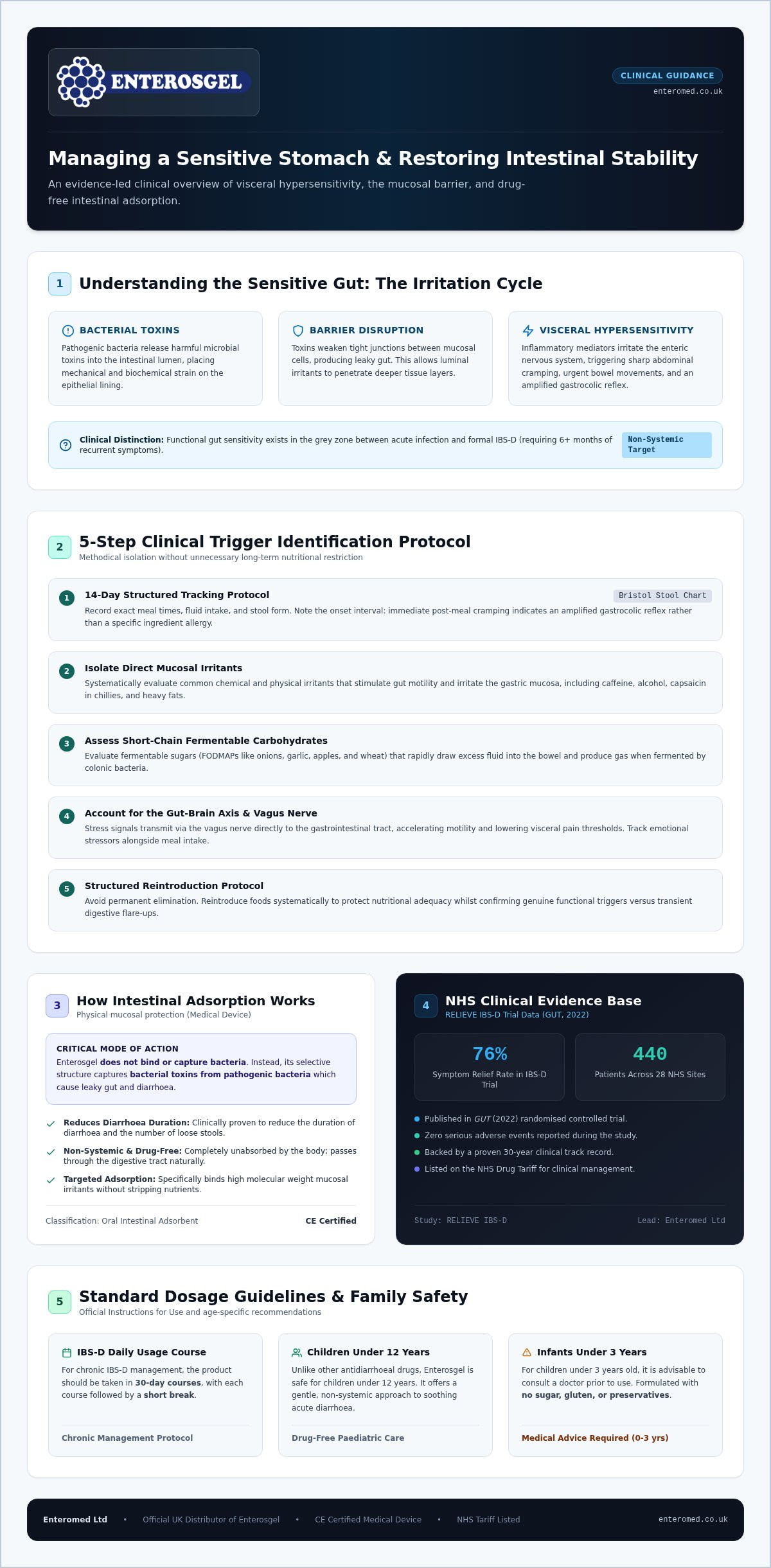
A sensitive stomach is characterised by heightened gastrointestinal reactivity, where ordinary digestion triggers persistent discomfort, abdominal cramping, or sudden urgency. When low-grade irritation disrupts the mucosal lining, local nerve endings become hyper-responsive; this process is known as visceral hypersensitivity, turning normal digestive contractions into sharp pain. While acute diarrhoea typically stems from short-lived viral or bacterial infections, and IBS-D represents a formal functional diagnosis requiring at least six months of clinical symptoms, non-specific sensitivity often exists in the grey zone between them.
Understanding how to manage a sensitive stomach requires looking past temporary food intolerances. Sustained intestinal stability depends entirely on an intact, resilient epithelial barrier. When this mucosal defence weakens, everyday digestive processes quickly become distressing.
Recognising Common Signs of Digestive Hypersensitivity
Digestive sensitivity presents through a predictable cluster of symptoms. Patients frequently report:
- Recurrent loose stools or unpredictable bowel frequency
- Sharp, colicky post-meal cramping
- Distension, bloating, and excessive gas
- Urgent bowel movements immediately following a meal
That sudden post-prandial urgency relates directly to the gastrocolic reflex. Eating normally prompts the colon to contract and make space for incoming food. In a hypersensitive gut, this physiological signal is dramatically amplified, transforming a subtle digestive reflex into an urgent rush for the bathroom.
The Role of Bacterial Toxins and the Gut Barrier
Dietary triggers rarely act alone. In many cases, gut sensitivity stems from mucosal disruption driven by harmful microbial by-products. Bacterial toxins released by pathogenic bacteria irritate the delicate epithelial lining, directly weakening the tight junctions that seal intestinal cells together. This damage creates intestinal permeability, commonly referred to as leaky gut.
Once the epithelial barrier is compromised, these toxins and luminal antigens penetrate deeper tissue layers. This influx stimulates inflammatory mediators, which continually irritate the enteric nervous system and trigger persistent visceral pain. True relief therefore depends on clearing these offending irritants. Exploring how a physical gut toxin binder shields mucosal tissue offers a practical path toward restoring intestinal stability, giving clinicians and patients a targeted approach for how to manage a sensitive stomach without relying on systemic drugs.
How to Identify Your Triggers: A Step-by-Step Plan
Pinpointing why your digestive system flares up requires a methodical, clinical approach rather than guesswork. When learning how to manage a sensitive stomach, eliminating entire food groups blindly often creates nutritional deficiencies without uncovering the actual culprits. A structured five-step framework isolates physical triggers while protecting your overall diet.
Step 1 & 2: Establishing a Structured Food and Symptom Diary
Start with a 14-day tracking protocol. Record exact meal times, fluid intake, and stool consistency using the Bristol Stool Chart. Note the delay between eating and the onset of cramping or urgency; immediate symptoms often indicate an exaggerated gastrocolic reflex rather than a specific ingredient intolerance. During this window, isolate standard mucosal irritants such as caffeine, alcohol, capsaicin in chillies, and heavy fats that place heavy demands on gut motility.
Step 3: Navigating Fermentable Carbohydrates (FODMAPs)
Short-chain fermentable carbohydrates draw excess fluid into the bowel and produce gas rapidly when fermented by colonic bacteria. Common ingredients like onions, garlic, apples, and wheat frequently trigger distension in sensitive individuals. Systematically assessing your response to these fermentable sugars aligns closely with standard irritable bowel syndrome relief UK clinical guidance, helping identify specific carbohydrate triggers without locking you into unnecessary long-term restriction.
Step 4 & 5: Accounting for the Gut-Brain Axis and Reintroduction
Physical stress signals travel directly along the vagus nerve to the gastrointestinal tract, accelerating motility and lowering pain thresholds. Tracking emotional pressure alongside your meals helps differentiate stress-induced spasms from dietary reactions. Crucially, functional sensitivities differ from IgE-mediated allergies, which cause systemic immune responses such as rashes or swelling.
Once your symptoms settle, reintroduce eliminated foods individually every three days to pinpoint your tolerance threshold. If you need gentle barrier support while identifying food triggers, solutions from enteromed.co.uk provide drug-free intestinal stability to keep your recovery on track.
Daily Habits and Dietary Strategies to Soothe Digestion
Modifying daily eating behaviours reduces physical stress on the digestive tract just as effectively as altering the foods on your plate. If you are learning how to manage a sensitive stomach, pacing your meals and adjusting mechanical digestion helps soothe an overactive gastrocolic reflex, preventing sudden bouts of urgency before they begin.
Meal Composition and Eating Behaviour for Sensitive Stomachs
Large, infrequent meals overwhelm gastric enzyme output and overstretch the stomach wall, sparking rapid spasms down the intestinal tract. Instead, consume smaller, evenly spaced meals throughout the day. Prioritise warm, cooked foods, such as steamed vegetables and tender proteins, over coarse, raw salads or ice-cold dishes that can shock the digestive system.
Chew every mouthful thoroughly. Breaking food down mechanically minimises gastric workload, ensuring nutrients pass smoothly into the small intestine. Sit upright in a calm environment away from screens to engage parasympathetic digestion. Skipping meals should also be avoided; prolonged fasting allows gastric secretions to pool, which directly irritates sensitive mucosal tissue.
Hydration Protocols That Protect Digestion
Hydration patterns significantly influence stool consistency and digestive ease. Follow these straightforward hydration principles:
Managing Post-Prandial Urgency and Bloating
Practise diaphragmatic breathing for five minutes directly after finishing a meal. Slow, deep belly breaths stimulate the vagus nerve, calming involuntary gut motility and easing post-prandial cramping. Follow this with a gentle ten-minute walk. Light ambulation encourages normal gastric emptying and clears gas pockets without the visceral jarring caused by vigorous exercise.
Clinical trials show that targeted barrier support combined with these daily habits significantly restores gut function. Explore the published Enteromed clinical research to discover how medical device technology strengthens intestinal stability. For proven, drug-free gastrointestinal comfort, browse targeted solutions at enteromed.co.uk today.
Targeted Gut Support: Clinical Adsorbents and When to See a GP
Dietary tracking and habit adjustments provide a solid foundation, yet irritated mucosal tissue often requires targeted physical protection. Many individuals seeking how to manage a sensitive stomach turn to conventional anti-diarrhoeal drugs that chemically paralyse gut motility. While slowing bowel contractions may delay urgency, it traps irritants inside the colon. As discussed by clinical wellness platforms such as Healthy Gut, relying purely on medications that suppress bowel transit can fail to resolve underlying irritation. An oral intestinal adsorbent provides a drug-free treatment alternative, operating entirely within the gut lumen to capture offending compounds without entering the bloodstream.
How Intestinal Adsorbents Protect the Sensitive Gut
Unlike pharmaceutical medicines, the Enterosgel 225g Tube functions as an oral medical device with a purely physical mode of action. It does not bind or capture bacteria; instead, its microscopic structure selectively targets and adsorbs high molecular weight bacterial toxins produced by pathogenic bacteria, alongside circulating inflammatory mediators. By binding these mucosal irritants, it neutralises the drivers of leaky gut and facilitates their natural excretion in the stool. This process reduces the duration of diarrhoea and the number of loose stools whilst leaving beneficial microbiota undisturbed.
Safe Usage Protocols for Long-Term Comfort and Families
Clinical data confirms that intestinal adsorbents offer an exceptional safety profile. Regarding the management of recurrent IBS-D symptoms and daily usage, the medical device should be taken in 30-day courses, with each course followed by a short break. It is formulated without sugar, gluten, or preservatives, ensuring gentle gastrointestinal transit. Crucially, unlike other antidiarrhoeal drugs that carry age restrictions, Enterosgel is safe for children under 12 years. For infants and children under 3 years old, it is advisable to consult a doctor prior to use.
Red Flags: When to Consult a GP Promptly
While gut sensitivity is common, certain clinical warning signs require thorough investigation by a GP to exclude serious pathology. You should seek prompt medical advice if you experience:
- Unexplained or unintentional weight loss
- Visible blood or dark, tarry stools
- Nocturnal diarrhoea that wakes you from sleep
- Persistent changes in bowel movement frequency lasting longer than two weeks
- A palpable abdominal mass, persistent high fever, or signs of dehydration
Your GP will arrange objective exclusions, such as faecal calprotectin and coeliac serology, to rule out inflammatory bowel disease or structural conditions before establishing how to manage a sensitive stomach safely over the long term.
Restoring Long-Term Intestinal Stability
Mastering how to manage a sensitive stomach doesn't require living on an endlessly restricted diet. By methodically identifying personal food triggers, pacing your meals to ease mechanical strain, and actively shielding the gut lining from irritants, you can effectively break the cycle of post-meal urgency and abdominal pain.
When everyday habits aren't enough, physical gut-barrier protection provides meaningful stability. Rather than masking symptoms or chemically slowing natural motility, Enterosgel functions as a drug-free Class IIa medical device that operates with a non-systemic physical action. Backed by over 30 years of established clinical safety and proven to relieve IBS-D symptoms in 76% of patients in a 440-patient NHS trial, it gently captures harmful bacterial toxins so your gut can recover naturally.
Explore Enterosgel 225g Tube for drug-free gut relief and take the first confident step toward lasting digestive peace. With consistent care and targeted mucosal support, a calm, dependable gut is well within reach.
Frequently Asked Questions
Can an intestinal adsorbent cure a sensitive stomach permanently?
No, an intestinal adsorbent manages ongoing symptoms and mucosal irritation rather than acting as a permanent cure. It operates physically within the digestive tract to capture harmful bacterial toxins and calm acute flare-ups. For chronic sensitivity or recurrent IBS-D symptoms, taking the medical device in 30-day courses followed by a short break helps maintain intestinal stability alongside sensible dietary adjustments.
Is Enterosgel safe for children with sensitive digestion?
Yes, Enterosgel is clinically safe for children and provides a gentle option because it contains no sugar, gluten, or preservatives. Unlike conventional antidiarrhoeal drugs that chemically restrict bowel motility, it is safe for children under 12 years. For infants and children under 3 years old, it is advisable to consult a doctor prior to use. It works entirely locally without entering the bloodstream.
What happens if I take an intestinal adsorbent alongside my daily medications?
Taking an oral intestinal adsorbent at the exact same time as prescription medicines can reduce their therapeutic absorption. Because the gel structure exhibits a strong physical binding capacity in the gut lumen, you should always space administration at least one to two hours apart from any oral pharmaceuticals. This ensures your prescribed treatments absorb correctly while the adsorbent clears irritants.
Can stress alone cause chronic stomach sensitivity and loose stools?
Yes, psychological stress directly triggers physical digestive upset through the gut-brain axis. Emotional tension sends rapid signals via the vagus nerve to the enteric nervous system, accelerating gut motility, amplifying visceral hypersensitivity, and prompting sudden loose stools. Addressing this neurological link is vital when learning how to manage a sensitive stomach, as calming nervous tension reduces painful bowel contractions.
How long should an elimination diet last when identifying stomach triggers?
A structured elimination phase should last between two to four weeks, never indefinitely. Restricting foods for excessive periods compromises gut microbiome diversity and risks nutritional deficiencies. Once acute symptoms settle, reintroduce individual ingredients every three days to pinpoint precise tolerance thresholds. Knowing how to manage a sensitive stomach involves identifying specific dietary triggers while keeping daily nutrition as diverse as possible.
Is a sensitive stomach the same condition as IBS-D?
Not necessarily, though both conditions share symptoms such as abdominal cramping, bloating, and urgent loose bowel movements. A sensitive stomach describes heightened gastrointestinal reactivity to foods, stress, or temporary luminal irritants. IBS-D is a specific clinical disorder diagnosed under NICE criteria when abdominal pain linked to frequent loose stools persists for at least six months, following objective exclusion testing.
Share this article