

IBS Urgency Treatment: Clinical Strategies for Regaining Bowel Control
Imagine the sudden, cold panic of being caught in a public space whilst your body signals an immediate, uncontrollable need for a restroom. For many, "toilet mapping" is a daily necessity, a survival strategy dictated by the unpredictable nature of their gut. You've likely felt the frustration of traditional medications that offer little relief or come with unwanted side effects. Finding an effective IBS urgency treatment often feels like an endless search for a solution that doesn't just mask the problem but actually addresses why it happens.
This article introduces a clinically proven, drug-free approach that focuses on the inflammatory triggers within your digestive system. By employing adsorption therapy, you can capture the bacterial toxins that cause leaky gut and diarrhoea. This precise physical mechanism reduces the duration of diarrhoea and the number of loose stools without the use of harsh chemicals. We'll explain how this "gentle protector" method restores predictable bowel movements, giving you the scientific tools to regain control and the confidence to socialise without fear.
Key Takeaways
- Understand the biological triggers behind the "fight or flight" bowel response and how a hypersensitive brain-gut axis creates sudden, intense pressure.
- Explore the science of adsorption, a drug-free IBS urgency treatment that captures bacterial toxins, rather than bacteria, to reduce the duration of diarrhoea.
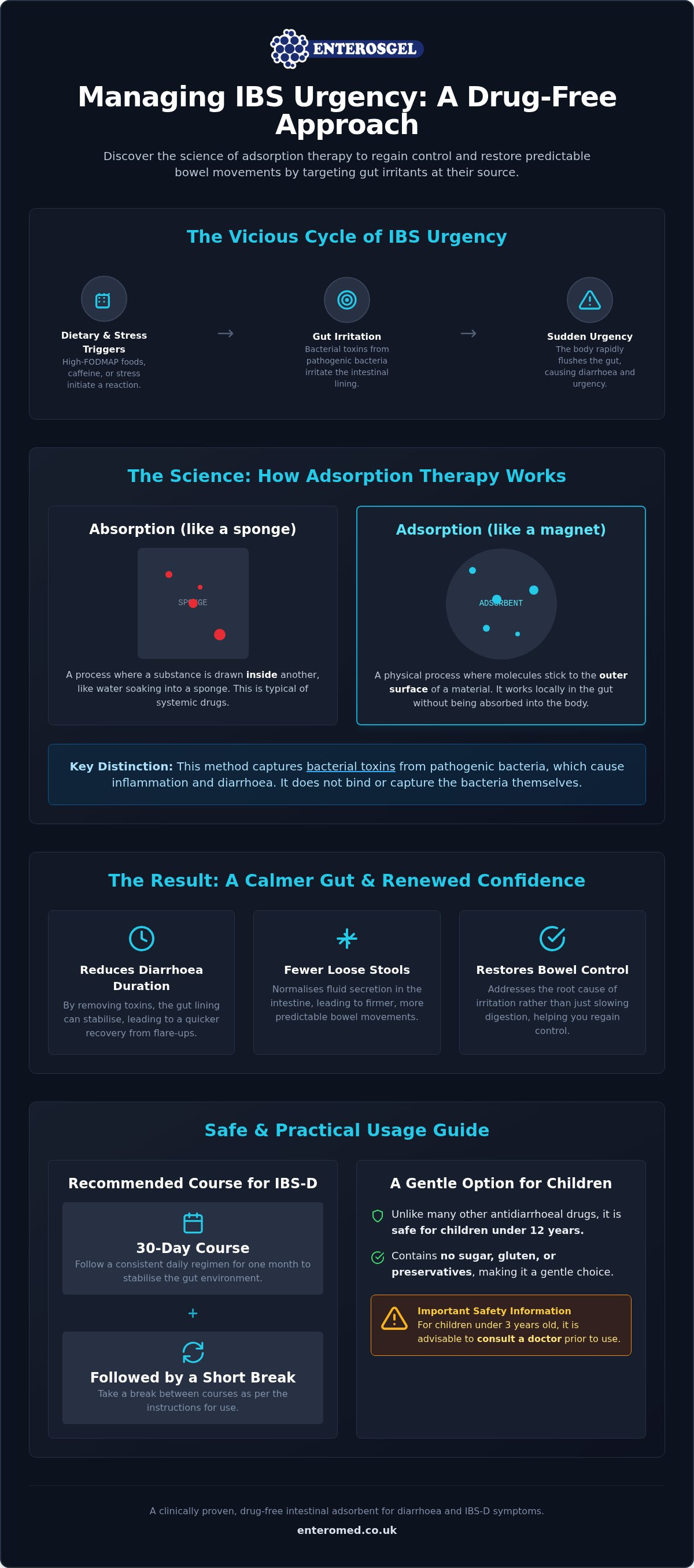
- Follow the clinical instruction that the product should be taken in 30-day courses, with each course followed by a short break.
- Recognise that unlike other antidiarrhoeal drugs, Enterosgel is safe for children under 12 years; however, for children under 3 years old, it is advisable to consult a doctor prior to use.
- Identify the most suitable format for your lifestyle, from the high-volume 225g tube for home use to portable sachets and the comprehensive IBS Starter pack.
Understanding IBS Urgency: Why the Sudden Need to Go?
Bowel urgency is characterised by a sudden, intense pressure to have a bowel movement, often leaving very little time to reach a lavatory. It's a visceral, high-pressure signal that overrides normal daily activities. This isn't merely a minor inconvenience; it's a physiological response driven by a hypersensitive brain-gut axis, a topic explored extensively in clinical research. When the communication between the central nervous system and the enteric nervous system becomes dysregulated, the bowel responds over-enthusiastically to minor stimuli.
Specific triggers often act as the catalyst for these episodes. High-FODMAP foods, caffeine, and sudden spikes in cortisol due to stress can all initiate a flare-up. However, the presence of gut irritants within the intestinal lumen is frequently the primary driver of this distress, leading to a state of chronic hyper-reactivity.
The Physiology of a Flare-Up
When the gut lining encounters irritants, it reacts by increasing fluid secretion to flush the system. This process, coupled with rapid, spasmodic contractions known as peristalsis, propels waste through the colon at an accelerated rate. Bacterial toxins from pathogenic bacteria irritate the intestinal mucosa, causing the inflammation and fluid imbalance associated with leaky gut and diarrhoea.
Impact on Daily Behaviour and Mental Health
The psychological burden of this condition often leads to "toilet mapping," a defensive behaviour where individuals mentally plot every public toilet along their route before leaving the house. This constant vigilance creates a cycle of anxiety; the fear of an accident triggers the "fight or flight" response, which further stimulates gut motility. Whilst traditional "slow-down" drugs are a common first step, they may not be the favourite choice for long-term care because they treat the speed of digestion rather than the underlying irritants. For those seeking a long-term IBS urgency treatment, moving beyond symptom suppression to toxin removal is a critical step in regaining confidence and physical stability. Furthermore, individuals exploring innovative telemedical services for chronic symptom management can learn more about AnandaMed and their patient-centred approach.
The Science of Adsorption: A Drug-Free Approach to Relief
Adsorption is often confused with absorption, but the distinction is vital for understanding effective IBS urgency treatment. Absorption involves a substance soaking into another, like water into a sponge. Adsorption, however, is a surface-level interaction where molecules are trapped on the outer layer of a physical matrix. Think of it like a magnet attracting iron filings; the irritants are bound to the surface of the adsorbent and carried out of the body naturally during a bowel movement.
This physical mechanism is what defines an intestinal adsorbent medical device. Unlike systemic drugs, these devices are not absorbed into the bloodstream. They remain within the gastrointestinal tract, acting as a gentle protector for the intestinal mucosa. You can find detailed clinical evidence on this process by visiting the Enterosgel research page.
Adsorption vs. Absorption: Why it Matters
Because the treatment works physically rather than chemically, it avoids the side-effect profiles associated with traditional antidiarrhoeals. It doesn't interfere with the body's metabolic processes. Instead, it provides a clean, drug-free pathway to relief. This makes it a safe, reliable option for those who have grown frustrated with conventional medications that often leave them feeling sluggish or constipated. By remaining entirely outside the bloodstream, it offers a high-performance solution that feels safe and grounded in evidence.
Reducing Diarrhoea Duration and Frequency
The primary goal of this approach is to capture bacterial toxins from pathogenic bacteria. It's important to clarify that this method does not capture or kill the bacteria themselves. Instead, it removes the toxic byproducts that cause leaky gut and diarrhoea. When these inflammatory triggers are removed, the gut lining has the opportunity to stabilise and heal. This reduction in toxin load directly impacts stool consistency. As the intestinal mucosa becomes less irritated, fluid secretion normalises, leading to firmer stools and a significant reduction in the frequency of movements.
For a deeper dive into how these binders function, you may wish to read our clinical guide to gut toxin binders. By addressing the root cause of the irritation, you can move away from "masking" symptoms and towards genuine bowel control. If you're ready to start your journey, the Enterosgel 225g Tube offers a comprehensive supply for your first treatment course.
Practical Management: 30-Day Courses and Safety Protocols
A successful IBS urgency treatment requires more than just reactive dosing; it demands a structured clinical approach. To manage symptoms effectively, the product should be taken in 30-day courses, with each course followed by a short break. This specific duration allows the intestinal mucosa to recover as the gel focuses on capturing bacterial toxins from pathogenic bacteria which cause leaky gut and diarrhoea. It is important to note that the gel does not bind or capture bacteria. By removing these triggers, the process reduces the duration of diarrhoea and the number of loose stools.
Maintaining hydration is a critical secondary step in this protocol. Frequent bowel movements can lead to dehydration, so ensure you consume plenty of water whilst the adsorbent works physically within your system. For maximum efficacy, integrate the gel into your daily routine, taking it diluted in water and spaced away from other medications. This ensures the physical mechanism of the gel remains unhindered as it moves through the digestive tract.
Managing IBS-D for the Long Term
For chronic symptom management, consistency is key. The instruction that the product should be taken in 30-day courses, with each course followed by a short break, is designed to provide the gut with a period of stabilisation. Using the Enterosgel 225g tube ensures you have a sufficient supply for a complete cycle. This methodical habit helps break the cycle of urgency and provides the "smart" protection needed for long-term gut health.
Safety for Children and Vulnerable Groups
Safety is a paramount concern for families, and this medical device is designed with the most vulnerable in mind. Unlike other antidiarrhoeal drugs, Enterosgel is safe for children under 12 years. It is a gentle option for children because it contains no sugar, gluten, or preservatives. Its physical mode of action means it is not absorbed into the bloodstream, making it a high-performance yet safe IBS urgency treatment for young digestive systems. However, for children under 3 years old, it is advisable to consult a doctor prior to use. This adherence to official Instructions for Use ensures that every family member receives the most appropriate level of care. If you are starting treatment for the family, you can order the 225g tube here.
Selecting the Right Treatment: Tubes, Sachets, and Kits
Choosing the correct format for your IBS urgency treatment depends on your lifestyle and the intensity of your symptoms. For those newly diagnosed, the Enterosgel IBS Starter pack Tube 225g and pack of Sachets offers the most comprehensive introduction. It provides the volume needed for an initial 30-day course whilst offering the flexibility to manage unexpected flare-ups away from home. By having both formats available, you can maintain a consistent clinical protocol without interruption.
At Home vs. On the Go
The Enterosgel 225g Tube serves as the cost-effective centre of a home-based management programme. It's designed for regular daily use during the recommended 30-day cycle, ensuring you have a consistent supply to capture the bacterial toxins from pathogenic bacteria that trigger urgency. This format is ideal for morning or evening routines, providing the stability needed for long-term gut lining recovery.
Conversely, the Enterosgel Sachets (Pack of 10) are a discrete, portable option for maintaining control amongst social settings, at work, or whilst travelling. These single-dose sachets fit easily into a bag or pocket, allowing you to react quickly to symptoms without the need for a bulky container. For more management tips, our IBS relief clinical guide offers further insights into navigating daily life with chronic gut issues.
Why a Drug-Free Medical Device is the "Smart" Choice
Opting for a physical medical device over chemical intervention is a logical conclusion for those seeking pure, effective relief. As established, the adsorption process captures inflammatory toxins without being absorbed into the bloodstream. This is a crucial distinction for long-term health; it ensures the IBS urgency treatment does not interfere with your natural gut flora or beneficial bacteria. It works with your body's natural processes rather than against them.
By focusing on removing the cause of irritation rather than simply slowing down the bowel, you're choosing a high-performance tool that respects your body's biology. It's a "smart" protection strategy that offers stability and predictability. Taking the first step with a drug-free intestinal adsorbent means moving away from the anxiety of "toilet mapping" and towards a life where you feel empowered and in control of your digestive health.
Restoring Stability and Confidence in Your Gut Health
Transitioning from a life of "toilet mapping" to one of genuine bowel control is possible through a methodical, science-led strategy. By prioritising the removal of bacterial toxins from pathogenic bacteria, you address the physical triggers of urgency rather than just masking the symptoms. This IBS urgency treatment provides a high-performance, drug-free pathway to restoration, reducing the duration of diarrhoea and the frequency of loose stools without chemical interference.
To ensure consistent results and long-term gut health, remember the instruction that the product should be taken in 30-day courses, with each course followed by a short break. This protocol, combined with the knowledge that unlike other antidiarrhoeal drugs, Enterosgel is safe for children under 12 years, makes it a reliable addition to any family healthcare toolkit. However, for children under 3 years old, it is advisable to consult a doctor prior to use. By choosing a medical device that contains no sugar, gluten, or preservatives, you are opting for a gentle protector for your gut lining.
View the Enterosgel range for clinically proven IBS relief
Frequently Asked Questions
How quickly does Enterosgel work for IBS urgency?
Relief can often be felt soon after the first dose as the gel begins to capture bacterial toxins within the gut. Clinically, it's proven to reduce the duration of diarrhoea and the number of loose stools significantly. For those seeking an effective IBS urgency treatment, the physical mechanism of adsorption works quickly to stabilise the intestinal environment. Consistent use according to the instructions ensures the gut lining remains protected from further irritation.
Can I take Enterosgel alongside my other IBS medications?
Yes, it can be integrated into most treatment plans, but you must space it away from other oral medications. Because the gel is a high-performance adsorbent, it could potentially bind other drugs if taken at the same time. It's recommended to take it two hours before or after other medications. This ensures that your primary treatments are absorbed correctly whilst the gel performs its role of capturing harmful toxins from pathogenic bacteria.
Is it safe to use an intestinal adsorbent every day?
Daily use is safe and effective when following the clinical protocol for chronic conditions. For managing IBS-D symptoms, the product should be taken in 30-day courses. Each course must be followed by a short break as per the official Instructions for Use. This structured approach helps maintain a stable gut environment. Since it's a drug-free medical device that isn't absorbed into the bloodstream, it remains a gentle option for long-term symptom management.
Can I give Enterosgel to my toddler for diarrhoea?
Enterosgel is safe for children under 12 years, unlike many other common antidiarrhoeal drugs. However, for children under 3 years old, it's advisable to consult a doctor prior to use. It's a popular choice for families because it contains no sugar, gluten, or preservatives. The gel works gently to reduce the number of loose stools by capturing bacterial toxins, making it an appropriate high-performance healthcare tool for sensitive younger systems.
Does Enterosgel contain any common allergens like gluten or sugar?
No, the formulation is entirely free from common allergens including gluten and sugar. It also contains no preservatives, flavours, or sweeteners, which makes it suitable for individuals with multiple food sensitivities or those following specific dietary protocols. This purity is a cornerstone of its medical-first approach. By avoiding harsh ingredients, it functions as a gentle protector for the intestinal mucosa without introducing unnecessary chemical triggers into the digestive tract.
What is the difference between Enterosgel and standard anti-diarrhoeal tablets?
Standard tablets often work by slowing down gut motility, which can lead to constipation. In contrast, this IBS urgency treatment uses a physical mechanism called adsorption. It doesn't bind or capture bacteria; instead, it captures bacterial toxins from pathogenic bacteria that cause leaky gut. By removing these triggers, it reduces the duration of diarrhoea naturally. Because it isn't absorbed into the blood, it offers a safer profile for long-term use compared to chemical drugs.
Share this article