

Intestinal Adsorbent: Drug-Free Relief for Diarrhoea
What if the most effective way to stop diarrhoea isn't by chemically slowing down your gut, but by physically removing the irritants causing the distress? Most traditional treatments rely on systemic drugs that paralyse bowel movements, often leaving the underlying toxins exactly where they cause the most trouble. Using an intestinal adsorbent for diarrhoea represents a fundamental shift in gastrointestinal care. It acts like a clever microscopic sponge, targeting the root cause of irritation without being absorbed into your bloodstream or affecting your internal organs.
We know how exhausting recurring IBS-D flare-ups and sudden urgency can be, especially when you're worried about the side effects of chemicals or the safety of ingredients for your children. You deserve a solution that's as gentle as it is high-performance. In this guide, you'll discover how intestinal adsorbents provide a safe, drug-free alternative for managing gut health. We'll explain the clinical difference between adsorption and absorption, show how these mineral-based gels trap and remove pathogens naturally, and help you create a calmer gut environment for your whole family.
Key Takeaways
- Learn the clinical difference between adsorption and absorption to understand how a physical gut-cleansing medical device targets toxins without entering your bloodstream.
- Discover why an intestinal adsorbent for diarrhoea is a preferred drug-free alternative, acting as a molecular sponge to trap and remove harmful bacteria and viruses.
- Explore how this non-systemic approach provides effective relief for chronic conditions like IBS-D, helping to calm the gut environment during acute flare-ups.
- Understand why these mineral-based gels are safe for the whole family, including babies from birth, offering a gentle yet high-performance solution for digestive distress.
- Identify the best format for your needs, from the Enterosgel 225g Tube for home treatment to convenient sachets for precise dosing whilst you're on the move.
Understanding Intestinal Adsorbents for Diarrhoea Management
An intestinal adsorbent for diarrhoea is not a traditional pharmaceutical drug; it is a physical, gut-cleansing medical device. This distinction is vital for anyone seeking a safer way to manage digestive distress. Unlike standard medicines that are absorbed into the bloodstream to alter bodily functions, an adsorbent works mechanically. It passes through the digestive tract without being digested, acting as a sophisticated filter that identifies and captures harmful substances. This medical-first approach provides a high-performance solution that remains gentle enough for the most sensitive users.
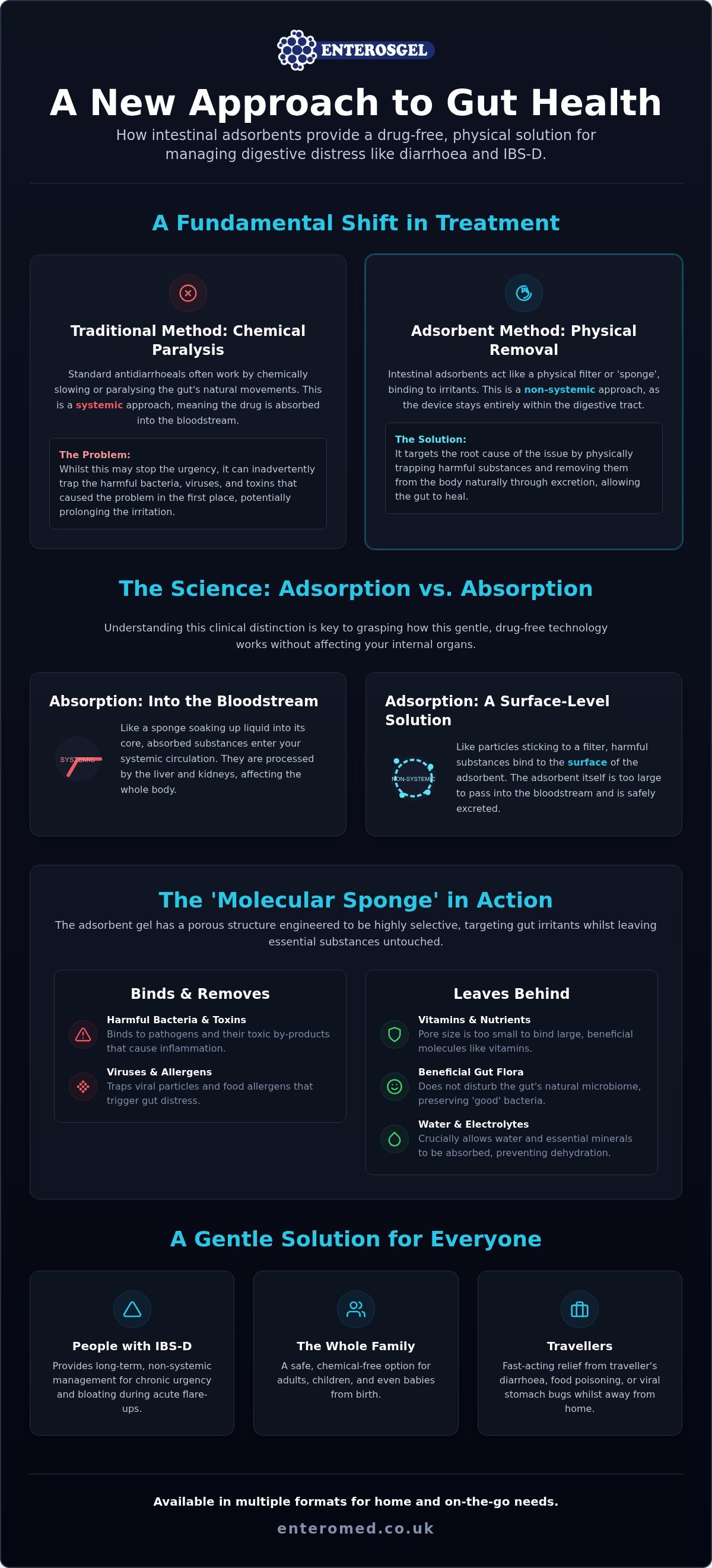
The UK medical community is increasingly recommending these drug-free alternatives for several reasons. Traditional antidiarrheals often work by paralysing the gut's natural movement. Whilst this stops the urgency, it can inadvertently trap harmful bacteria and toxins inside the body. Adsorbents offer a more logical progression. They target the root cause of irritation, binding to pathogens, toxins and inflammatory molecules so they can be excreted naturally. This makes the treatment ideal for a wide range of people, including:
- IBS-D Sufferers: Those managing chronic urgency and bloating who need a long-term, non-systemic solution.
- Parents: Families looking for a safe, drug-free option for children and babies from birth.
- Travellers: Individuals needing fast-acting relief from food poisoning or viral stomach bugs whilst away from home.
Adsorption vs Absorption: Why the Distinction Matters
Understanding the difference between these two terms is essential for grasping how gut healing works. Absorption is a process where substances enter your systemic circulation, much like a sponge soaking up liquid into its core. Most drugs work this way, taken into the blood stream and travelling throughout your body. Adsorption is entirely different. It is where particles "stick" to the outside or into the pores of a material.
Enterosgel utilizes this principle. The gel structure acts as a molecular sponge with specific pore sizes designed to trap medium-sized molecules like viruses and bacterial toxins. Because the gel itself is too large to pass through the intestinal wall, it never enters your bloodstream. This non-systemic approach ensures that the treatment is highly effective in the gut without impacting the rest of the body.
The Role of Adsorbents in Modern Gut Healthcare
Modern healthcare is shifting towards treatments that support the body's natural detoxification processes rather than overriding them. Adsorbents play a crucial role here by maintaining a healthy gut environment. They selectively remove "bad" molecules whilst leaving beneficial gut flora and essential nutrients untouched. This targeted action helps restore the intestinal lining and reduces inflammation. This methodology is supported by clinically proven research, which demonstrates that physically removing irritants can significantly shorten the duration of acute diarrhoea and provide reliable stability for chronic IBS symptoms.
The Science of Adsorption: How Toxin Binders Work
To understand why an intestinal adsorbent for diarrhoea is so effective, we must look at its physical architecture. This gel functions as a sophisticated, porous molecular sponge. It is specifically engineered to move through the digestive tract whilst capturing the microscopic triggers of gut distress. This physical method of treatment ensures that the underlying cause of the problem is physically removed from the body rather than simply suppressing symptoms.
The selectivity of this process is what sets it apart. The gel's structure is designed to trap medium-sized molecules, which include the most common gastrointestinal irritants. Harmful bacterial toxins, viral particles, allergens, and inflammatory molecules are securely bound by the gel. Crucially, the gel does not capture beneficial gut flora, but removes toxins from pathogenic bacteria, which cause the damage to the gut lining and resulting diarrhoea. Water and electrolytes also remain untouched, which is vital for preventing the dehydration often associated with acute diarrhoea.
The "Molecular Sponge" Metaphor
Visualising the gel as a protective net helps explain its gentle action. As it travels through the intestines, it creates a clean path by gathering harmful substances that cause inflammation and urgency. By physically clearing these irritants, the gel allows the intestinal lining to rest and begin its natural repair process. This reduction in toxic load provides a sense of stability and relief that chemical alternatives often fail to deliver.
Safety and Non-Systemic Action
The primary advantage of a non-systemic treatment is its exceptional safety profile. Because the gel is not absorbed into the bloodstream, this makes it a reliable choice for vulnerable groups, including the elderly and infants. It avoids the common side effects of traditional antidiarrheals, such as rebound constipation or dizziness. You can find more details on these mechanisms in our clinically proven research section.
For those managing recurring symptoms at home, keeping an Enterosgel 225g Tube in your medical cabinet ensures you have immediate access to this advanced toxin-binding technology when you need it most.
Clinical Applications: When to Use an Intestinal Adsorbent
The versatility of an intestinal adsorbent for diarrhoea makes it a vital tool for both sudden illnesses and long-term gut management. Because it works mechanically, it has a different action than other medications. This allows for broad clinical applications, ranging from the immediate treatment of viral stomach bugs to the steady management of chronic digestive sensitivities. It provides a reliable safety net for anyone who prefers to avoid systemic pharmaceuticals whilst seeking high-performance relief.
IBS-D and Chronic Symptom Management
For those seeking Irritable Bowel Syndrome relief in the UK, the primary goal is often stability. IBS-D is frequently characterised by sudden urgency and abdominal pain, which can be triggered by a many factors. Using an adsorbent helps to bind these triggers daily, reducing the frequency of flare-ups. Beyond the physical benefits, there's a significant psychological advantage. Knowing you have a safe drug-free tool that won't cause rebound constipation provides a sense of control over a condition that often feels unpredictable.
Travel and Acute Upset Stomachs
Acute infectious diarrhoea affects an estimated 17 million people in the UK each year. These cases, often caused by food poisoning or viral pathogens, require a solution that addresses the cause quickly. Adsorbents are particularly effective against common travellers' diarrhoea pathogens because they trap the bacterial toxins or viruses before they can cause further inflammation. They are a staple for any "holiday pharmacy" kit. For more advice on protecting your gut abroad, see The Essential Guide to Traveller’s Diarrhoea Prevention.
Recovery doesn't always end once the initial infection clears. Many people experience lingering loose stools after a course of antibiotics. In these scenarios, an adsorbent helps to settle the gut by clearing out residual toxins and debris, allowing the natural microbiome to recover without the interference of harsh chemicals. Whether you are commuting or flying across the globe, having a travel-ready solution is essential for maintaining your routine.
To ensure you're prepared for sudden urgency whilst away from home, consider packing Enterosgel Sachets (Pack of 10) for convenient, precise dosing on the go.
Selecting and Using Enterosgel for Gut Health
Choosing the right intestinal adsorbent for diarrhoea depends on your specific lifestyle and the nature of your symptoms. For many households, the Enterosgel 225g Tube serves as the foundation of a proactive gut-first aid kit. It provides a reliable, multi-dose supply that is ideal for managing chronic conditions or family-wide stomach bugs at home. For those who travel frequently or need a discreet solution whilst commuting, Enterosgel Sachets offer precise, pre-measured dosing that fits easily into a bag or pocket.
How to Take Enterosgel Correctly
Preparation is simple. Stir the recommended dose into a glass of water or an oral rehydration solution until you achieve a smooth suspension. Enterosgel is completely tasteless and odourless, making it easy for children to take. This lack of sensory triggers is why Enterosgel Kids 0+ is a favourite choice for UK parents managing toddler tummy troubles, as it avoids the struggles often associated with flavoured liquids or chalky tablets. To ensure the gel works at maximum efficacy, you must pay attention to the timing of your dose. Because an adsorbent binds to substances in the gut, it is crucial to take Enterosgel 2 hours before or after any other oral medications and 1-2 hours for meals. This prevents the gel from accidentally binding to your medicine and reducing its effectiveness.
Finding the Right Format for Your Lifestyle
Selecting between the 225g tube and the 10-pack of sachets often comes down to value versus convenience. The tube is perfect for the medicine cabinet, whilst the sachets provide peace of mind during long flights or holidays where water quality might be a concern. Having both formats ensures you are never caught unprepared by sudden urgency or a flare-up.
Whether you are dealing with a sudden viral infection or long-standing IBS symptoms, the goal is to restore your gut to its natural balance without the use of harsh chemicals. This physical method of treatment is backed by a 30-year clinical track record, providing a level of professional validation that few other over-the-counter solutions can match. By physically removing the irritants, you aren't just masking the problem; you're giving your body the space it needs to heal. For more details on the scientific studies behind these results, you can explore our clinically proven research.
Take Control of Your Gut Health Naturally
Managing digestive health shouldn't involve a trade-off between effectiveness and safety. By choosing an intestinal adsorbent for diarrhoea, you're opting for a physical solution that targets the root cause of irritation. This medical device works as a selective molecular sponge, trapping harmful pathogens and toxins whilst leaving your body’s essential nutrients and water untouched. It is a non-systemic approach that respects your internal biology, avoiding the common side effects associated with pharmaceutical drugs.
Whether you're managing chronic IBS-D symptoms or dealing with a sudden family stomach bug, having a reliable tool in your medicine cabinet provides essential peace of mind. Enterosgel is a drug-free medical device that is clinically proven in the UK and suitable for the whole family from birth. It offers a gentle yet high-performance way to restore your gut's natural balance and reclaim your daily routine. Take the first step towards a calmer, more predictable gut environment today.
Order Enterosgel today for clinically proven, drug-free relief
Frequently Asked Questions
Is an intestinal adsorbent the same as activated charcoal?
No, they are distinct treatments. Whilst both are adsorbents, activated charcoal is a broad-spectrum binder that can sometimes be non-selective. Enterosgel is a mineral-based organosilicon hydrogel with a porous structure specifically designed to target medium-weight molecules like bacterial toxins and viruses. It doesn't bind to essential nutrients or water, making it a more targeted solution for gut health management without the lack of selectivity associated with charcoal.
Can I take an intestinal adsorbent whilst pregnant or breastfeeding?
Yes, Enterosgel is generally considered safe during pregnancy and breastfeeding because it is non-systemic. It isn't absorbed into the bloodstream, which means it doesn't reach the foetus or enter breast milk. It simply passes through the digestive tract. We always recommend consulting your healthcare professional before starting any new treatment during these periods to ensure it's appropriate for your specific clinical needs and health history.
How quickly does an intestinal adsorbent start working for diarrhoea?
Relief often begins shortly after the first dose as the gel starts binding to irritants in the gut. In clinical trials, using an intestinal adsorbent for diarrhoea has been shown to reduce the duration of acute symptoms significantly compared to standard rehydration alone. Most users notice a reduction in urgency and stool frequency within the first 24 hours of treatment as the physical toxic load decreases.
Does Enterosgel cause constipation if taken for diarrhoea?
Constipation is not a common side effect of this treatment. Unlike many pharmaceutical antidiarrheals that work by slowing down the movement of the intestines, this gel works mechanically. It focuses on removing the irritants that cause the urgency in the first place. Once these toxins are excreted, the gut can return to its normal behaviour naturally without the risk of the "rebound" constipation often seen with drugs.
Can children under one year old safely use intestinal adsorbents?
Yes, Enterosgel is suitable for babies and children from birth. Its drug-free, non-systemic nature makes it an exceptionally safe choice for infants with sensitive digestive systems. Because the gel is tasteless and odourless, it can be easily mixed with water or expressed breast milk. This provides a gentle way to manage toddler tummy troubles or infant diarrhoea without introducing harsh chemicals or artificial flavours to your child's system. The Instructions for use recommend that prior to use in children under 3 years old it is advisable to consult a doctor.
Do I need a prescription for Enterosgel in the UK?
No, you don't need a prescription to purchase Enterosgel in the UK. It is classified as a Class IIa medical device and is available over-the-counter from pharmacies and reputable online retailers. This accessibility allows you to keep an intestinal adsorbent for diarrhoea in your home first aid kit for immediate use during sudden flare-ups, food poisoning, or viral stomach bugs without waiting for a GP appointment. Alternatively, Enterosgel is listed on the drug tariff so it can be prescribed by a GP.
Share this article