

Managing Diarrhoea Flare-ups: A Clinical Guide to Rapid Relief
Stopping a sudden bowel disturbance isn't merely about slowing down your digestive system; it's about physically removing the irritants that shouldn't be there. Physical exhaustion, abdominal urgency, and the constant anxiety of being away from a toilet. We understand these challenges deeply. It's a total loss of control that disrupts your daily activities and leaves you feeling drained. This clinical guide focuses on managing diarrhoea flare-ups by identifying specific triggers and using proven, drug-free methods to settle your gut and regain your independence.
Whilst many standard treatments focus on chemical slowing, a more sophisticated approach involves physical adsorption to cleanse the intestinal tract. You'll discover how to achieve a rapid reduction in stool frequency and relief from abdominal pain, facilitating a steady return to normal digestive function. We will examine the science of smart protection, where medical-grade adsorbents act like a magnet to bind toxins and pathogens, providing a safe and gentle way to restore your well-being without the use of harsh ingredients.
Key Takeaways
- Learn to recognise common triggers such as food, stress, and infections to better anticipate and manage sudden gut distress.
- Understand the clinical difference between absorption and adsorption, and how physical binding can effectively remove irritants from the intestinal tract.
- Follow a structured step-by-step protocol for managing diarrhoea flare-ups, focusing on immediate hydration and physical intervention to regain control quickly.
- Discover why drug-free intestinal adsorbents are a safe, high-performance tool for the whole family, providing rapid relief without being absorbed into the body.
- Explore how integrating a clinically proven medical device into your gut health toolkit can help prevent future episodes and restore normal digestive function.
Understanding Diarrhoea Flare-ups: Identifying Triggers and Symptoms
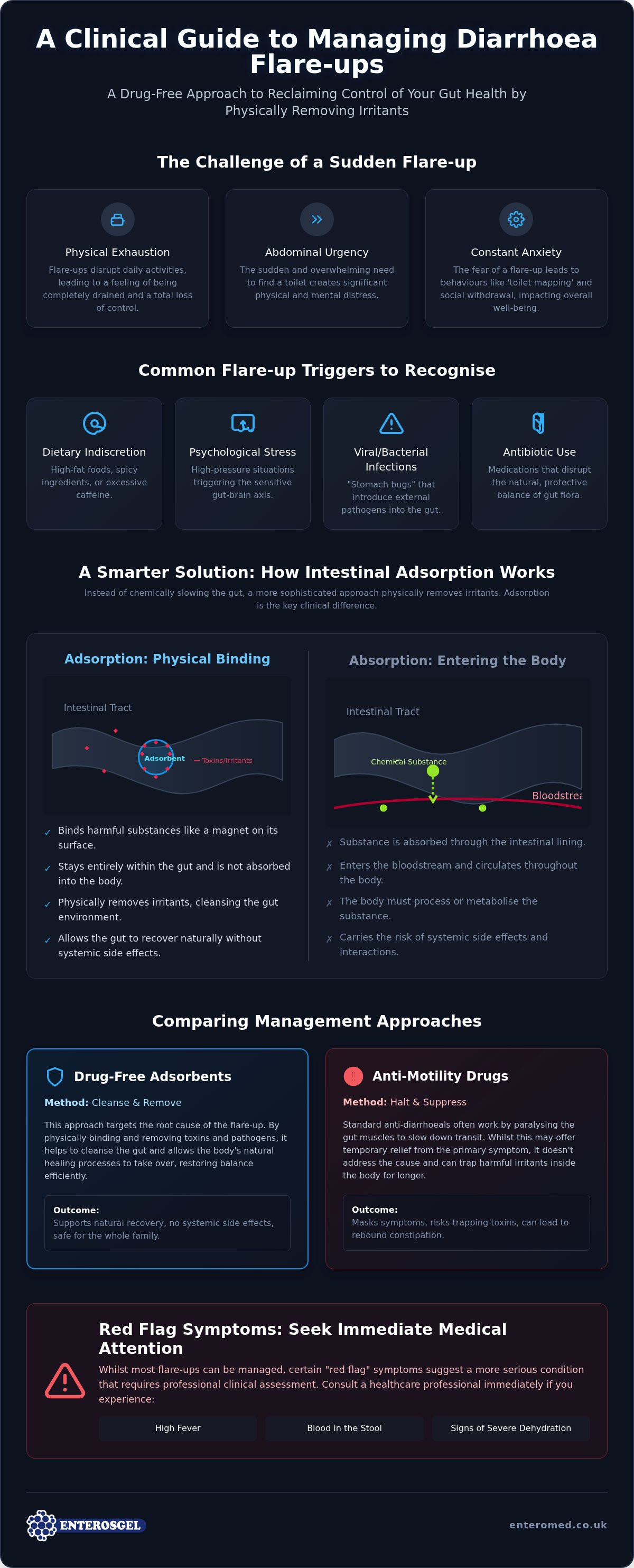
A diarrhoea flare-up is defined as a sudden, often overwhelming increase in bowel frequency or urgency. For those with sensitive guts, it's a physical disruption that can occur without warning, leaving the individual feeling vulnerable and exhausted. Managing diarrhoea flare-ups effectively starts with understanding why the gut reacts so violently. Several common factors can spark this response:
- Dietary indiscretion, such as consuming high-fat foods, spicy ingredients, or excessive caffeine.
- Acute psychological stress or high-pressure situations that trigger the gut-brain axis.
- Viral or bacterial infections, often referred to as "stomach bugs."
- Antibiotic-associated changes that disrupt the natural balance of gut flora.
It's vital to distinguish between an acute infection and a chronic IBS-D flare-up. An infection is typically a self-limiting event caused by external pathogens, whilst an IBS-D flare-up is a recurring symptom of a long-term functional disorder. Regardless of the cause, the gut often enters a vicious cycle. Irritants cause inflammation, which increases gut sensitivity; this sensitivity then leads to faster transit times and further irritation, preventing the bowel from settling naturally.
Recognising the Warning Signs
Physical discomfort usually precedes the most intense part of a flare-up. Abdominal cramping, significant bloating, and the passage of liquid stools are the primary clinical indicators. Beyond the physical, the sudden urgency creates a profound mental burden. The constant anxiety about being away from a toilet often leads to "toilet mapping" and social withdrawal, which can significantly alter your daily behaviour and well-being.
Certain "red flag" symptoms require immediate medical intervention. If you experience a high fever, blood in the stool, or signs of severe dehydration such as extreme thirst and dark urine, consult a healthcare professional immediately. These indicators suggest a more serious condition that needs professional clinical assessment.
The Role of Gut Irritants
Pathogens and toxins act as physical irritants within your digestive tract. When these harmful substances accumulate, they disrupt the delicate balance of the intestinal environment and irritate the gut lining. Diarrhoea is actually the body's natural defence mechanism. It's a rapid, albeit distressing, attempt to flush out these substances to prevent further harm.
By viewing these irritants as physical objects that need removal, we can better understand how to break the flare-up cycle. For those seeking long-term stability, finding irritable bowel syndrome relief UK is a crucial step in stabilising the gut environment and reducing the frequency of these episodes.
The Role of Intestinal Adsorbents in Breaking the Flare-up Cycle
When managing diarrhoea flare-ups, the primary clinical objective is to neutralise the irritants that have triggered the gut's defensive response. Intestinal adsorbents are specialised medical devices that facilitate this by binding harmful substances directly to their surface. This physical mechanism of action provides a targeted way to cleanse the gut environment without relying on systemic drugs that alter your body's natural rhythms. By physically removing the cause of the irritation, you allow the digestive system to return to its baseline state more efficiently.
Adsorption vs. Absorption: The Clinical Difference
Adsorption is the physical binding of molecules to a surface. Whilst the terms sound similar, absorption refers to a substance being taken into the body and entering the bloodstream. Adsorption, conversely, happens entirely within the lumen of the gut. By "trapping" toxins on a porous surface, the adsorbent prevents these irritants from contacting the intestinal lining and causing further inflammation. This process supports the gut’s natural healing environment. It allows the mucosal barrier to recover without the interference of lingering pathogens or irritants.
Why a Drug-Free Approach Matters
Standard anti-motility medications often work by "stopping" the gut. They essentially paralyse the muscles of the digestive tract to slow down transit. While this may provide temporary relief, it can lead to rebound constipation or, more concerningly, trap harmful toxins inside the body for longer. A drug-free approach avoids these systemic side effects. Because intestinal adsorbents are not absorbed into the body, they remain entirely within the digestive tract until they are naturally excreted along with the bound toxins.
This high-performance mechanism is particularly beneficial for those with sensitive systems, multiple allergies, or individuals who must avoid the potential complications of pharmaceutical interventions. The use of gut toxin binders or intestinal adsorbents represents a significant advancement in modern gastrointestinal care. It offers a solution that prioritises purity and safety for the whole family. For those currently experiencing acute distress, keeping a clinically proven adsorbent in your home medical kit ensures you are prepared to act at the first sign of a flare-up.
A Step-by-Step Protocol for Managing Acute Gut Distress
When a flare-up strikes, a logical and methodical response is essential to minimise physical exhaustion. This protocol focuses on managing diarrhoea flare-ups by addressing both the immediate symptoms and the underlying physical irritation. Following a clinical sequence ensures that your body has the resources it needs to recover whilst the gut environment is stabilised.
Your recovery depends on a structured response. Following these steps helps stabilise the system:
- Step 1: Immediate hydration. Use oral rehydration salts (ORS) rather than plain water to restore electrolyte balance and prevent physical fatigue.
- Step 2: Physical intervention. Utilise an intestinal adsorbent like Enterosgel to begin binding the irritants and pathogens that triggered the episode.
- Step 3: Dietary simplification. Adhere to low-residue foods like white rice or plain toast to give the bowel a much-needed rest.
- Step 4: Rest and stress reduction. Calm the gut-brain axis whilst the body recovers to prevent further nervous system-induced urgency.
Dietary Adjustments During a Flare
During acute episodes, the digestive system is highly sensitised. It's best to avoid dairy, caffeine, and high-fibre foods, as these can exacerbate bowel movements and increase cramping. Many clinicians suggest following the "BRAT" diet principles (Bananas, Rice, Applesauce, Toast) for a short period. These foods are low in residue and easy for the gut to process. Don't rely on this for long, as it's for short-term use only. Eating small, frequent meals rather than three large portions also reduces the mechanical workload on your digestive tract.
Hydration and Electrolyte Balance
Severe diarrhoea causes the loss of vital salts and minerals. Plain water doesn't replace the glucose and electrolytes, so using oral rehydration salts is a good option. It's vital to watch for dehydration symptoms such as extreme thirst, dark-coloured urine, and dry mucous membranes. In children, look for lethargy or fewer wet nappies. To ensure fluids are tolerated by a sensitive stomach, take small, frequent sips every few minutes. This methodical approach prevents the stomach from becoming over-distended, which can otherwise trigger further urgency.
By following this structured clinical pathway, you can significantly reduce the duration of an episode and regain control. For rapid relief during your next flare-up, you can order an Enterosgel 225g Tube to keep in your home medicine cabinet.
Long-Term Management: Preventing Future Diarrhoea Flare-ups with Enterosgel
Effective control of chronic gut issues requires a shift from reactive treatment to proactive management. Enterosgel is a clinically proven medical device designed for this exact purpose. It offers a sustainable way of managing diarrhoea flare-ups by providing a physical cleansing mechanism that doesn't lose efficacy over time. Unlike systemic drugs, it's suitable for long-term use in IBS-D management because it isn't absorbed into the body and does not interfere with the natural metabolic processes.
Acting at the first sign of gut discomfort is the key to preventing a minor irritation from becoming a full episode. Having the Enterosgel 225g Tube in your medicine cabinet allows for immediate action. Early intervention helps neutralise toxins before they can trigger the inflammatory cascade that leads to urgency and pain. This "smart" protection approach ensures that irritants are bound and removed before they can disrupt your daily life.
The Enterosgel Advantage
This medical-first approach is backed by over 30 years of clinical history and extensive research into the efficacy and safety of intestinal adsorption. The formulation is exceptionally pure. It contains no preservatives, no sugar, and no gluten, making it safe for vulnerable groups and those with multiple food sensitivities. For those who need protection whilst away from home, Enterosgel Sachets provide a portable format for work or travel. This ensures that your clinical support is always within reach, regardless of your location or schedule.
Building a Gut Health Toolkit
Incorporating this adsorbent into a broader gut health strategy provides a reliable safety net. It's a high-performance, non-drug solution that complements dietary adjustments and stress management techniques. By building a comprehensive gut health toolkit, you move away from the anxiety of "what if" and toward a position of informed control. You don't have to feel helpless against recurring symptoms. With the right clinical tools and a methodical approach, you can manage flare-ups effectively and maintain a stable, healthy digestive system.
Regaining Control Over Your Digestive Health
Successfully managing diarrhoea flare-ups requires a clinical approach that prioritises the physical removal of gut irritants rather than simply masking symptoms. By identifying your specific triggers and following a methodical protocol of hydration and physical adsorption, you can significantly reduce recovery time. Enterosgel provides a sophisticated, drug-free solution that's been used clinically for over 30 years. It isn't absorbed into the body. Instead, it works like a smart sponge to bind toxins and pathogens, making it safe for everyone from infants (0+) to adults.
Having a reliable tool in your medicine cabinet ensures you're never caught unprepared by sudden urgency. This medical device is clinically proven for both acute diarrhoea and IBS-D management, offering a high-performance alternative to traditional pharmaceutical options. You don't have to let digestive distress dictate your schedule or impact your mental well-being. With the right clinical support, you can restore your gut's natural balance whilst returning to your daily life with confidence.
Buy Enterosgel 225g Tube for Clinically Proven Flare-up Relief and take the first step towards a stable digestive future. You're fully capable of breaking the cycle of distress and achieving lasting comfort.
Frequently Asked Questions
How long does a diarrhoea flare-up typically last?
An acute diarrhoea flare-up typically lasts between one and four days, depending on the underlying cause. If you're managing diarrhoea flare-ups associated with IBS-D, these episodes might recur more frequently or persist longer without intervention. Whilst most viral stomach bugs resolve within a week, using an intestinal adsorbent can help shorten the duration by physically removing the pathogens.
Is Enterosgel safe to use for IBS-related diarrhoea flare-ups?
Enterosgel is specifically indicated and clinically proven for the symptomatic treatment of IBS-D. It works by physically binding to bacterial toxins and other irritants in the gut that trigger diarrhoea, urgency and pain. Because it's not absorbed into the bloodstream, it's suitable for long-term management without the risk of systemic side effects. This makes it an essential tool for those with sensitive systems who need consistent relief from recurring discomfort.
Can I take Enterosgel alongside other medications for gut health?
You can use Enterosgel alongside most other medications; however, you must observe a specific timing protocol. Because the gel is a high-performance adsorbent, it could bind to other oral medicines, potentially reducing their efficacy. To prevent this, always take Enterosgel two hours before or two hours after taking any other medication. This gap ensures that your other treatments are fully absorbed before the gel begins its cleansing process in the gut. For those taking modified release medications Enterosgel is not recommended, speak to your GP or Pharmacist if you are unsure about your other medications before taking Enterosgel.
How quickly does an intestinal adsorbent work during a flare-up?
Many individuals report a noticeable reduction in urgency and abdominal pain within one to two hours of the first dose. The speed of action depends on the volume of irritants present in the intestinal tract. As the gel moves through the digestive system, it continuously adsorbs toxins and pathogens. For managing diarrhoea flare-ups effectively, early intervention is key; the sooner you begin binding the irritants, the faster your gut can return to normal function.
What is the best thing to drink whilst experiencing a diarrhoea flare-up?
Oral rehydration salts (ORS) are the most effective choice for maintaining electrolyte balance during a flare-up. Plain water often lacks the necessary glucose and minerals required for optimal absorption in a compromised gut. You should avoid sugary fizzy drinks, caffeine, and dairy, as these can exacerbate transit speed. Sipping small amounts of ORS frequently ensures that your body retains vital fluids whilst the intestinal adsorbent works to stabilise your bowel movements.
Is Enterosgel suitable for children and babies during a stomach bug?
Yes, Enterosgel is entirely suitable for children and babies from birth (0+). Because the treatment is drug-free and remains within the digestive tract, it's a safe choice for young, sensitive systems. It's particularly effective for stomach bugs, as it physically removes the viral or bacterial toxins causing the distress. For infants, the gel can be easily mixed with water or dilute juice to ensure they receive the necessary gut protection safely. Prior to use in children under 3 years old it is advisable to consult a doctor.
Share this article