

Non-Systemic Gut Treatment: A Clinical Guide to Drug-Free Relief
Why should a treatment for your digestive system need to travel through your bloodstream, heart, and liver before it even begins to work? It’s a question many people ask whilst searching for a non-systemic gut treatment that avoids the trade-offs of traditional medications. You want relief from bloating, urgency, or diarrhoea, yet the very drugs designed to help often bring a host of unwanted side effects like drowsiness or chronic constipation. It feels like an impossible choice between the ailment and the "cure."
True gut health management shouldn't require systemic intervention. You deserve a solution that targets the root cause of distress directly within the intestinal lumen without affecting the rest of your body. This clinical guide explores how drug-free, physical adsorbents provide a sophisticated alternative to chemical absorption. We will examine the science behind treatments that remain entirely within the gut, offering a safe, rapid, and evidence-led solution for every member of the family, from infants to adults. By focusing on physical adsorption rather than chemical interference, you can achieve effective relief that is both gentle and powerful.
Key Takeaways
- Understand the clinical distinction between systemic medications that enter the bloodstream and a non-systemic gut treatment that acts locally within the intestinal tract.
- Discover the science of physical adsorption, where harmful toxins and pathogens are trapped on the surface of a binder rather than being absorbed into your body.
- Learn why drug-free interventions are ideal for managing chronic conditions like IBS-D and acute diarrhoea without the risk of drowsiness or constipation.
- Identify how clinical solutions like Enterosgel provide relief from urgency and abdominal pain by physically removing triggers from the gut.
- Explore the safety profile of intestinal adsorbents that remain entirely within the digestive system before being naturally expelled.
What is Non-Systemic Gut Treatment? Understanding the Gut-Only Pathway
A non-systemic gut treatment is a medical intervention designed to act exclusively within the gastrointestinal tract. Unlike traditional medications that require absorption into the bloodstream to reach their target, these treatments remain within the intestinal lumen. They work where the problem is. By staying local, they address issues such as IBS, acute diarrhoea, food poisoning, and chronic bloating without being distributed to other organs. This targeted approach is the foundation of drug-free relief.
Systemic vs. Non-Systemic: A Comparison
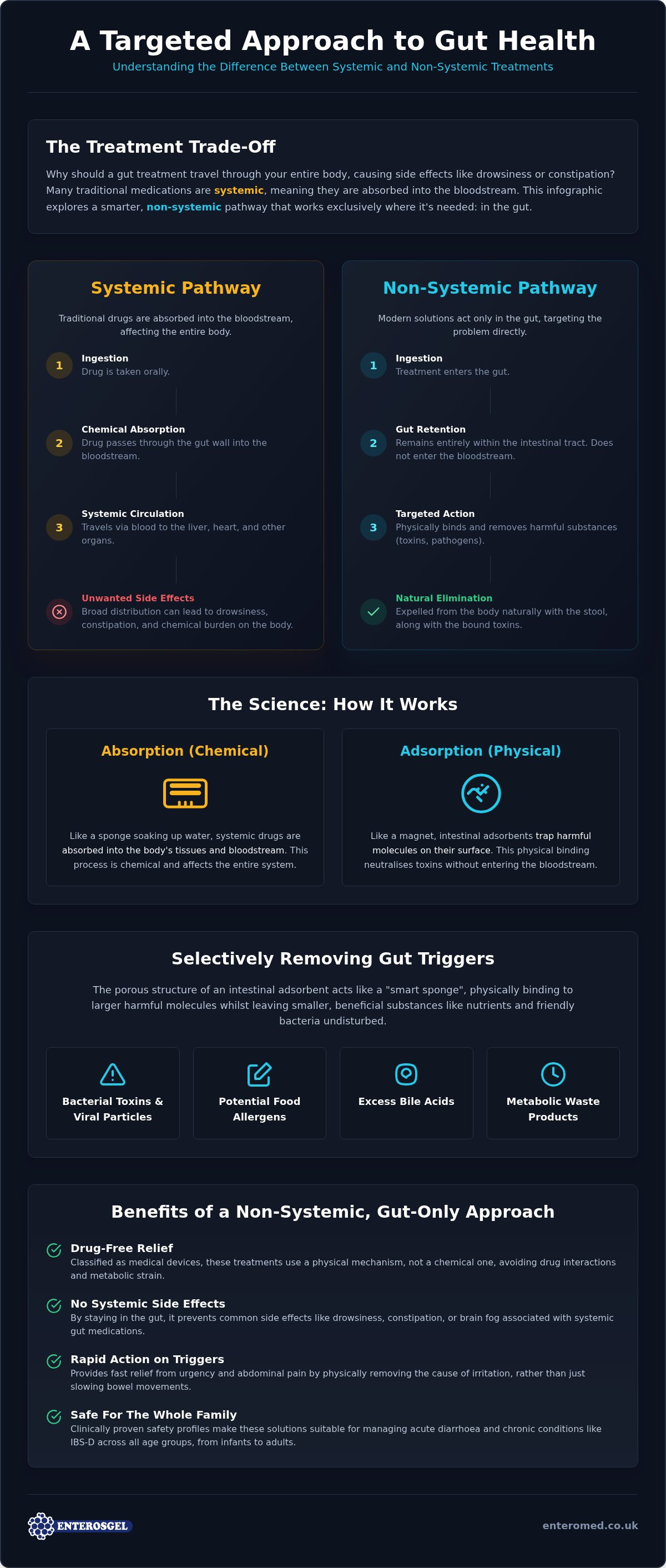
The primary difference lies in the journey the treatment takes through your body. Systemic drugs, such as standard antibiotics or anti-motility agents, are absorbed through the intestinal wall. They enter the circulatory system, affecting the heart, liver, and kidneys before providing relief. This broad distribution often leads to adverse reactions. A non-systemic gut treatment follows a different path:
- Retention: The treatment remains entirely within the gut.
- Action: It targets pathogens and toxins physically rather than chemically.
- Elimination: It is expelled naturally from the body with the stool.
Specialists increasingly prefer this "gut-only" strategy because it avoids systemic drug interactions and reduces the chemical burden on the body. It's a precise way to manage symptoms whilst protecting the rest of your health. For those exploring how targeted gut health supports overall longevity, emagene.life offers a comprehensive guide to functional medicine approaches.
The Role of Medical Devices in Gut Health
Many non-systemic options are classified as medical devices rather than pharmacological drugs. This distinction is vital for those seeking drug-free relief. Whilst a drug alters your body's chemistry, a medical device typically uses physical mechanisms to achieve a result. For example, some devices act as intestinal adsorbents, using a porous structure to trap harmful substances like a magnet. They don't interfere with your metabolism or cause the drowsiness associated with some gut medications. Choosing clinically validated devices ensures you're using a tool that has undergone rigorous testing, as evidenced by ongoing research into their efficacy and safety profiles across all age groups.
The Science of Intestinal Adsorption: How Physical Toxin Binders Work
Understanding the mechanism of a non-systemic gut treatment requires a clear distinction between adsorption and absorption. Whilst absorption involves a substance soaking into the bloodstream, adsorption is the physical trapping of molecules on a surface. Think of it as the difference between a sponge soaking up water and a magnet pulling iron filings to its exterior. In the context of gut health, this physical binding ensures that harmful substances are neutralised without the treatment ever entering your circulatory system.
The gel acts as a porous matrix, moving through the intestinal tract like a smart sponge. It doesn't get digested or broken down. Instead, it simply travels through the lumen, collecting various pathogens and metabolic waste products. These include:
- Bacterial toxins and viral particles
- Potential food allergens
- Bile acids and inflammatory mediators
- Heavy metals and toxic metabolites
Why Adsorption is Superior for Diarrhoea Relief
Protecting the Microbiota Whilst Treating Symptoms
A significant concern with many gut interventions is the collateral damage to beneficial bacteria. However, clinical binders are designed to be selective. They target larger pathogenic molecules whilst leaving the smaller, beneficial gut flora undisturbed. Maintaining this microbial diversity is essential for long-term health and immune function. You can explore the latest gut health research to see how this physical mechanism supports the delicate balance of the microbiome.
For those managing chronic symptoms or looking for a reliable family-first solution, the Enterosgel 225g Tube offers a clinically proven way to facilitate this physical detoxification. It provides a high-performance tool for maintaining a clean, balanced digestive environment without the need for systemic drugs.
When to Choose Non-Systemic Options for IBS and Diarrhoea
Identifying the right moment for a non-systemic gut treatment is key to long-term digestive stability. This approach is particularly valuable for individuals who need effective relief but cannot risk the side effects or complications associated with systemic drugs. Because these treatments stay within the intestinal tract, they offer a high level of safety for diverse groups. Ideal candidates for this drug-free approach include:
- Parents looking for toddler-safe relief from gas and bloating
- Chronic IBS-D sufferers who want to avoid 'rebound' constipation
- Travellers who need to stay mobile without the drowsiness of traditional medicines
- Individuals on multiple medications concerned about drug-drug interaction risks
Unlike systemic anti-diarrhoeals that slow down the movement of the intestines, non-systemic adsorbents focus on toxin removal. This makes them a superior choice for travel. They don't cause the frustrating constipation that often follows traditional "plugging" treatments. Additionally, since these devices don't enter the bloodstream, they can be used alongside other medications without the typical risks of chemical interference.
Managing IBS Symptoms Without Medication
Living with Irritable Bowel Syndrome requires a strategy that addresses both acute flare-ups and daily maintenance. Many patients find significant irritable bowel syndrome relief UK wide by incorporating adsorbents into their routine. By physically binding to inflammatory mediators and gas-producing toxins, these treatments break the cycle of bloating and urgency. It isn't about masking the pain; it's about removing the irritants that cause it. This proactive management helps prevent the sudden onset of symptoms that can disrupt your daily life.
Safe Treatment for Vulnerable Groups
Safety is paramount for the most vulnerable members of the family. A non-systemic gut treatment is often considered the gold standard for toddler bloating and gas relief because it doesn't interfere with a child's developing metabolism. These options are equally appropriate for use during pregnancy and whilst breastfeeding, providing a gentle way to manage digestive distress. There is no 'rebound' effect to worry about. The treatment simply does its work and leaves the body naturally.
If you are ready to manage your symptoms with a professional-grade solution, you can buy the Enterosgel 225g Tube online for reliable, drug-free support.
Enterosgel: The Clinically Proven, Non-Systemic Solution
Enterosgel stands as a premier intestinal adsorbent, offering a high-performance alternative to traditional pharmacological interventions. As a non-systemic gut treatment, it addresses the underlying triggers of digestive distress without entering the bloodstream. This makes it an essential tool for those prioritising safety and clinical efficacy. The treatment is available in versatile formats to suit different needs, including the Enterosgel 225g Tube for consistent home use and convenient sachets for those travelling or at work. Its profile is intentionally pure; the gel is entirely drug-free, non-allergenic, and sugar-free, ensuring it remains appropriate for individuals with various dietary sensitivities.
Incorporating this solution into a health routine is straightforward. For acute symptoms like food poisoning or sudden diarrhoea, it provides rapid physical clearance. For chronic conditions such as IBS-D, it can be used to manage daily flare-ups and maintain intestinal balance. Because it doesn't interact with other medications, it fits seamlessly into existing healthcare plans.
The Physical Mechanism of Enterosgel
The efficacy of the gel stems from its unique organic mineral structure. It functions as a porous molecular sieve, specifically designed to identify and trap medium-weight molecules such as bacterial toxins and inflammatory mediators. Once these substances are bound to the gel's surface, they are held securely as the matrix moves through the digestive tract. This entire complex is then expelled naturally from the body within 12 to 24 hours. Enterosgel is not absorbed by the body at all.
Why Families Trust Non-Systemic Care
Practicality is just as important as clinical validation for busy households. Enterosgel is a flavourless gel that can be easily mixed with water or a favourite juice, making it simple to administer to children or those with sensitive palates. This ease of use is backed by over 30 years of clinical application and research, providing a sense of stability for parents and carers alike. For those new to the treatment, the Enterosgel IBS Starter pack provides a comprehensive introduction to managing symptoms effectively. It offers a gentle yet powerful way to protect family gut health whilst avoiding the chemical side effects of systemic drugs.
Achieving Digestive Balance with Targeted Care
Transitioning to a non-systemic gut treatment represents a significant shift in how we manage digestive health. By prioritising local action within the intestinal tract, you can avoid the systemic side effects that often accompany traditional pharmacological options. This approach focuses on the physical removal of toxins and pathogens, offering a clean, drug-free pathway to recovery. It's a method that respects the body's natural processes whilst providing the high-performance support needed for conditions like IBS-D and acute diarrhoea.
This clinical solution is safe for the whole family, including infants (0+) and pregnant women. With over 30 years of clinical validation and global recommendations from healthcare professionals, the efficacy of physical adsorption is well-established. You don't have to settle for treatments that disrupt your entire system just to find relief in your gut. Stability and comfort are within reach.
Shop Enterosgel: The drug-free, non-systemic choice for gut relief
Frequently Asked Questions
What exactly does non-systemic mean in gut health?
It means the treatment remains entirely within the gastrointestinal tract. Unlike systemic medications that enter the bloodstream and travel to organs like the liver or heart, a non-systemic gut treatment acts locally. It performs its function within the intestinal lumen and is then naturally expelled from the body. This mechanism ensures that the rest of the body's systems remain unaffected by the medical intervention.
Is Enterosgel considered a drug or a medication?
Enterosgel is classified as a medical device rather than a pharmacological drug. It achieves its effect through a physical mechanism of adsorption rather than a chemical or metabolic interaction with the body. Because it's drug-free, it doesn't contain active pharmaceutical ingredients that alter your body's chemistry. This distinction is why it's suitable for long-term use and for vulnerable groups like infants and pregnant women.
Can I take non-systemic treatments whilst on other prescriptions?
Yes, you can typically use these treatments alongside other medications. Since the gel isn't absorbed into the bloodstream, it doesn't cause the chemical drug-drug interactions associated with systemic medications. However, because it's a powerful adsorbent, you should leave a gap of two hours between taking Enterosgel and any oral medications. This prevents the gel from physically binding to your other medicine and reducing its absorption into your system.
Are there any side effects to non-systemic intestinal adsorbents?
Side effects are rare because the treatment remains local to the gut. Some users might experience mild constipation if they don't maintain adequate hydration whilst using the product. Because the gel is non-allergenic and free from sugar, preservatives, and gluten, it avoids the common adverse reactions triggered by chemical additives. It's designed to be a gentle protector of your digestive health without causing the drowsiness often linked to anti-diarrhoeals.
How quickly does a non-systemic treatment like Enterosgel work?
Most users experience relief from acute symptoms like diarrhoea or urgency within a few hours of the first dose. The physical binding process begins as soon as the gel reaches the affected area of the intestine. For chronic conditions like IBS, it might take a few days of consistent use to notice a reduction in bloating and abdominal pain. The gel is typically expelled from the body naturally within 12 to 24 hours.
Is it safe to use non-systemic gut treatments for long-term IBS management?
Yes, long-term use is considered safe because the treatment isn't absorbed by the body. Many people use the gel as a daily maintenance tool to manage recurring IBS symptoms and prevent flare-ups. Clinical studies and over 30 years of medical application have confirmed its safety profile for extended use. It doesn't lead to dependency or the rebound effects that can occur with long-term use of systemic pharmacological treatments.
Share this article